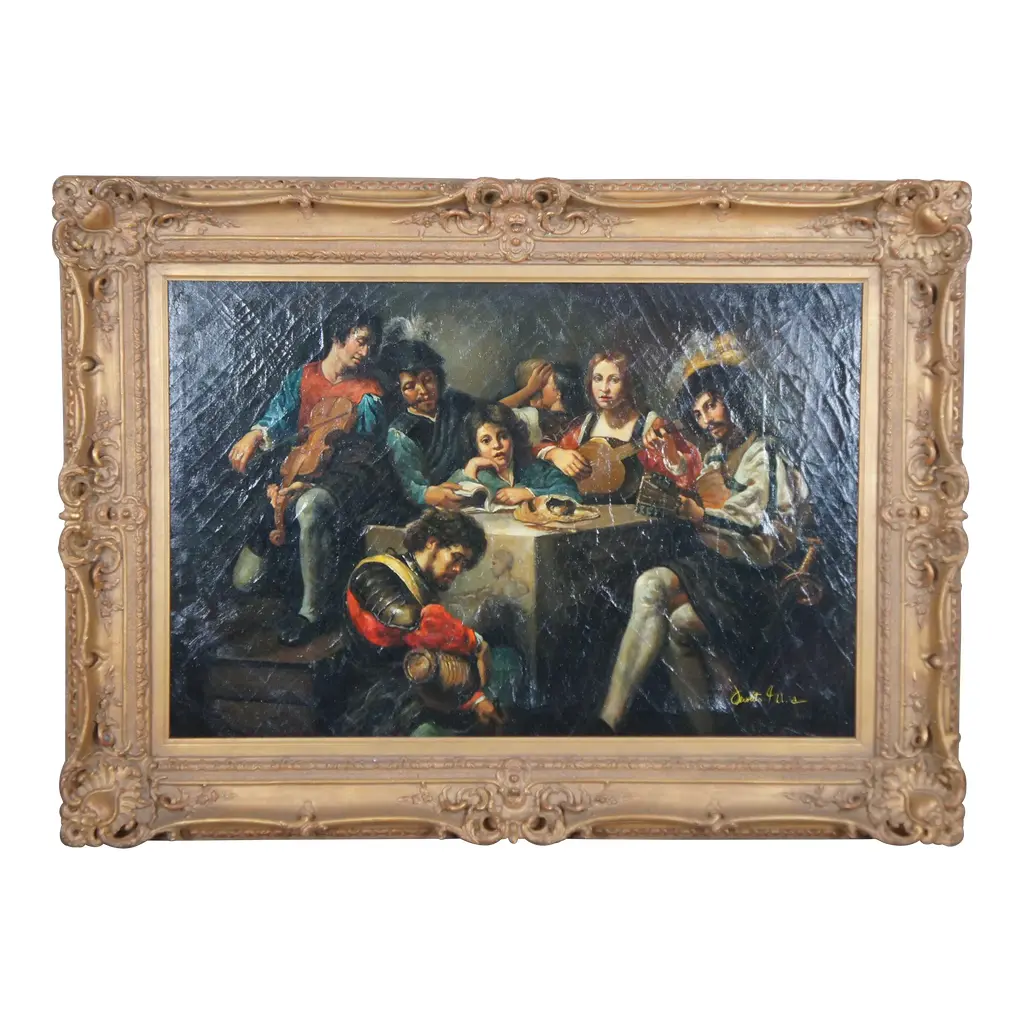
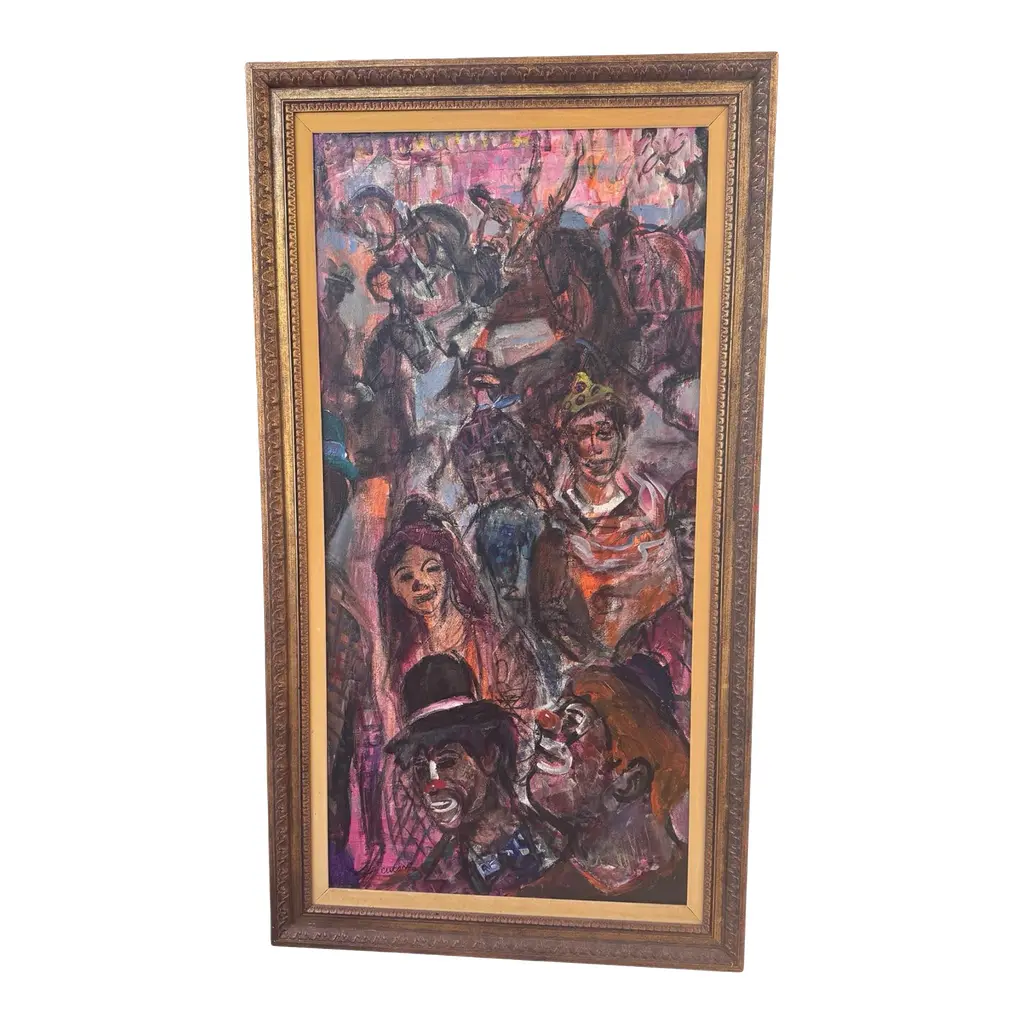
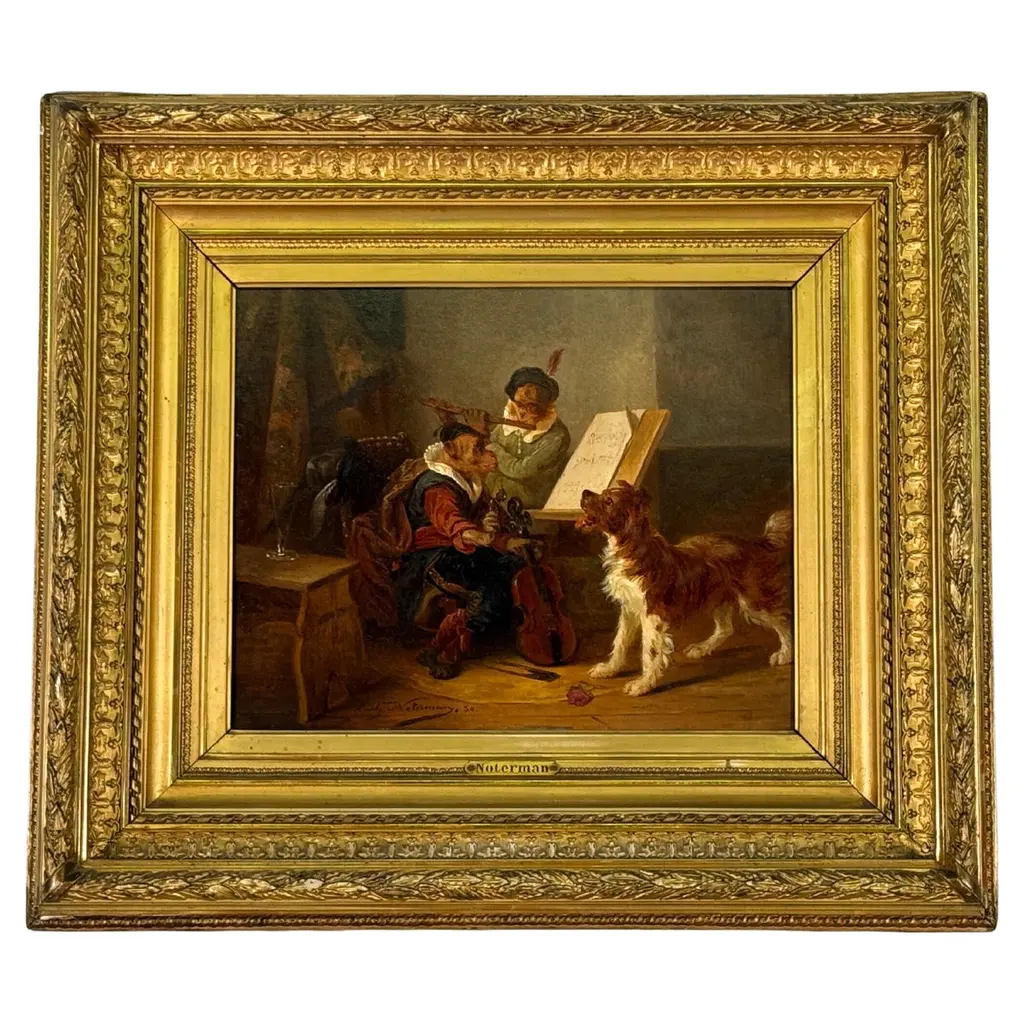
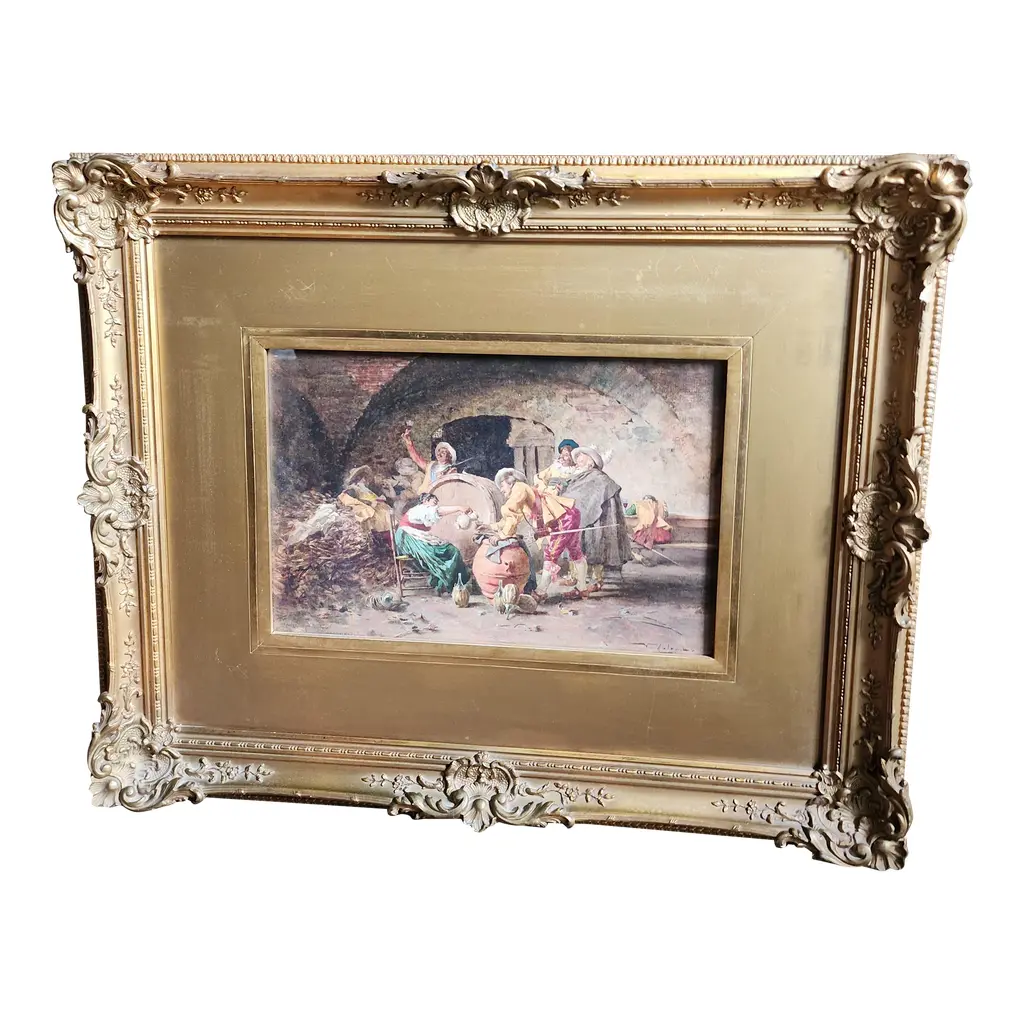
Technique: Oil on canvas Title of the work: “Carnivals” Artist: José María García Fernández “Castilviejo” Signed in the lower right corner Period: Late 20th century Country of origin: Zamora, Spain Good condition considering its age and use Overall dimensions: 65 x 82 x 6 cm Dimensions without frame: 36 x 54 cm A wonderful oil painting on canvas signed by the artist José María García Fernández, known as “Castilviejo,” in the mid-20th century. It depicts a genre scene with a carnival theme, to which he dedicated an entire collection around the 1960s. A group of musicians or acrobats are shown in what appears to be a carnival or circus celebration, in an immersive atmosphere that draws the viewer in to enjoy the spectacle. Castilviejo is especially renowned for dedicating his work to depicting the reality of Castile and its inhabitants, its culture and traditions, using a loose yet controlled brushstroke and the expert use of light to create textures and atmospheres. He employs a wide range of colors in different tones, creating contrasts of light and shadow to give form to the figures, dispensing with precise drawing, but without losing sight of the lines. Costumbrismo was an artistic trend or movement that reflected the customs and traditions of society, referring to a specific region or country and its traditional folklore. It emerged in Europe, especially in Spain and France, during the 18th and 19th centuries. It sought to portray daily life, often focusing on the popular classes, both rural and urban, capturing moments that reflected cultural identity, folklore, and local customs. Typically, the subjects were not great historical figures, but rather ordinary people. In Spain, costumbrismo (regionalist painting) experienced remarkable development, especially in the 19th century, as a response to the rapid social and economic changes brought about by industrialization. José María García Fernández, “Castilviejo” (1925-2004) José María García Fernández was a prominent painter from Zamora who left a profound mark on the region's artistic landscape and beyond. His works are characterized by rural themes, strongly influenced by the landscape of the Castilian plateau. He also dedicated himself to portraits and scenes of daily life, reflecting the simple lives of people in the villages of Zamora and Castile, showing deep respect and affection for his subjects, capturing their character and dignity. Through his work, he helped future generations appreciate the cultural and scenic heritage of Zamora, and his influence remains alive in the region's artists. His work serves as a reminder of the importance of preserving the beauty of the everyday and our connection to the land. In 2002, she was awarded the Gold Medal of Fine Arts of Castile and León in recognition of her artistic work. This piece has an attribution mark, I am sure that it is completely authentic and take full responsibility for any authenticity issues arising from misattribution
Similar products