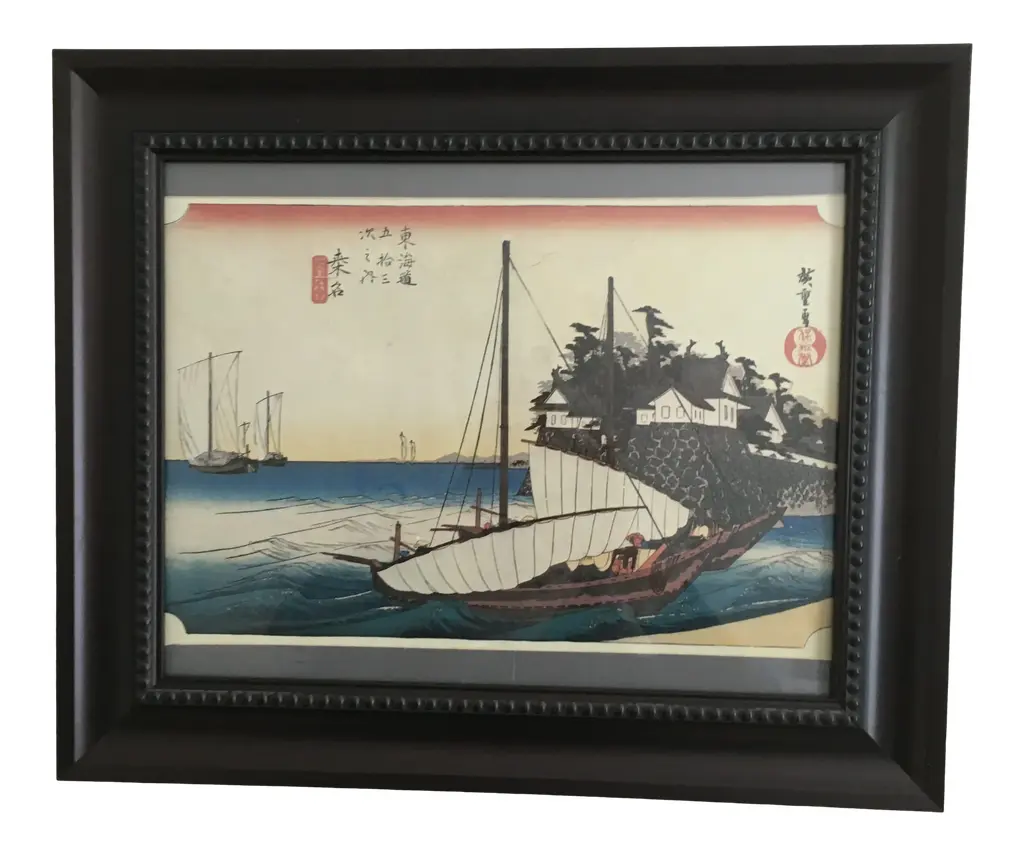
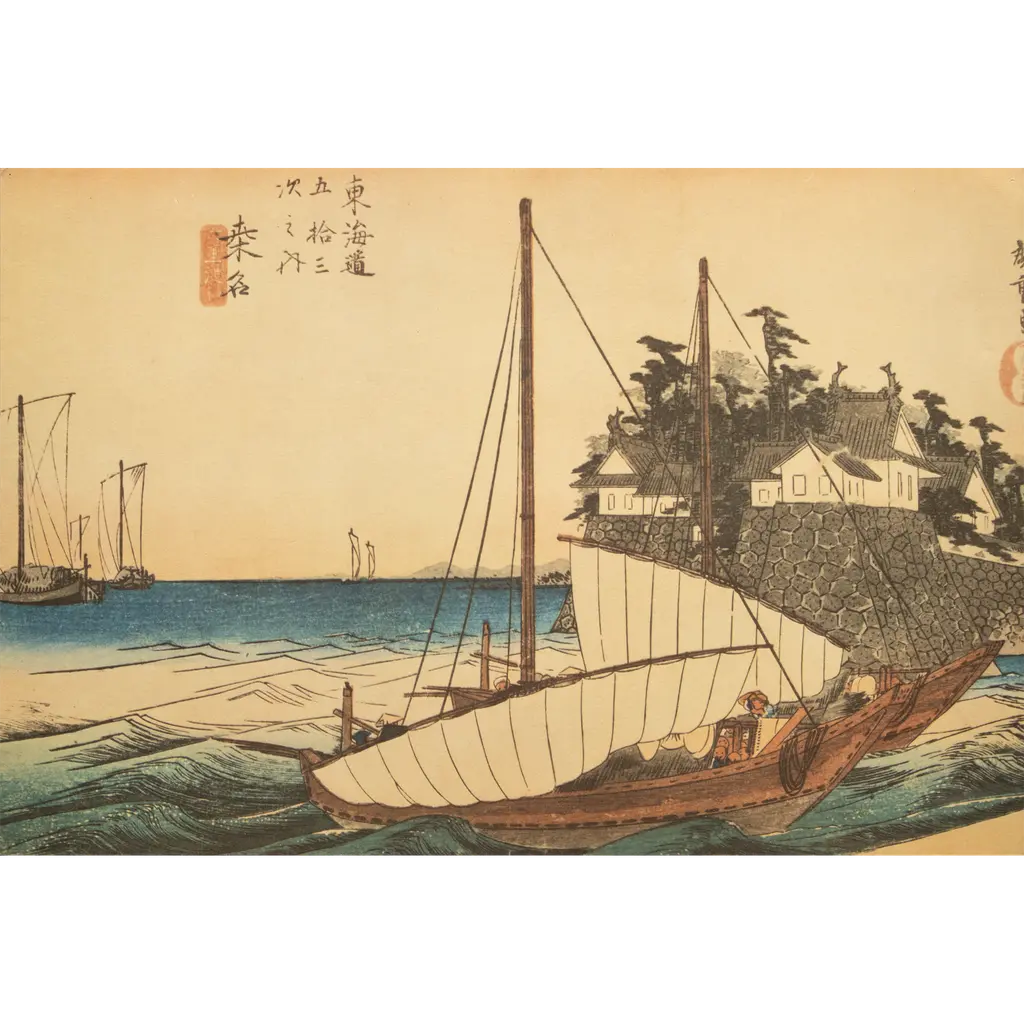
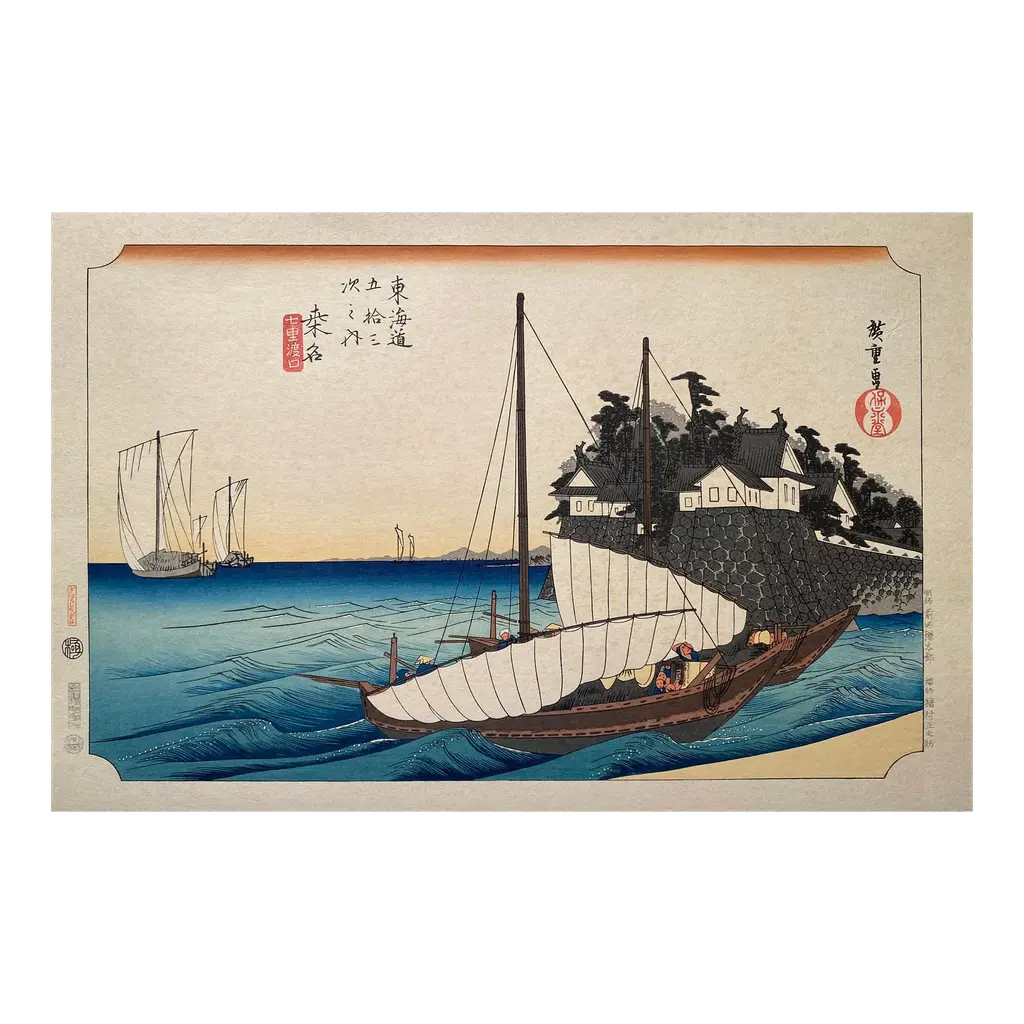
Kiyomi Barrier & Seiken Temple Near Okitsu- Japanese Woodcut Print On Rice Paper By Utagawa Hiroshige
Chairish$1,550
Kiyomi Barrier & Seiken Temple Near Okitsu- Japanese Woodcut Print On Rice Paper By Utagawa Hiroshige
Chairish$1,550
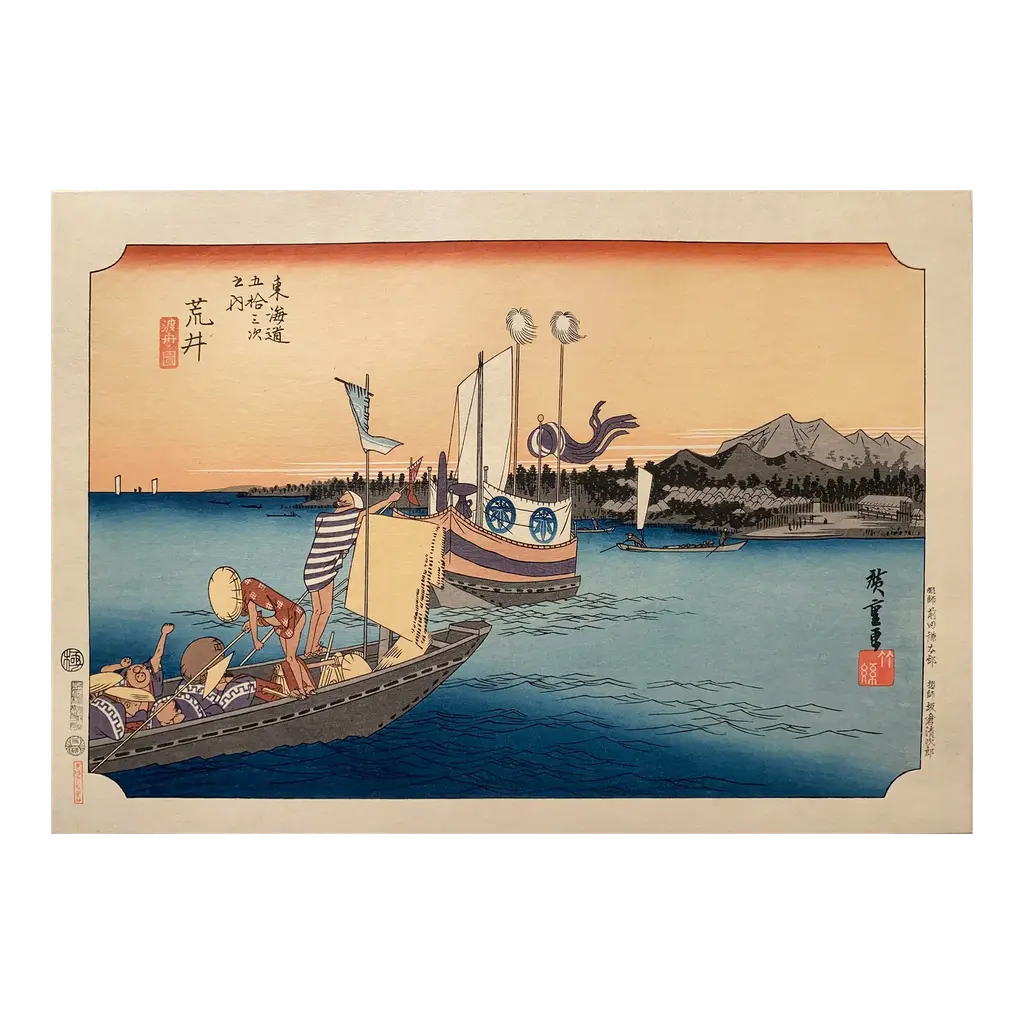
Kiyomi Barrier & Seiken Temple Near Okitsu - Japanese Woodcut Print on Rice Paper Woodblock print of boats in a harbor by Utagawa Hiroshige (Japanese, 1797-1858). Originally published c. 1850, this is scene number 18 from The 53 Stations of the Tokaido. Two boats are in a natural harbor, near the Okitsu River. In the distance, there is a city on the shore, nestled into the mountains. Behind the first range on mountains, a large white peak rises dramatically (likely Mt. Fuji). This piece is also called the "Reisho Tokaido." Presented in a black frame with a mat. Frame size: 15.5"H x 19.25"W Image size: 9.25"H x 14"W Born in Edo as Tokutaro Ando, Hiroshige Utagawa grew up in a minor samurai family. His father belonged to the firefighting force assigned to Edo Castle. It is here that Hiroshige was given his first exposure to art: legend has it that a fellow fireman tutored him in the Kano school of painting, though Hiroshige’s first official teacher was Rinsai. Though Hiroshige tried to join Toyokuni Utagawa's studio, he was turned away. In 1811, young Hiroshige entered an apprenticeship with the celebrated Toyohiro Utagawa. After only a year, he was bestowed with the artist name Hiroshige. He soon gave up his role in the fire department to focus entirely on painting and print design. During this time he studied painting, intrigued by the Shijo school. Hiroshige’s artistic genius went largely unnoticed until 1832. In Hiroshige Utagawa's groundbreaking series of Japanese woodblock prints, The 53 Stations of the Tokaido (1832-1833), he captured the journey along the Tokaido road, the highway connecting Edo to Kyoto, the imperial capital. With the Tokugawa Shogunate relaxing centuries of age-old restrictions on travel, urban populations embraced travel art and Hiroshige Utagawa became one of the most prominent and successful ukiyo-e artists. He also produced kacho-e (bird-and-flower pictures) to enormous success. In 1858, at the age of 61, he passed away as a result of the Edo cholera epidemic. Hiroshige Utagawa’s woodblock prints continue to convey the beauty of Japan and provide insight into the everyday life of its citizens during the Edo period. The appeal of his tender, lyrical landscapes was not restricted to the Japanese audience. Hiroshige’s work had a profound influence on the Impressionists and Post-Impressionists of Europe: Toulouse-Lautrec was fascinated with Hiroshige’s daring diagonal compositions and inventive use of perspective, while Van Gogh literally copied two of Hiroshige's prints from the famous series, 100 Famous Views of Edo in oil paint.
Similar products