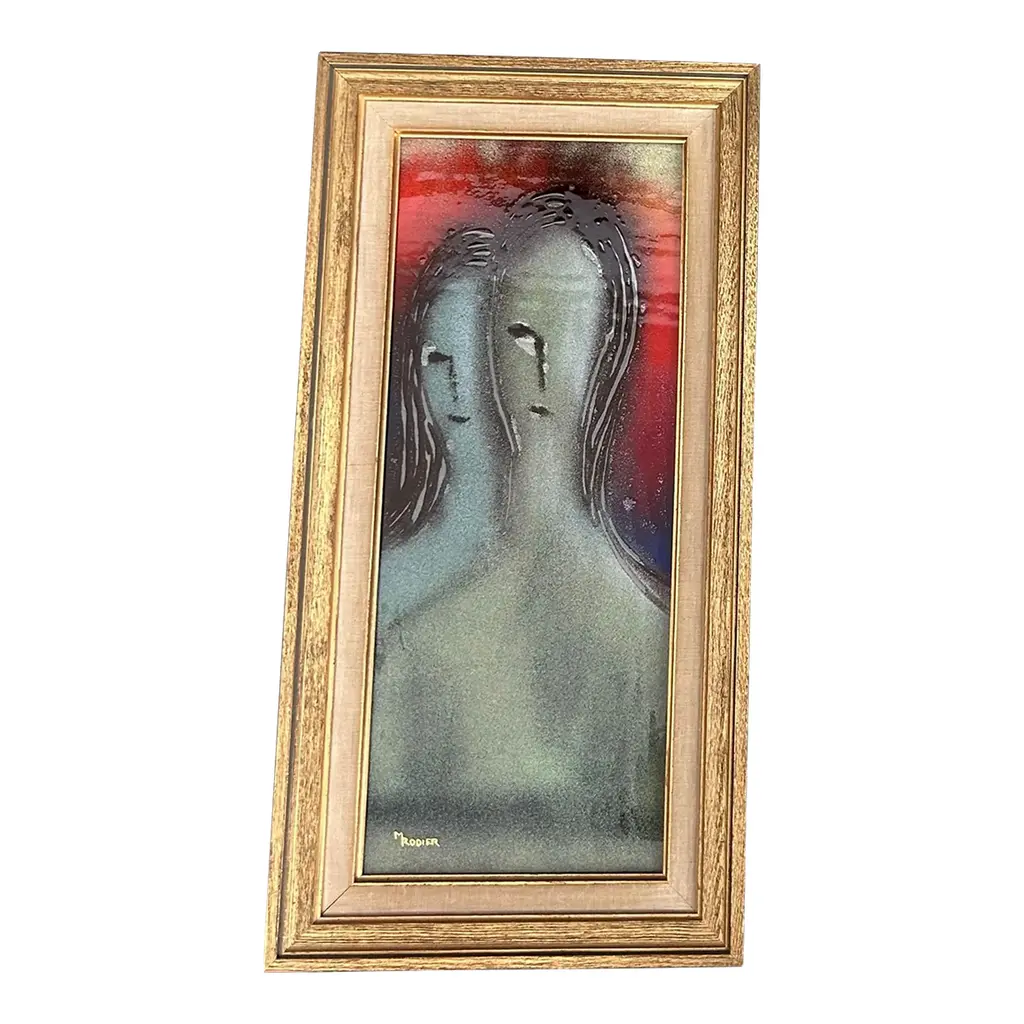
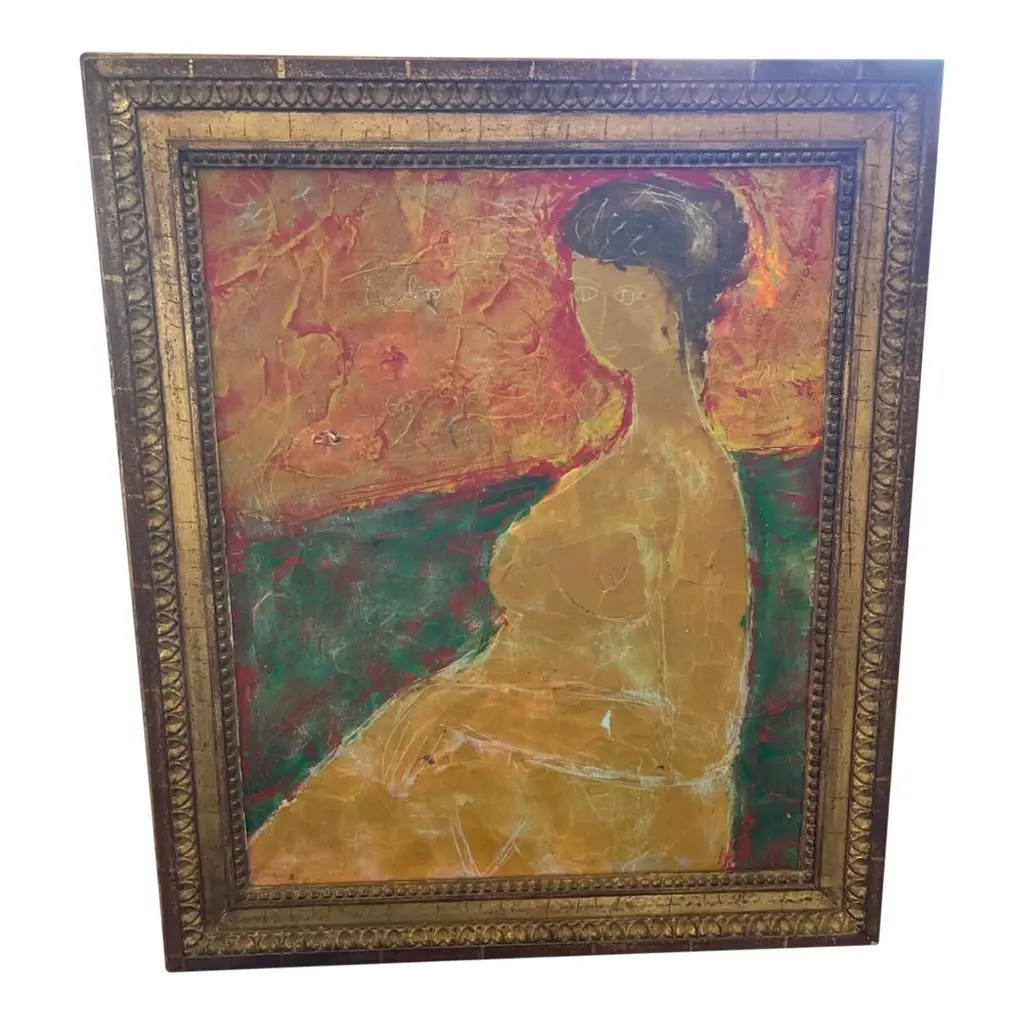
Lady in Red* Virginia Cohn Parkum, c. 1980s In Lady in Red, Virginia Cohn Parkum reduces portraiture to a charged interplay of color, contour, and suggestion. The figure is not fully articulated but emerges from a saturated red field that both defines and consumes the surrounding space. This chromatic dominance denies conventional depth and situates the subject within an enveloping atmosphere, where figure and ground remain in constant negotiation. The red plane functions simultaneously as garment, aura, and emotional climate, transforming the portrait into an experiential rather than descriptive encounter. The head and torso are built through dark, cool passages of green-black and violet that hover beneath the surface, suggesting structure without resolving into detailed anatomy. These shadowed areas form a mask-like presence, interrupted by swift linear incisions that trace the bridge of the nose, the contours of the eyes, and the curve of the cheek. The eyes are only implied through thin, looping lines, creating an effect of veiled perception — the subject appears both present and withheld. This economy of line resists portrait likeness in favor of psychological opacity. Parkum’s handling of paint underscores the painting’s tension between immediacy and erasure. Broad, translucent washes allow earlier layers to remain visible, while dragged strokes and vertical streaks introduce a sense of gravity and downward movement. The pigment appears to bleed and settle, suggesting a figure in the process of appearing and dissolving. Areas of exposed ground and thin scumbling record revision and hesitation, emphasizing the temporality of the act of painting. The chromatic structure is central to the work’s interpretive resonance. Red operates here not merely as clothing but as a field of intensity that can be read in multiple registers: vitality, sensuality, vulnerability, or emotional saturation. The cooler underlayers introduce restraint and distance, preventing the red from becoming purely decorative. Instead, the color relationships produce a tension between heat and containment, visibility and concealment. The figure’s downward tilt and softened contours suggest introspection rather than outward engagement. Rather than confronting the viewer, the subject appears absorbed within her own interior space. Parkum’s refusal to stabilize the facial features reinforces this inwardness, presenting identity as provisional and fluid. The portrait thus becomes less a depiction of an individual than an exploration of presence shaped by mood, memory, and atmosphere. Situated within expressionist figuration, Lady in Red transforms the conventions of portrait painting into an inquiry into perception and emotional presence. Through the dominance of color, the spareness of line, and the visible traces of process, Parkum presents the figure as an unstable convergence of form and feeling — an image that hovers between emergence and dissolution within a field of red intensity. -Jonathan Flike *The title of this work was assigned by Visard Gallery.
Similar products