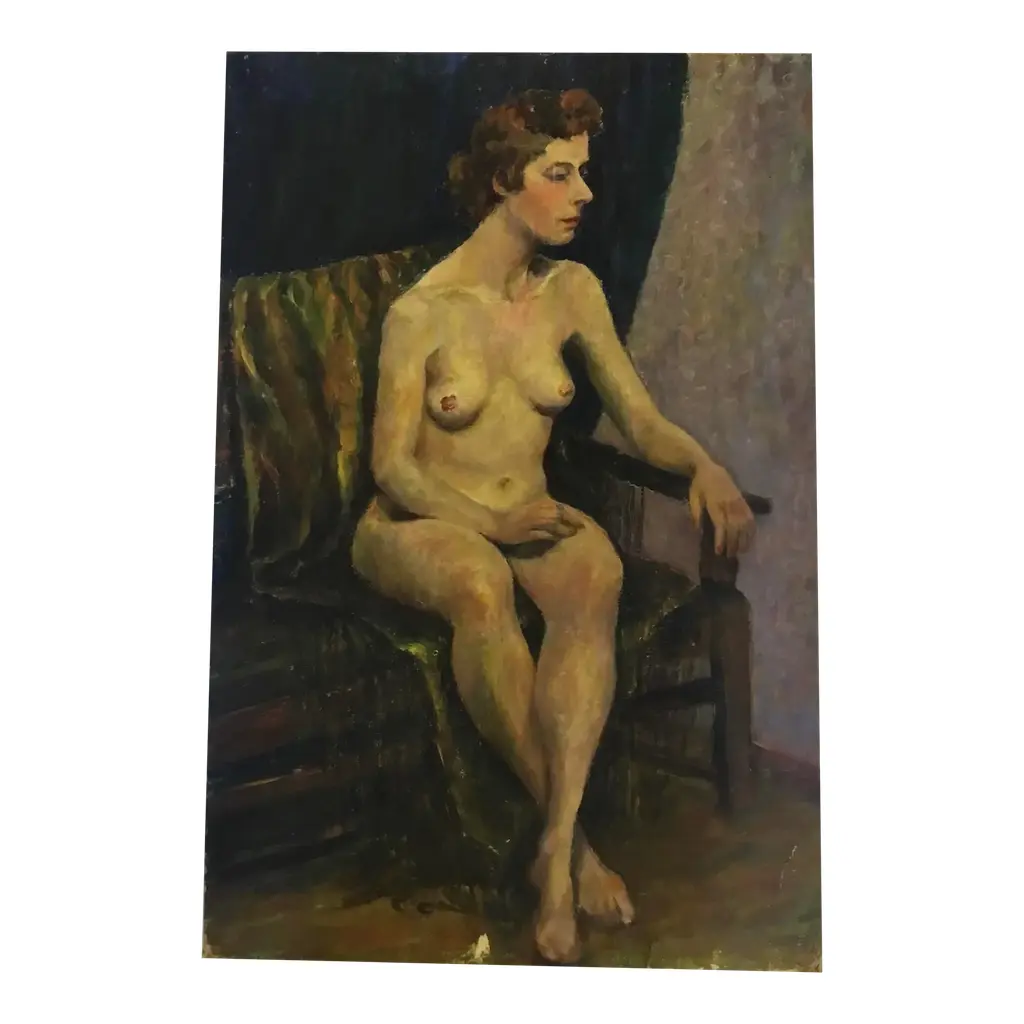
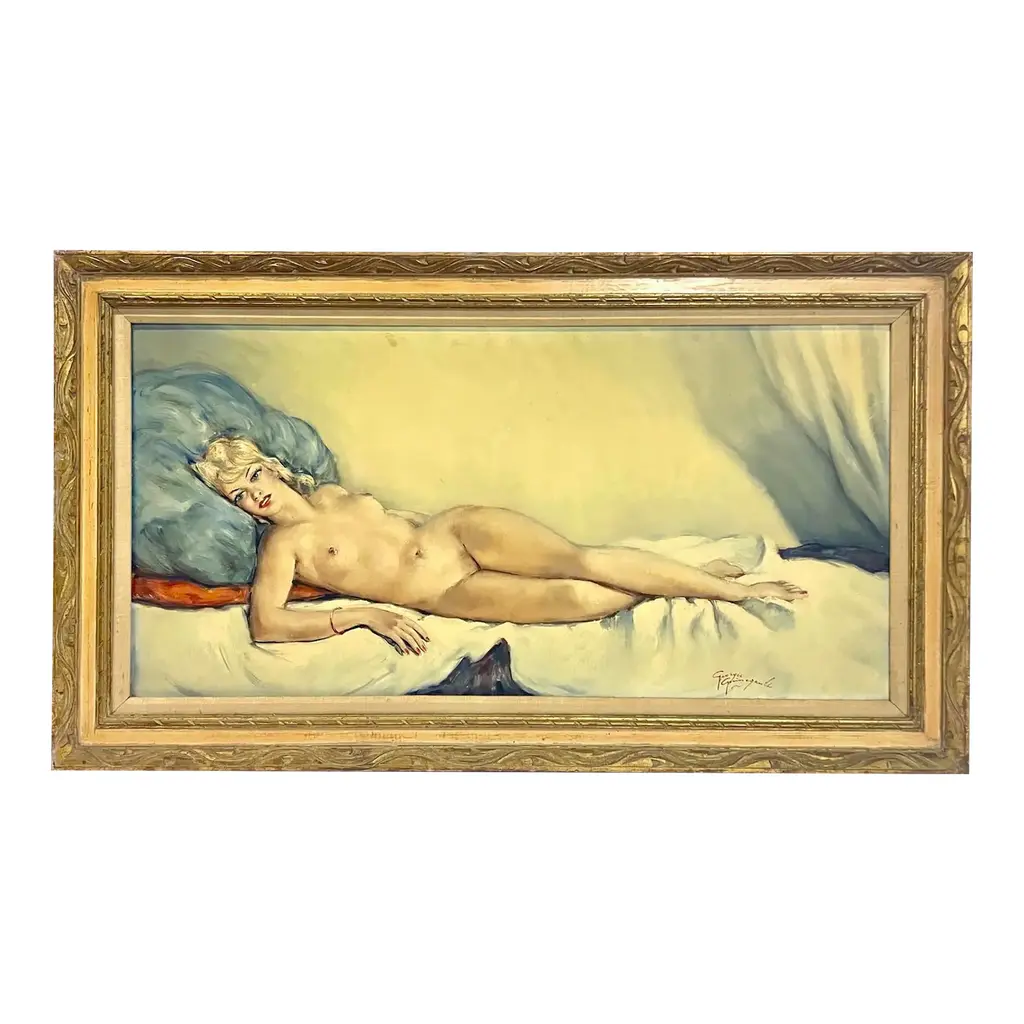
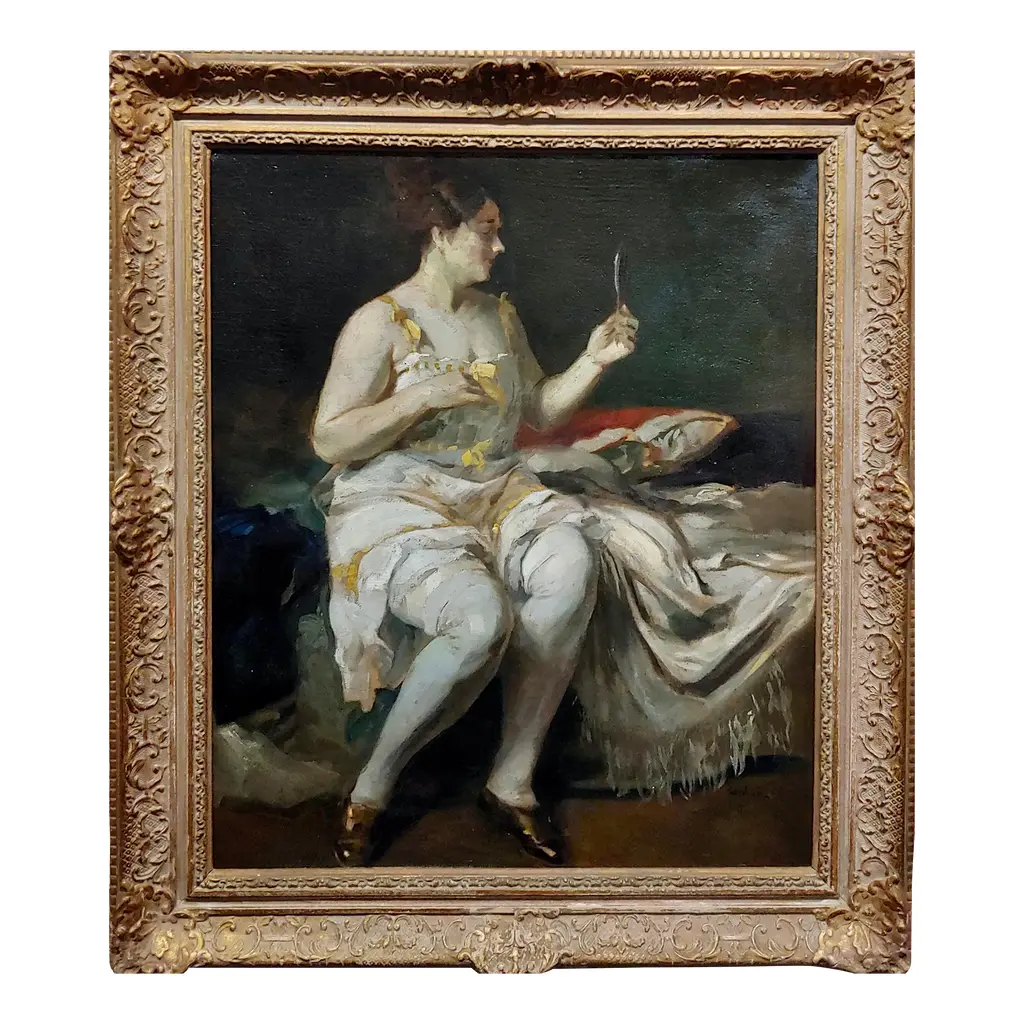
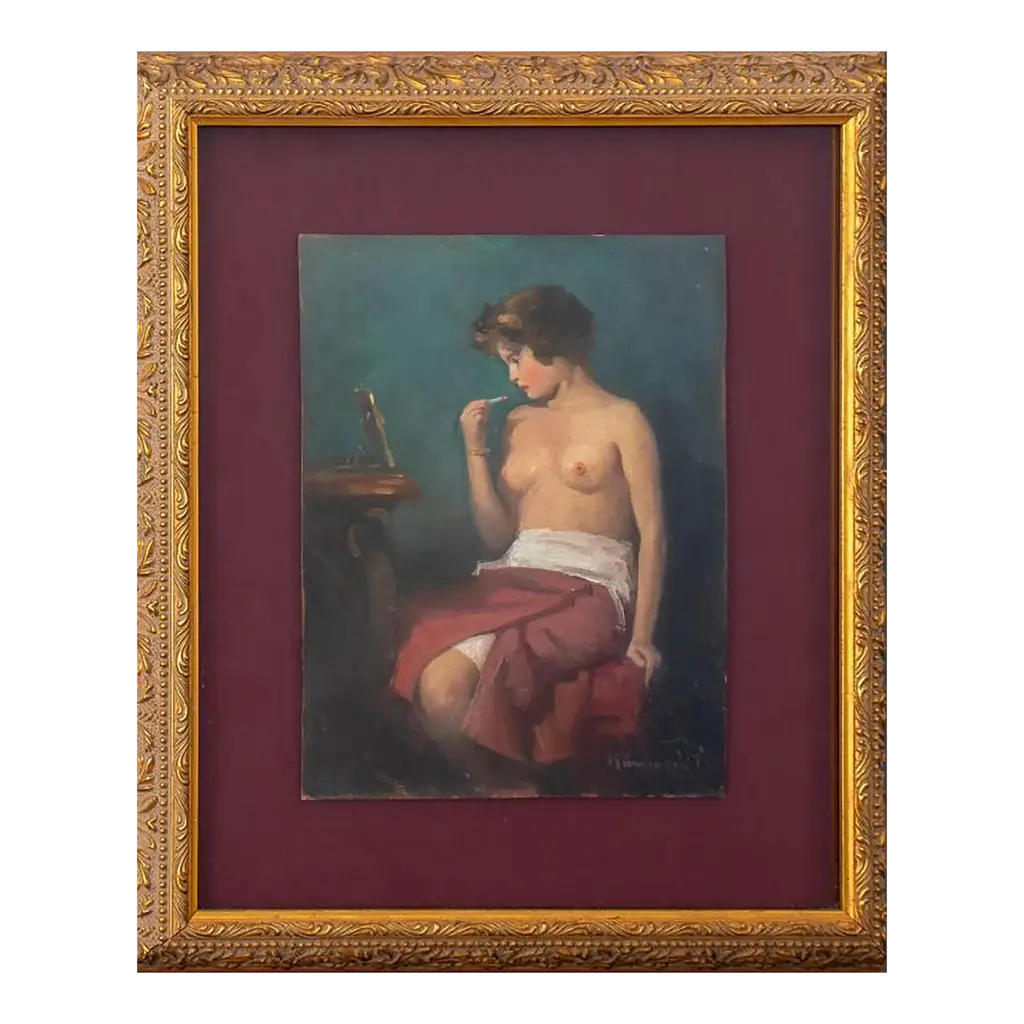
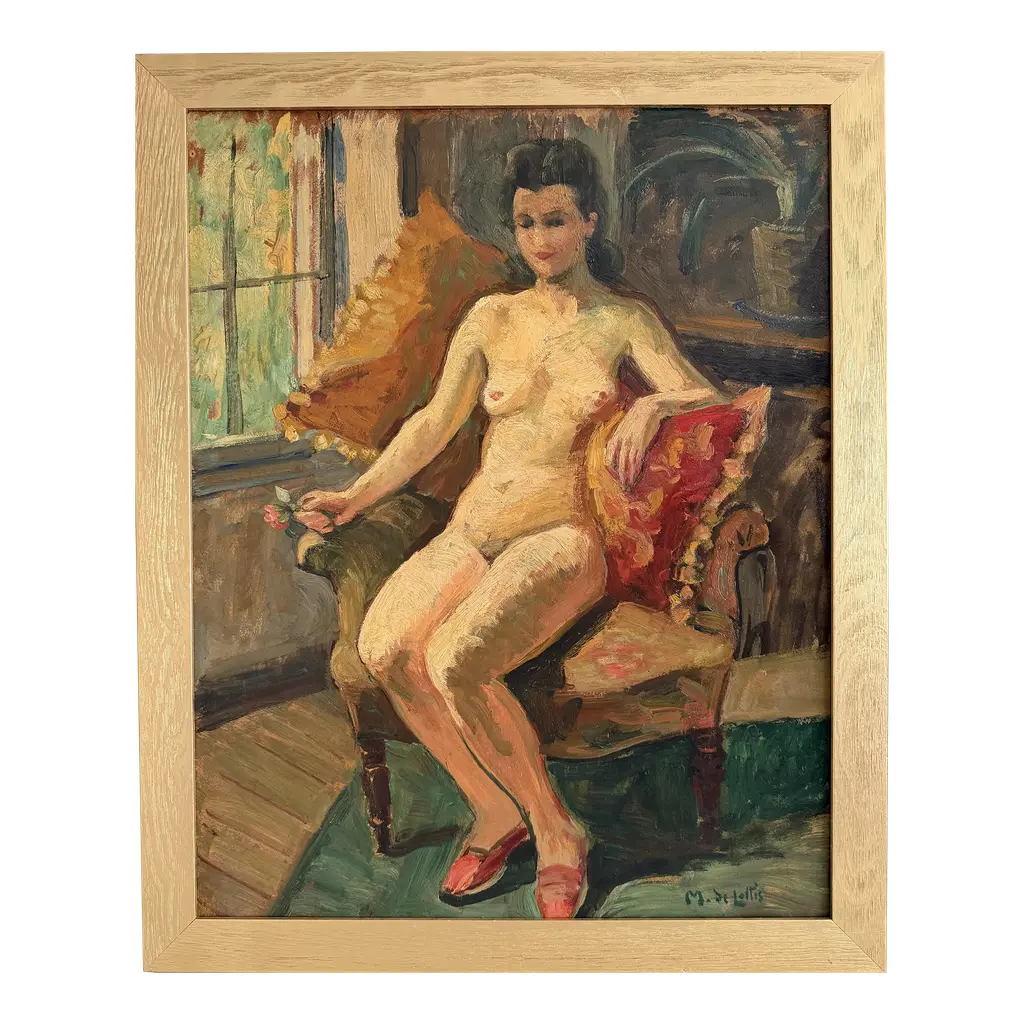
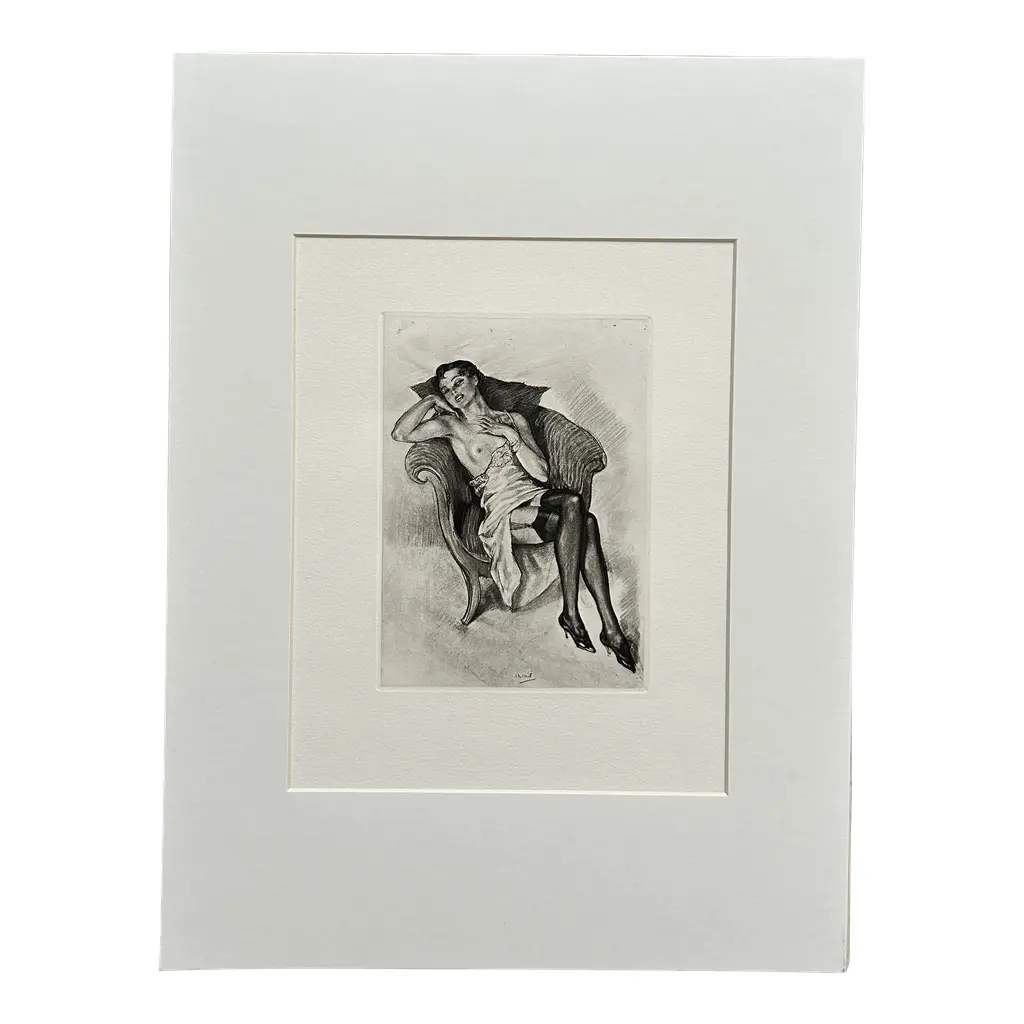
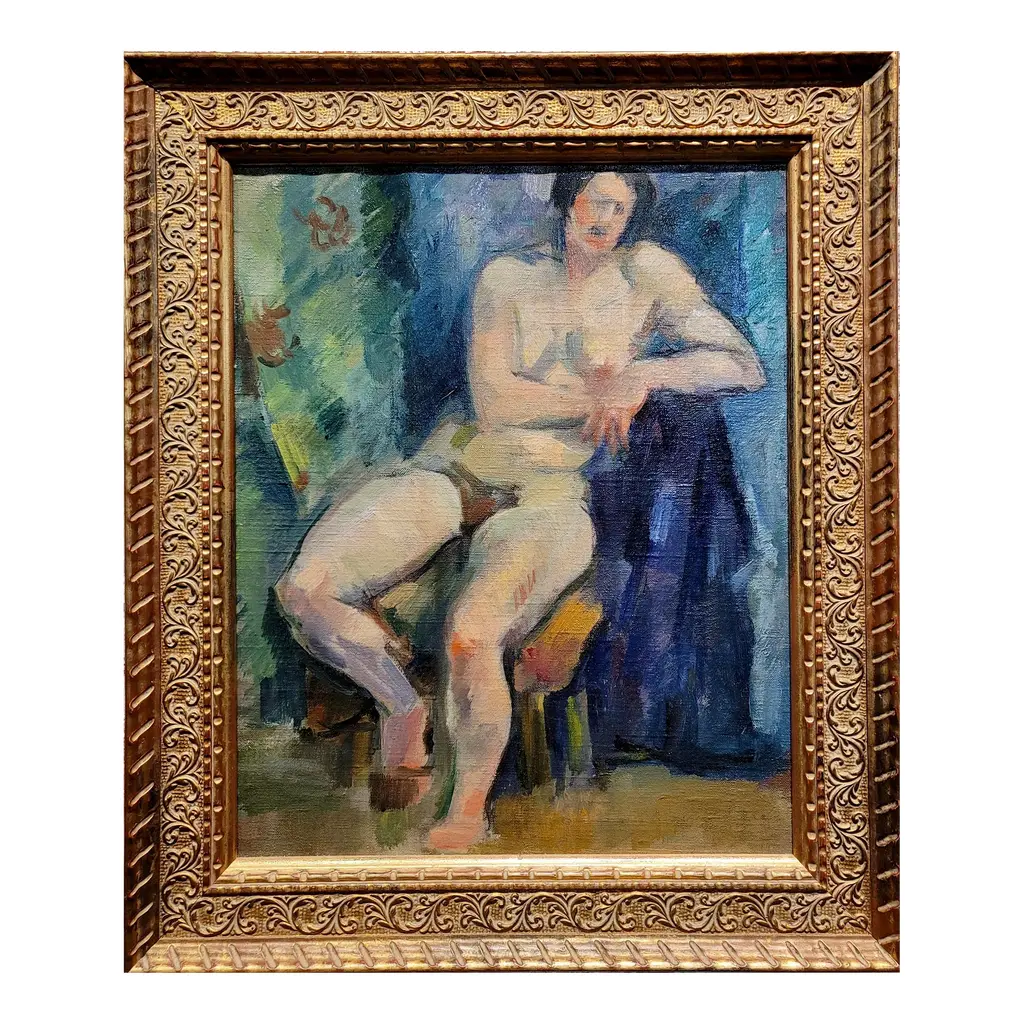
The drawing is a pastel work from the late 19th or early 20th century and it features a female nude seated in a chair smoking a cigarette. It is titled "Gisele." The artist's signature on the piece is "M. van Bever de la Quintinie." The technique used here is pastel drawing, a medium where artists use sticks of pigment to create various hues on paper. The nature of pastel allows for soft textures and subtle blending of colors, which is evident in the gentle gradations on the figure's skin and the velvet texture of the seat. The model used named 'Gisele' could potentially refer to the remarkable lady by the name of Gisèle d'Estoc. Gisèle d’Estoc was the pseudonym of a nineteenth-century French woman writer and, it turns out, artist who, among other things, was accused of being a bomb-planting anarchist, the cross-dressing lover of writer Guy de Maupassant, and the fighter of at least one duel with another woman, inspiring Bayard’s famous painting on the subject. The true identity of this enigmatic woman remained unknown and was even considered fictional until recently, when Melanie C. Hawthorne resurrected d’Estoc’s discarded story from the annals of forgotten history. Marguerite Louise Van Bever de la Quintinie, living from 1872 to 1935, was part of the vibrant art scene in Paris during a period of great change and innovation in the arts. As an artist, her life spanned the end of the 19th century and the beginning of the 20th century, which were crucial times in the development of modern art. Her work in pastels, and specifically portraiture, places her within the tradition of fine art that was gradually embracing more modernist tendencies during her lifetime. Her association with the Société du Salon d'Automne is particularly noteworthy, as this institution was known for being at the forefront of avant-garde art during the early 1900s. The Salon d'Automne was established as an alternative to the conservative policies of the official Paris Salon and played a significant role in the rise of movements such as Fauvism and Cubism. Given that Marguerite Van Bever de la Quintinie was active in the early 20th century, her works would likely reflect the stylistic transitions of that time, possibly exhibiting the loose brushwork of Impressionism, the bold color of Post-Impressionism, or even the early expressions of modernist abstraction. Her participation in such a forward-thinking society implies that her art could have shared the innovative spirit that defined the art world of Paris at that time. The artwork "Gisele" is indicative of the personal and intimate style of portraiture that became popular during this era. It captures a sense of individuality and the personal character of the subject, which was a departure from the more formal and historical depictions seen in earlier art periods. It is a representation not just of the figure but also a glimpse into the personality and mood of the subject, reflecting the evolving approach to portraiture in which the artist's perception and connection to the subject became increasingly important. The drawing is professionally framed with the highest quality art (museum) glass.
Similar products