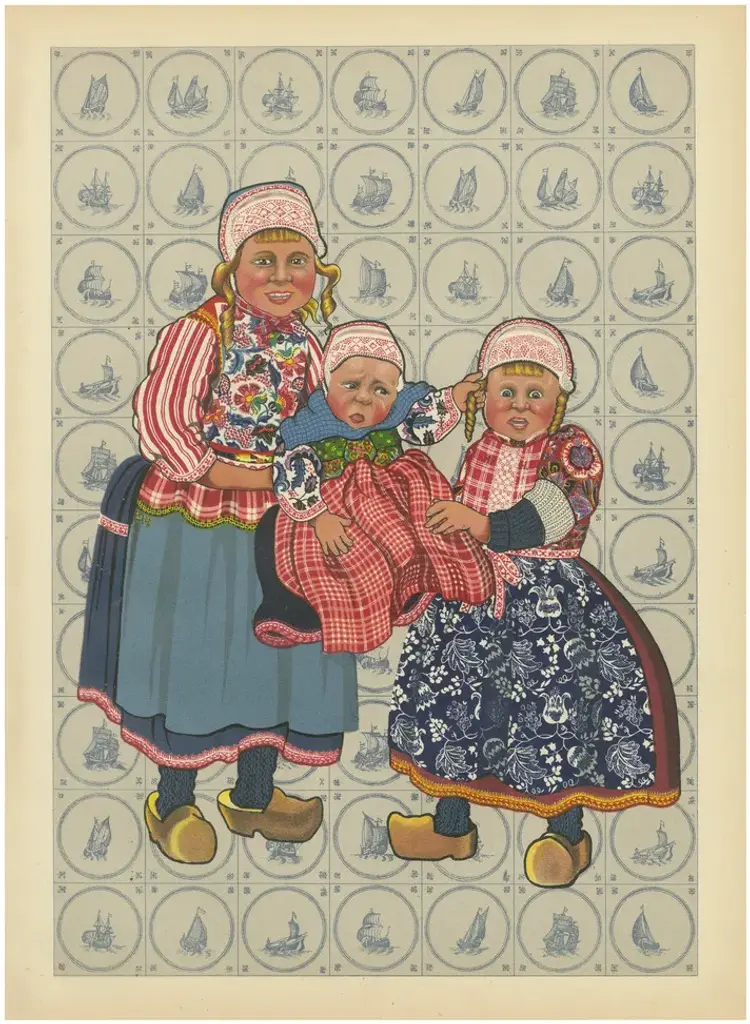
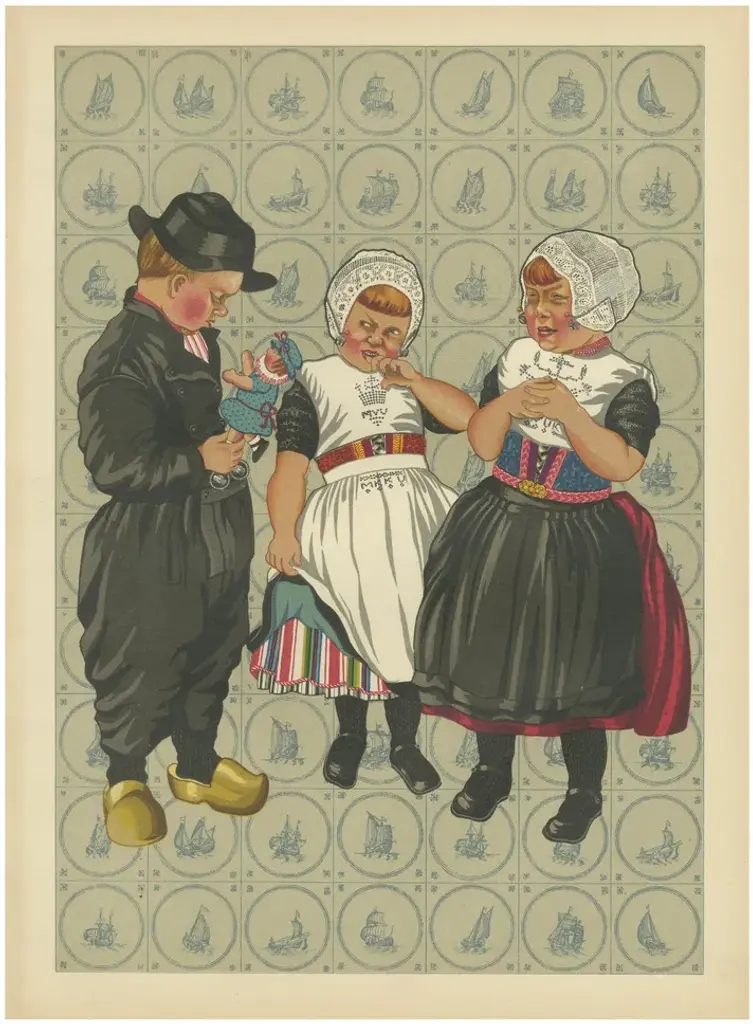
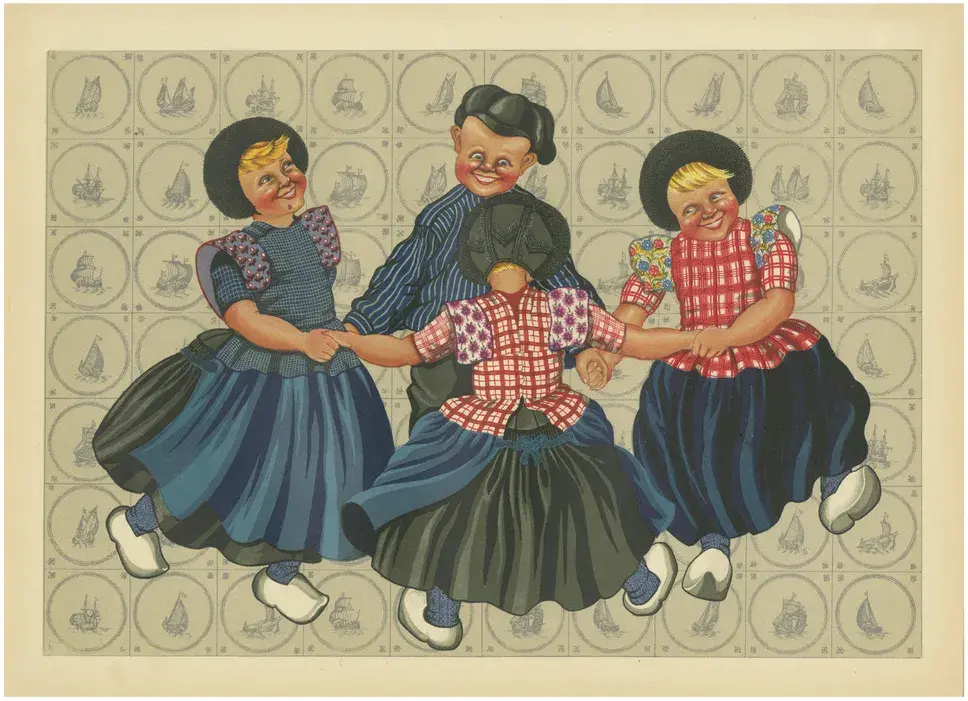
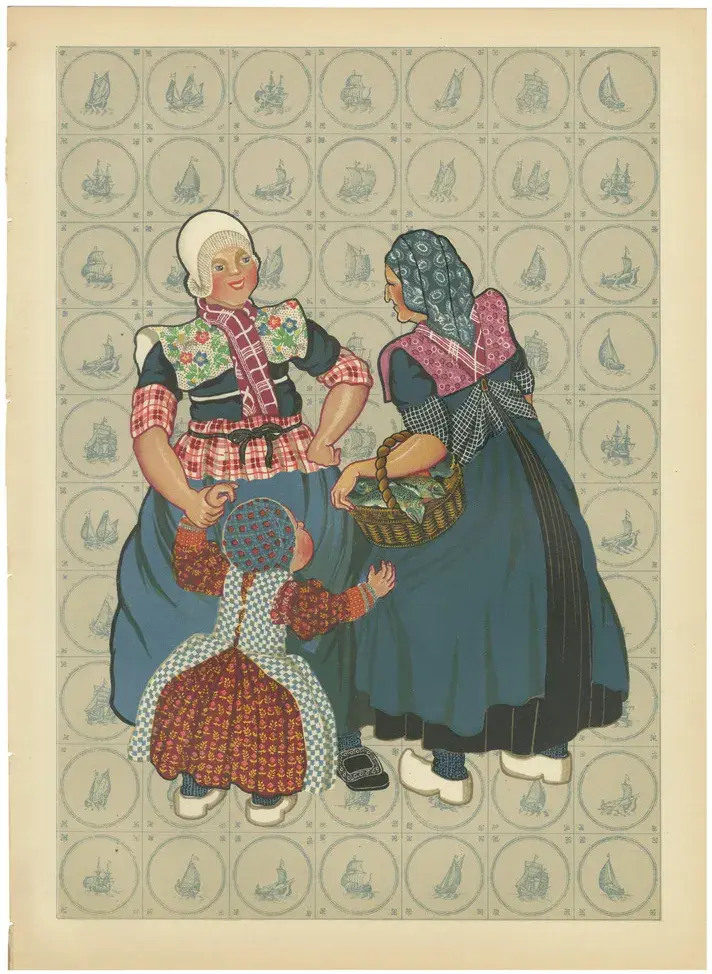
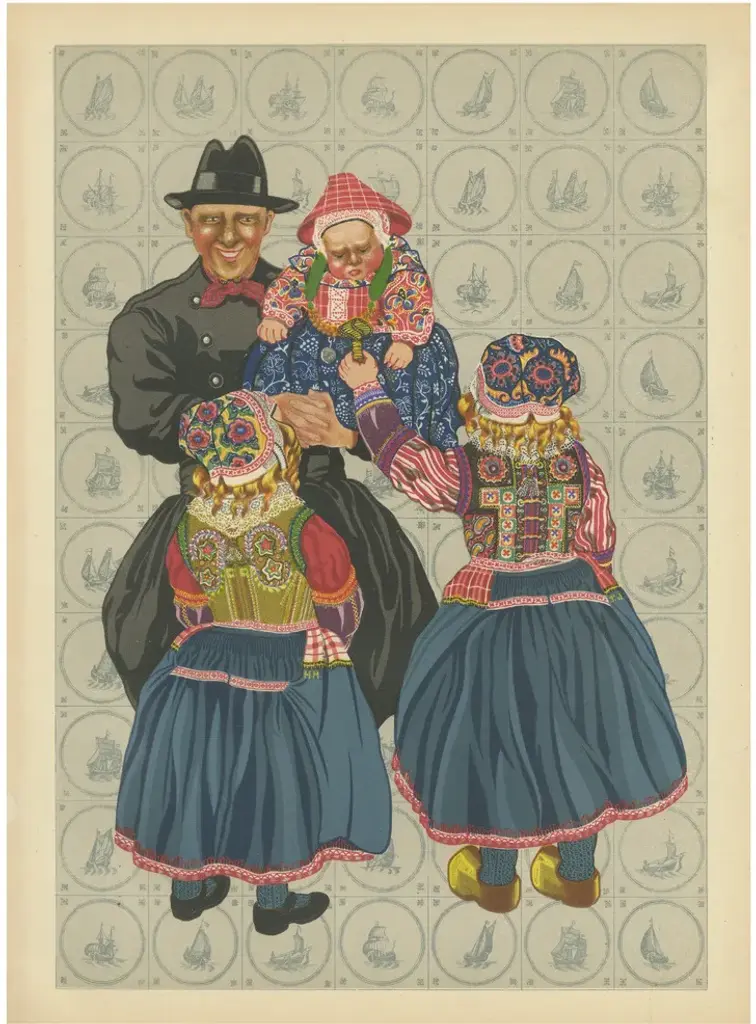
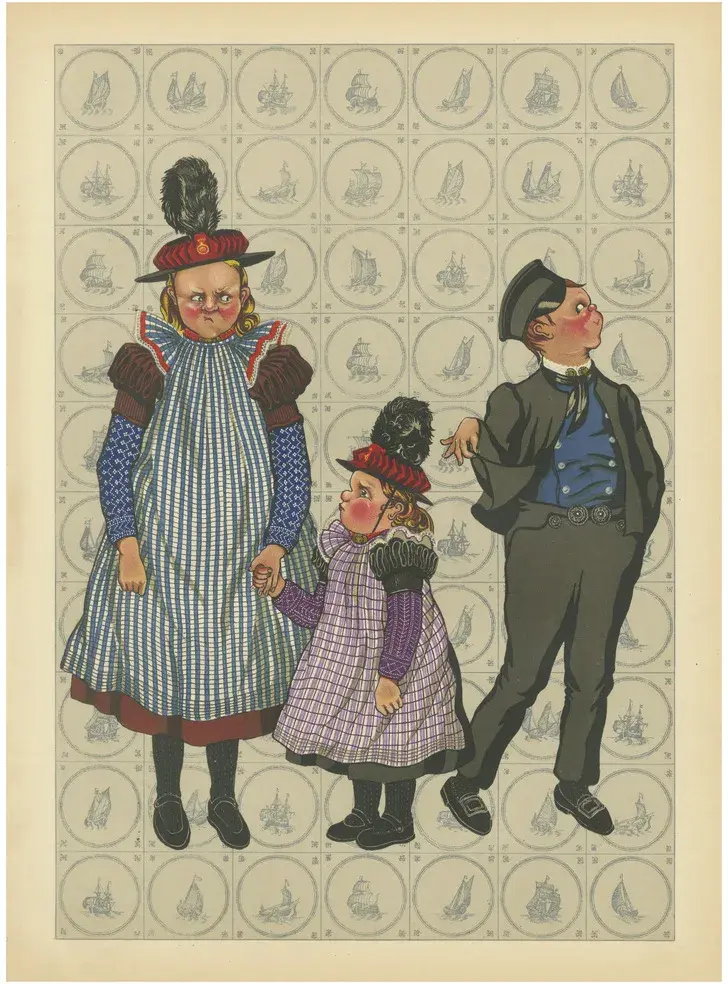
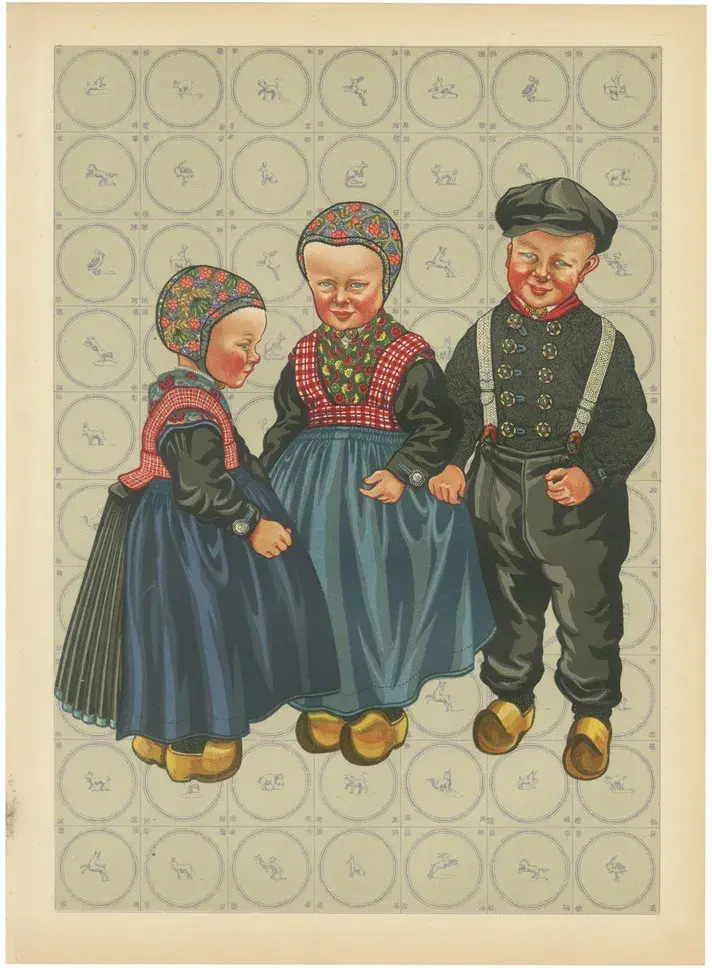
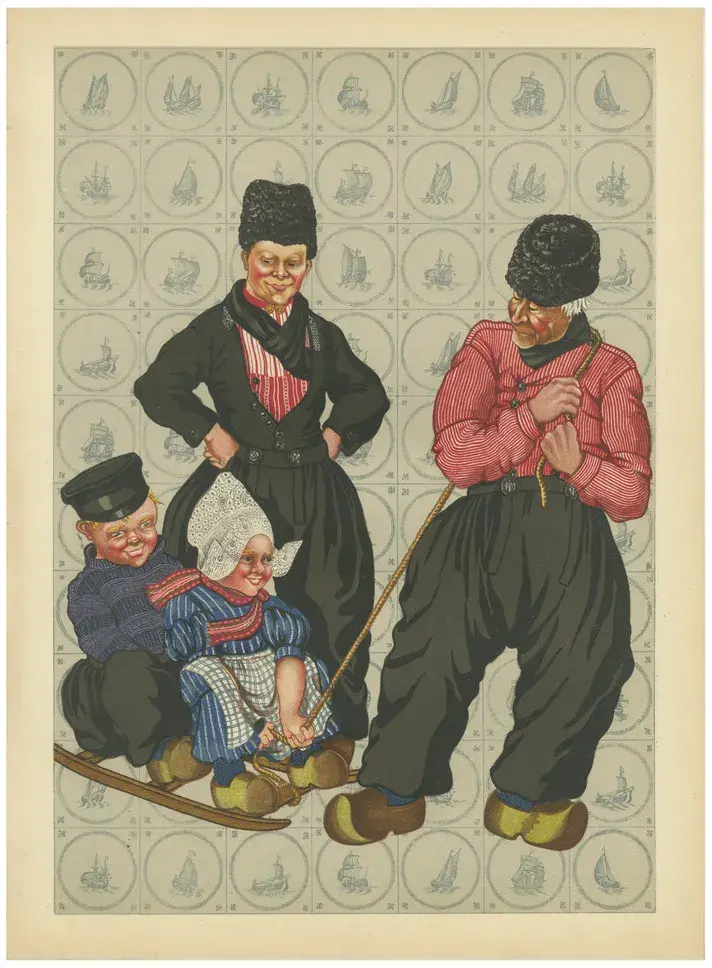
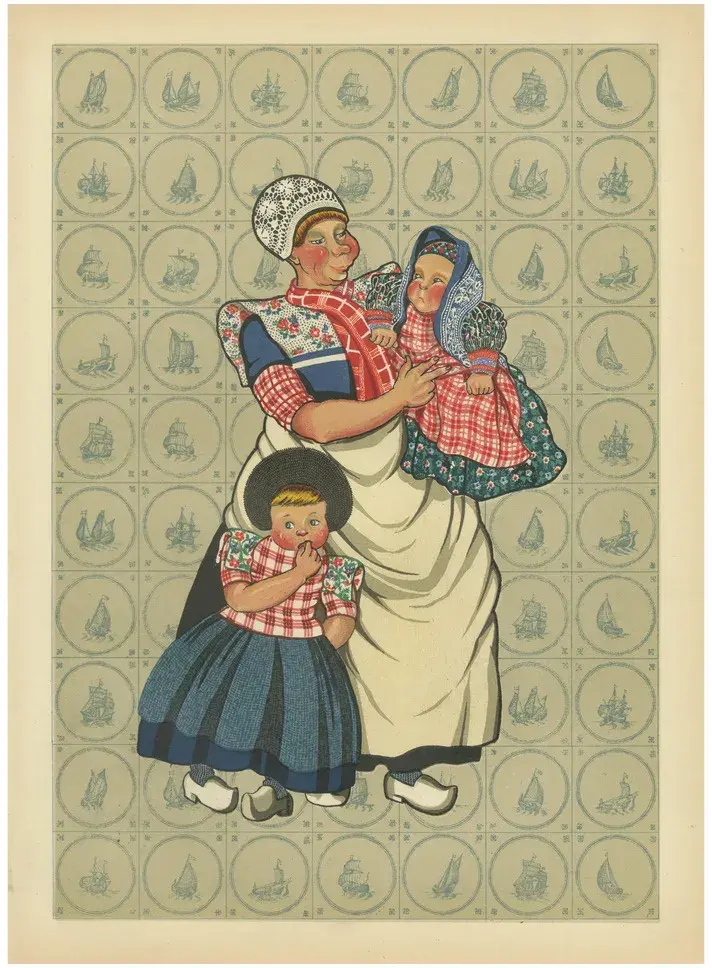
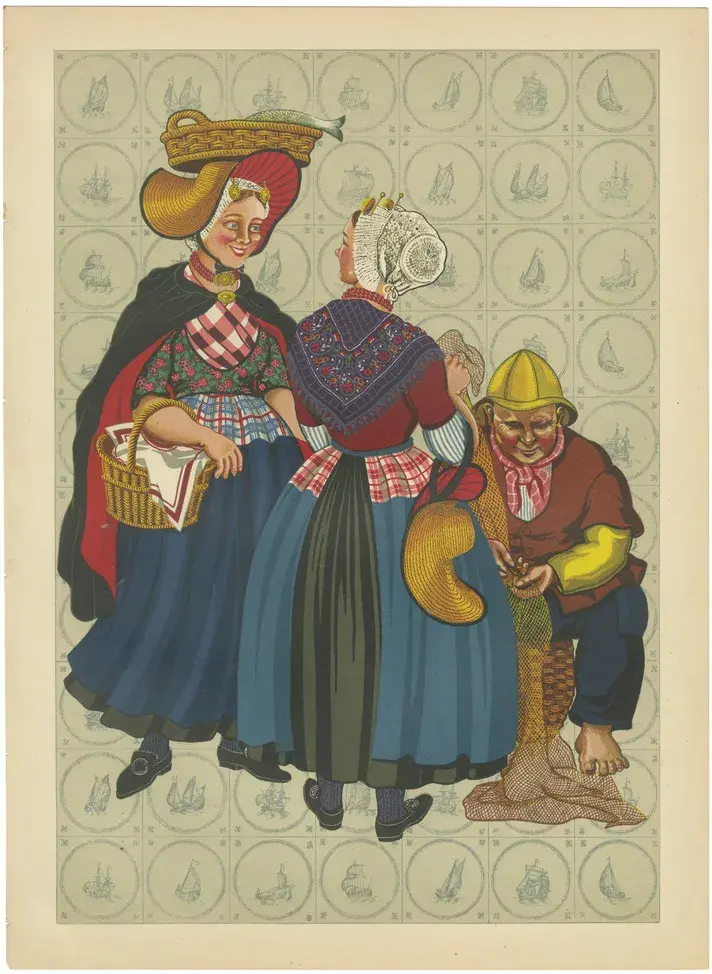
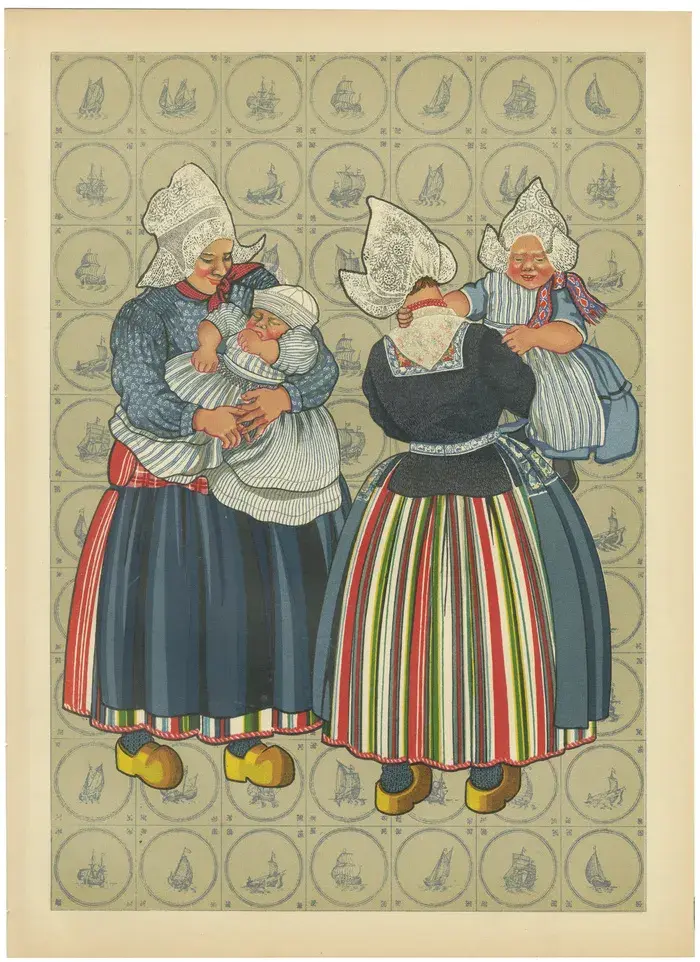
Marken Childhood Traditions: Dutch Boys and Girls in Festive Costume This original hand-colored lithograph from the rare 1932 folio *The National Costumes of Holland* depicts four children from the island of Marken, dressed in detailed variations of traditional costume still worn in the early 20th century. Created by Gratiane de Gardilanne and Elizabeth Whitney Moffatt with text by Alma Oakes, and printed by the renowned Vincent, Brooks, Day & Son of London, this limited edition was issued in only 500 copies for commercial distribution. On the left, a boy of about seven wears the full dress of a Marken fisherman—wide black wool breeches with silver buttons, a striped overshirt, and a black cap—having just outgrown his childhood ringlets. Beside him, a young girl wears at least four layered caps under a chin-tied strap: red cotton, cambric, white lace, and chintz. Her white chintz under-dress is partly hidden by a small *voorpanden*, and her black wool skirt is finished with a red-and-white braided hem and blue apron, all tied with a vivid red sash. The seated child in the center, still in ringlets, wears a decorative red jacket with flower motifs over a full brown baize skirt trimmed with yellow braid. At far right, another boy nearing age seven wears a subdued version of the same attire, his darker palette likely indicating mourning. This plate offers a lively and affectionate glimpse into the distinct social codes of Marken childhood, where even the smallest garment held symbolic meaning. Technique and Origin: Original chromolithograph from The National Costumes of Holland, published in London, 1932. Printed by Vincent, Brooks, Day & Son. Condition: Very good. Colors remain vivid and paper clean, with only minor age-toning at the outer edges. No tears, stains, or foxing. Full margins present. A well-preserved example suitable for framing or collection. Framing Tips: Frame with an off-white or soft ivory museum-grade mat to highlight the colorful garments. A slim black or dark walnut frame adds sophistication without overwhelming the print. Use UV-protective glass or acrylic to prevent fading. Archival hinge-mounting is recommended to preserve the paper’s integrity.
Similar products