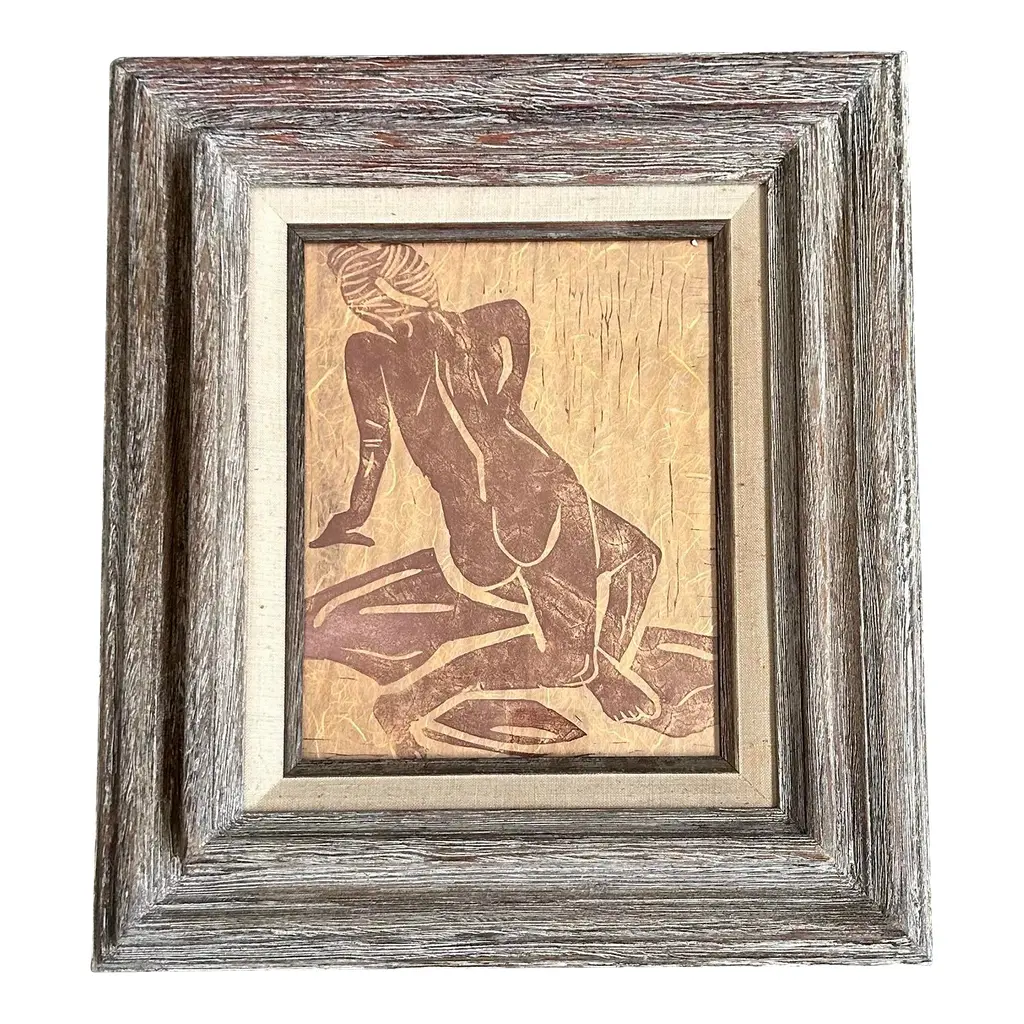
Metamorphosis Virginia Cohn Parkum, c. 1989 In Metamorphosis, Virginia Cohn Parkum presents the human body as a site of transformation rather than anatomical description. The figure, seen from behind, occupies the center of the composition and is rendered through broad, fluid passages of pale flesh tones punctuated by dark void-like forms. The surrounding field of deep reds, umbers, and black envelops the figure, collapsing spatial depth and situating the body within a charged, indeterminate environment. This compression of space denies conventional figure–ground separation and instead frames the body as an emergent presence within a field of forces. The painting’s structure is organized around contrast and interruption. Pale, luminous passages define the spine and shoulder blades, emphasizing verticality and skeletal structure, while irregular black forms interrupt the torso, destabilizing the integrity of the body. These dark passages read simultaneously as shadows, cavities, or zones of dissolution, complicating the viewer’s perception of the figure’s physical coherence. Rather than modeling musculature, Parkum constructs the body through tonal oppositions that suggest both presence and erasure. The spine functions as a central axis, reinforcing the sense of transformation occurring along a structural core. Material handling plays a central role in the work’s conceptual framework. The paint is applied in gestural sweeps and thin washes that reveal the direction and speed of the artist’s hand, while areas of exposed ground and dragged pigment produce a sense of abrasion and reworking. Red passages along the lower torso and left side appear to bleed outward into the surrounding field, emphasizing permeability between body and environment. This permeability challenges the notion of the body as a closed system, instead presenting it as porous and subject to external forces. The title Metamorphosis invites interpretation through both biological and philosophical frameworks. In biological terms, metamorphosis denotes a process of radical structural change, a transition from one state of being to another. Parkum’s figure appears caught within such a transitional state, neither fully intact nor fully dissolved. From a philosophical perspective, the work resonates with phenomenological conceptions of embodiment in which the body is not a fixed object but an evolving site of perception and experience. The instability of form suggests a subject in the process of becoming rather than a completed identity. The absence of narrative markers or contextual detail shifts emphasis from representation to condition. The viewer encounters not a specific individual but a body undergoing transformation, marked by tension between cohesion and fragmentation. The surrounding chromatic field intensifies this condition, functioning less as environment than as an atmospheric pressure acting upon the figure. Through its reductive formal language and emphasis on material process, Metamorphosis situates itself within postwar figurative expressionism, where the human form becomes a vehicle for exploring existential change, vulnerability, and the instability of selfhood. Parkum’s treatment of the body resists idealization, instead presenting transformation as a state of exposure — one in which identity, structure, and boundary remain in flux. -Jonathan Flike
Similar products