Mid 20th Century After Edward Henry Potthast, Fine Art Reproduction Of “Brother And Sister” (Acrylic On Paper), Signed “Pauleen”
Chairish$5,840
Mid 20th Century After Edward Henry Potthast, Fine Art Reproduction Of “Brother And Sister” (Acrylic On Paper), Signed “Pauleen”
Chairish$5,840
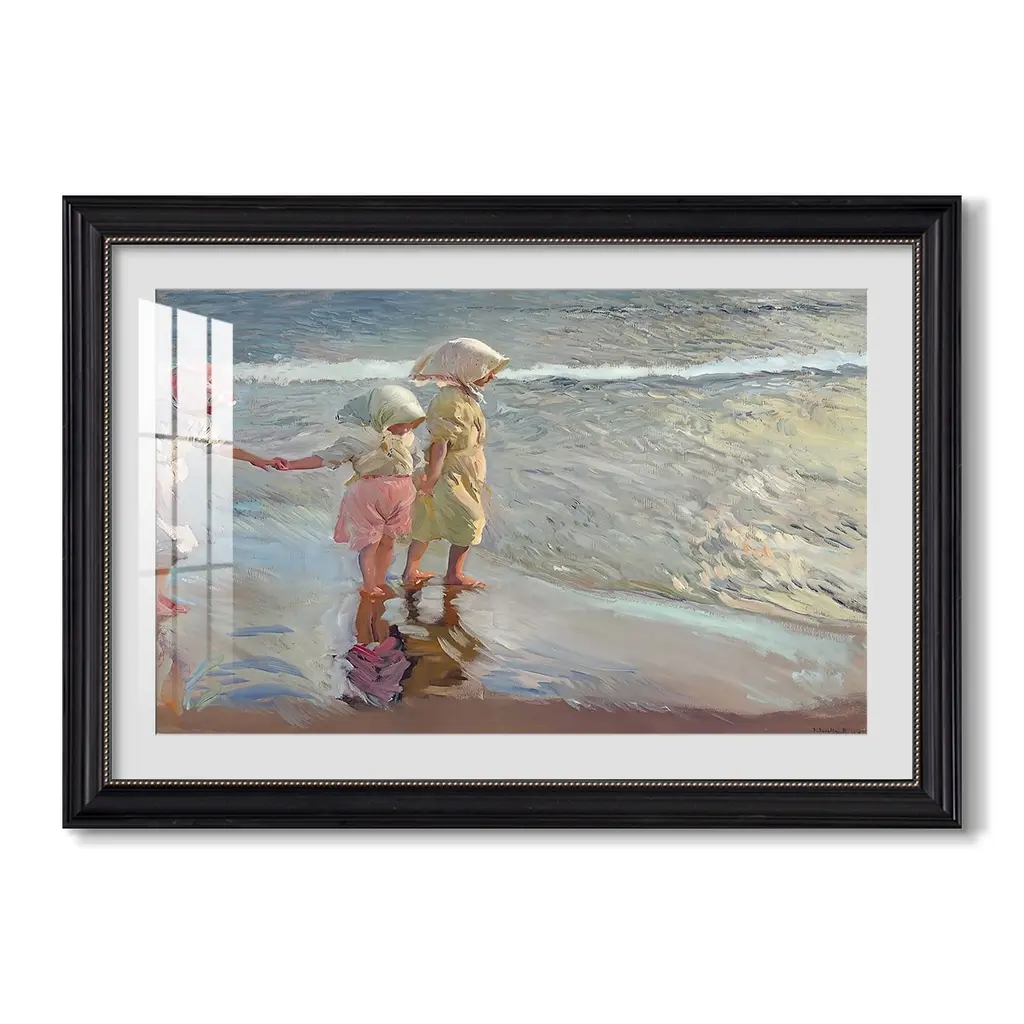
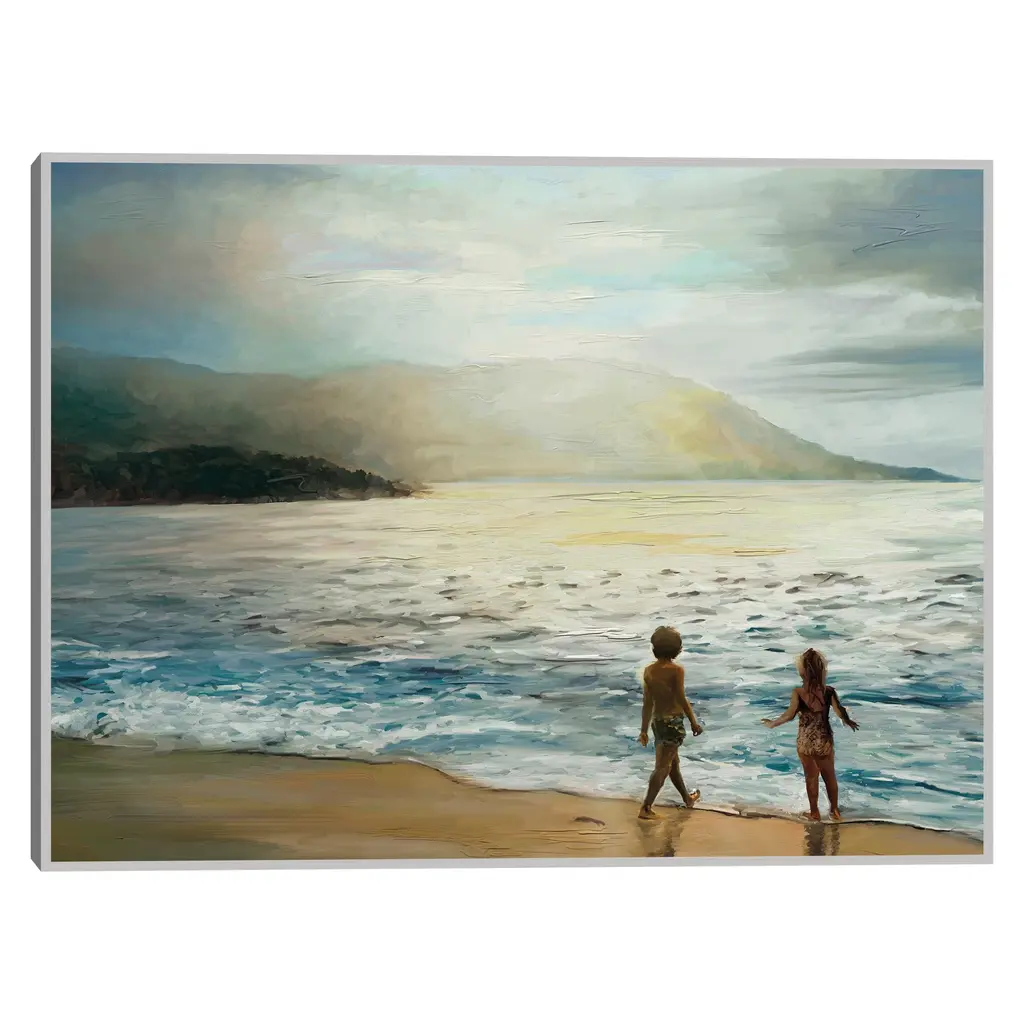
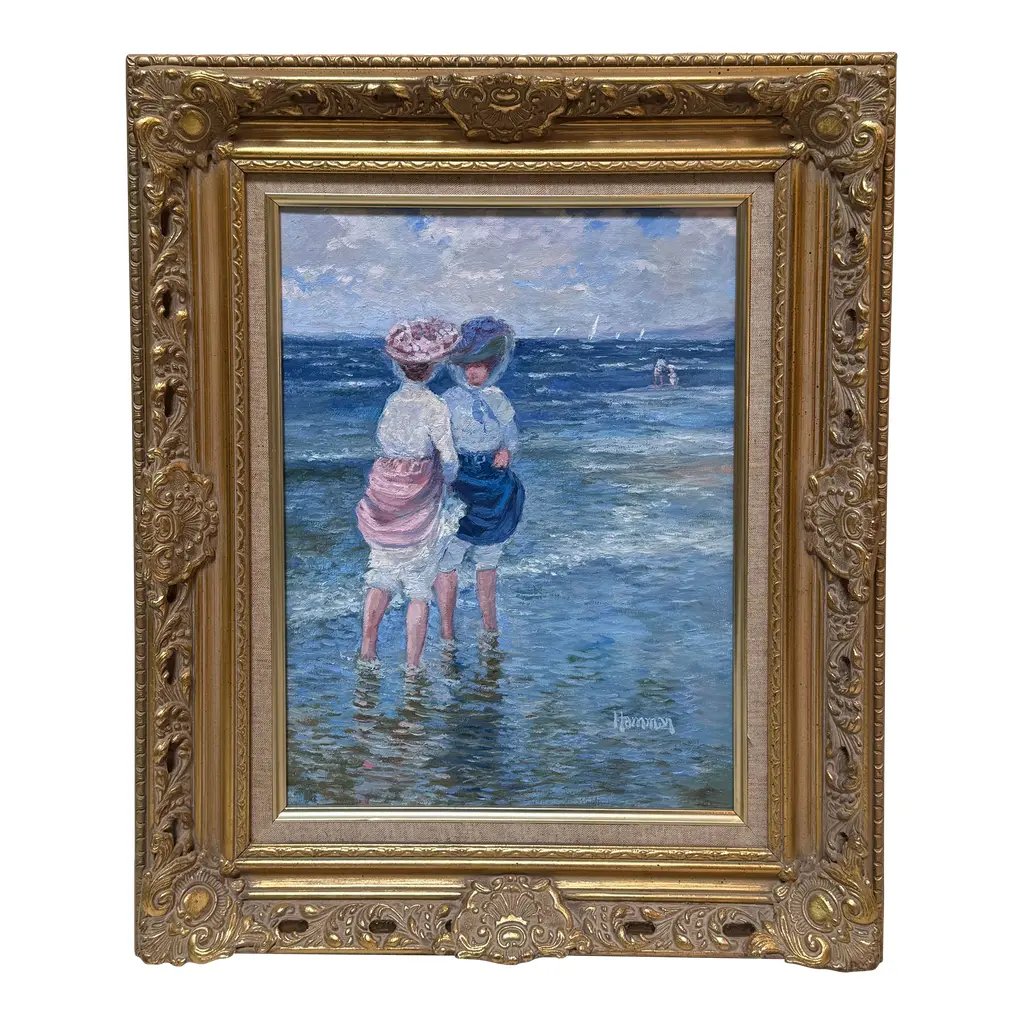
This is a fine art painting reproduction of “Brother and Sister” (produced in 1915), after famed painter, Edward Henry Potthast (1957-1927). The artist’s signature reads “Pauleen,” likely an art student/enthusiast of a Parisian, Spanish or an American art school. Missing from the reproduction painting are further figures on the beach located on the top left corner of the original artwork. This reproduction appears to have been produced later in the Mid-Century than during the time of Potthast’s Impressionism. The artwork is presented in a simple, gold-colored metal frame with glass (dimensions noted include the matting and frame). This painting is a reproduction or an homage to the style and subject matter of American Impressionist painter, Edward Henry Potthast. Such works are often created by artists studying or appreciating the original master's technique and vision. The original painting from which this is derived is housed at the Cincinnati Art Museum (donated by Mr. & Mrs. Walter J. Wichgar). Little background information can be found on the reproduction artist (“Pauleen”) at this time. This piece is intentionally zoomed in to focus on the primary two subjects. It is rather melancholy to have left out likely the pair’s mother and their younger baby sibling in her arms. However, by focusing on the two older siblings, the artist allows their shared sibling story to be told. To me, this piece represents friendship, caring and watching over one another. It is charming, understated, and serene. Provenance: Private Estate (La Jolla, CA) The original painting reproduced and depicted in this piece is by Edward Henry Potthast, who typically painted with oil on canvas (famed for his magnificent beach scenes). This fine art reproduction is on produced with acrylic paint on fine art paper. Combined with gentle pastel shoreline scenery, this painting almost has the appeal of a watercolor, but it is clearly done in acrylic paint. The underneath paper appears to be of a light coral color and the paint is faint, yet highly effective. The subjects are overall well-portrayed and the scene is delightful. It is a good representation. Edward Henry Potthast (June 10, 1857 – March 9, 1927) was an American Impressionist painter. He is known for his paintings of people at leisure in Central Park, and on the beaches of New York and New England. Potthast's love for beach scenes became prominent after his conversion to Impressionism in the late 1880s. Following his move to New York in 1895, he specialized in capturing the tranquility of people enjoying holidays at the beach and rocky harbor views. Edward Potthast was among the best of the American Impressionist painters. Although he adopted the Impressionist style somewhat late in his career, he was nevertheless extremely popular and successful in his own lifetime. Potthast is known as a painter who celebrated the relaxed and cheerful world of the seaside holiday and summer afternoons in New York's Central Park. His paintings avoid complex emotions and instead depict happy carefree moments. Whether he shows us families playing in the surf or friends picnicking under the shade of a great tree, it is always with the sun shining and the scenery beautiful. Potthast presents this lovely world to us with a masterful flourish of brushwork that captures the essence of the day. The Early Years Edward Henry Potthast was born on June 10, 1857 in Cincinnati, Ohio. At a young age he showed a natural inclination toward art, filling the blank pages and margins of his school books with drawings. By the age of sixteen, he had begun an apprenticeship with a large Cincinnati lithographic firm. The craft served him well. He was able to support himself comfortably as a lithographer until the age of 39 when he moved to New York City to embark on a career as a full-time painter. During the twenty or so years that Potthast worked as a lithographer, he was studying painting. Although he attended night classes at the local academy, his most important training came from two trips he made to Europe. He studied in Munich, Germany from 1882 - 1885. The Munich School was very popular with young artists from Cincinnati as that area of Ohio had been settled by German immigrants. The style of the Munich School was characterized by painterly brushwork, subdued color and bold lights and darks. These qualities remained in Potthast's work until he found his own style in the Impressionist vein. Establishing A Career In 1887, Potthast made his second trip to Europe. Initially returning to Munich, he moved to Paris before fatefully settling in Barbizon, a small town in the forest of Fontainebleau, the home of the great French school of plein-air landscape painters and a place where many of the French Impressionists had worked in their youth. Potthast again returned to his home town of Cincinnati and his job at the lithographers. Community respect and encouragement for his artwork grew, culminating in the purchase of one of his paintings for the Cincinnati Museum of Art. This appears to have been the turning point for him, pushing him toward becoming a full-time artist. In 1895, he moved to New York City to open a studio. Upon his arrival, he began working as a freelance illustrator for such popular magazines as Scribner's and Century to support his artistic career. Within a few years, Edward Potthast was firmly established in the New York art world. He won numerous prizes, was included in all the important annual exhibitions and was a member of many art associations; such as the National Academy of Design, the Society of American Artists and the Salamgundi Club. The New York Studio By 1908 he had a studio in the Gainsborough Building overlooking Central Park. This was an ideal location for Potthast. The activity of Central Park, - people on family outings and children playing, - became a favorite subject of the artist. When not painting in Central Park or on summer trips to New England, Potthast would pack up his paints and canvases and go to the beaches of Long Island. The paintings that resulted from his Long Island forays are his signature works. His full-blown Impressionist style seems to have been released by the glare of the sun and the sand. The colors at the shore are brilliant and fresh; the shadows are filled with reflected light. The natural effect easily lent itself to an Impressionist treatment. The motion of the surf, children playing, as well as the casual poses of people on holiday demanded from the artist a quick animated brushstroke. The Final Years From seeing Edward Potthast's paintings, we may be correct in assuming that his life was a happy one. He was well thought of by his friends; his achievement in painting was recognized during his lifetime and respected by his peers; and he had the good fortune to be able to work until the end of his life. On March 9, 1927 at the age of 69, he died of a heart attack in his studio. According to reports of the time, Edward H. Potthast was found surrounded by some 500 of his paintings. Yes, Potthast's beach scenes, in particular, are regarded as a solid investment in the art market. Their serene and timeless quality, combined with the artist's significant contribution to American Impressionism, contributes to the appeal and value of his work. Edward Henry Potthast's prices have increased dramatically over the last ten years. Many paintings by Edward Henry Potthast have sold privately at similar levels and even higher. The following (via web.archives.org) list are the top auction prices for Edward Henry Potthast's paintings. This list may be updated as new records become available. Beach at Far Rockaway Oil on Canvas 24" x 30" $1,384,000 05/23/2007 The Water's Fine Oil on Canvas 30" x 40" $1,384,000 05/24/2007 At the Beach Oil on Canvas 24" x 30" $1,161,000 05/21/2008 A Summer Afternoon Oil on Canvas 24" x 30" $825,000 05/21/2008 Springtime of Life Oil on Canvas 24" x 30" $540,000 05/23/2007 A Summer's Night Oil on Board 15.7" x 19.7" $484,000 12/01/2004 Children in Central Park Oil on Canvas 20" x 24.2" $481,000 11/29/2007 Looking out to Seas Oil on Canvas 30" x 40" $464,5000 05/21/1998 Playing in the Surf Oil on Canvas 24" x 30" $458,500 12/04/2008 Beach Scene Oil on Canvas 16.2" x 20.2" $409,000 11/29/2007
Similar products