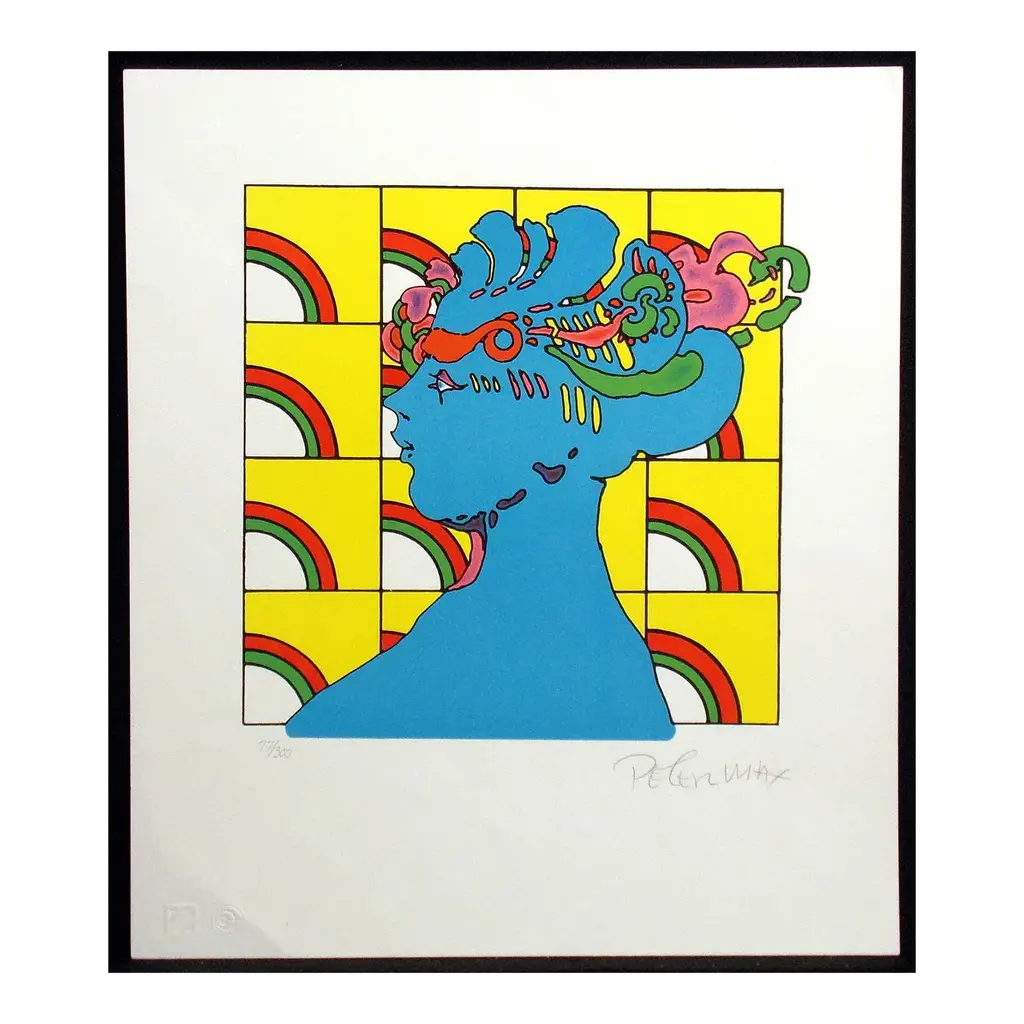
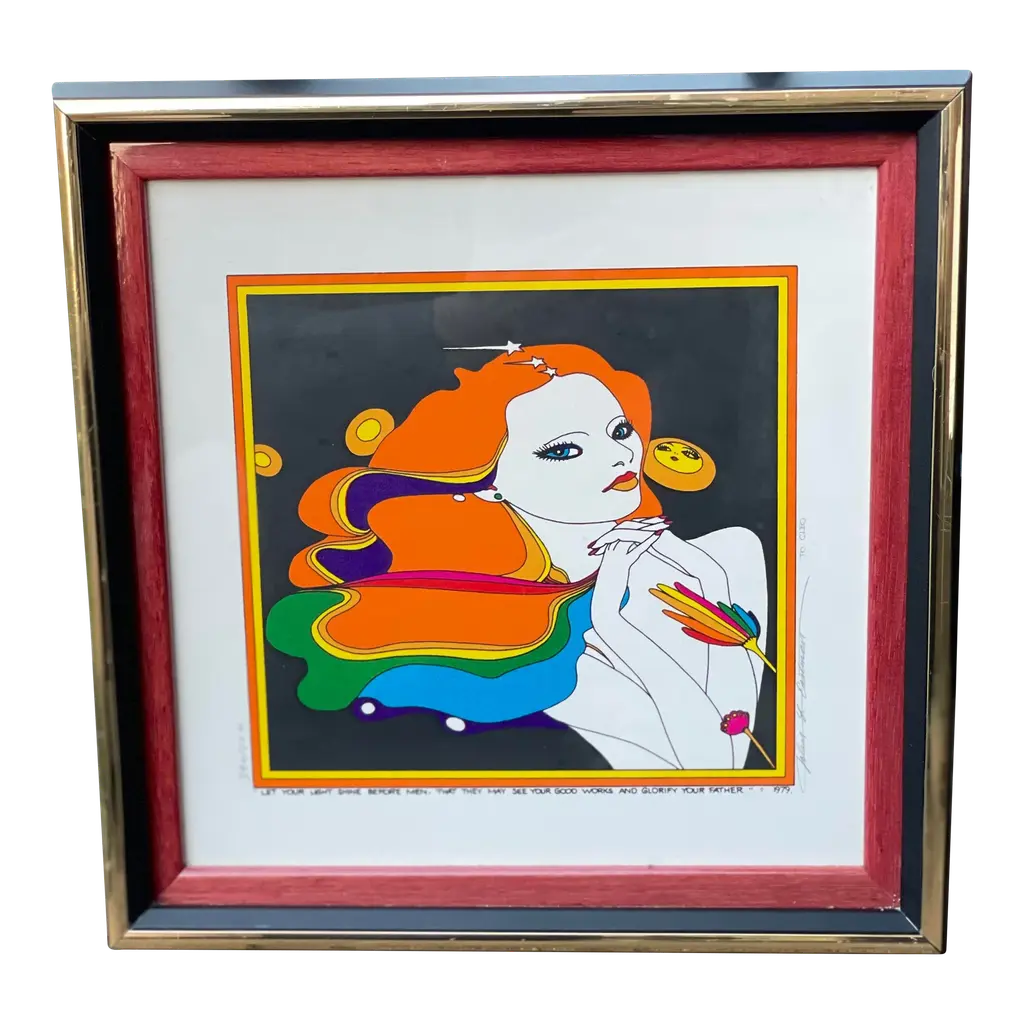
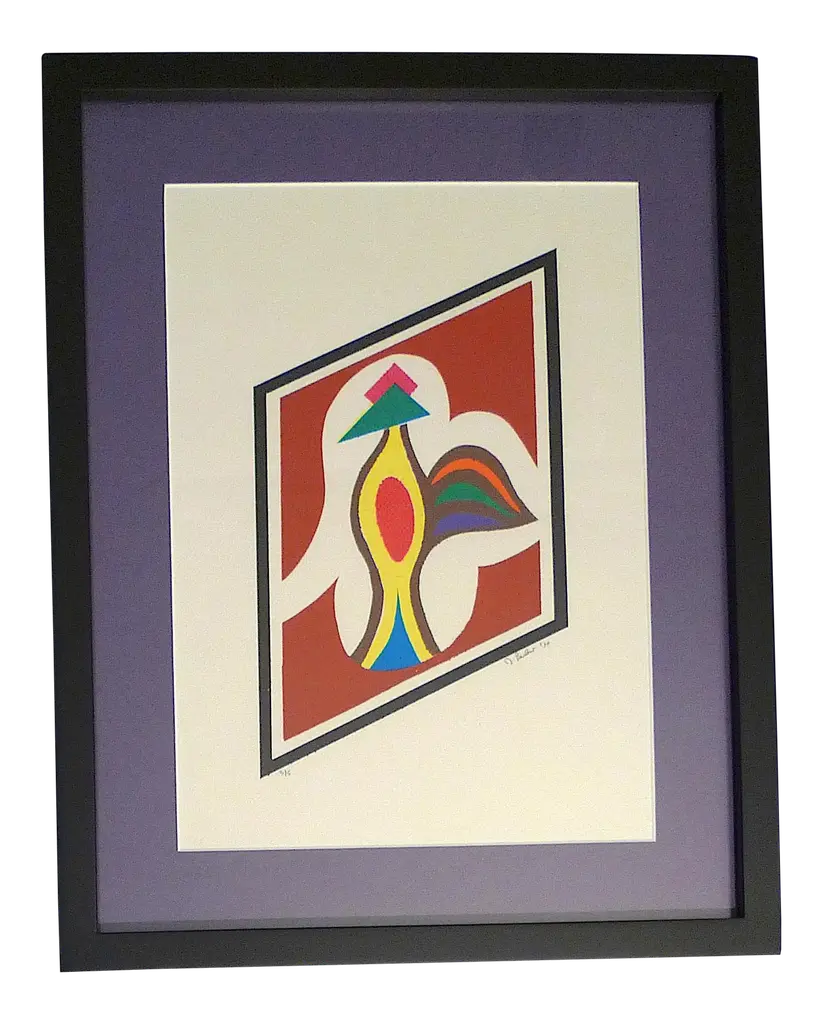
"Lady On Pattern" by Peter Max Hand signed by the artist Limited Edition Vintage Lithograph Framed Size: 21-1/2" x 20-1/2" Edition Number: 76/300 Year: 1976 Certificate of Authenticity and appraisal is included 100 percent guarantee of authenticity Condition of the artwork and frame is Excellent. Newer frame made with archival materials. Peter Max 1937- From visionary pop artist of the 1960s, to master of dynamic neo Expressionism, Peter Max and his vibrant colors have become part of the fabric of contemporary American culture. European-born and raised in Shanghai, Tibet, South Africa, Israel and France, Max's pan-cultural background has made his work rich in artistic diversity. From the calligraphy of the Buddhist monks to the Classical statuary in Parisian gardens, Max was inspired by the elegance of the line which gives birth to form. Ranging from American comic book art through the passionate brushstrokes of the European Expressionists and Fauves, Max learned about the magic of color and texture when applied with spontaneity; the brush being guided by the heart. Serigraph definition: A stencil method of printmaking in which an image is imposed on a screen of silk or other fine mesh, with blank areas coated with an impermeable substance, and ink is forced through the mesh onto the printing surface. Also called silkscreen process and screen-printing. A serigraph is a print made by this method. The word Serigraph is a combination of two Greek words, seicos, meaning silk, and graphos, meaning writing. Silkscreen printing and other stencil-based printing methods are the oldest forms of printmaking. Printmaking is a process for producing editions (multiple originals) of artwork. Painting, on the other hand, is a process for producing a single original piece of artwork. In printmaking, each print in an edition is considered an original work of art, not a copy. Silkscreen printing can be traced as far back as 9000 BC, when stencils were used to decorate Egyptian tombs and Greek mosaics. From 221-618 AD stencils were used in China for production of images of Buddha. Japanese artists turned screen printing into a complex art by developing an intricate process wherein a piece of silk was stretched across a frame to serve as the carrier of hand cut stencils. Silkscreen printing found its way to the west in the 15th century. The original material used in screen printing was silk, hence the name Silkscreen printing. Today polyester is the fabric
Similar products