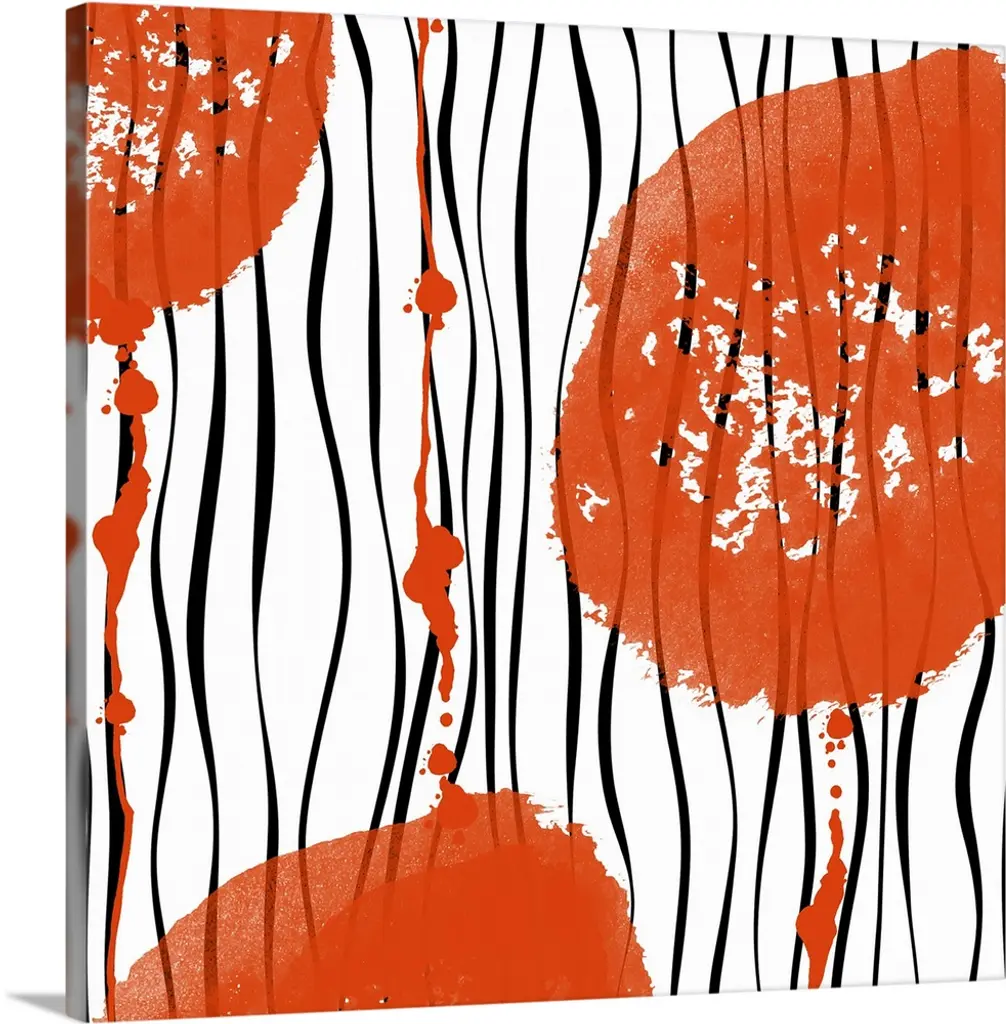
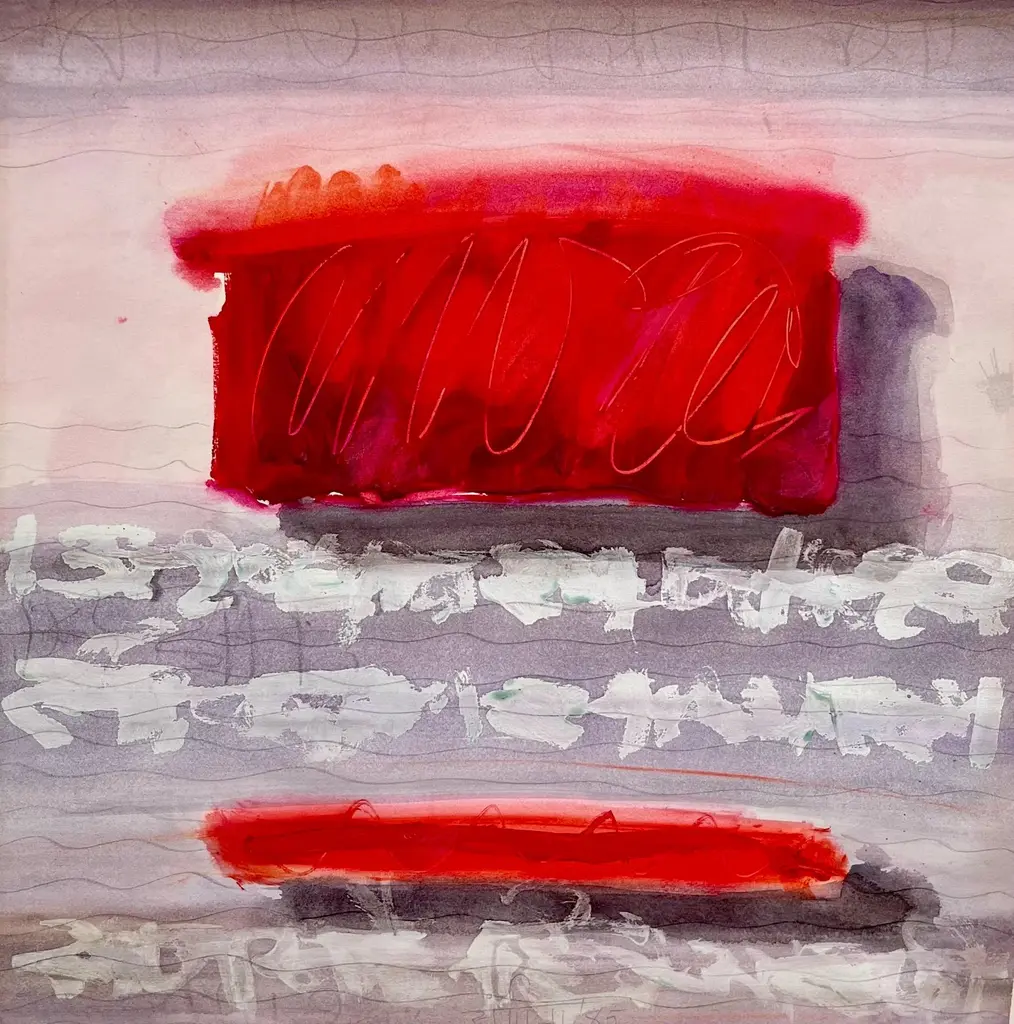
Red Shoes Robert Sperry, c. 1987 In Red Shoes, Robert Sperry presents a deceptively spare composition that reveals increasing complexity the longer it is observed. Two luminous red circular forms sit near the upper portion of the composition, immediately establishing themselves as the visual center of gravity. Their intense color stands in stark contrast to the otherwise restrained palette of black and white, drawing the viewer’s attention with an almost visceral immediacy. Yet these forms are not pristine or perfectly bounded; their edges bleed softly into the pulp surface, suggesting a process in which pigment and paper interact rather than simply overlay one another. Closer inspection reveals darker ruptures within each red form, where black pigment interrupts the otherwise saturated color. These openings create the impression that the circles are not solid shapes but surfaces that have been punctured or eroded. The surrounding halos of disrupted pulp paper add to this effect, giving the forms a sense of depth and material disturbance. Rather than depicting literal objects, Sperry constructs an image that feels simultaneously symbolic and physical—forms that appear to emerge from, and partially dissolve back into, the paper itself. Anchoring the composition below, a series of broad horizontal black bands stretch across the page. Their irregular edges and slight wavering reinforce the tactile quality of the pulp surface while establishing a rhythmic counterpoint to the circular forms above. The stripes function visually as both grounding and structure, creating a stable field against which the vibrant red shapes seem to hover. Throughout the work, Sperry allows the inherent qualities of the material—absorption, pooling, and texture—to shape the final image. The layered pulp paper becomes an active participant in the composition, producing subtle shifts in tone and surface that echo the artist’s broader interest in material presence. In Red Shoes, the interaction between color, structure, and surface results in a work that is at once minimal in form and rich in physical and visual complexity. -Jonathan Flike
Similar products