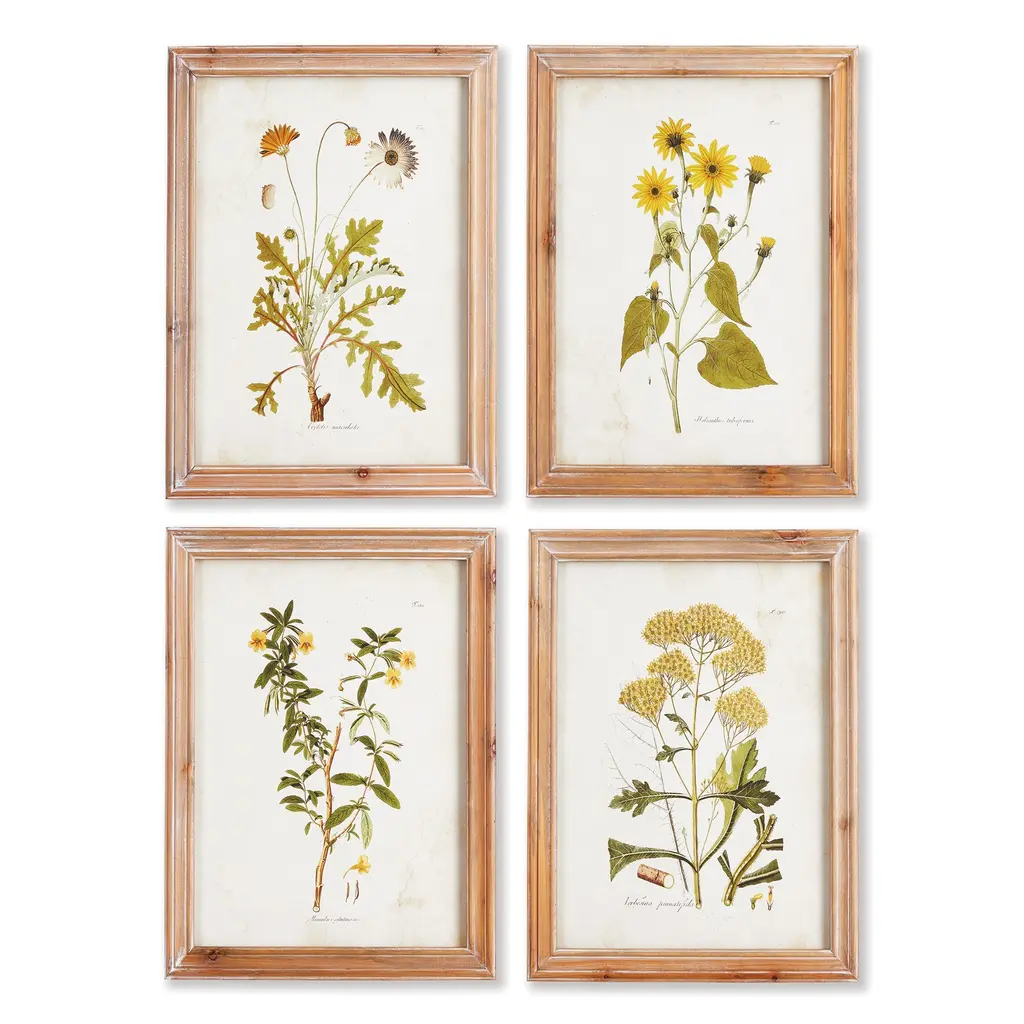
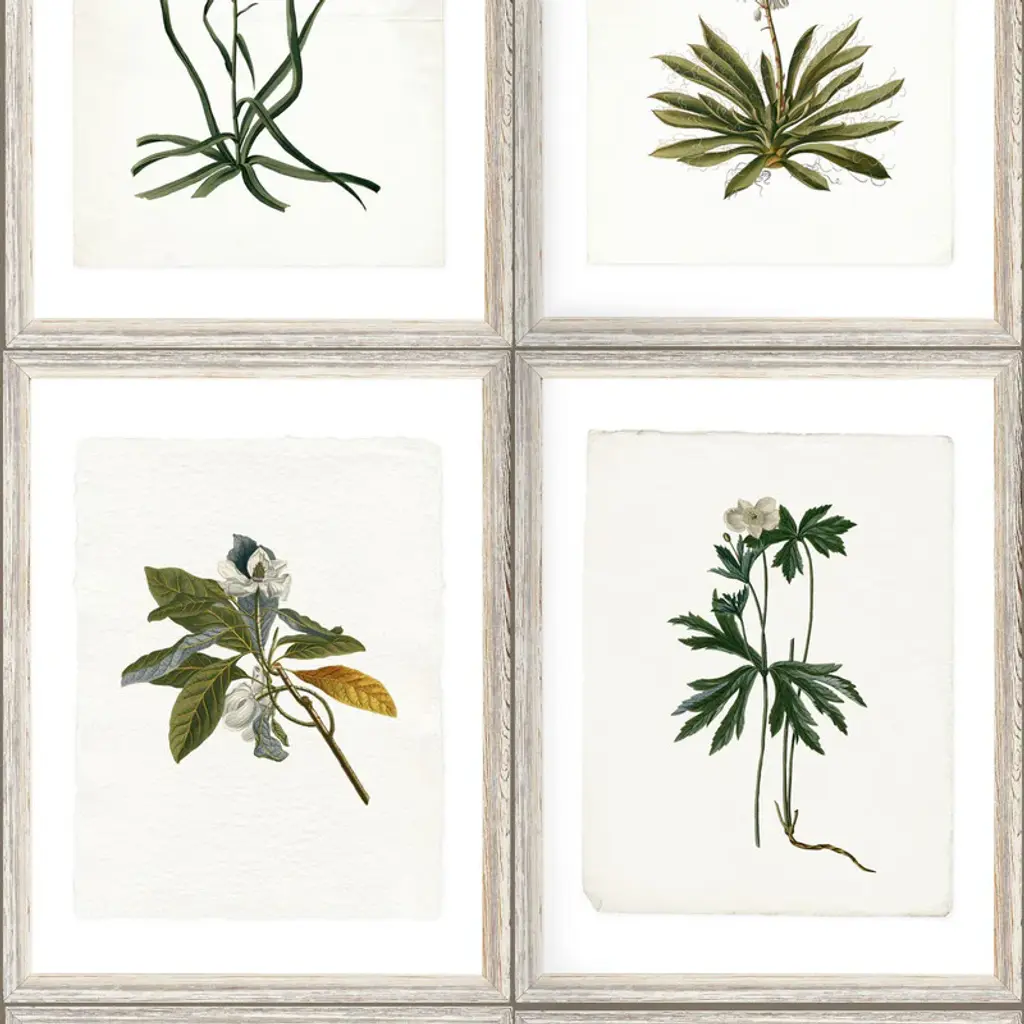
"Phytanthoza Iconographia": Set of Twelve Botanical Engravings by Johann Weinmann, Circa 1737–1745 A fine and historically significant set of twelve original copperplate engravings from Johann Wilhelm Weinmann's monumental botanical work, the Phytanthoza Iconographia (published Regensburg, 1737–1745). These plates are exemplary for their clarity and vibrancy, produced using an innovative early color-printing technique (a precursor to full color printing involving mezzotint) that was successfully utilized on the Continent for this major series. The engravings are printed in colors and meticulously finished by hand to ensure botanically accurate depictions. Each print is individually housed in a complementary decoupage botanical frame, which enhances the naturalistic presentation of the scientific illustrations. The plates bear the initials of the skilled artists and engravers—including notable contributors like Georg Dionysius Ehret, Johann Jakob Haid, and Bartholomeus Seutter—in the lower corners, testifying to the collaborative genius behind the project. The plate numbers are 21 (E) 62 (E), 95 (E), 160 (E), 168 (E),195 (S), 224 (S), 236 (S), 154 (E)240 (S), 561 (H) & 708 (S). E= Ehret, S= Seuter and H stands for Haid. Measurements: Framed Height: 19 1/4 inches (48.9 cm) Framed Width: 14 1/2 inches (36.8 cm) Frame Depth: 1 inch (2.54 cm) Historical Context: Johann Wilhelm Weinmann (1683–1741), a German apothecary and botanist, oversaw the creation of the Phytanthoza Iconographia, a landmark eight-volume work containing over 1,000 plates. Technical Innovation: This publication was one of the first on the Continent to successfully employ a sophisticated multi-plate color-printing technique. This method allowed for greater tonal variation and shading than traditional hand-colored black-and-white prints, providing superior realism. Artistic Legacy: The project is famous for launching the career of Georg Dionysius Ehret, who would become the most dominant botanical artist of the 18th century. The work became an influential reference, impacting subsequent botanical studies and inspiring works as far afield as Japanese medicinal texts. (Ref: NY11020-nnrrr)
Similar products