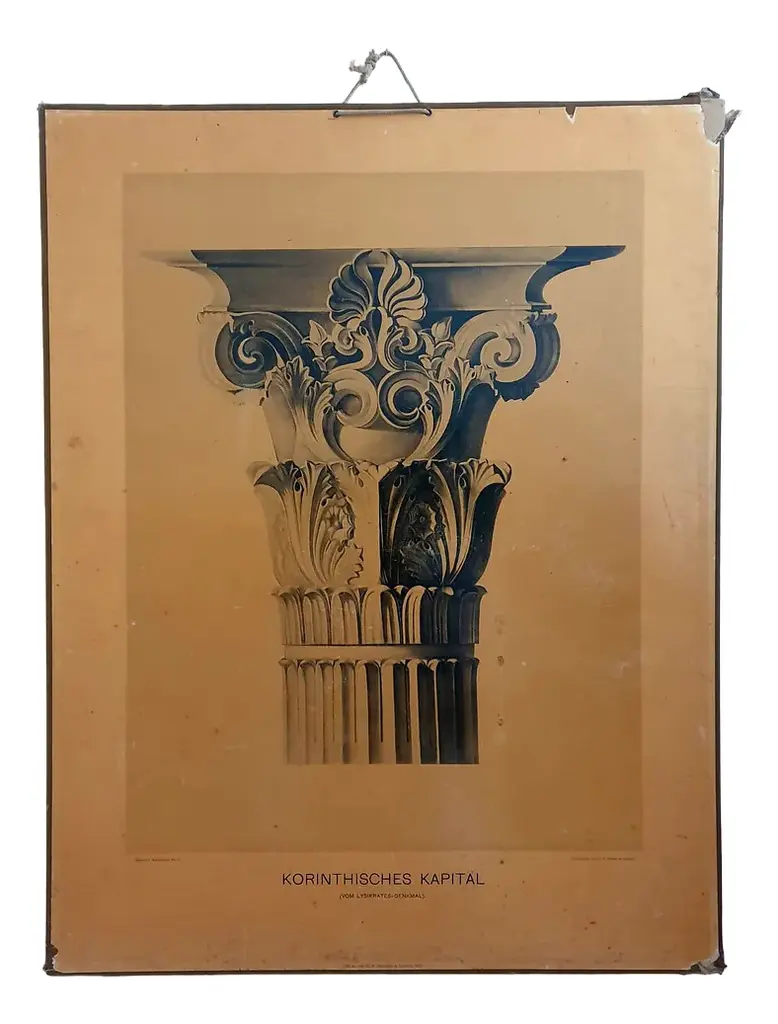
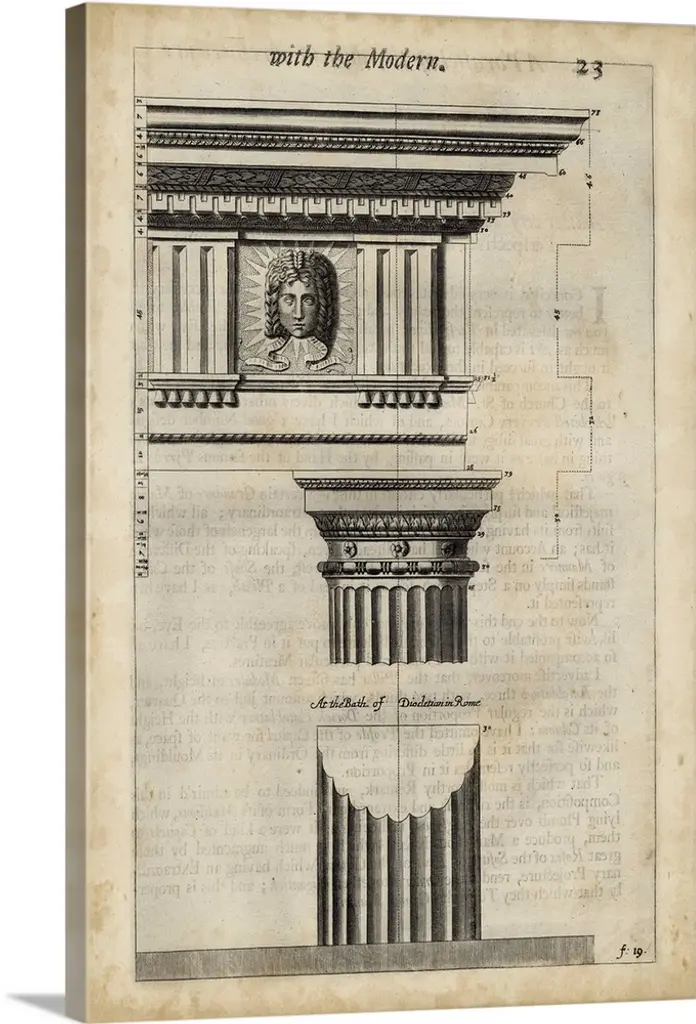
Collotype print, photographic reproduction Seemann’s wall pictures no. 72 Ionic order From the Mausoleum at Halicarnassus. Original drawing by Professor George Niemann Photography and collotype print by Sinsel & Co in Leipzig-Plagwitz Collotype is a gelatin-based photographic printing process invented by Alphonse Poitevin in 1855, used to print images in a wide range of tones without the need for halftone screens. The majority of collotypes were produced between the 1870s and 1920s. It was the first form of photolithography. It is a reproductive printmaking technique based on photography. Although collotype is now increasingly rare, in the early 20th century it was valued for its ability to reproduce the subtle delicacy of drawings and photographs. A photographic negative is projected onto a printing plate coated with light-sensitive gelatin, which hardens and becomes receptive to ink. Paper is then placed on top, and the image is printed using a press.
Similar products