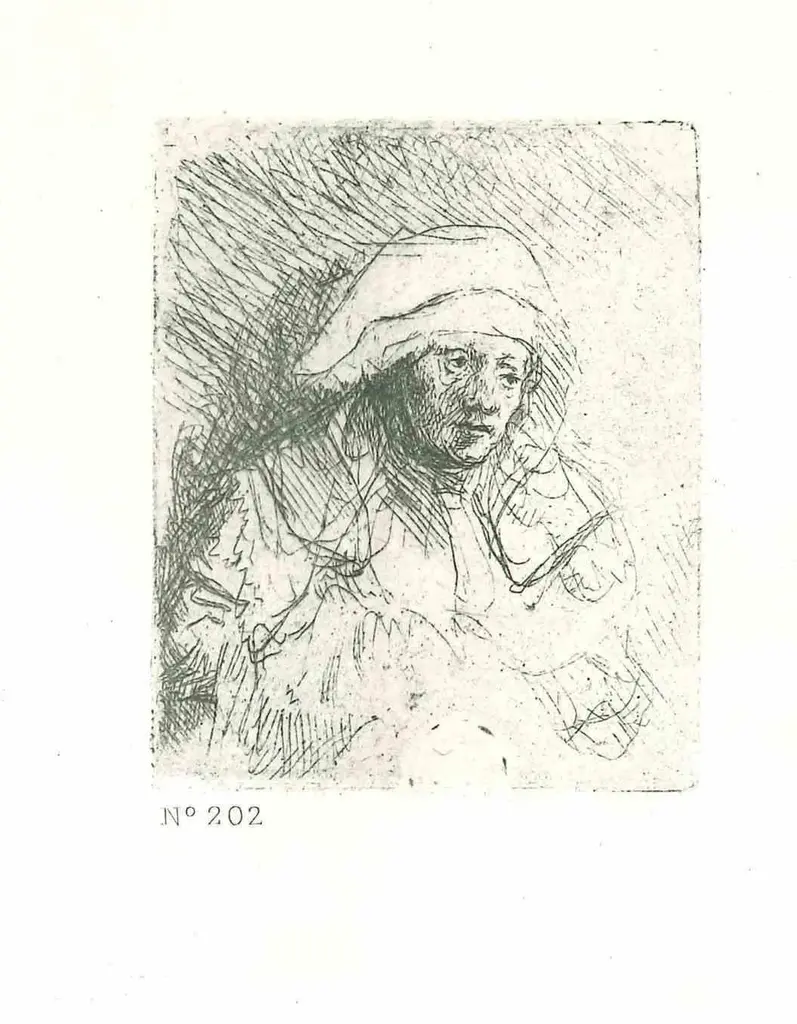
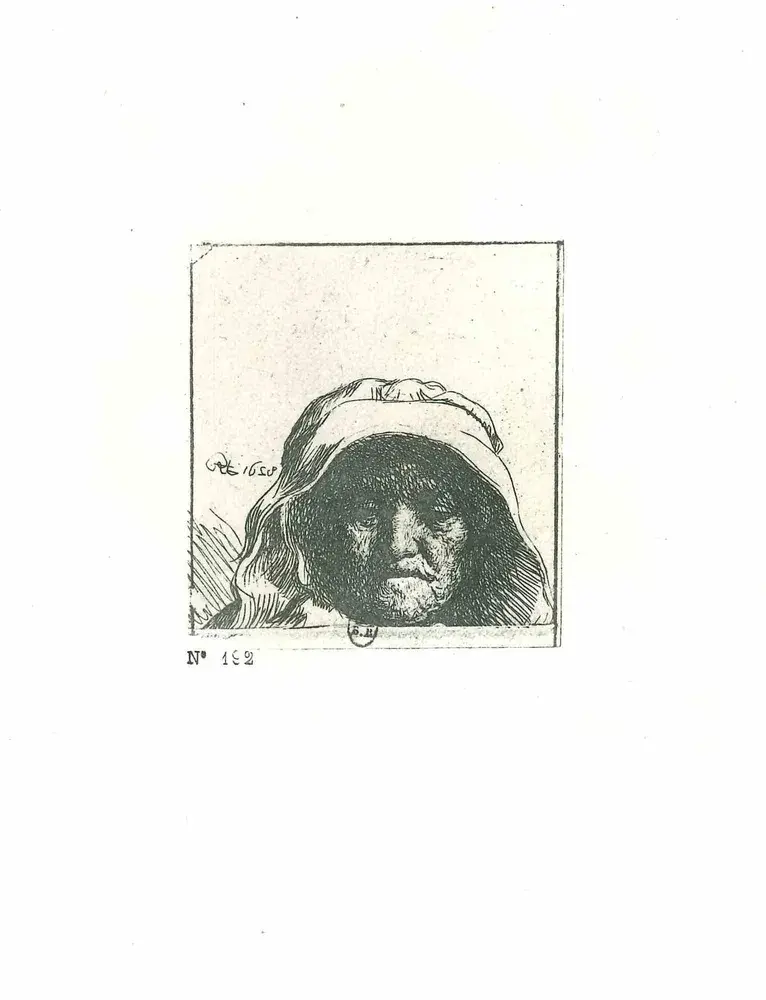
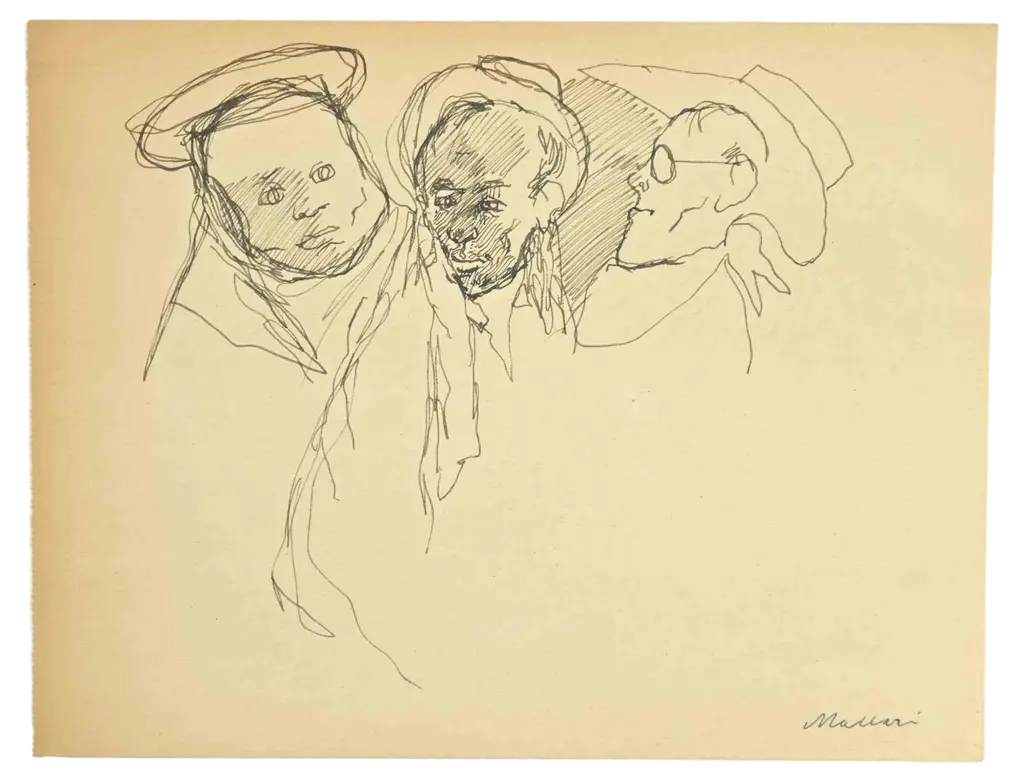
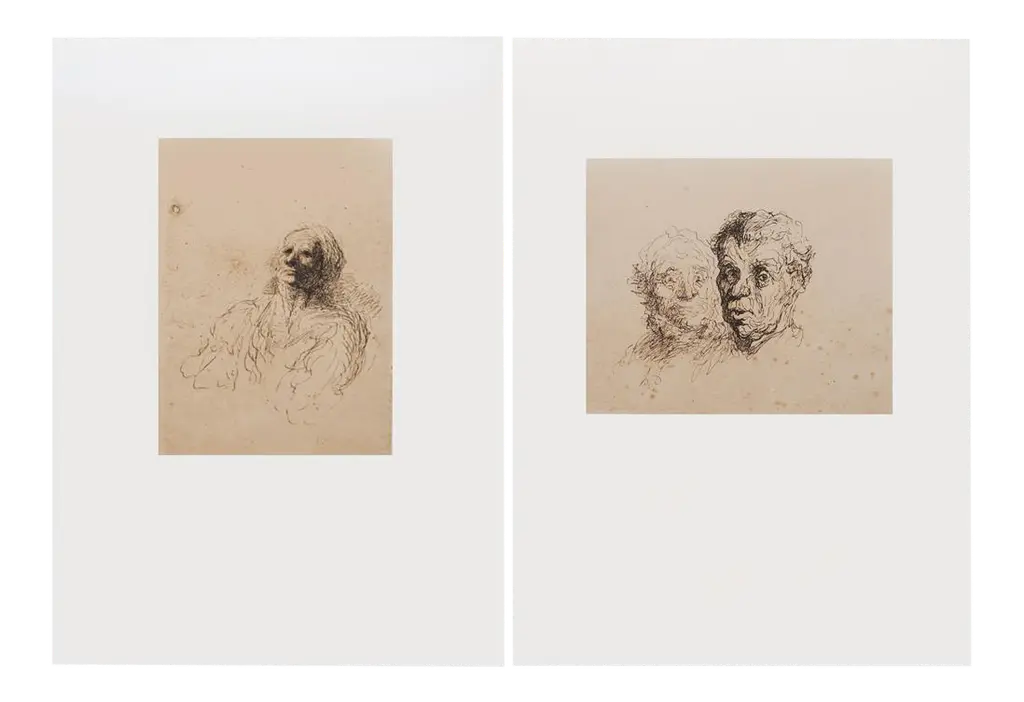
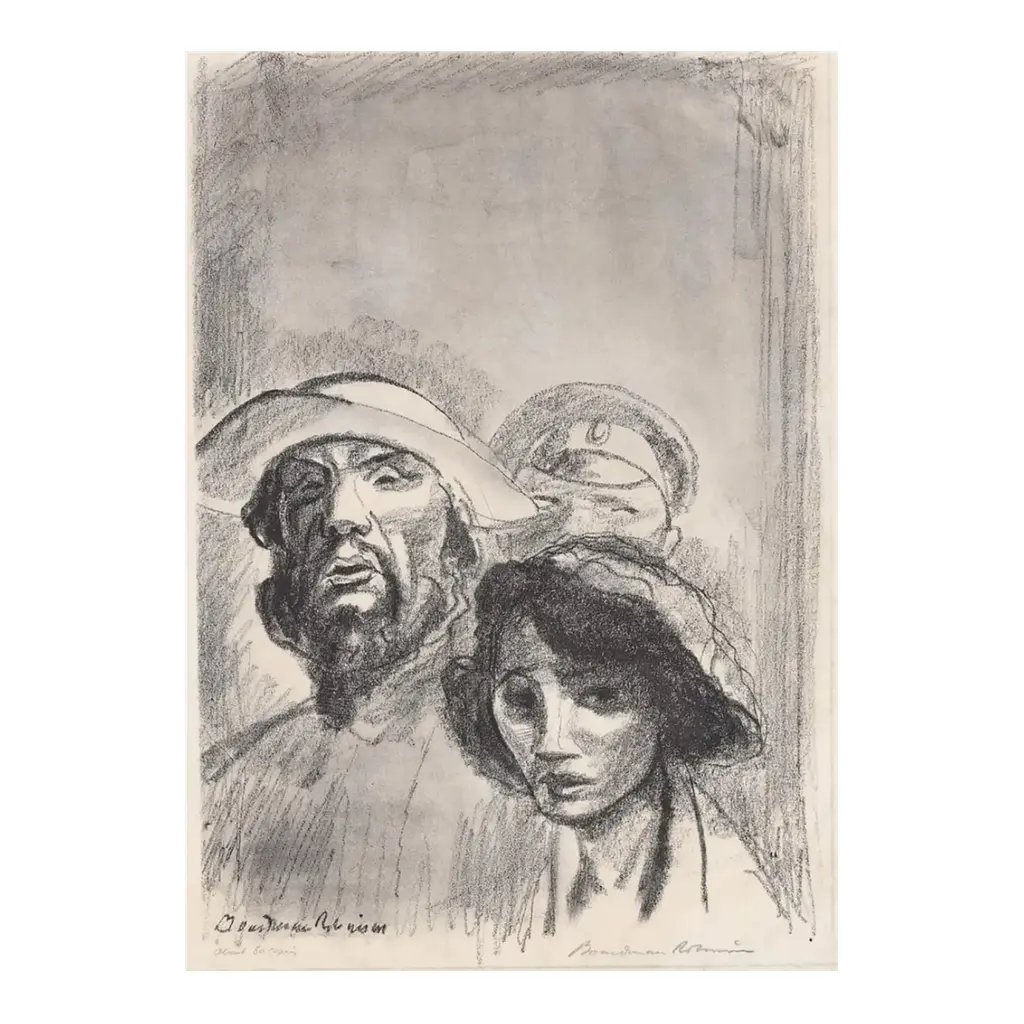
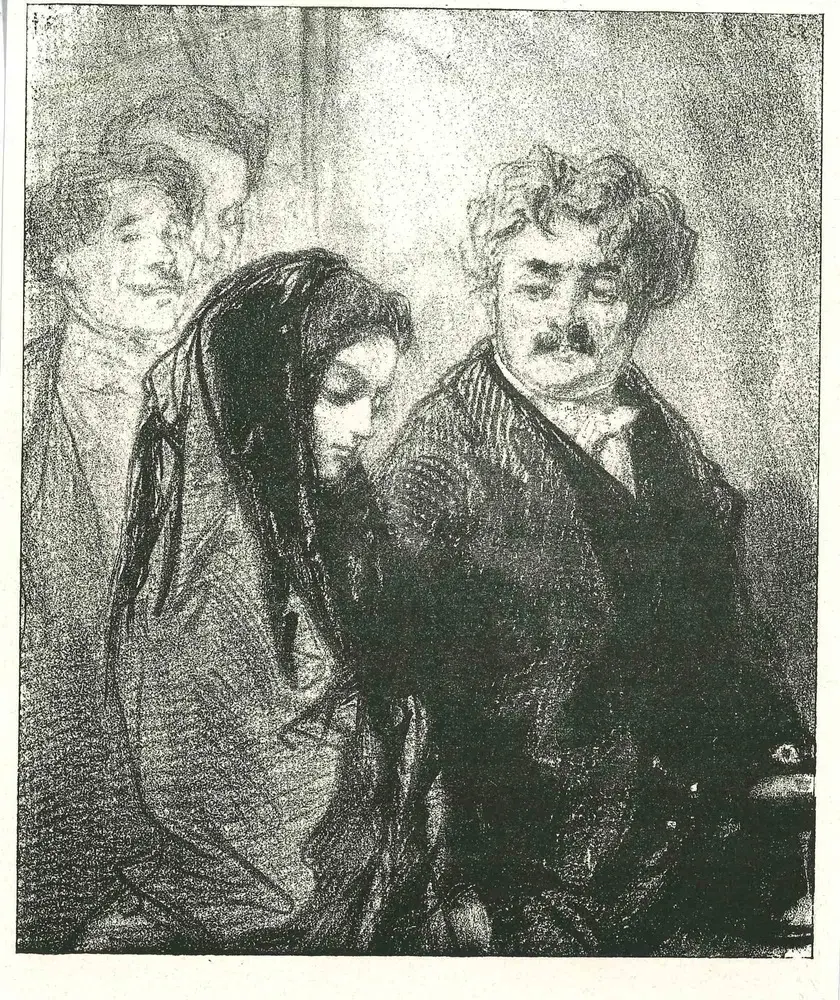
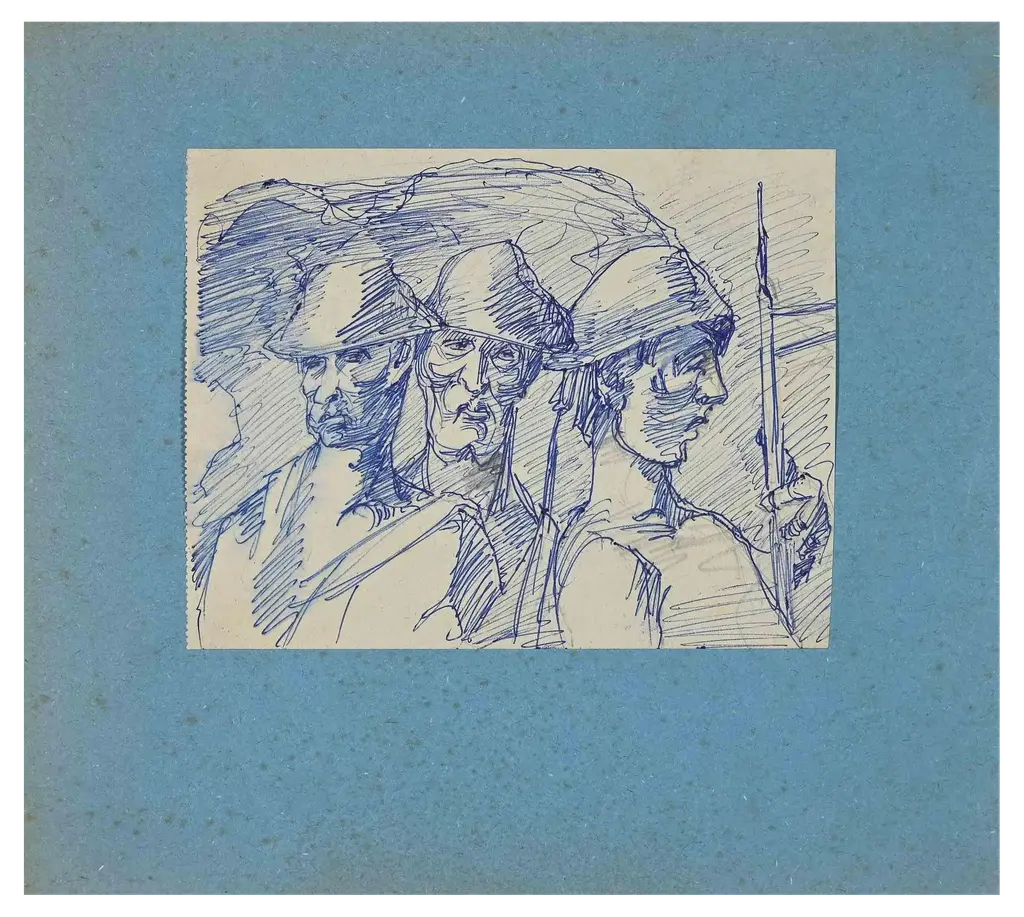
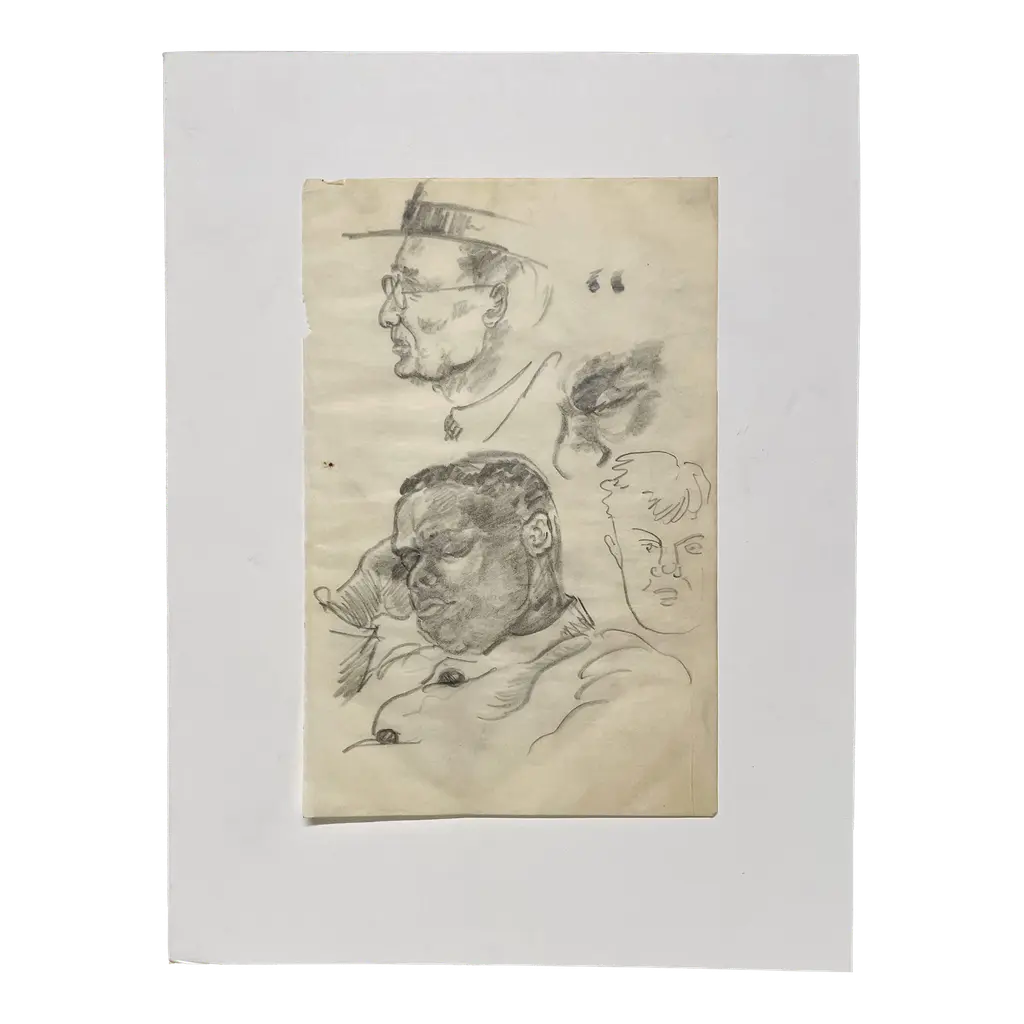
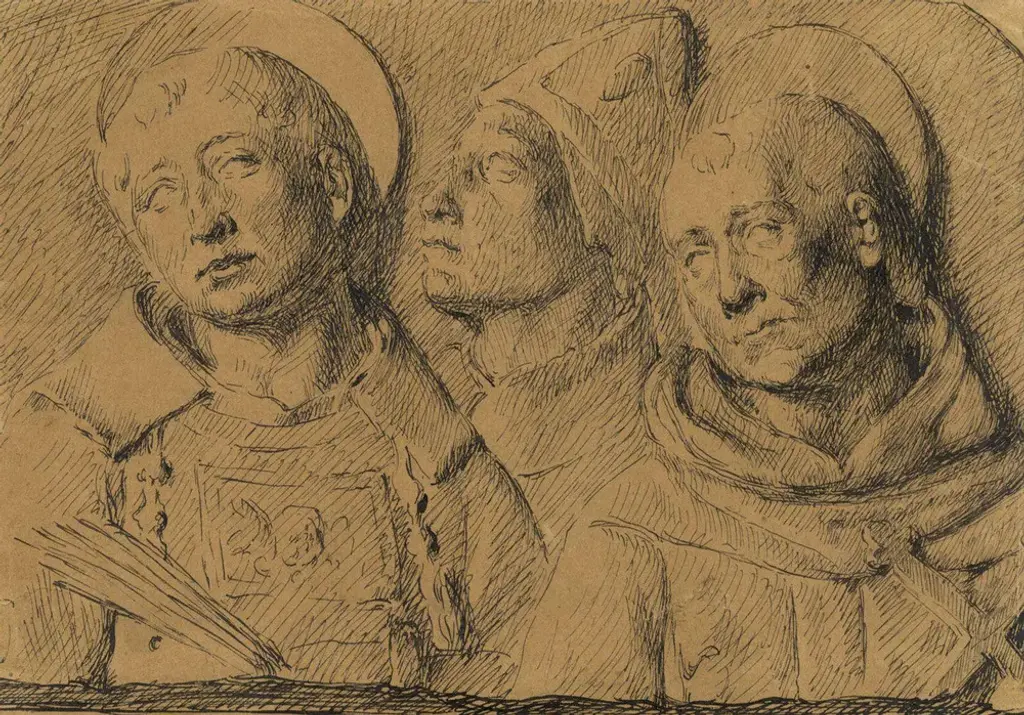
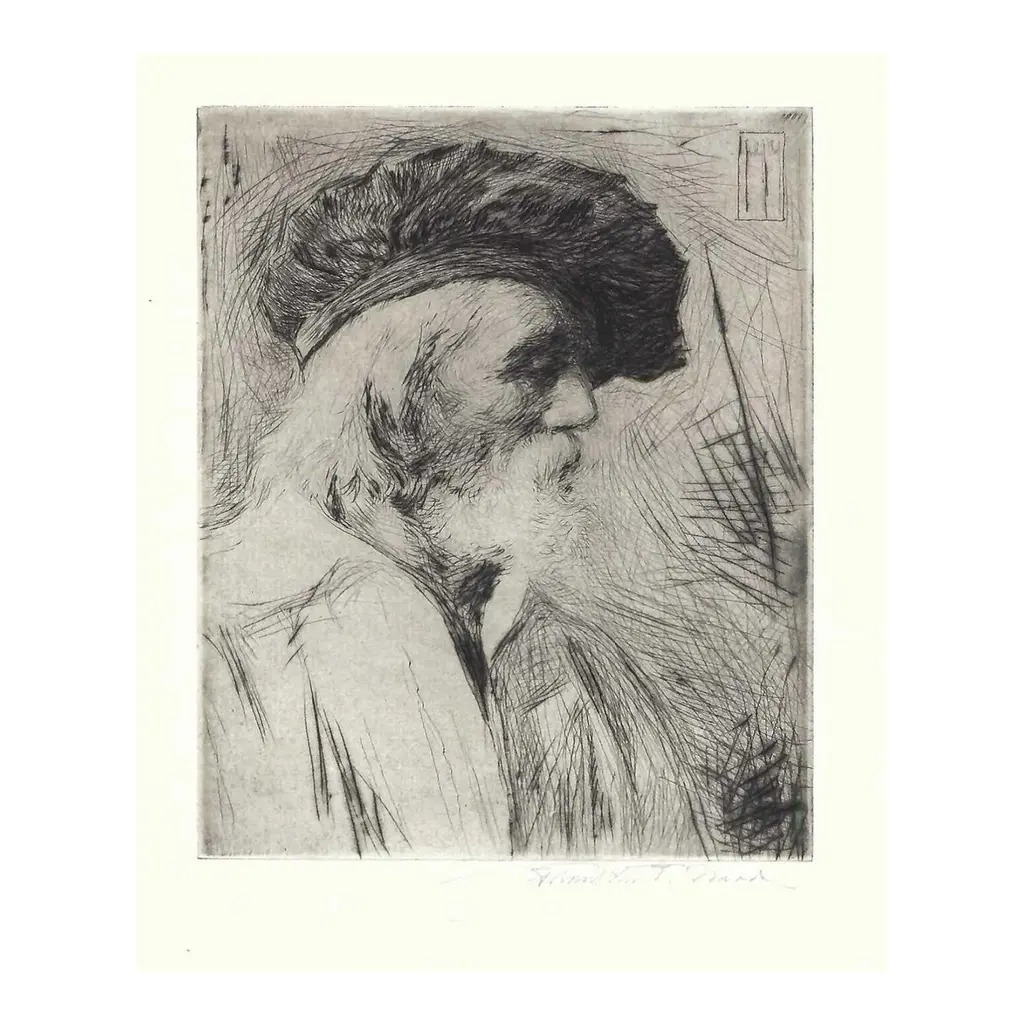
Study of Five Heads is a beautiful black and white etching with drypoint interventions on paper, realized at the end of XVIII century by the French artist Jean-Jacques de Boissieu (Lyon, 1736- 1810). Five study of heads of which two profiles (a female and a male) are lightly sketched with the drypoint technique, and we could appreciate the incredible draftsmanship. Instead, the bigger three portraits are very detailed and etched with a superb technique. Although the subjects are drawn in different scales and with different degrees of finish, each portrait has the dignity of a unique piece and the composition is very balanced. In particular on the lower margin at the center there is the portrait of ''Le Père Cotrot, Garçon Teinturier à Lyon''', an elderly man, toothless and with a large-nosed, slightly turned to left, with a hat and unbuttoned jacket over waistcoat, shows all his wrinkles in a very realistic way. Signed on plate on lower right margin “De Boissieu”. This old master’s original print with fresh impressions, is in very good conditions, except for a usual yellowing of the paper above all on the edges and some signs of the time and light foxing along the margins, do not affect the image. Jean-Jacques de Boissieu (Lyon,1736 –1810) Jean-Jacques de Boissieu was a French artist studied at the École de Dessin in Lyon, but he was mostly self-taught. His first prints were realized between 1758–64. When he went to Italy in the retinue of the ambassador and Duc de la Rochefoucauld d’Enville, he had the lifechanging encounter: he met Voltaire and he entered in the world of luminaries, he had the opportunity of realizing some plates for the Diderot-d’Alembert’s Encyclopèdie. Then he continued to produce prints in Lyon, Boissieu made many etchings of the Roman and Dutch countryside, as well as the French countryside around Lyon, which earned him a reputation as the last representative of the older etching tradition. This artwork is shipped from Italy. Under existing legislation, any artwork in Italy created over 70 years ago by an artist who has died requires a licence for export regardless of the work’s market price. The shipping may require additional handling days to require the licence according to the final destination of the artwork.
Similar products