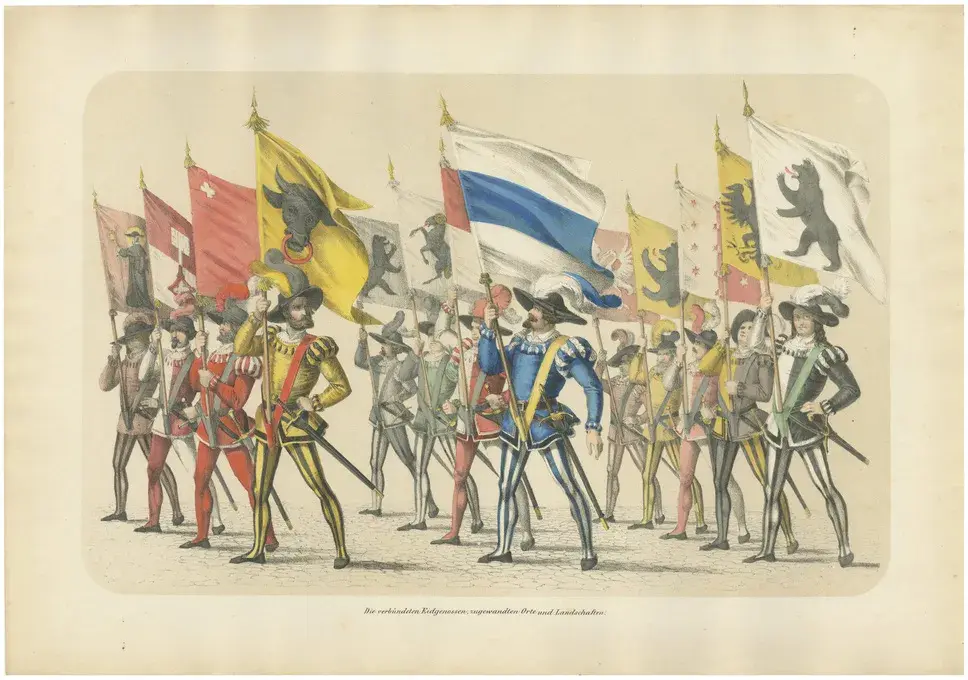
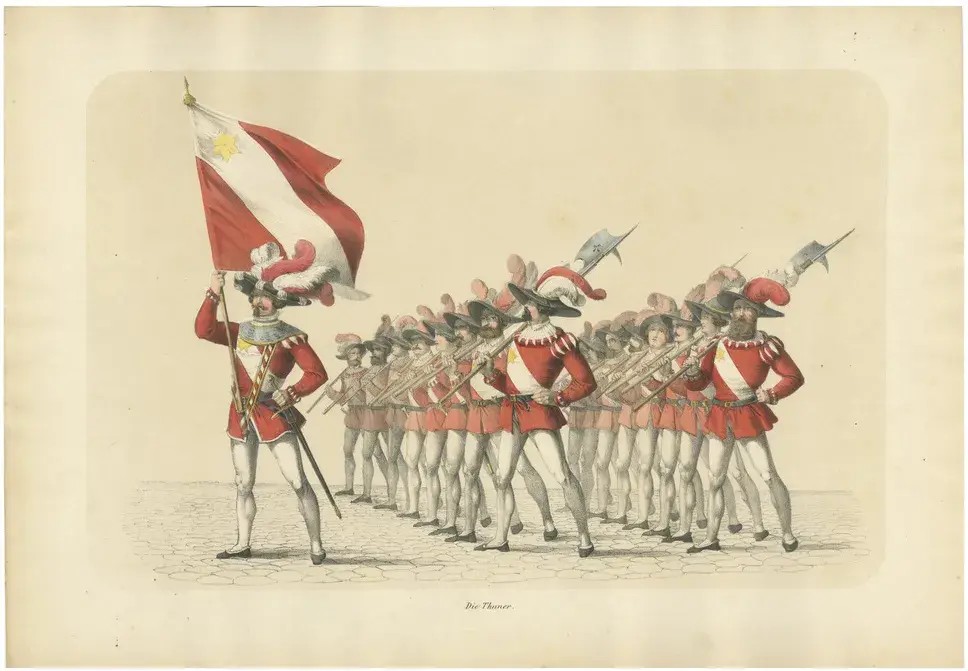
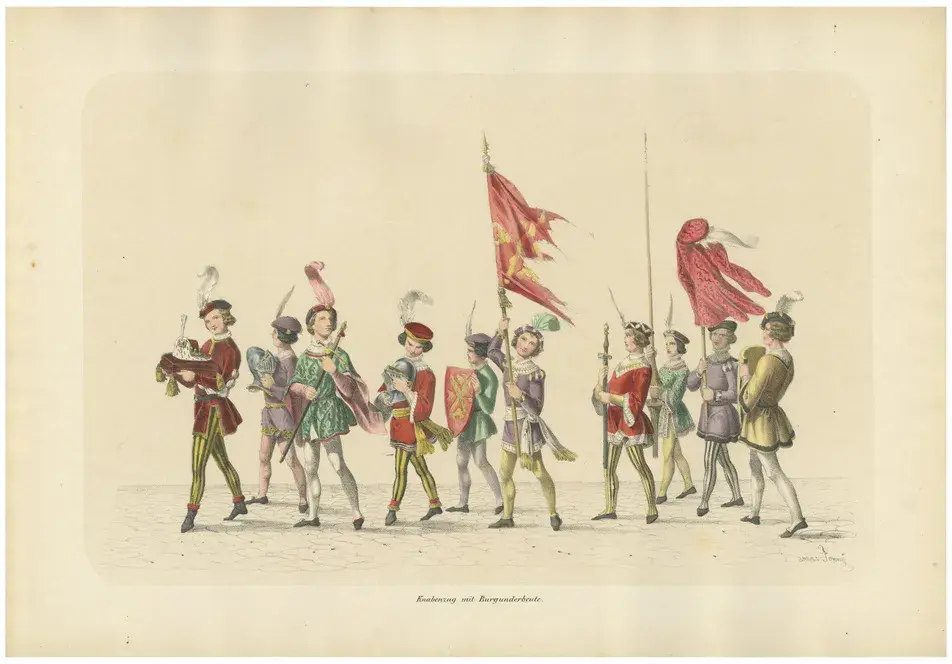
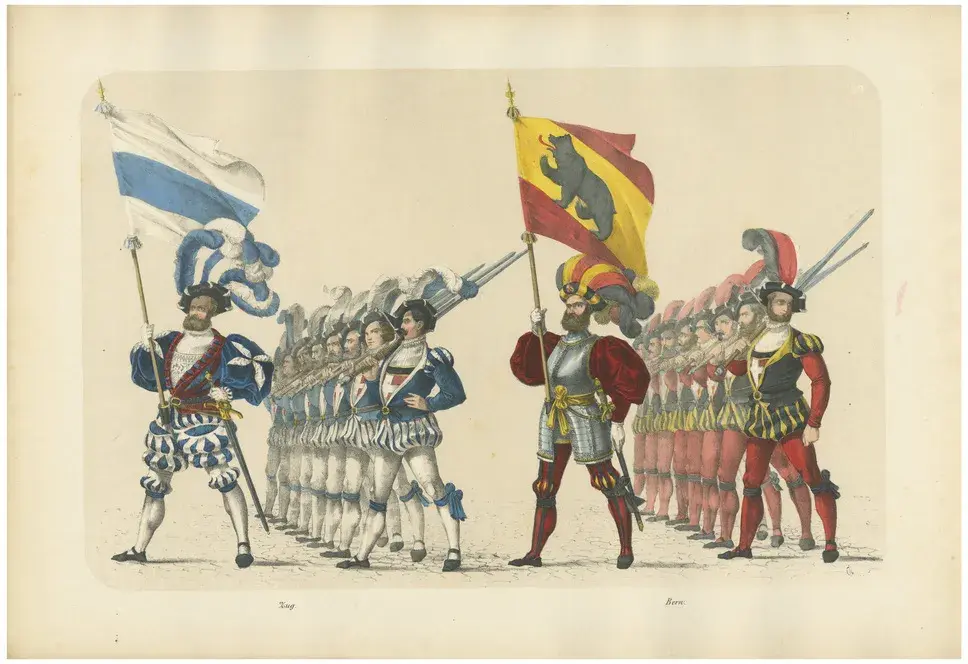
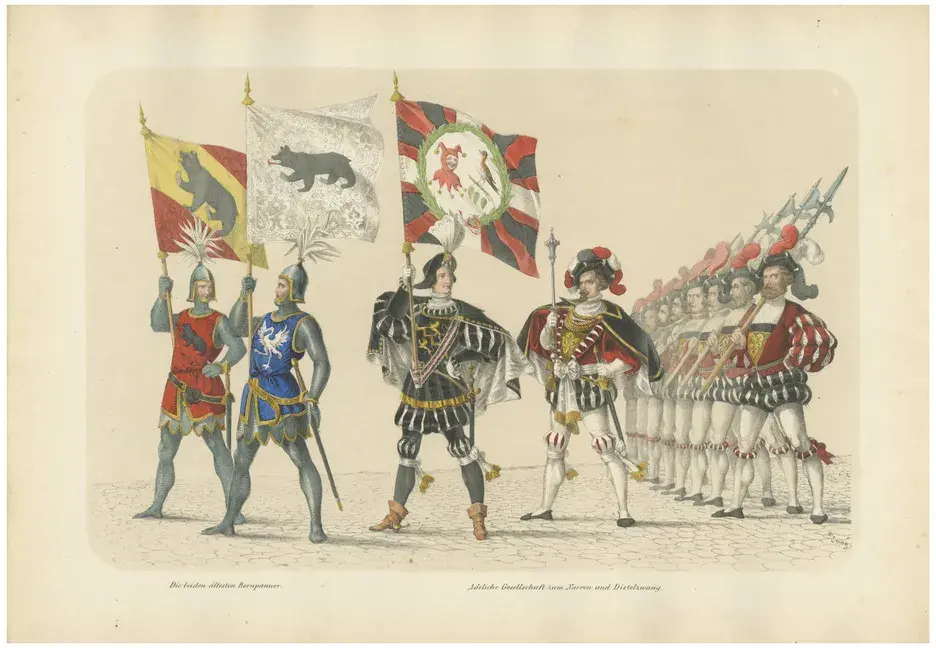
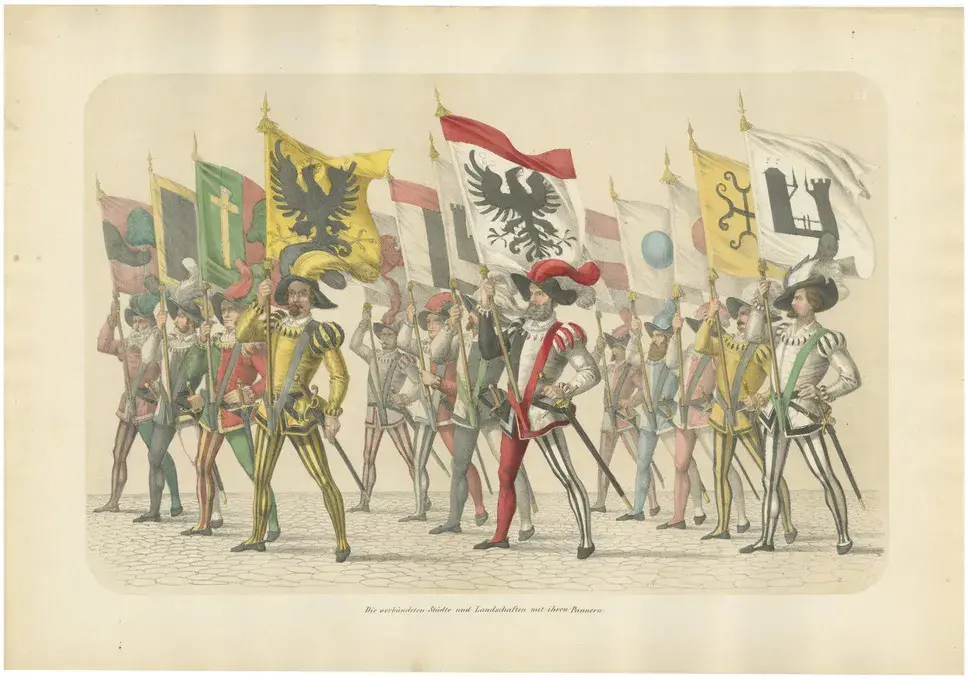
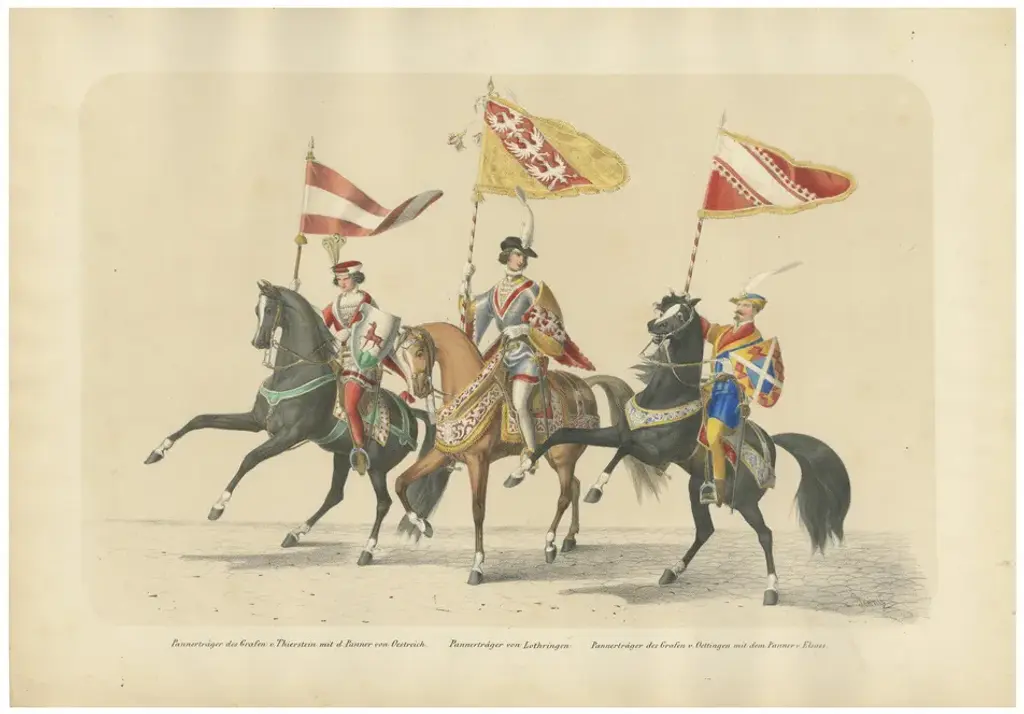
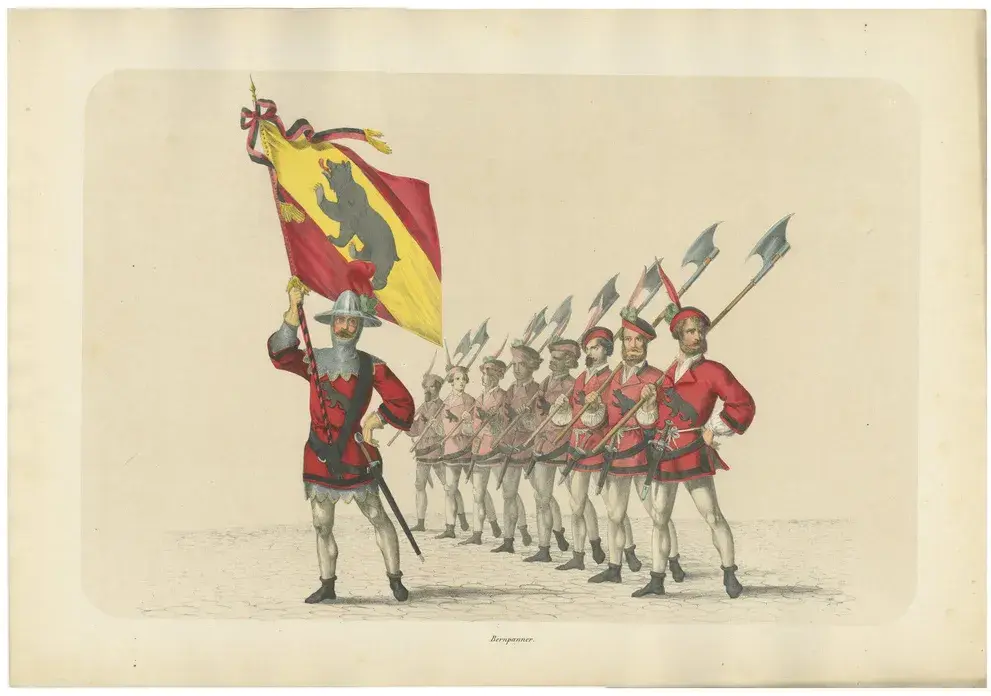
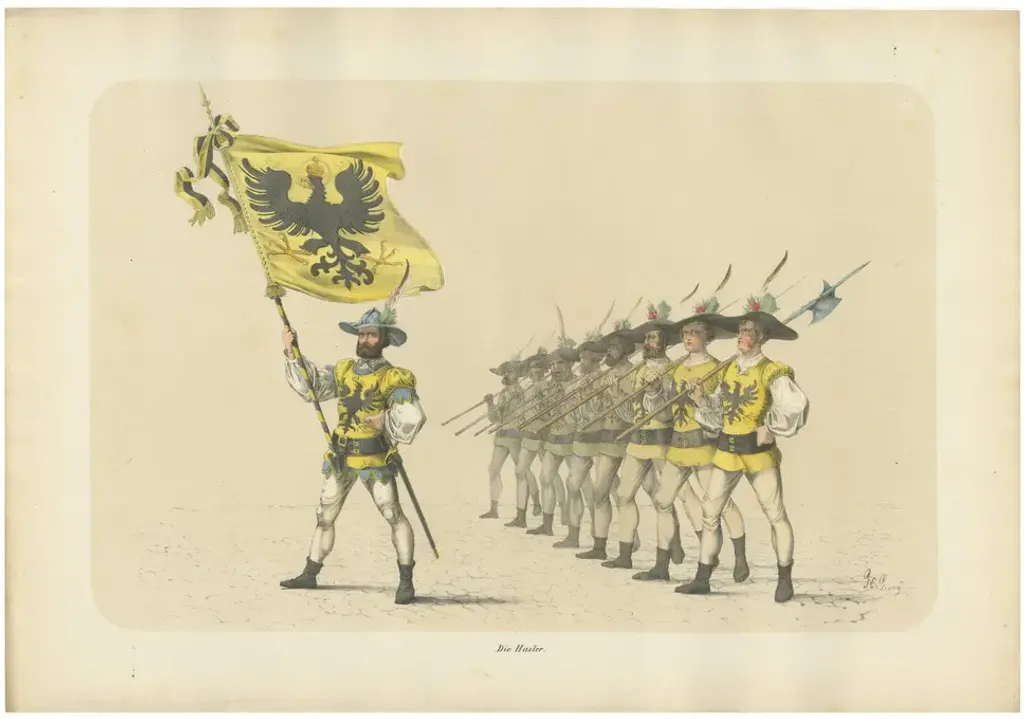
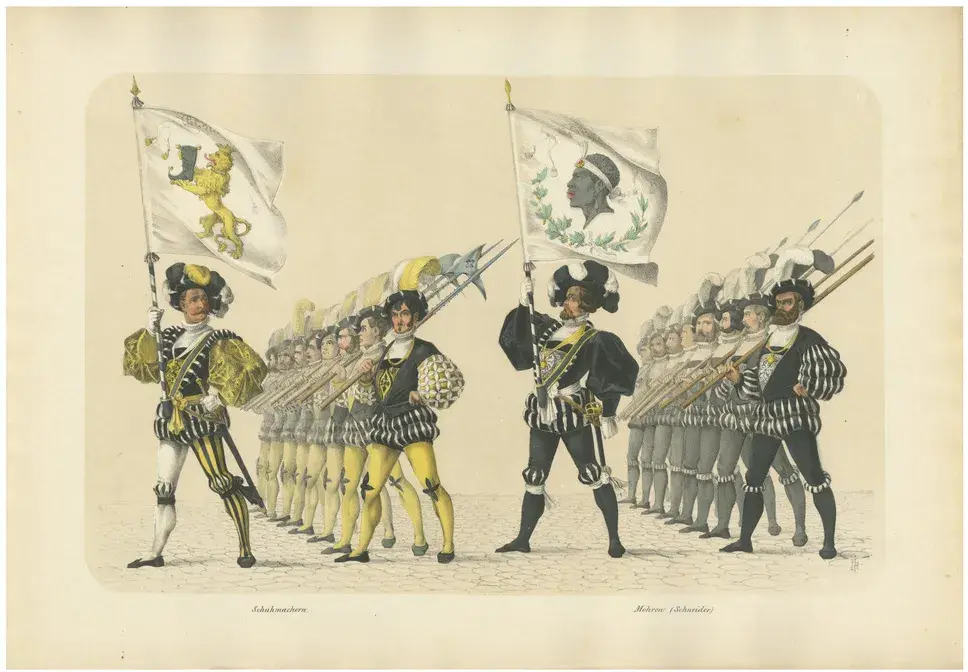
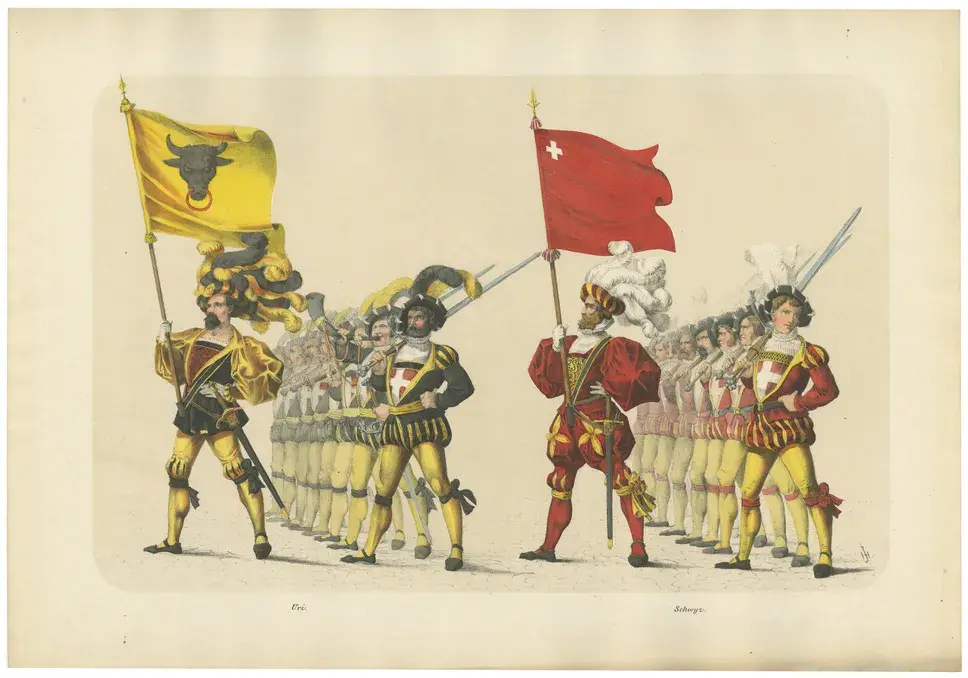
The Military Procession of Uri, Schwyz, and Unterwalden in the Bernese Festive Parade This striking hand-colored lithograph is part of the *Fest Album Celebrating Bern’s Entry into the Swiss Confederation on March 6, 1353*, an elaborate commemorative folio published in Bern and Zurich in 1855. The album visually captures the grand historical pageantry marking the 500th anniversary of Bern's alliance with the Swiss Confederation, featuring a magnificent procession of military contingents, guild representatives, and noble figures. This particular lithograph, created by H. Jenny and lithographed by Kümmerly and Wittmer, depicts the military contingents of Uri, Schwyz, and Unterwalden, three of the founding cantons of the Swiss Confederation. Their troops march in full ceremonial attire, led by standard-bearers proudly hoisting their respective banners. At the forefront, the contingent from Uri is distinguished by their bold yellow uniforms and the unmistakable banner featuring a black bull’s head with a red nose ring on a golden background. This emblem has long been associated with the canton of Uri and symbolizes strength and resilience, reflecting the fierce independence of the region's early warriors. The armored commander, flanked by a trumpeter, exudes authority as he leads his regiment. Behind them, the soldiers of Schwyz are clad in red tunics, carrying a simple yet powerful red flag with a white cross, the symbol of Schwyz, which later inspired the Swiss national flag. Their disciplined formation reflects the canton’s crucial role in the foundation of the Swiss Confederation. Further in the procession, the men of Unterwalden bear a red and white flag featuring a key and cross motif, emphasizing their historical significance as a founding member of the Swiss alliance. Their ranks march in perfect order, reinforcing the unity and solidarity that defined the early Swiss Confederation. Condition: This lithograph is in very good condition, with some minor signs of aging such as light foxing along the margins. The hand-coloring remains exceptionally vibrant, particularly in the rich reds and yellows of the cantonal banners and uniforms.
Similar products