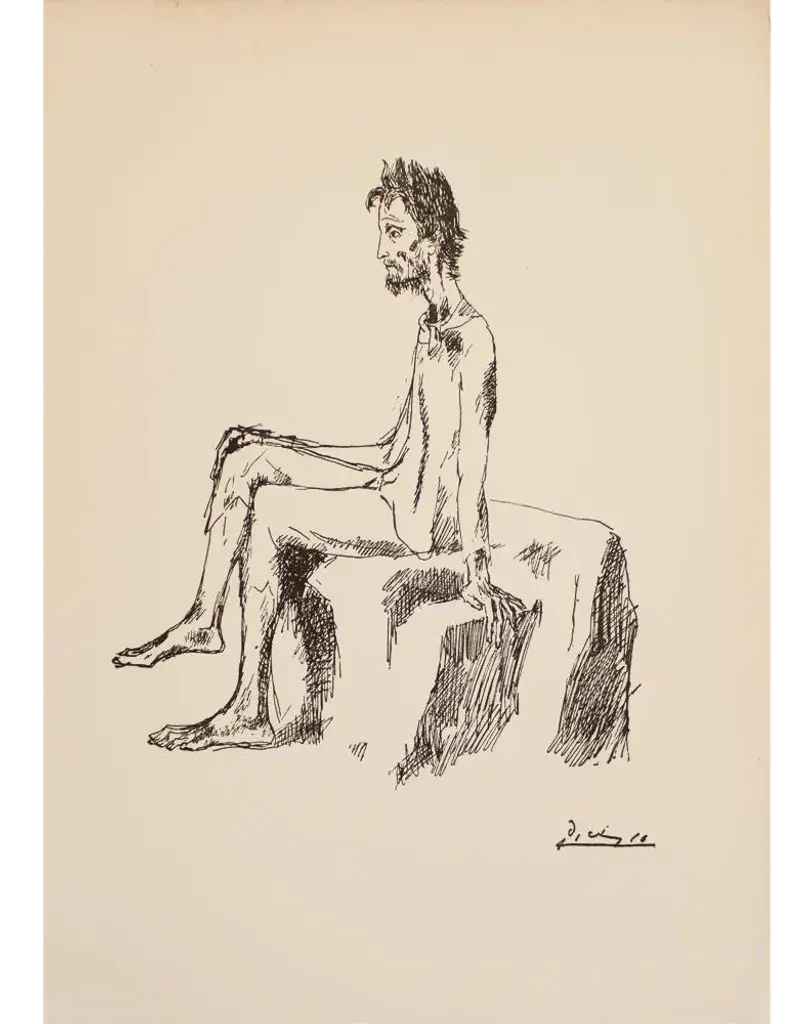
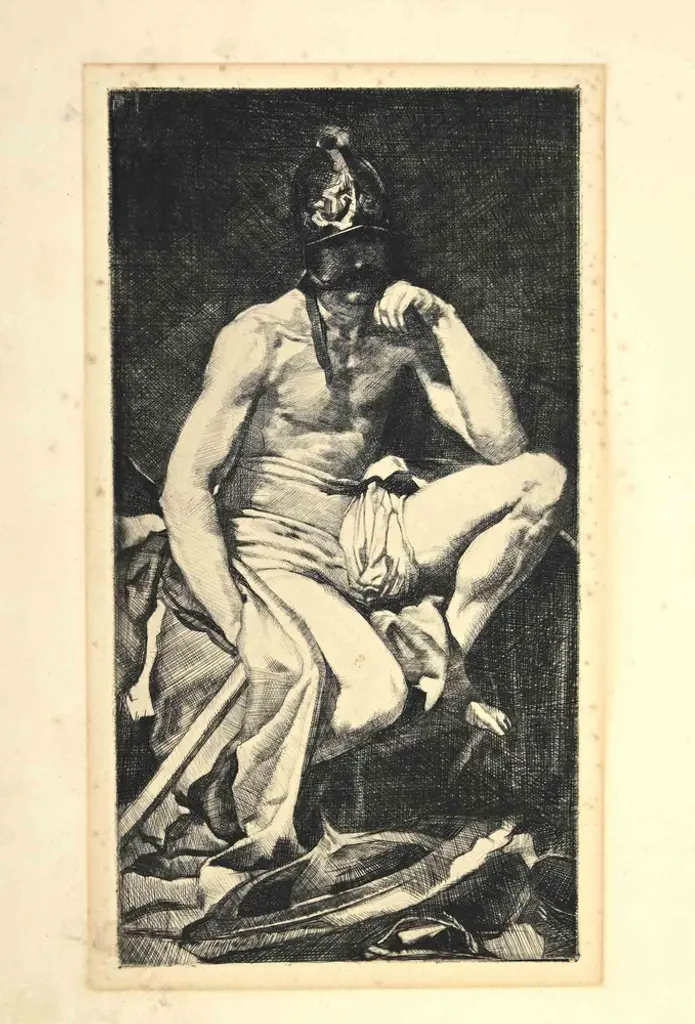
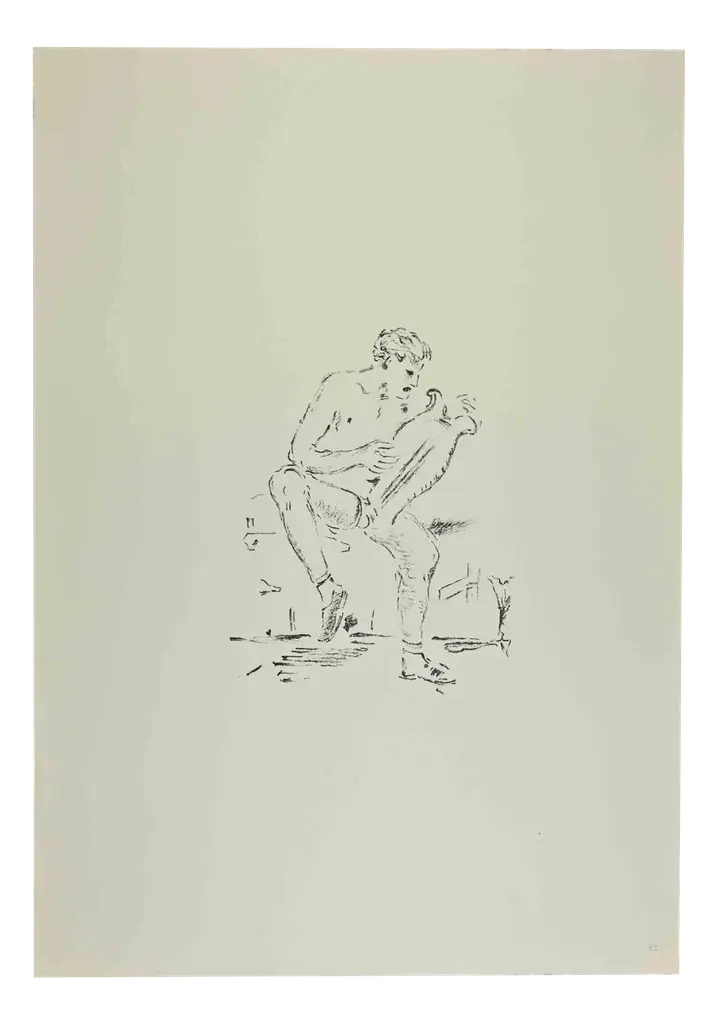
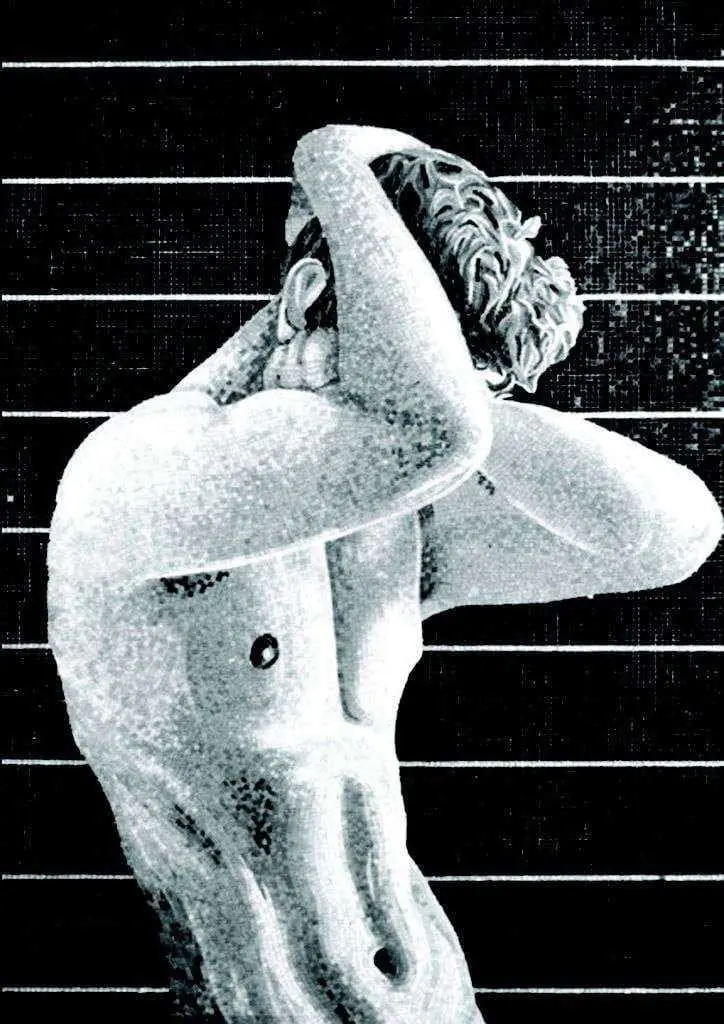
The Physiognomy - The Thinking Man after Fuseli is an original etching artwork realized by Grignion Sculp after Fuseli Delin for Johann Caspar Lavater's "Essays on Physiognomy, Designed to Promote the Knowledge and the Love of Mankind", London, Bensley, 1810. with the script on the rear. Good conditions. Johann Caspar Lavater was a swiss theologian and philosopher known throughout Europe for his studies on physiognomy. Following the physiognomy tradition of Della Porta and of many Renaissance and Baroque philosophers, he believed that the character of a person could be elucidated through examining their “lines of countenance" i.e. tracing a profile outline portrait. Being able to "read outside" was the key to "know the inside". Lavater's thought largely influenced Art in the late 18th and early 19th century, as in the case of Johann Fuseli and William Blake (who realized two etchings for Lavater's English edition of his Essay). Lavater was convinced that he could show his theories by analyzing the portraits of some of the main historical figures of the past, in some cases taken from paintings or (mainly for antiquity) sculptures. Some of the engravings in his volume, made by great masters of the time, are still considered today as graphic masterpieces. I have official proof of authenticity such as vintage catalogs, designer records, or other literature sources and take full responsibility for any authenticity issues arising from misattribution
Similar products