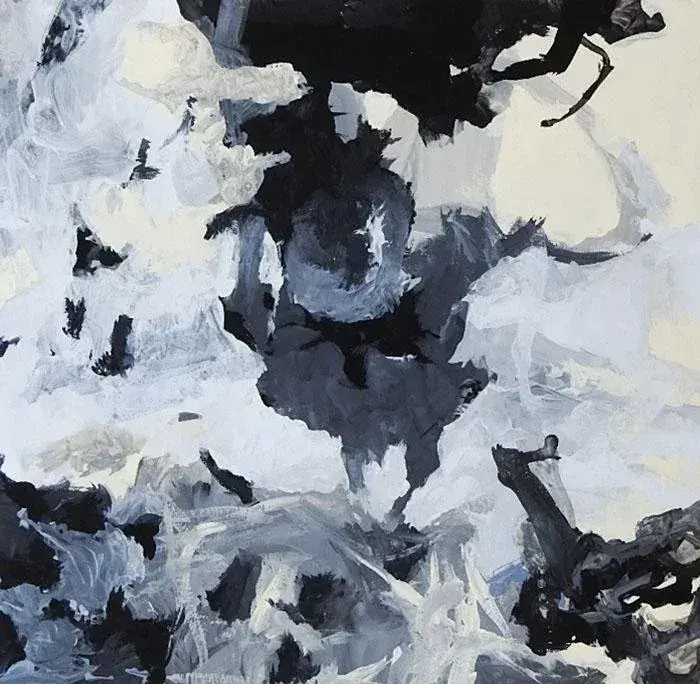
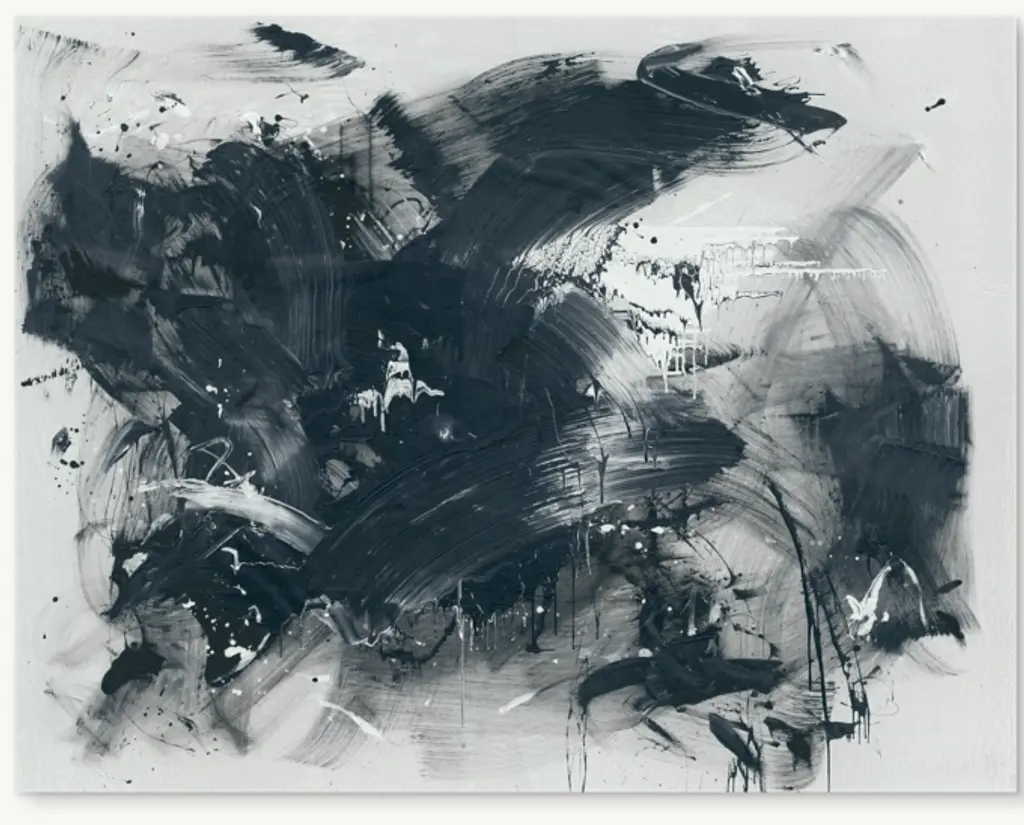
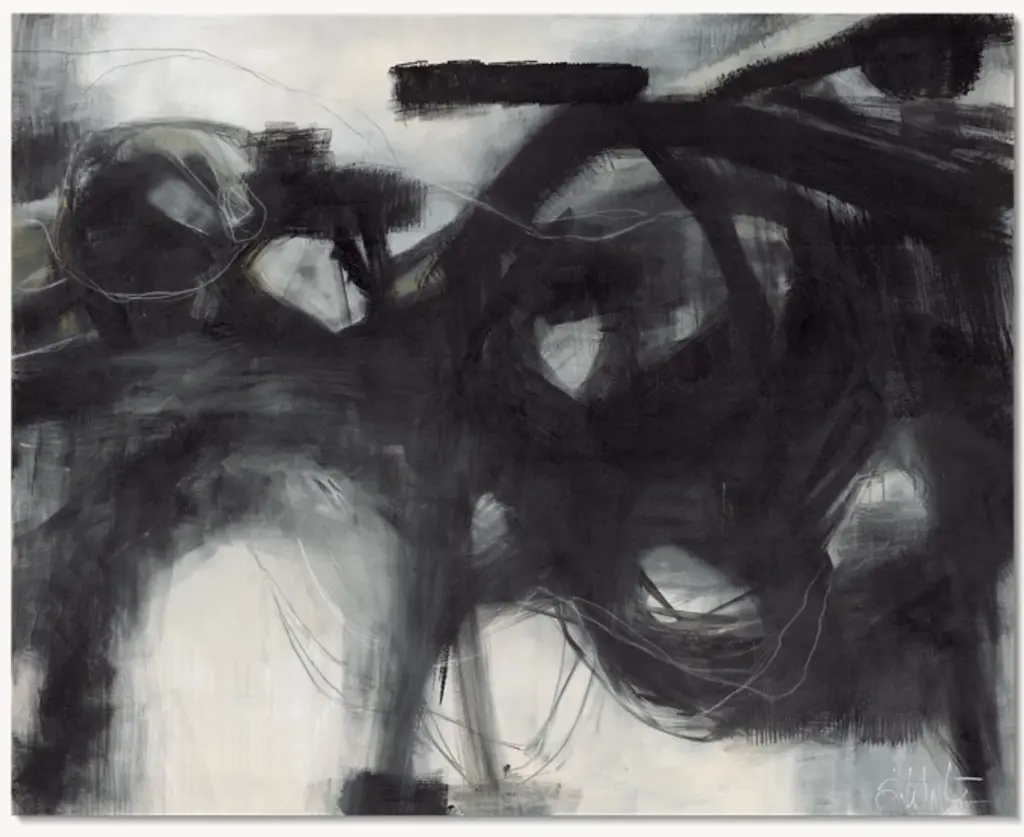
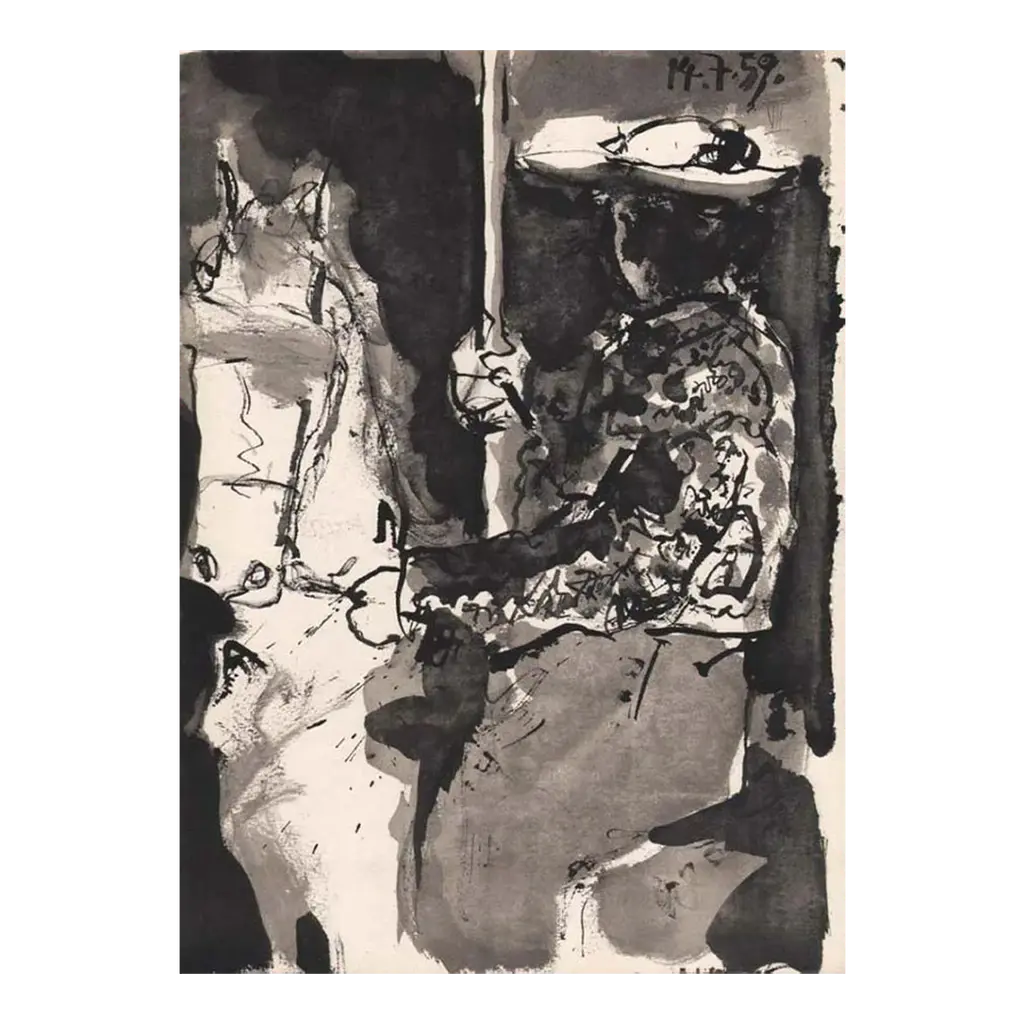
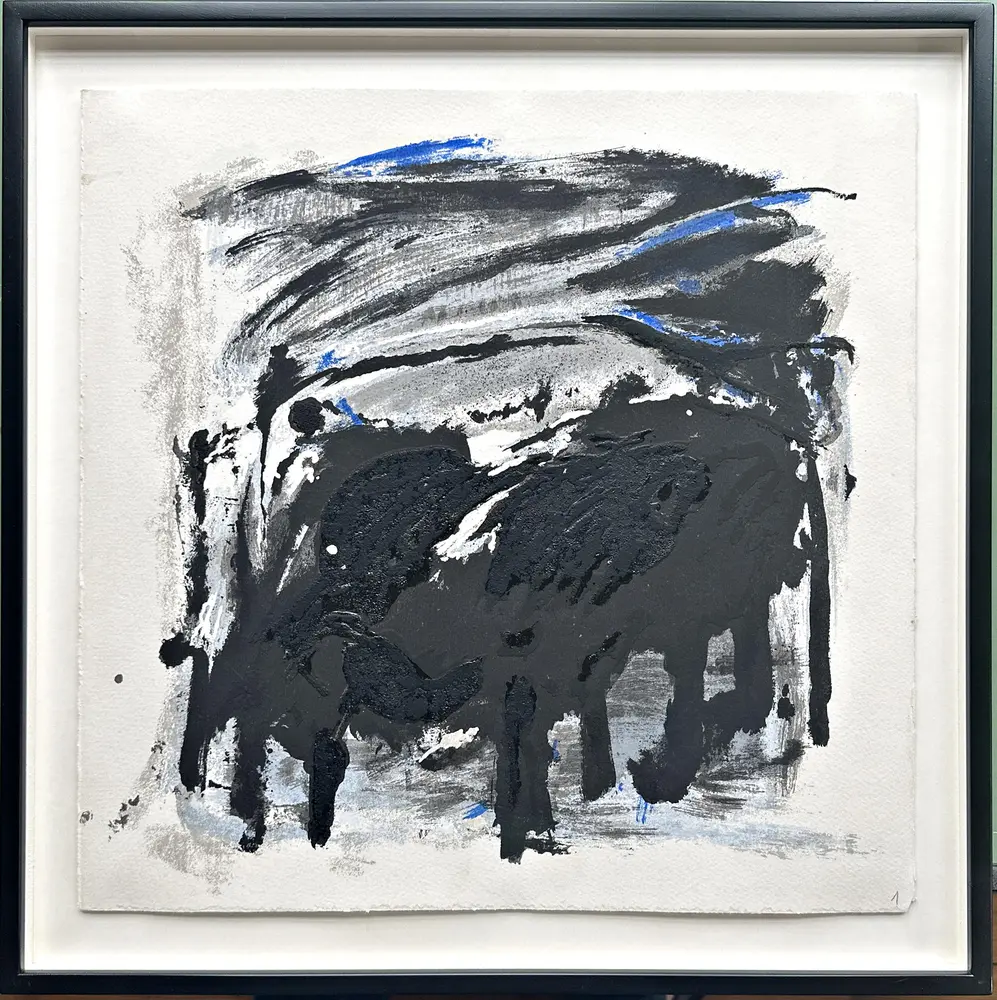
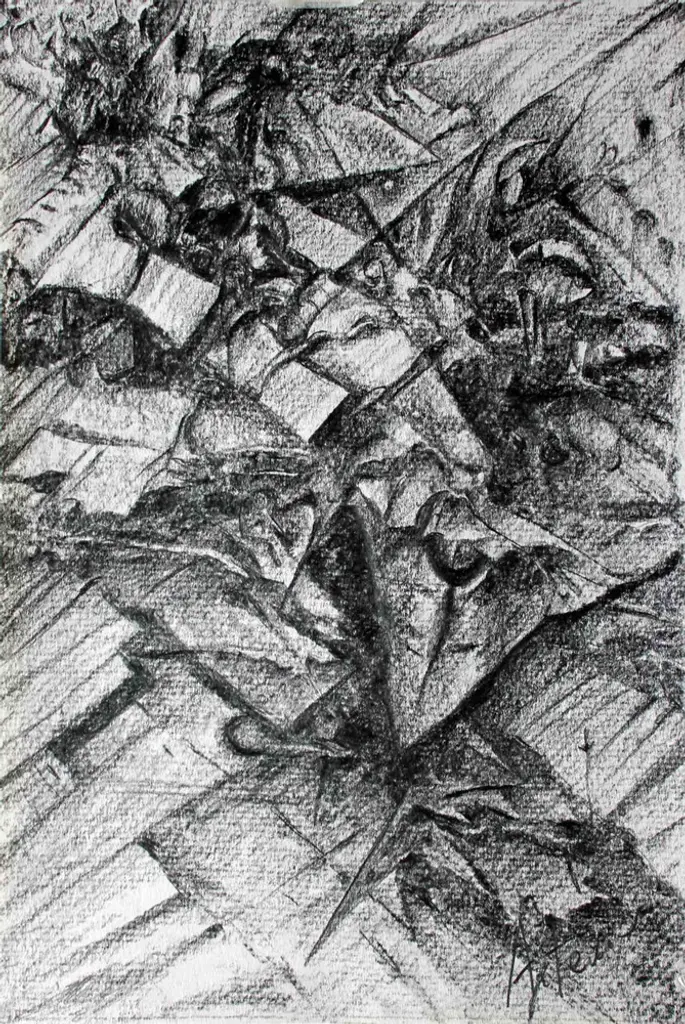
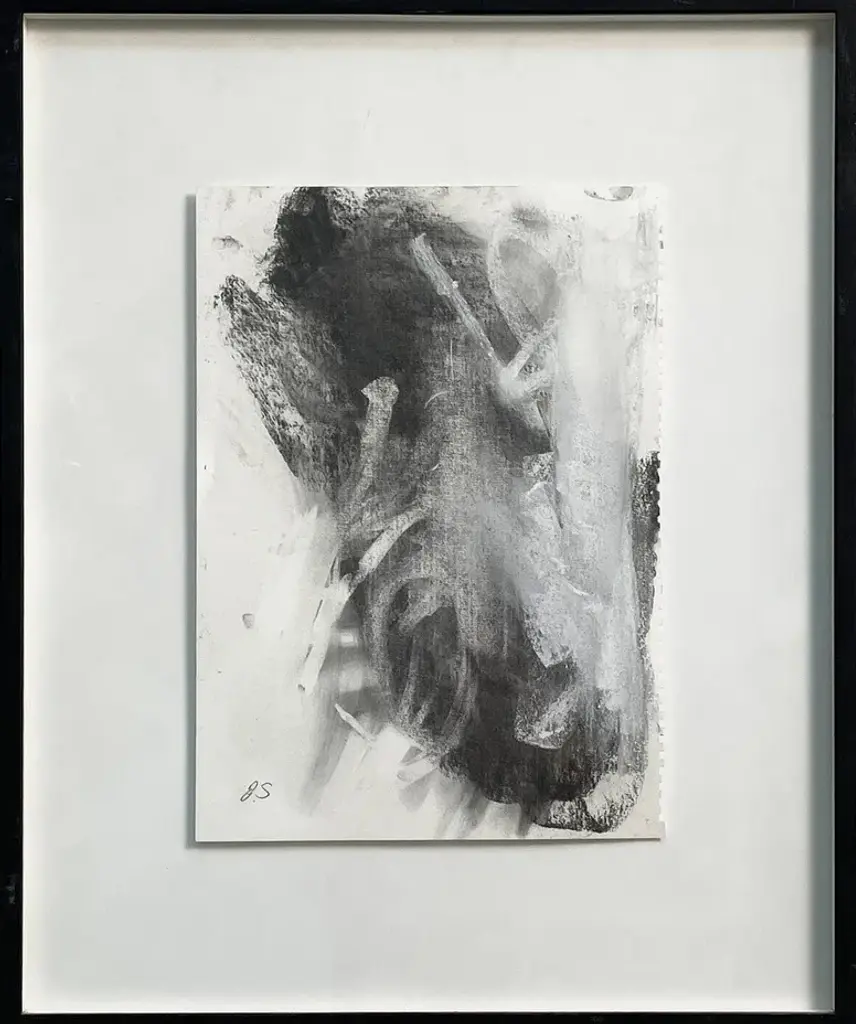
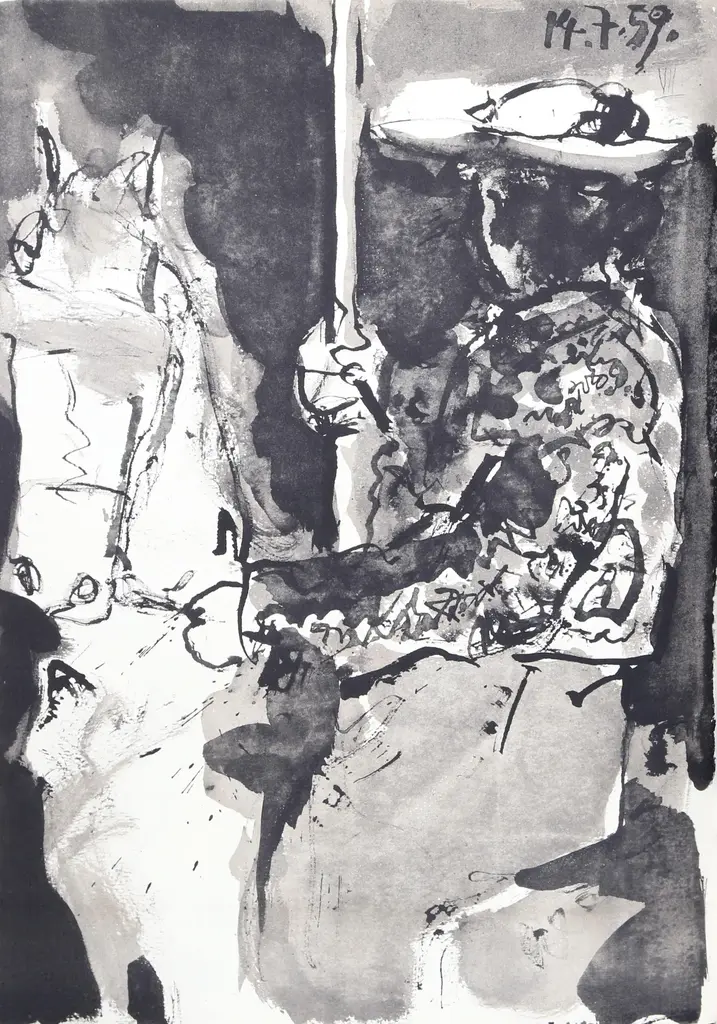
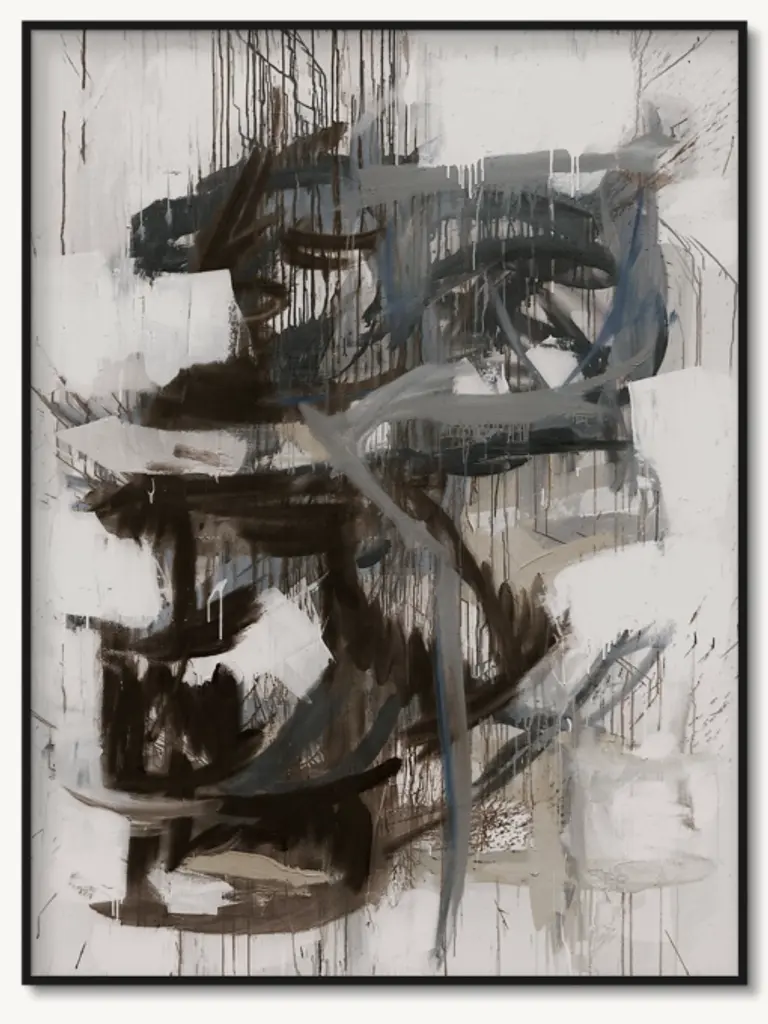
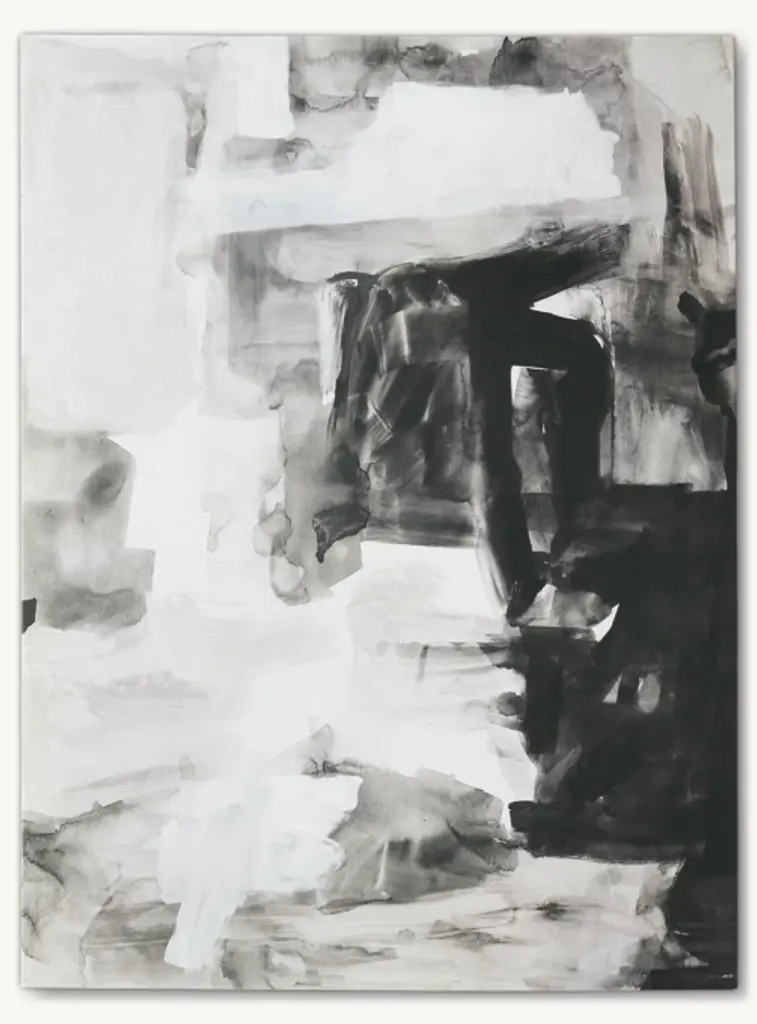
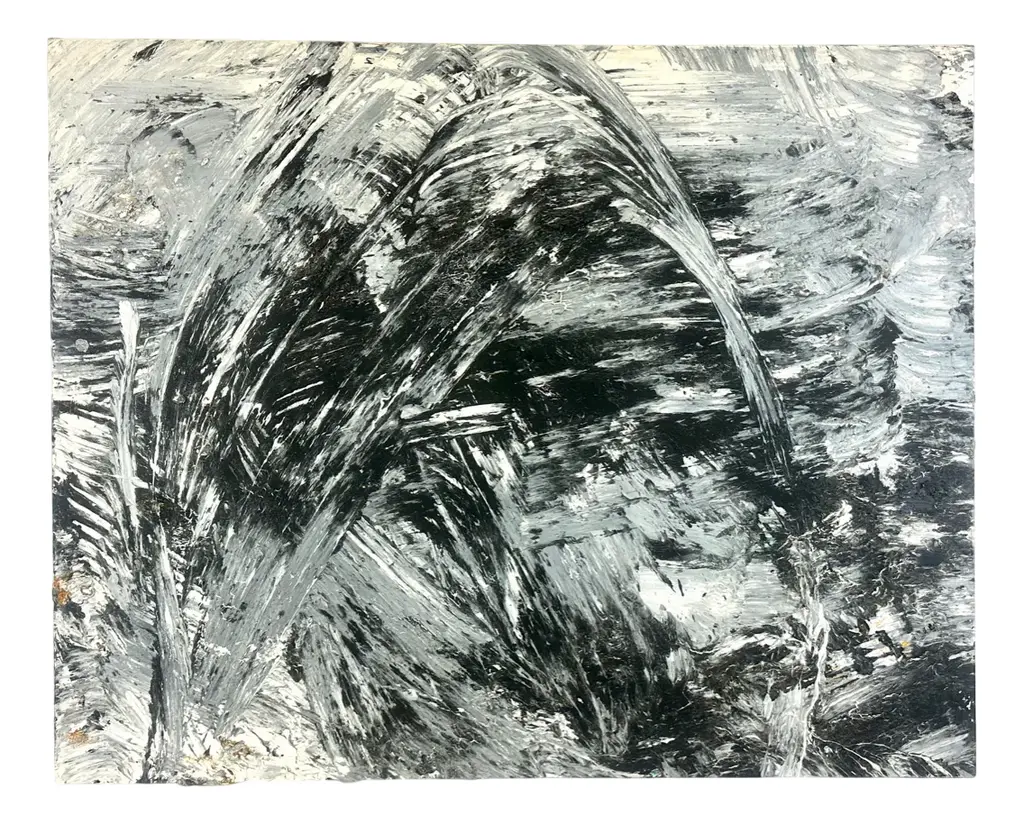
The large paintings, signed by Zsolt Berszán, approach the theme of death from the angle of the remains of decomposing bodies. The surface of the canvas is treated as a battlefield indicating the idea of earth, mud, manure, and through which one could glimpse crushed, abandoned and decomposing bodies or body parts. The artist suggests the body, barely perceptible in the economy of the drawing, like a macabre game of twists, twists, arcs and torn fragments. It is a material representation of the remains of an absent body. Zsolt Berszán is not interested in the individual himself, but in the human remains that become subjects in themselves. The representation of fragments, truncated bodies, remains, draws traces interpreted in this context, not only as organic materials, but also as material forms testifying to the a priori existence of these people. This new series of paintings could also be seen as a personal archive of images to contextualize the dissolution of the human body. These vital vestiges arise from the relationship between appearance and disappearance; they are sorts of phantom traces which bear witness to a past existence, but which can also be interpreted as the beginning of a new process. The body as an environment of memory allows time to be experienced on a loop by recounting the overlapping and interplay of multiple temporalities, past experiences and meanings imbued with new ones. This piece has an attribution mark, I am sure that it is completely authentic and take full responsibility for any authenticity issues arising from misattribution
Similar products