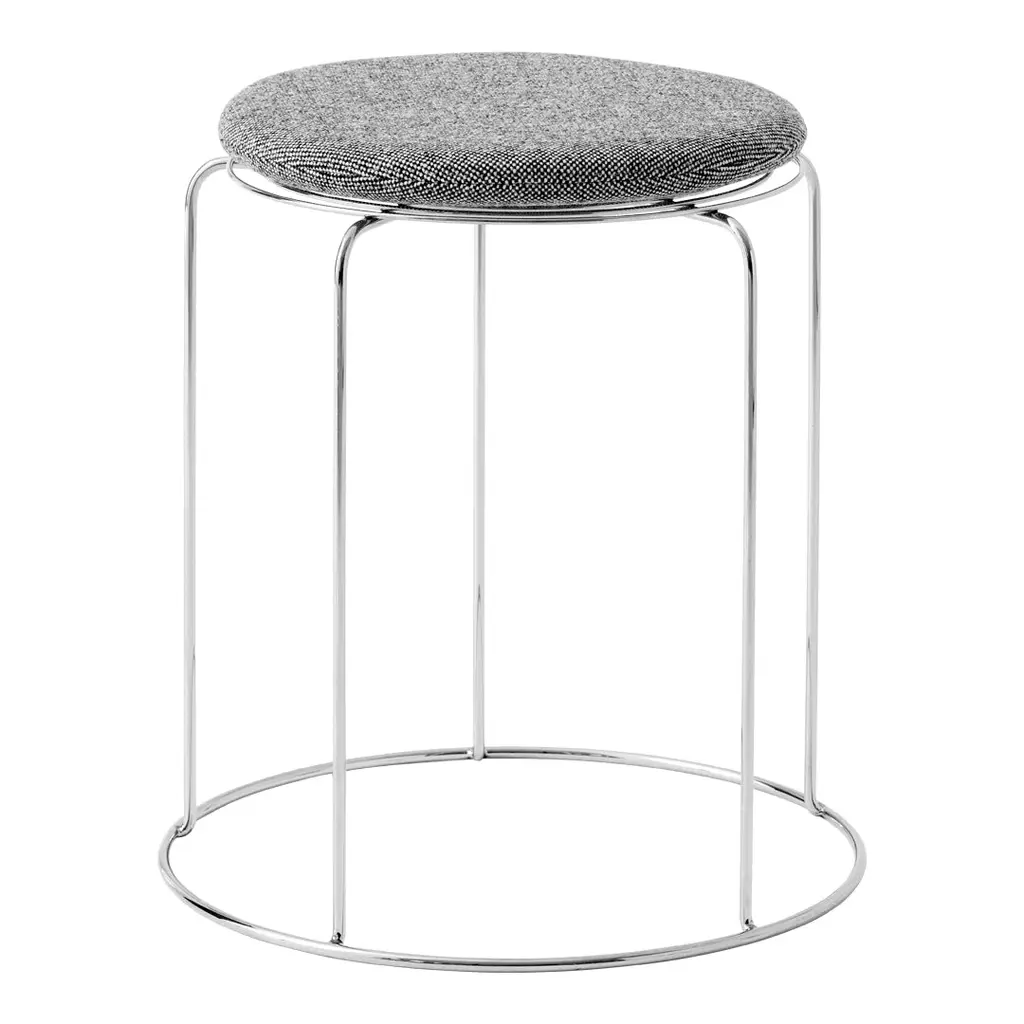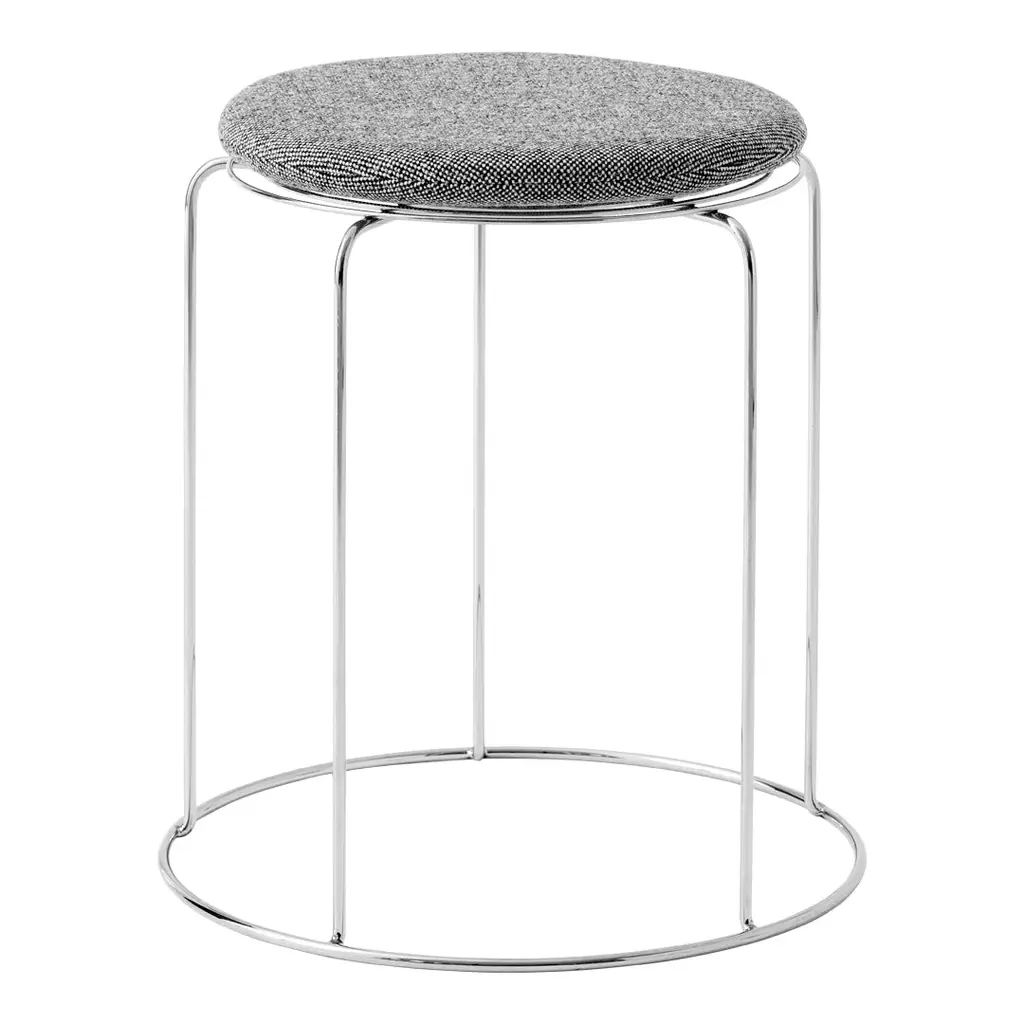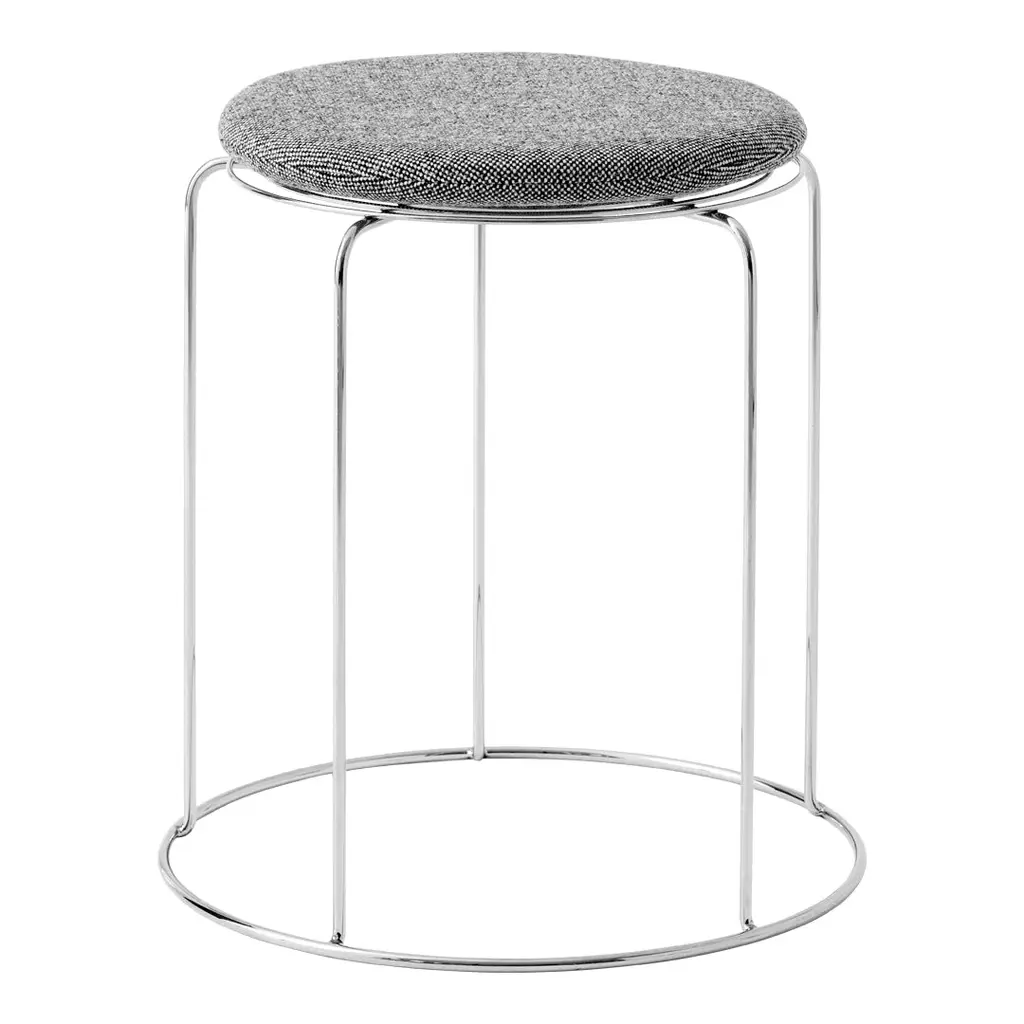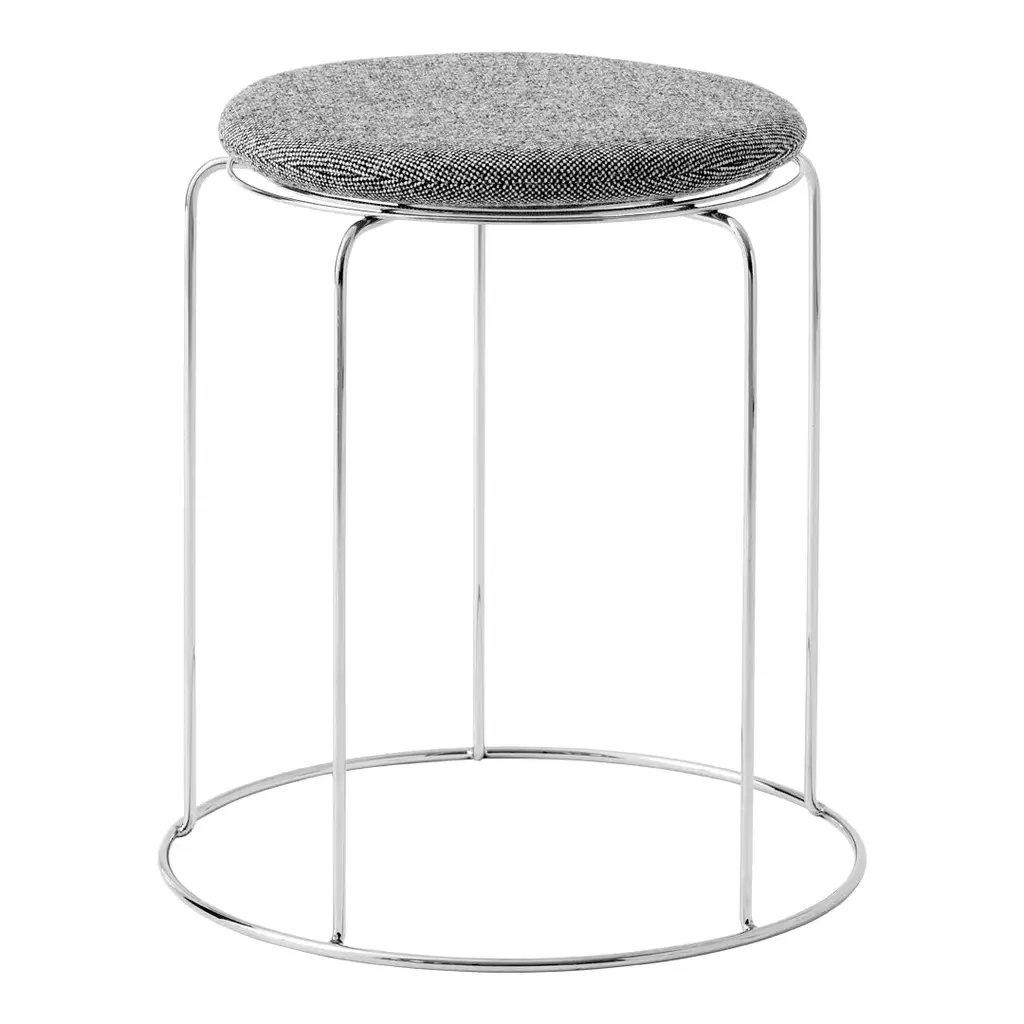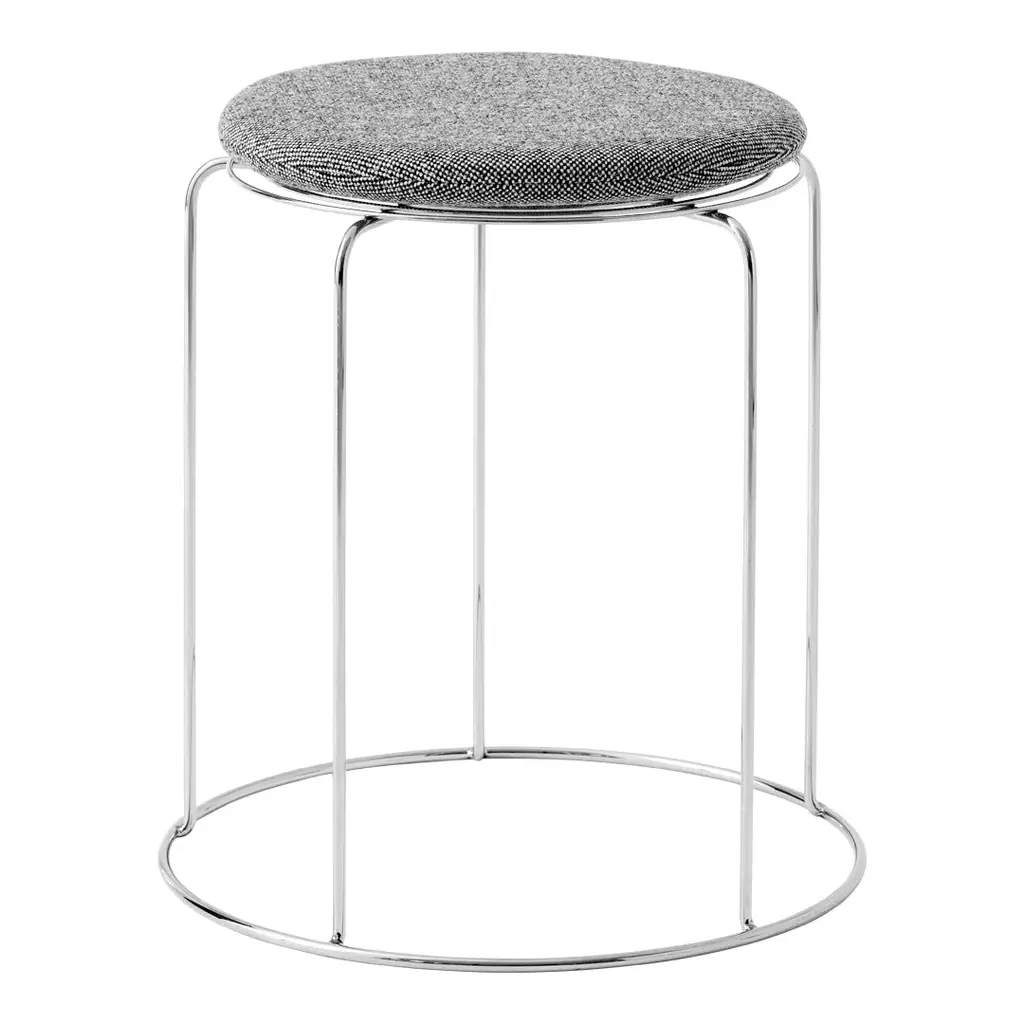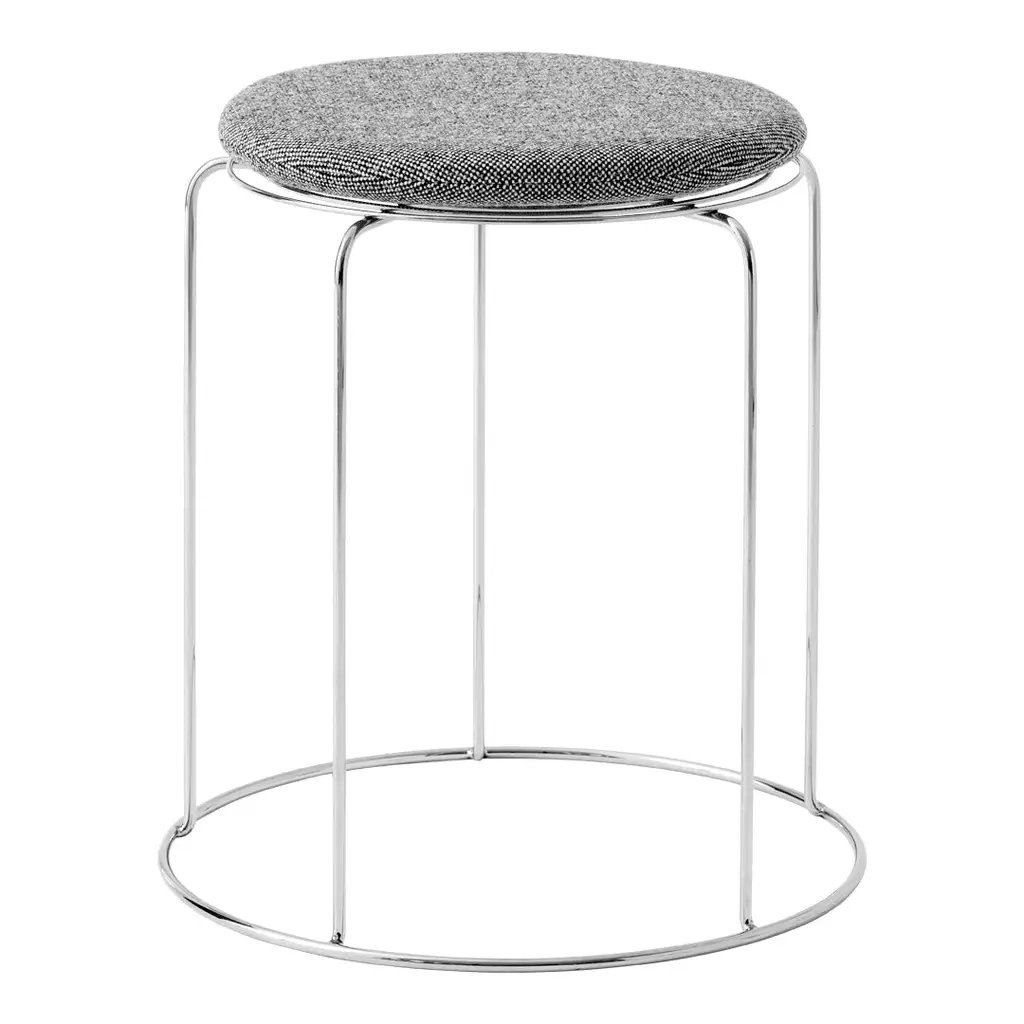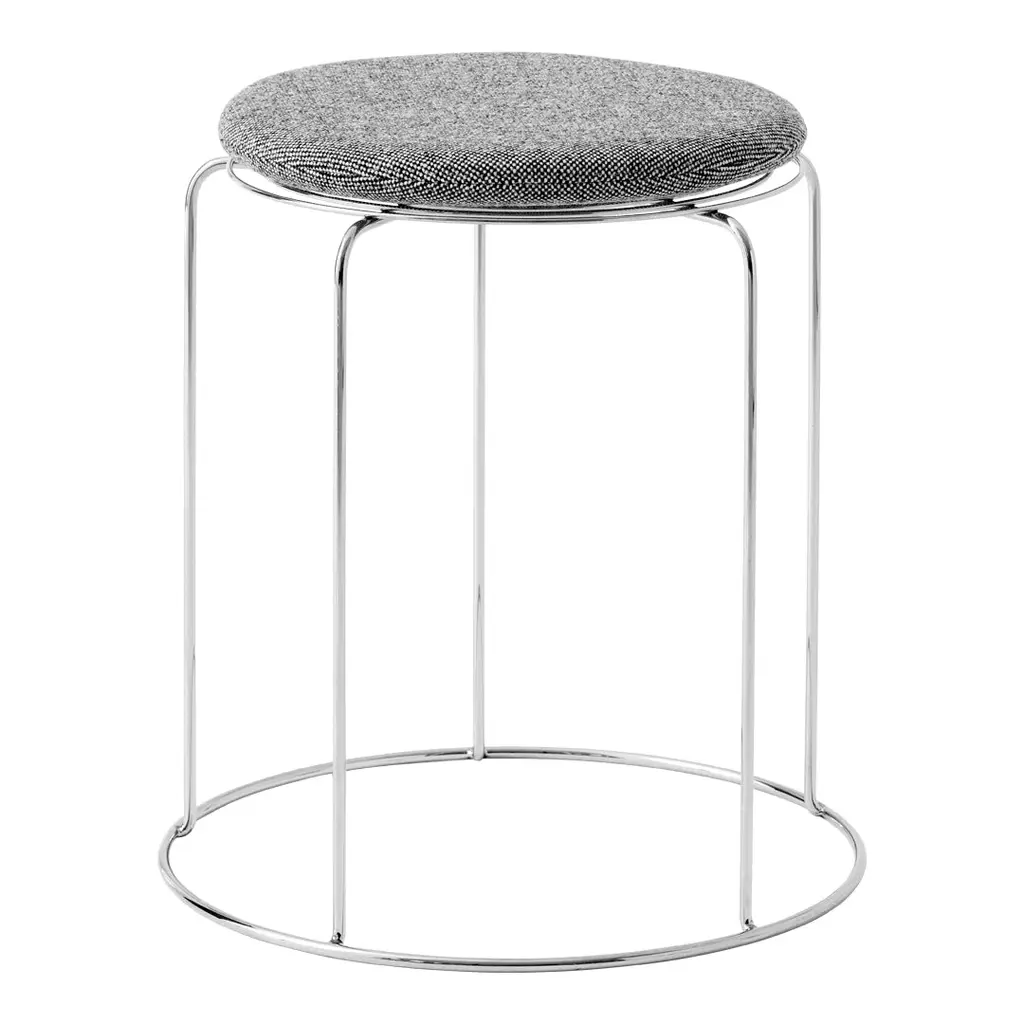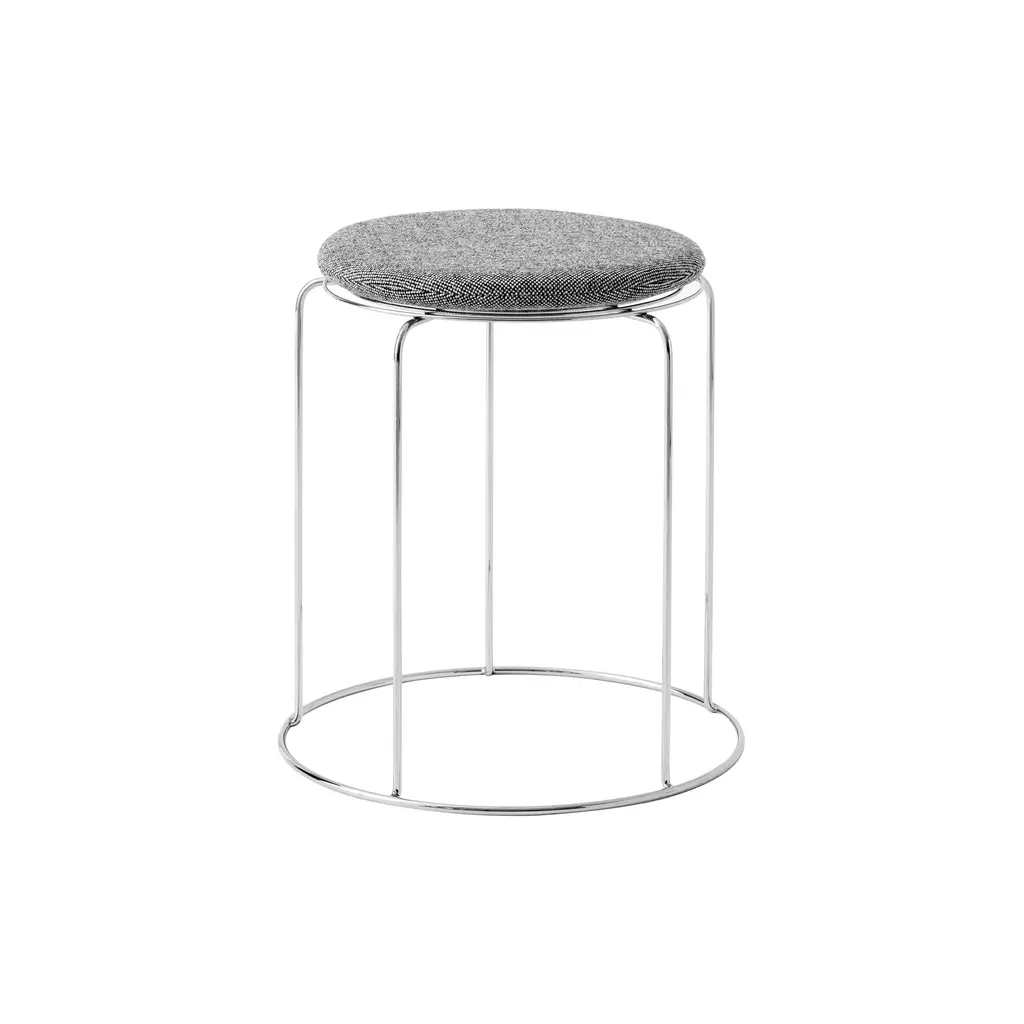
Wire Stool Vp11, Mirror Polished Steel/hallingdal 944, By Verner Panton For &T
$528
1st Dibs
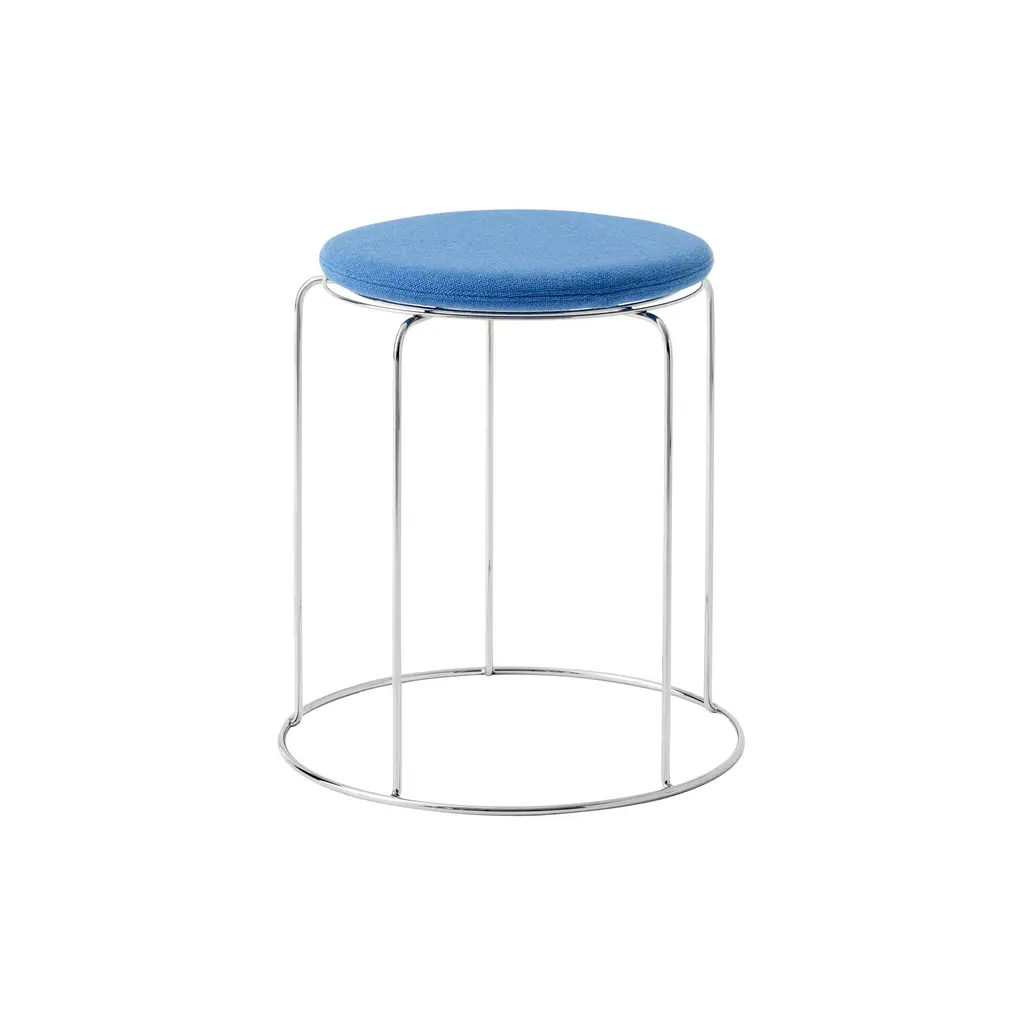
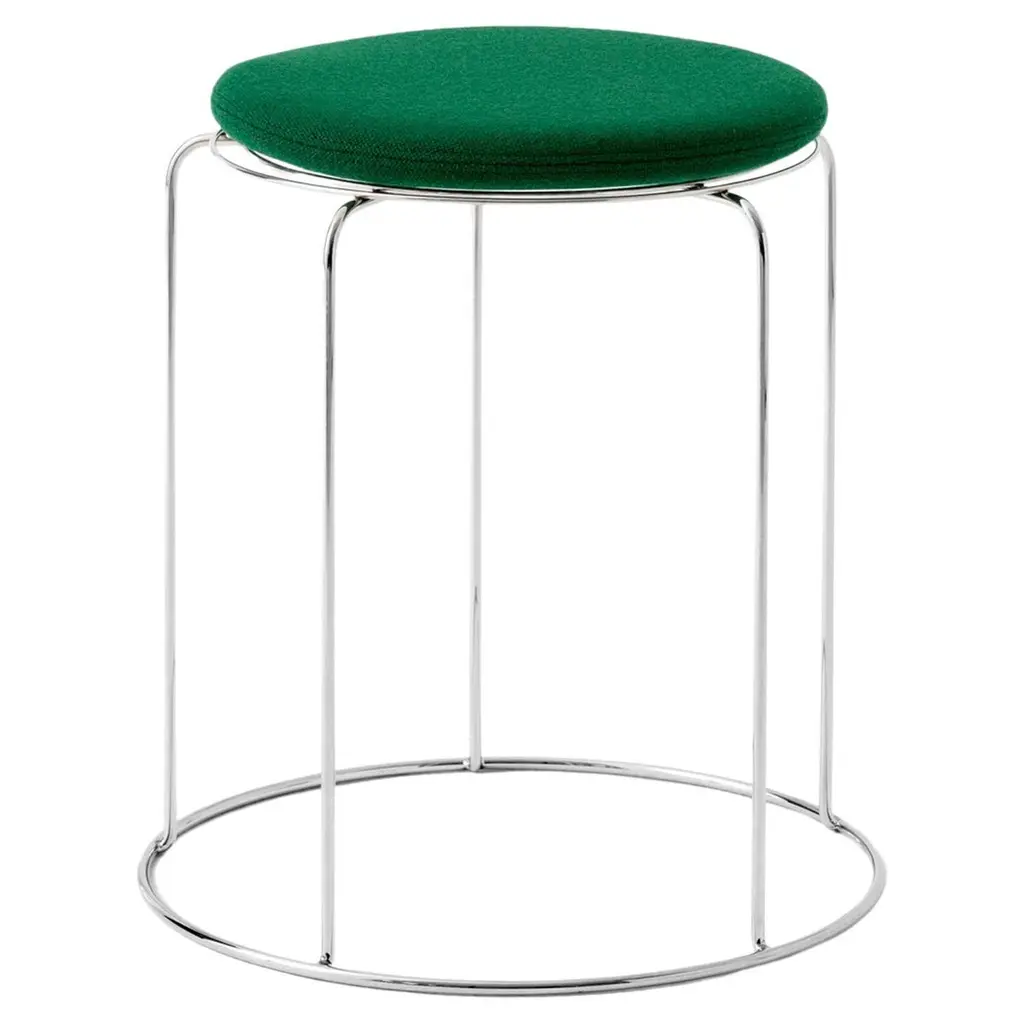
What makes the Wire Stool indicatively Verner Panton is the use of stainless-steel wire to create a simple geometric shape with repeated patterns, in a stackable stool that doubles as a side table. An icon from the archives destined to become a collectible, the airy transparency makes it a versatile design suitable for a vast array of settings. Each Wire Stool has the option of detachable seat pads, in four colours, attachable with a discreet magnet.To add an additional layer of comfort for the Wire Stool, a seat pad is added in collaboration with the Panton Family. Easily attached with concealed magnetic pointsWire StoolProduct MaterialMirror polished steelProduction ProcessThe stool is made of stainless steel wire that is bent into circles and spot welded together. The centre plate is made of magnetic steel, allowing for the seat pad to be attached.Dimensions :W: 44 cm/17 inch, D: 44 cm/17 inch, H: 42 cm/16 inchWeight2.3 kgSeat PadProduct MaterialMoulded foam with magnet upholstered in fabricProduction ProcessThe cushion is made of moulded foam with an integrated magnet. The cushion is covered with a textile cover. A zipper allows for insertion of the foam during production and easy disassembly at end of life.Hallingdal 944DimensionsW: 36cm/ 14in, D: 36cm/ 14in, H: 3.5cm / 1in.Weight0.4 kgDesignerVerner PantonVerner Panton aspired to be a painter before studying architecture at the Royal Academy of Fine Arts in Copenhagen. After an apprenticeship with architect/designer Arne Jacobsen, Panton pursued a path in furniture and interior design. It was during this part of his career that he became famous for his avant-garde work, pushing the boundaries of design with innovative materials, bold colors, and unconventional forms that transformed contemporary interiors. In the 60’s and 70’s, his passion for designing entire environments led to immersive interiors featuring his hypnotic patterns and futuristic designs for furniture, lighting, wallpapers, posters and rugs. Panton’s pioneering use of materials, colours and shapes earned him a reputation as a visionary.The Flowerpot lamp became emblematic of the Flower Power peace movement during the 60’s. With its range of vivid colours, it is just as synonymous with modernity now as it was when launched in 1968. Panton’s Topan lamp - the first he ever designed - is the Flowerpot’s little sister, made up of a simple semi-sphere that can be configured in clusters. "Panton’s provocative use of materials, geometric shapes and psychedelic colours set him apart from his contemporaries," notes Martin Kornbek Hansen. "Our portfolio of &Tradition products wouldn’t be complete without this endearing example from this evangelist of radical design."
Similar Items