•
Onton Team
Whether you’re a financial analyst crunching spreadsheets or a graphic designer sketching logos, the right home office setup can turn the daily grind into a zen-like flow. But is it better to place your desk away from the door to protect whatever’s on your screen, or sit next to the window so you can get a little more sunlight during your day?
The Chinese art of feng shui creates a structured approach to find the right ways to create maximum productivity in your office. In this guide, we’ll show you how to design a feng shui office. Read on to discover how even the smallest layout change can support better productivity while keeping your workspace relaxed and aesthetically pleasing.
What’s feng shui?
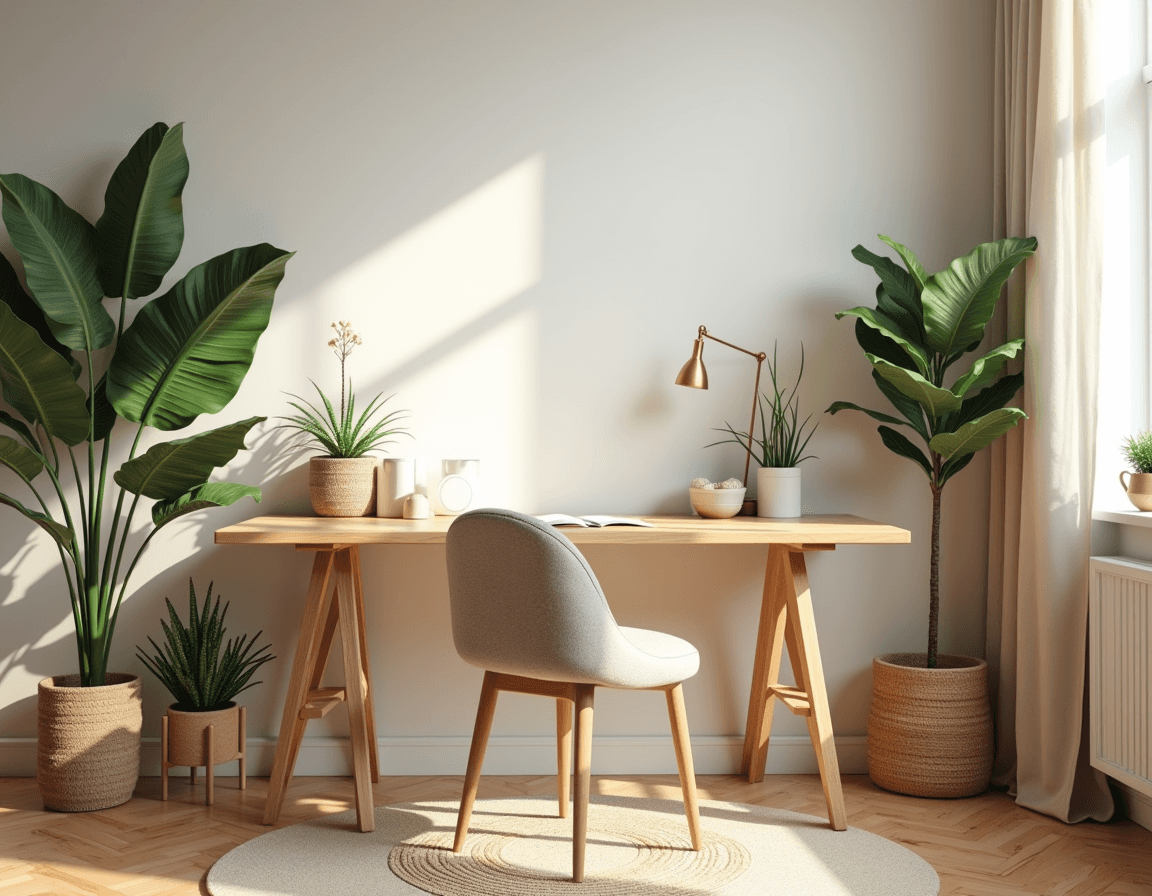
Feng shui is an ancient Chinese practice rooted in Taoist philosophy, centered on the flow of chi or qi, which is the energy present in all things. Chi is composed of two opposing but complementary forces called yin and yang. Feng shui focuses on arranging your environment so that yin and yang energies exist in harmony and positive energy flows freely.
In a feng shui office layout, cultivating positive energy flow means arranging furniture for easy movement, curating soothing colors, and welcoming in natural light. The result? A balanced workspace that helps you feel more focused, creative, and calm.
The 5 feng shui elements explained
Before harmonizing your work environment, let’s dive into some background on the five feng shui elements. These natural elements — wood, fire, earth, metal, and water — can be added or subtracted from a workspace to attract a more balanced flow of positive chi.
Wood
Wood is the element of growth, creativity, and strength. It fuels new ideas and forward momentum in the east and southeast sections of an office. You can incorporate this element with a mid-century modern wood desk and chair, leafy plants, green tones, and natural fibers. But don’t jump to turn your space into a jungle — too much wood can make you feel overwhelmed.
Browse for a wood desk with Onton
Fire
A scented candle doesn’t just smell good — its flame introduces the fire element, which is all about energy and expression. When placed in the southernmost section of your office, it keeps you driven and focused, but too much fire can make you feel on edge. Jar candles, warm lamps, and pops of fiery hues all represent the fire element.
Earth
The earth element keeps your feet on the ground, which is especially important in a space where you can easily become stressed. You can decorate your desk with the earth element using natural textures and materials like a stone paperweight, ceramic table lamp, or clay plant pot.
In a feng shui office design, earth calms nerves when deadlines approach and keeps you patient through difficult tasks. Traditionally, earth-related objects lie on a diagonal path from southwest to northeast through the middle of the room.
Metal
A brass wall sconce, industrial-style chrome desk frame, or Hollywood glam-inspired gold floating shelf brackets in the west or northwest parts of the room invite the metal element into your work environment. Metal symbolizes mental clarity and concentration, useful energies in a home office. But too much concentration leads to overthinking, so don’t go overboard on the metal accents.
Water
The free-flowing water element reflects flexibility and wisdom, encouraging more open thinking to confront challenges head-on. Feng shui office colors like blue and black in artwork or seat cushions might boost productivity, but too much can feel overstimulating. Water-related objects placed in the northern part of the room are maximally efficient: Traditionally, north is the direction representing career.
6 tips to create a balanced feng shui office design
Even a small adjustment to your desk decor or furniture placement can usher in positive energy. Here are six simple tips for home offices and shared workspaces.
Embrace natural light
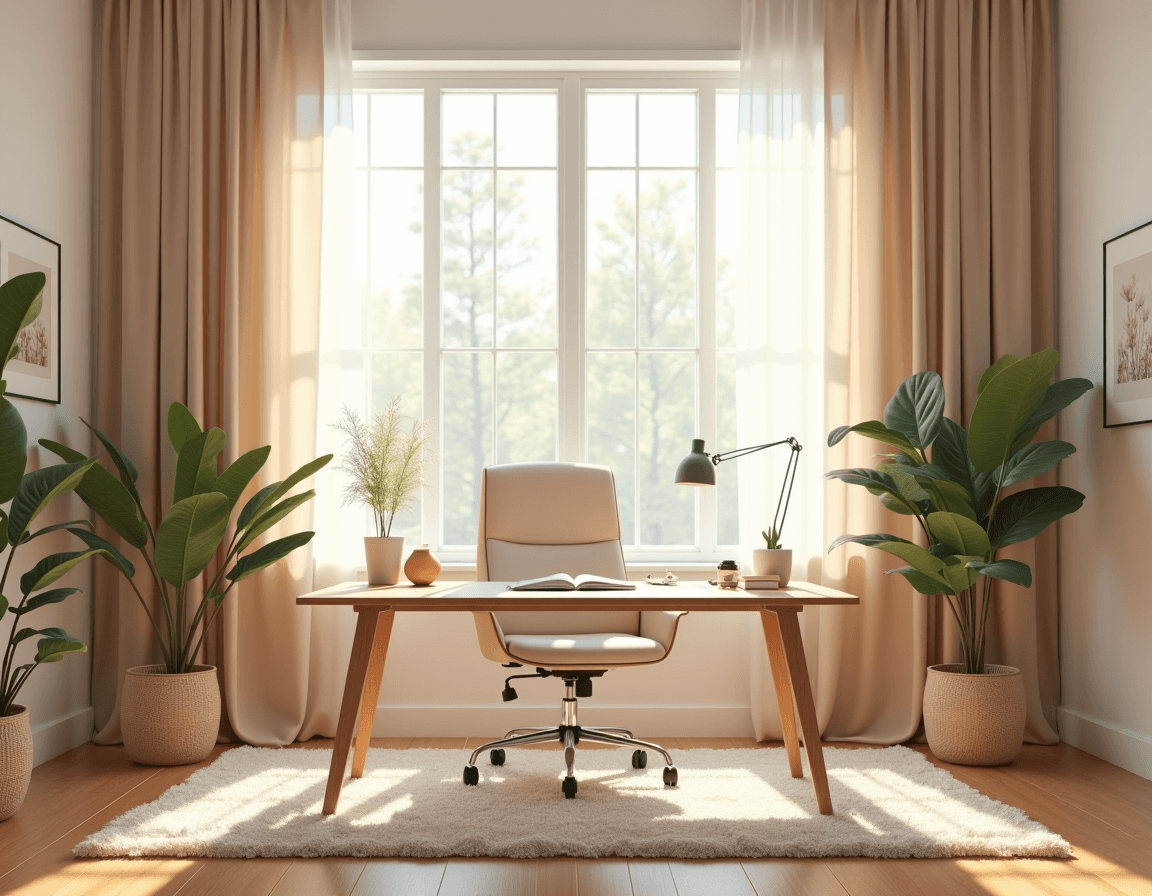
Just like people, good chi thrives with a little bit of Vitamin D. A light-filled workspace will naturally brighten your mood. Place your desk where it catches the most daylight without overpowering your monitor, and opt for light shades (think flowy lace, linen, or chiffon curtains) that ripple light rather than block it.
Check out sheer curtains on Onton
Keep walkways clear
Clear paths promote free-flowing energy. The easier it is to move around, the more clearly you will think, so make sure boxes, cords, and chairs don’t get in your way. Likewise, grouping items from your desk into bins or drawer organizers can combat a cluttered mind.
Use plants and water wisely
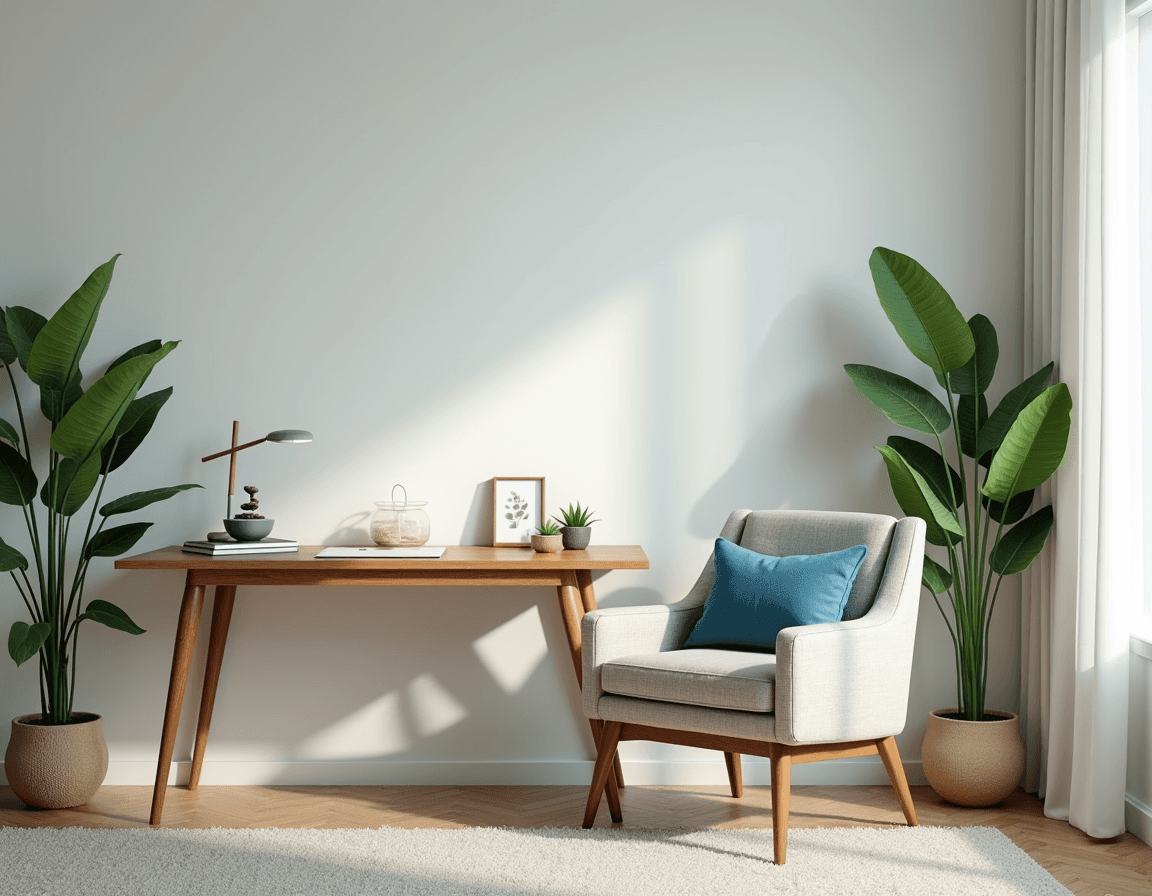
Vibrant green plants symbolize the wood element, which supports growth, health, and prosperity. Water, such as a small tabletop fountain or blue throw pillow on an armchair, traditionally encourages flexibility and calmness. Combine the two for an office environment that centers and focuses you, but keep it simple. Too much of a good thing can make you feel more overstimulated than refreshed.
Add artificial light
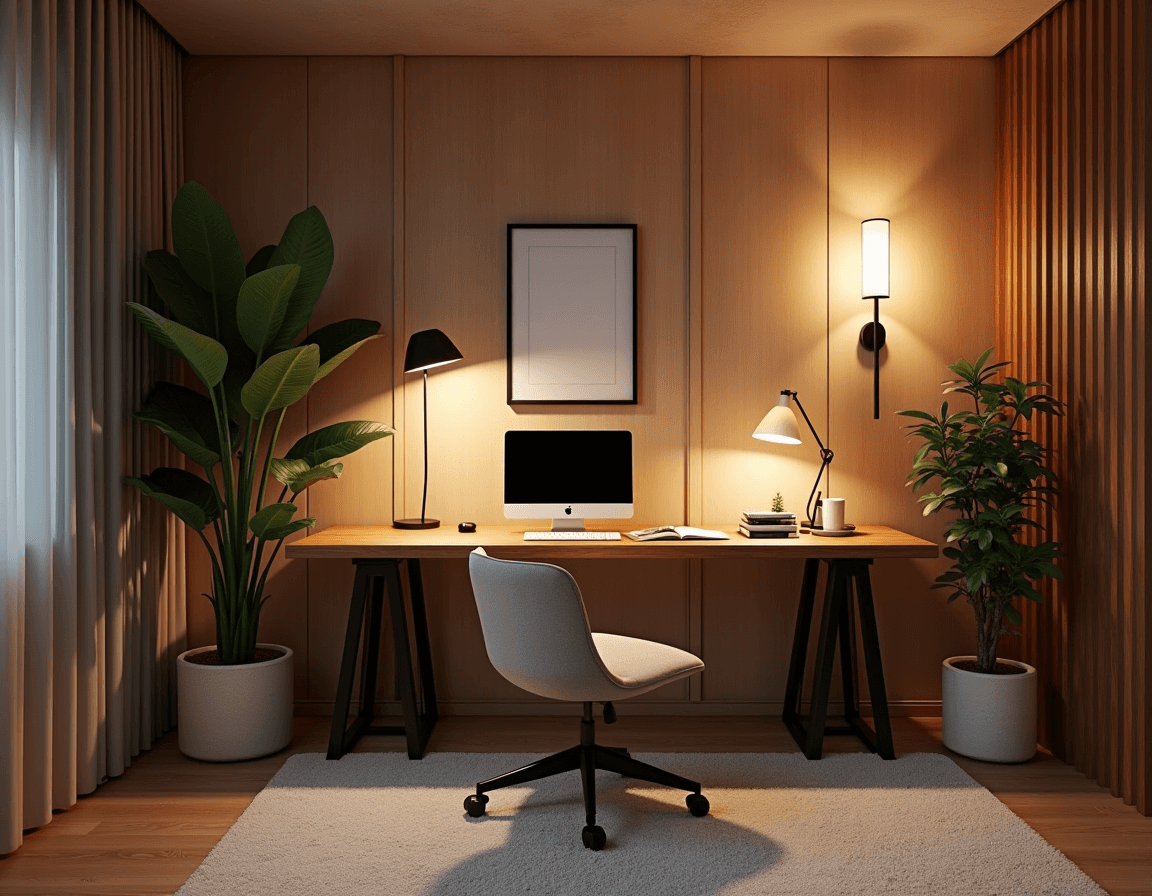
If you work from a corner that doesn’t get a lot of sunshine, layer lighting to warm up the space. Brightness keeps you energized, while shadows tend to lead to sluggishness. A desk lamp, wall sconce, and floor lamp combo will liven up your space, especially if you invoke feng shui’s fire element and place them in the south.
Work by a window
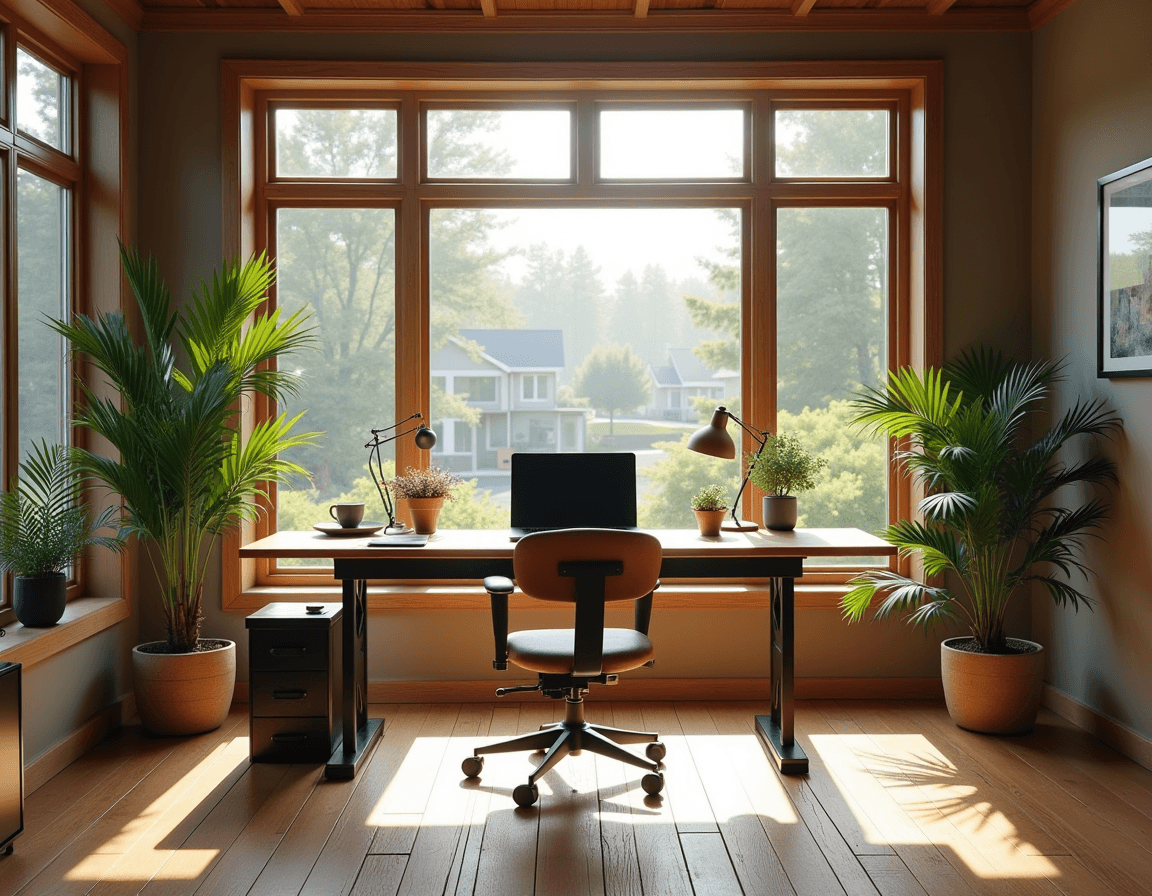
Watching the neighborhood’s dogs pass by isn’t the only reason to face the window: A view of nature, the skyline, or your community broadens your perspective beyond the confines of your computer screen. The breeze blowing positive energy by your desk is like a deep breath, helping you avoid that boxed-in feeling of staring at the wall all day.
Hang inspiring art
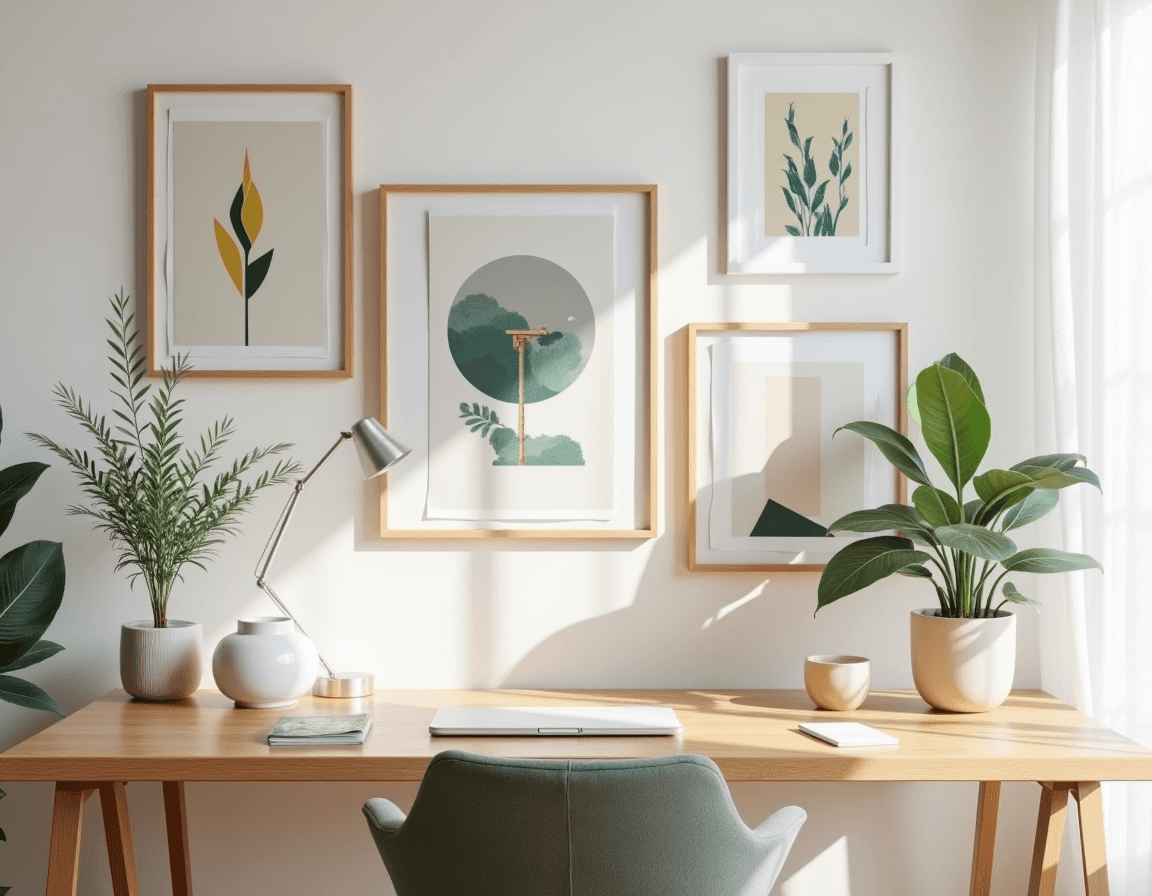
By inspiring art, we don’t mean the stereotypical kind of print you might find on an office set — unless inspiring quotes paired with cats gets your productivity going. Inspiring art reflects your personality and keeps you balanced, like a painting of your favorite landscape that calms you down, a colorful Bauhaus-style geometric print that sparks creativity, or a family photo that reminds you why you work. Choose whatever builds the right positive energy for you.
What’s the best feng shui desk placement?
Finding the right desk placement using feng shui takes a little trial and error — not too close to the window, not too boxed in, just the right distance from the door. Here’s how to position your desk for a successful workday:
The command position: In feng shui, the “command position” is ideal for any furniture setup, including how you stage your bed or living room sofa. Position your desk so you can see the door without being directly aligned with it. This arrangement is believed to give you a sense of control. That way, you’re open to opportunities rather than surprised by them.
Avoid facing a window: Remember, cultivating a sense of balance is key to good feng shui. While a gorgeous view promotes a sense of calm, too much time spent staring out the window can demolish your productivity. Set up your desk perpendicular to the window — close enough to glance out without losing focus on the work in front of you.
Use the wall for reinforcement: A wall behind you symbolizes support, while a wall in front of you creates a roadblock. If you can’t avoid putting your desk on a wall, schedule regular breaks to avoid feeling confined. Using the command position, the best placement for your desk is facing the door at a slight angle, with your back a foot or two away from a wall.
Why should you feng shui your office? 4 benefits
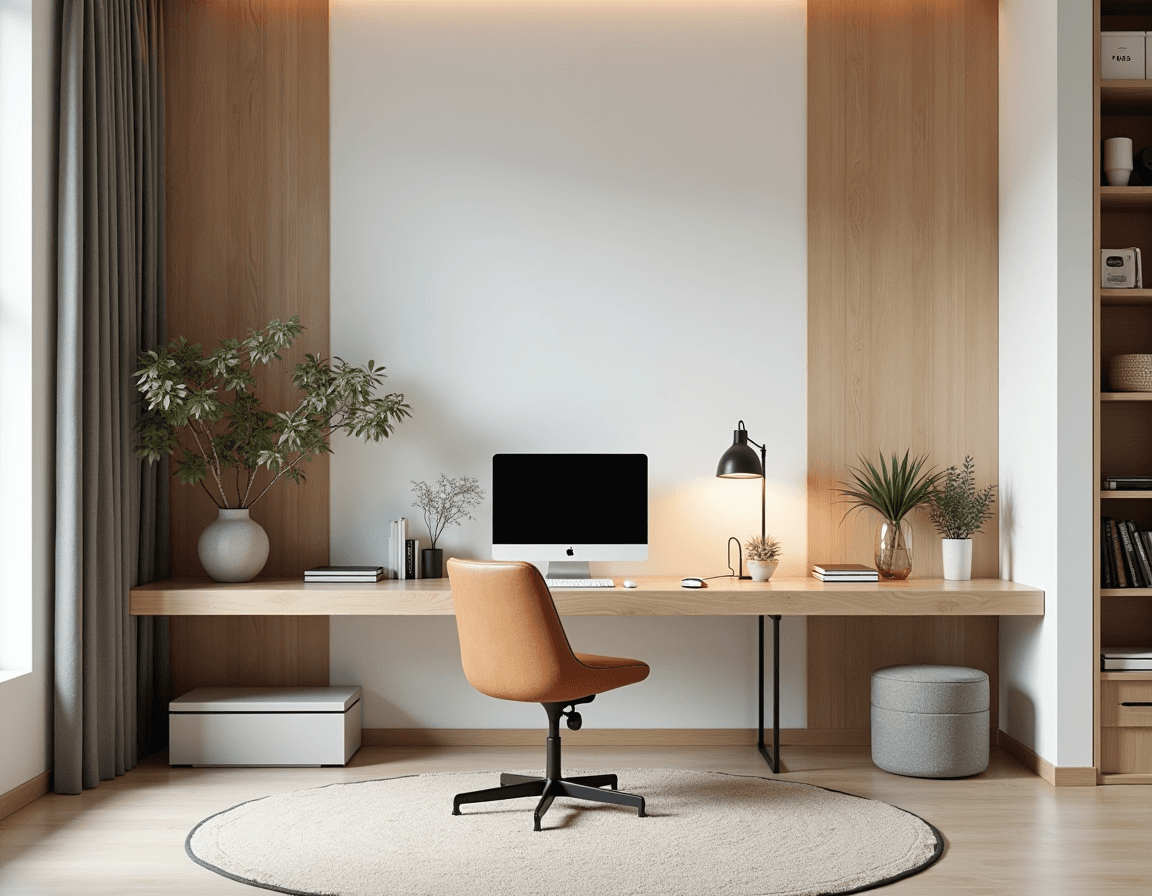
Lots of people turn to feng shui for productivity — and for good reason. Balancing yin and yang in your room’s interior design is believed to bring harmony to how you feel and work. Here are other ways using feng shui in your office might benefit you:
Enhanced concentration and mental clarity: Clutter on your desk leads to clutter on your mind. Feng shui promotes open pathways, natural light, and organization — things that help you focus longer and think more clearly.
Lower stress and anxiety: Cramped layouts and chaotic desktops can ramp up your stress levels. A feng shui office removes furniture and decor that doesn’t serve you to promote positive chi movement. Integrating calming colors, plants, and natural materials into the room creates a setting that soothes you.
Improved productivity: When everything is neat and organized, work feels smoother. It’s easier to enter (and sustain) a flow state.
Better emotional balance and creativity: The natural elements aren’t all symbolic in feng shui. Incorporating all five brings a diverse mix of texture, color, and contrast to your office. A balanced aesthetic promotes creative thinking without letting it take over your day.
Use feng shui to balance your home office with Onton
Ready to design a productive workspace? Use Onton’s AI-powered search engine to explore home office furniture and decor that maximizes your feng shui, from wood desks to plant pots. Try prompts like “stone paperweight,” “wooden desk,” or “desk organizers” to browse pieces from the best brands.
Once you discover a few favorites, use Onton’s Imagine tool to preview how they’ll look in your space. Just upload a photo and try a prompt like “small home office with floating desk and greenery” to start experimenting with different setups.
Dream up your ideal feng shui office design with Onton.
Related reading
Keep reading
Design guides, smarter shopping, and AI-powered ways to find what you love
