•
Onton Team
Some say a clean kitchen is a sign of someone who orders too much takeout. Great cooks know that it’s the opposite: A well-organized kitchen is mise-en-place on a bigger scale. When every pan, spice jar, and cutting board has its own place, you can move through new and familiar recipes with ease.
In this guide, you’ll find kitchen cabinet organization ideas to make your space somewhere you can easily cook one great meal after another. Read on to learn how to organize kitchen cabinets that work for your cooking style, your space, and your sanity.
The best way to organize kitchen cabinets: 20 tips and ideas
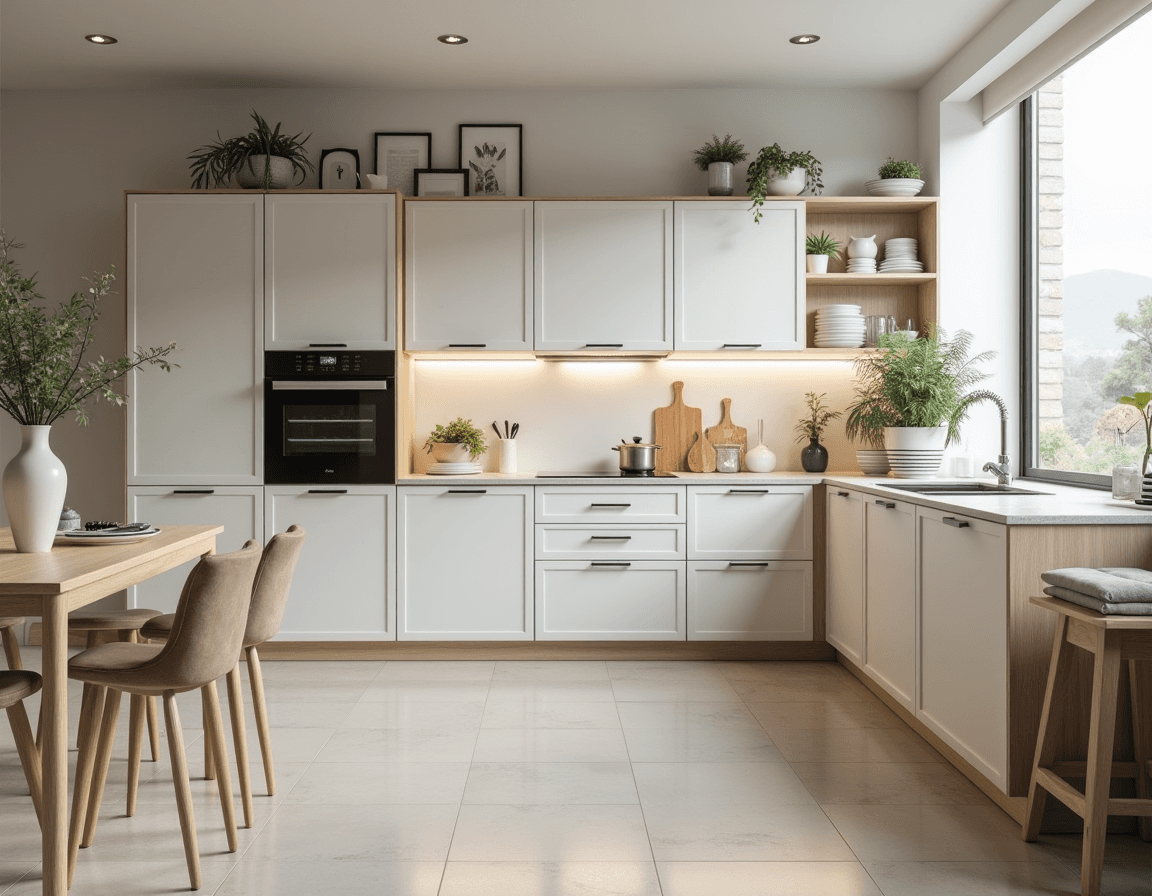
From drawer dividers to pantry storage hacks, here are 20 simple organization tips to create a clutter-free kitchen.
Declutter before organizing
Before you go wild adding organizers, dividers, and storage containers, pull everything out of your cabinets. Go section by section, starting with food in the pantry, pots and pans in lower cabinets, and dishware in the upper cabinets. Toss expired items, donate appliances you haven’t touched in years, and be honest about what brings you joy. The less you have, the easier it’ll be to keep everything clean and tidy.
Use AI to imagine an organized set of cabinets and shelves
Add shelf liners to protect surfaces
Organizing kitchen cabinets works best when you start with a clean space. Shelf liners keep crumbs, spills, and scratches from turning your shelves into a cleaning nightmare. A fun pattern can give you a tiny thrill every time you open the cabinet, and a waterproof version makes clean-up as simple as a quick spray and swipe.
Use clear containers to see contents
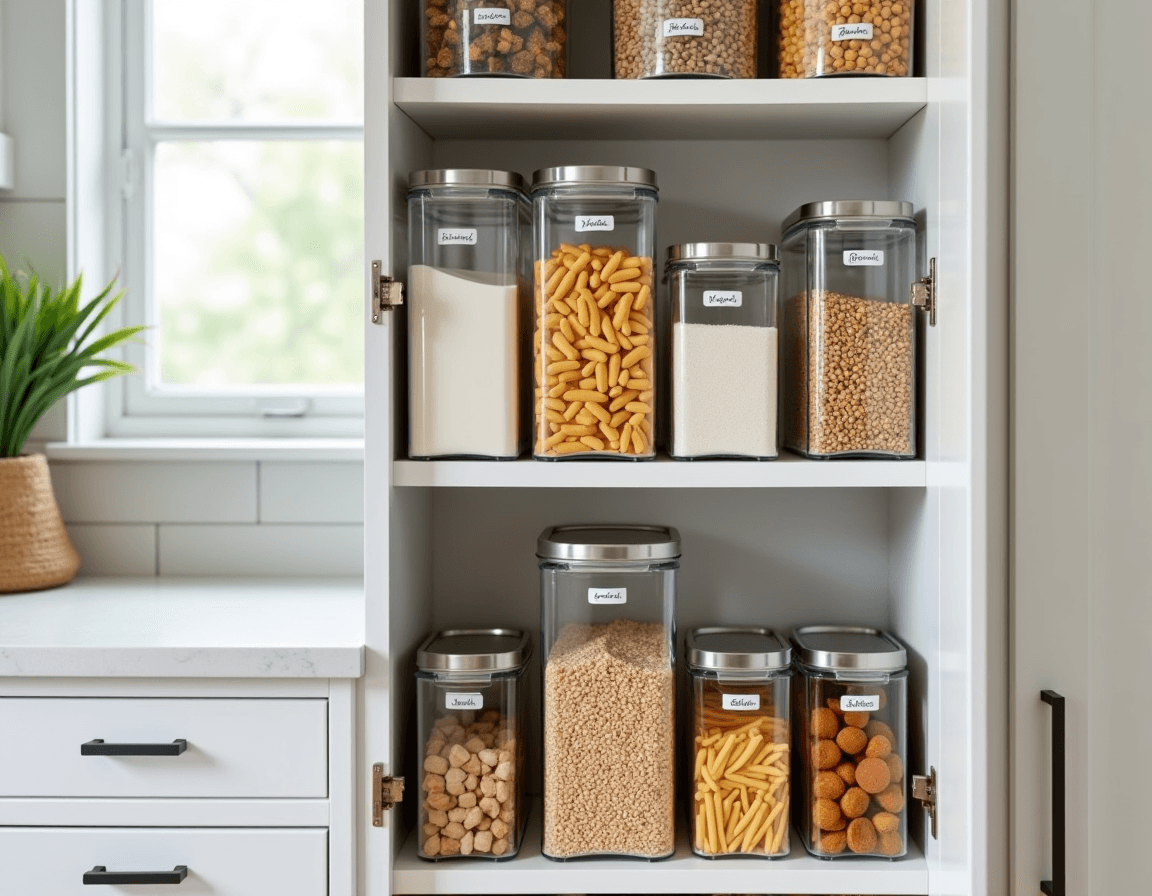
Transparent storage containers make what you have (and what you’re almost out of) obvious, so you won’t think you’re out of rice and purchase a new bag for the third time this month. Store bulk items like sugar, flour, and beans in individual containers, and use larger bins to group snacks, pasta, and tea boxes.
Install pull-out drawers for deep cabinets
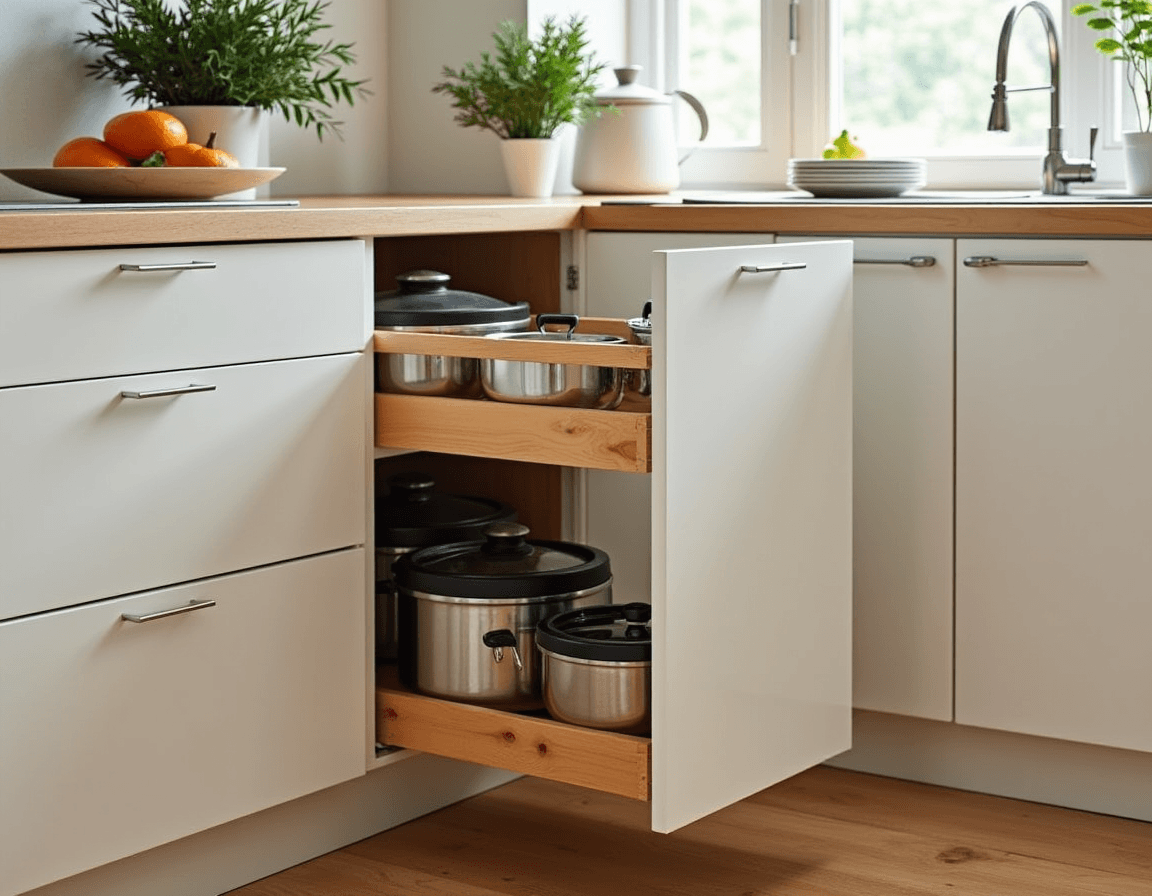
Things tend to disappear into deep kitchen cabinets. Pull-out drawers help you access cooking tools without having to unpack the whole cabinet every time you need a kitchen scale. They’re especially helpful for organizing bulky items you may not use often that get stored in the back of the cabinet, like kitchen appliances, pots, and pans. Be sure to measure your cabinet first so you can find a pull-out drawer that doesn’t waste space.
Use Lazy Susans for round or corner shelves
Corner shelves and cabinets are another storage space that tends to swallow cooking necessities. A Lazy Susan is a great option to house spices, condiments, and bottles of oil and vinegar on a corner shelf: It makes the shelf space functional but still sleek. Choose one with raised sides so your jars are less likely to fly off when the Lazy Susan is spun a little too fast.
Group items by use or function
Everyone has opinions about the right way to organize a kitchen. Whether you put silverware sets in the top drawer or not, decide where to put things in kitchen cabinets based on how you use them. Keep pots and pans near the stovetop or oven and glassware near the sink — or whatever works best for your cooking flow.
Stack matching food storage containers to save space
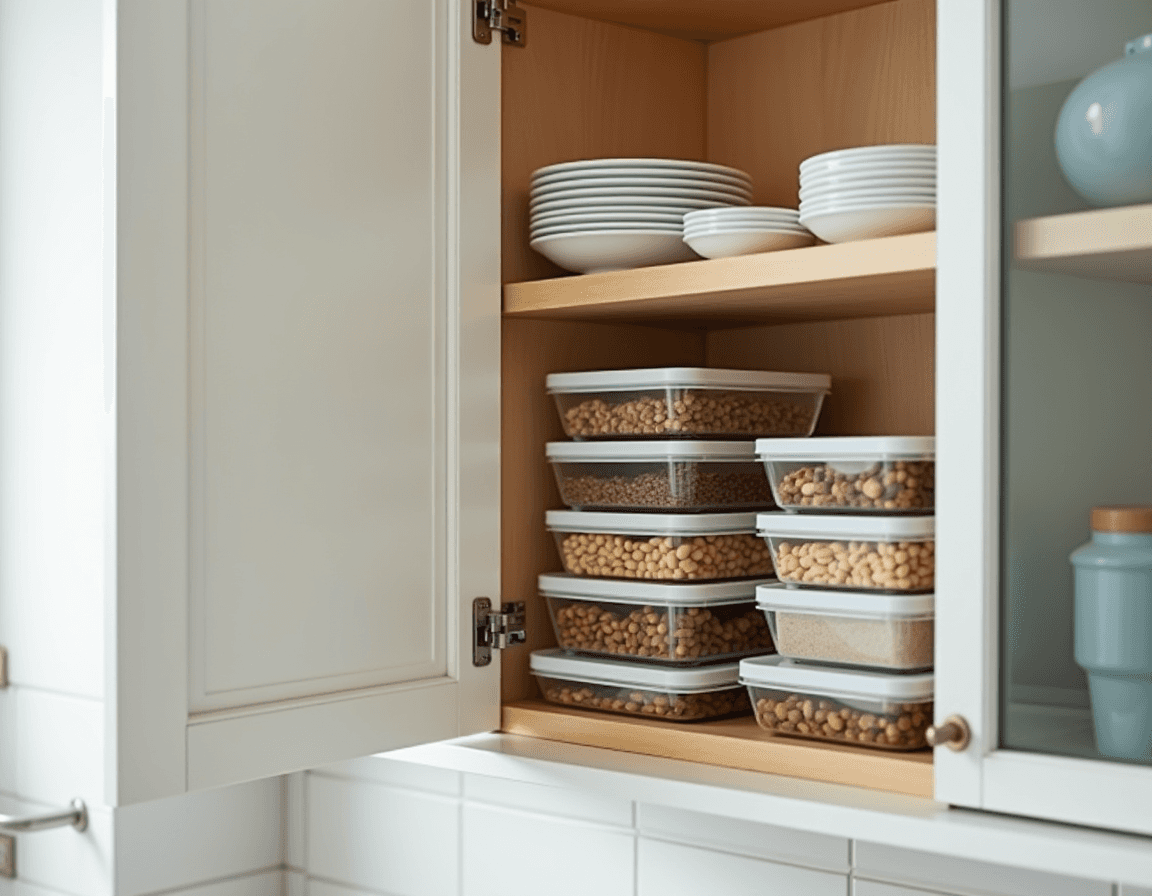
Mismatched sets of containers shoved in a cabinet don’t just mean a potential avalanche. In small rooms, every last inch counts. Stackable containers with nested lids help you fit everything inside the cabinet — no more banishing appliances to the laundry room or stashing pantry overflow in the hallway closet. Invest in matching shapes and sizes, then nest them on top of one another for extra storage potential.
Label everything for quick identification
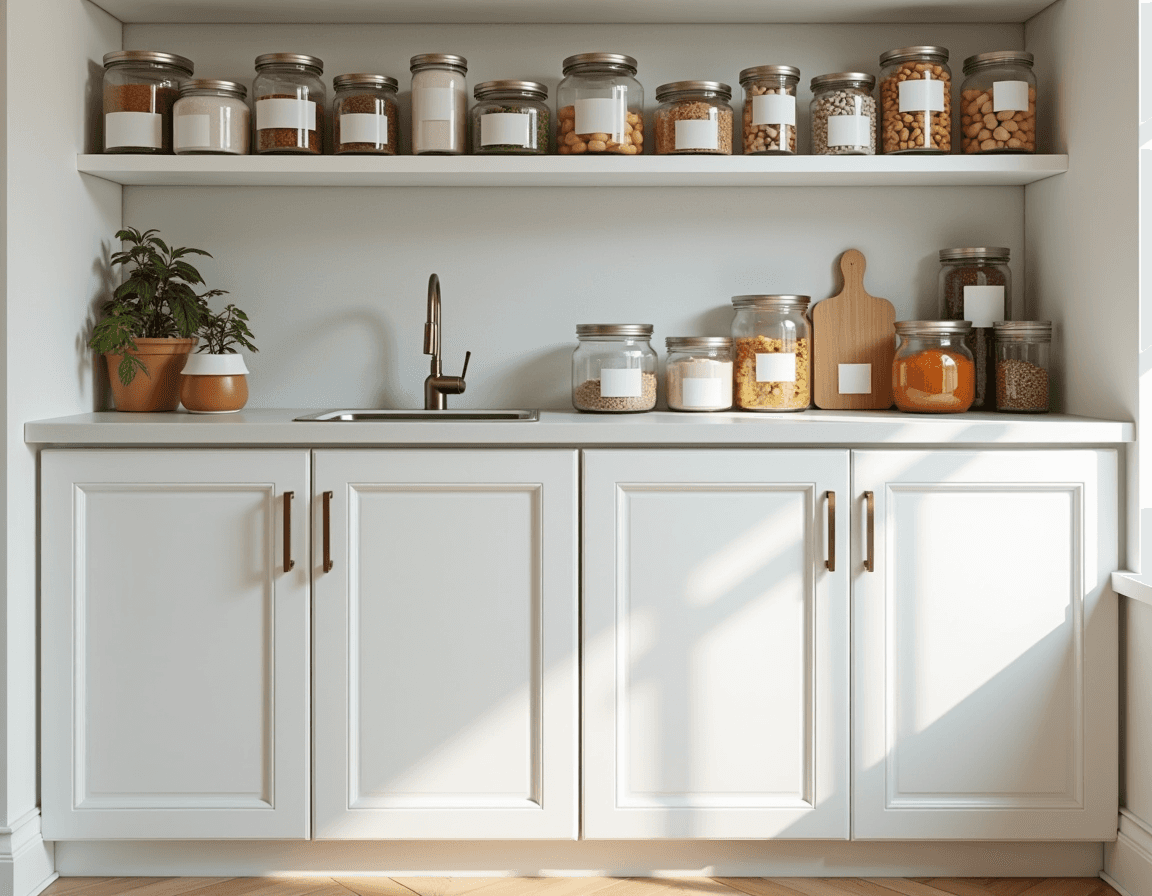
All those clear storage containers need labels so you can tell cake flour from AP flour. It’s not just practical — the stickers can be a design moment. Think retro embossed labels for a vintage cottage vibe or colorful printed labels in a maximalist kitchen.
Use tension rods to divide cutting boards
Cutting boards won’t stand up by themselves, and storing them horizontally is inefficient at best. Install a pair of tension rods vertically inside a cabinet to create a slim slot that keeps them standing upright. It’s a budget-friendly DIY kitchen cabinet organization hack that also works well for baking sheets, platters, and muffin tins.
Browse cutting boards on Onton
Store bulky items in lower cabinets
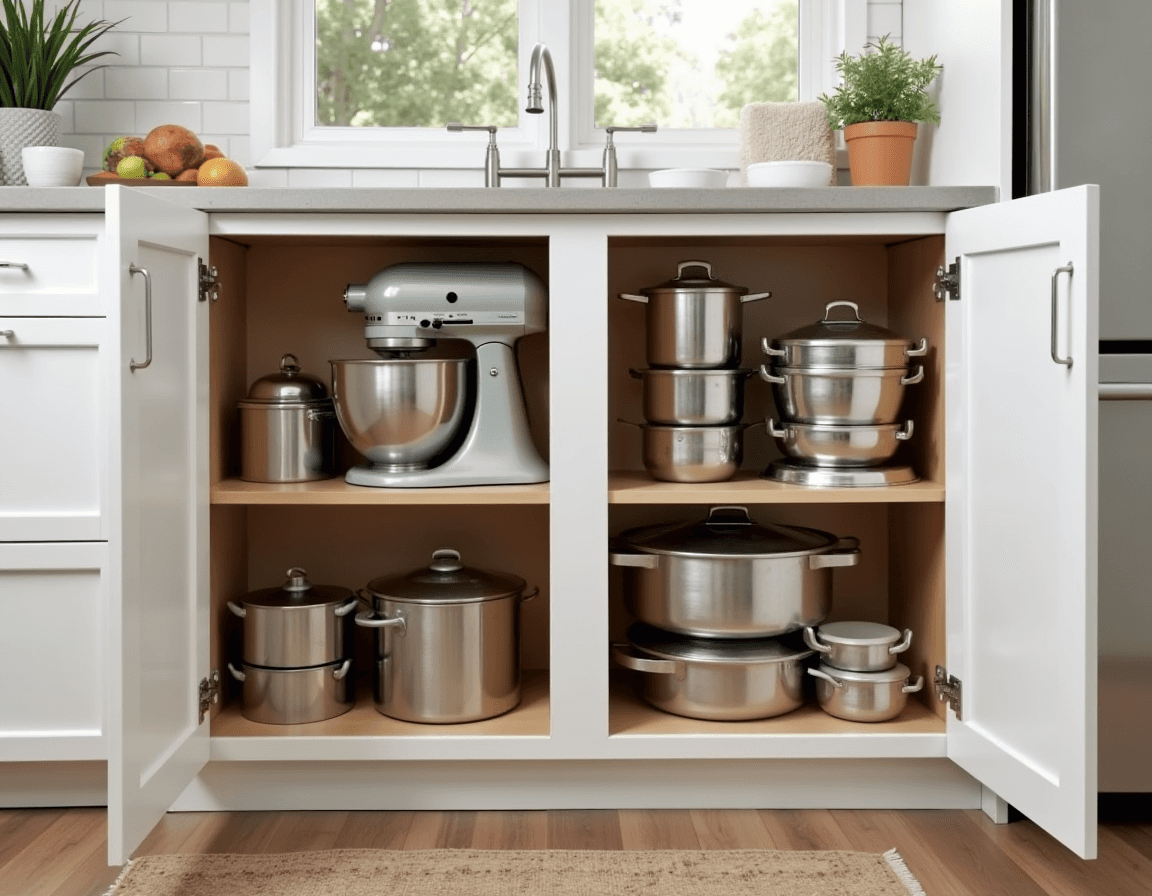
Heavy Dutch ovens, stand mixers, and other bulky cooking tools need low, sturdy shelves. Keeping these items in lower cabinets is a kitchen safety technique for avoiding heavy items crashing down on you. Group items according to your kitchen’s flow — pots and pans near the kitchen island stovetop, and appliances near your usual prep station — so you can still grab them at a moment’s notice.
Put lids and pans in separate sections
Stacking pans with their lids is an inefficient use of precious cabinet space — and time. You’ll spend half your cooking time untangling the mess of pots and pans you had to move first. Store lids vertically in a rack, door-mounted organizer, or DIY divider using tension rods. Like stacking storage containers, it’s a quick and neat storage solution that keeps you focused on cooking rather than reorganizing mid pan-fry.
Keep dishes near the dishwasher
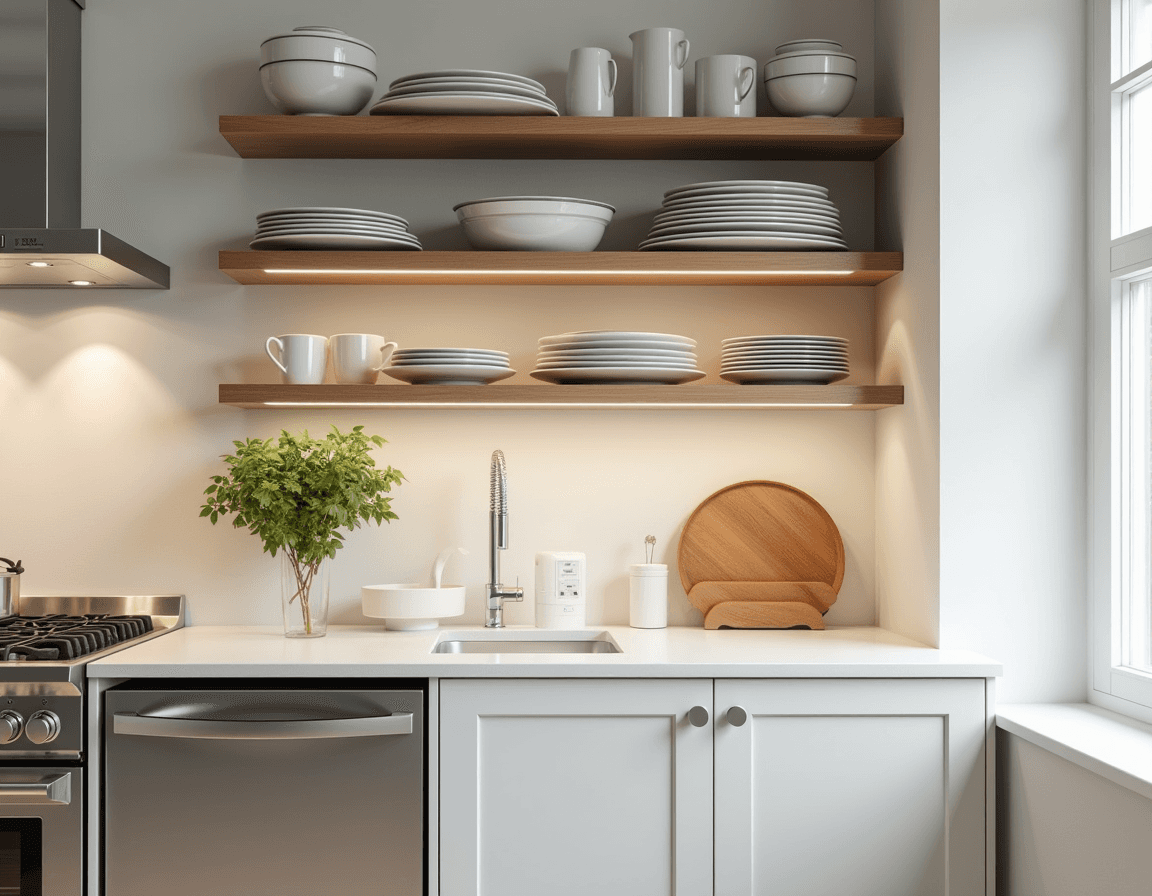
Unloading the dishwasher shouldn’t feel like cardio. It’s pure efficiency to store plates, bowls, and everyday glassware in a cabinet next to the dishwasher so you can move clean dishes from the rack directly to the shelf. Fine china, special serving platters, and fancy stemware shouldn’t go in the dishwasher, so they can stay in the bar or dining room buffet.
Search for stylish stemware on Onton
Hang items behind doors
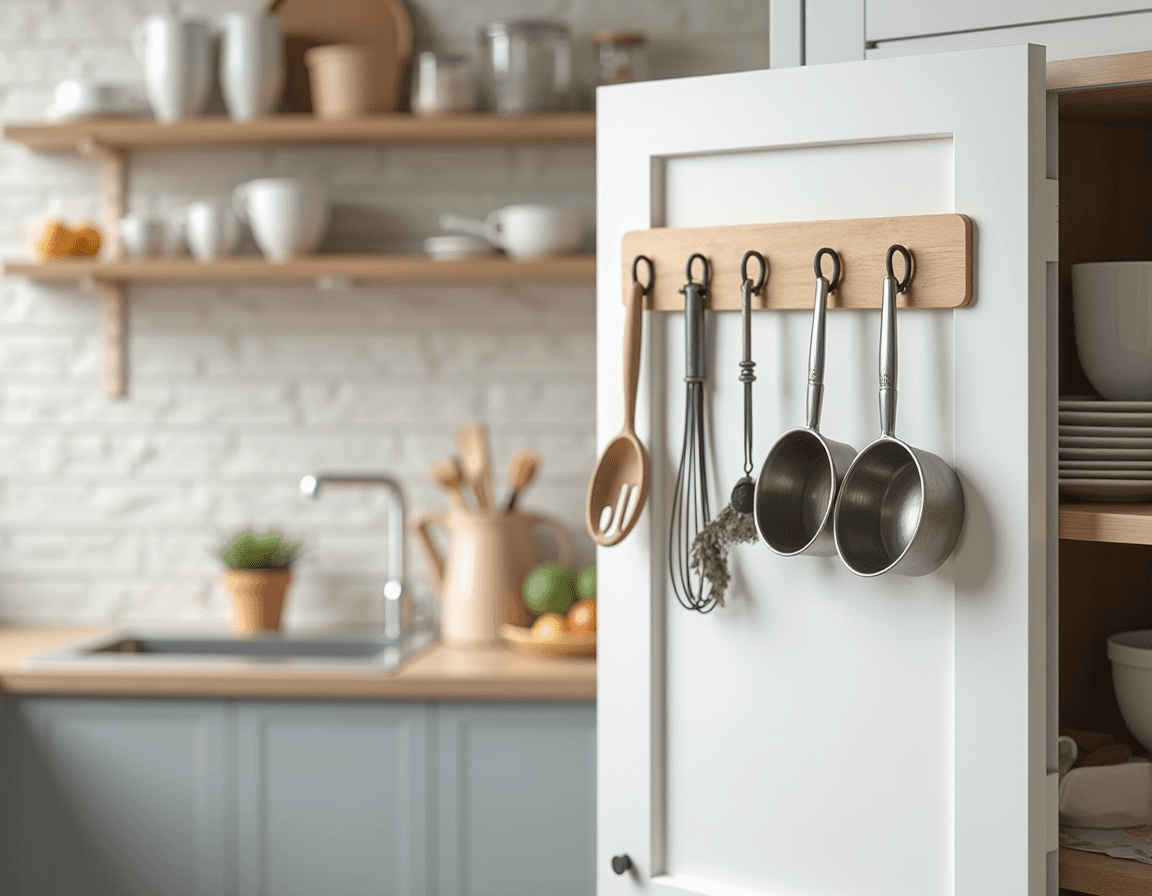
Cabinet and pantry doors are prime real estate for extra storage. Hang hooks or narrow organizers on upper cabinet doors for measuring cups and cooking spoons, or on lower cabinets for paper towel rolls and cleaning supplies. Pantry doors are great for hanging racks to store spices, extracts, and other small food items.
Create a snack station with baskets
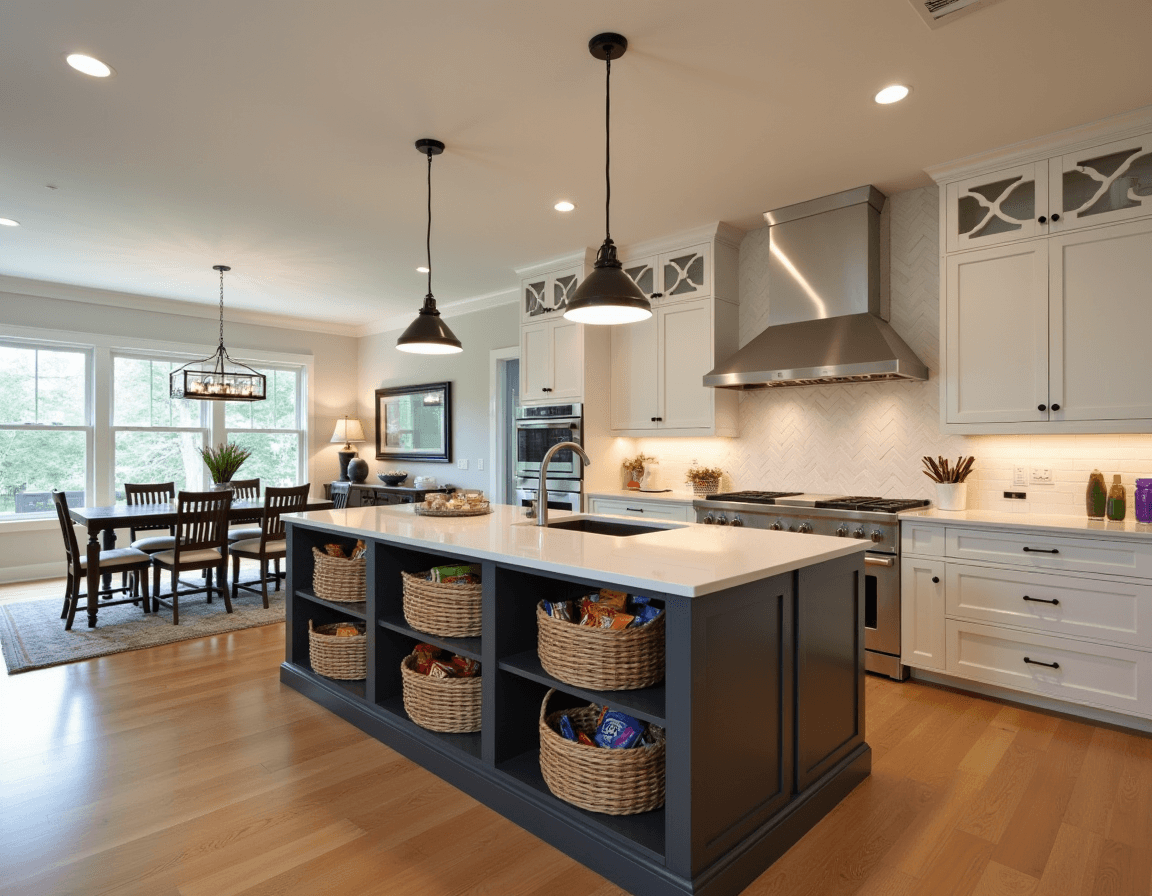
Stash daily snacks in one easy-to-grab spot. Bins on the kitchen bar or island are perfect for catching kids’ eyes and midday cravings. Baskets with built-in dividers make it even easier to separate chips, granola bars, and fruit snacks, and see what needs to be replenished. And filling the basket with healthy snacks is an easy way to encourage eating well, too.
Place spices in a tiered organizer
Even casual gourmands have a dozen different spice jars in their repertoire. If you have limited cabinet space, a spice organizer is another storage solution to keep your flavor roster cataloged. A tiered or behind-the-door spice rack helps you spot them all, so you don’t have to pull every jar out to find the Spanish paprika.
Use drawer inserts for utensils
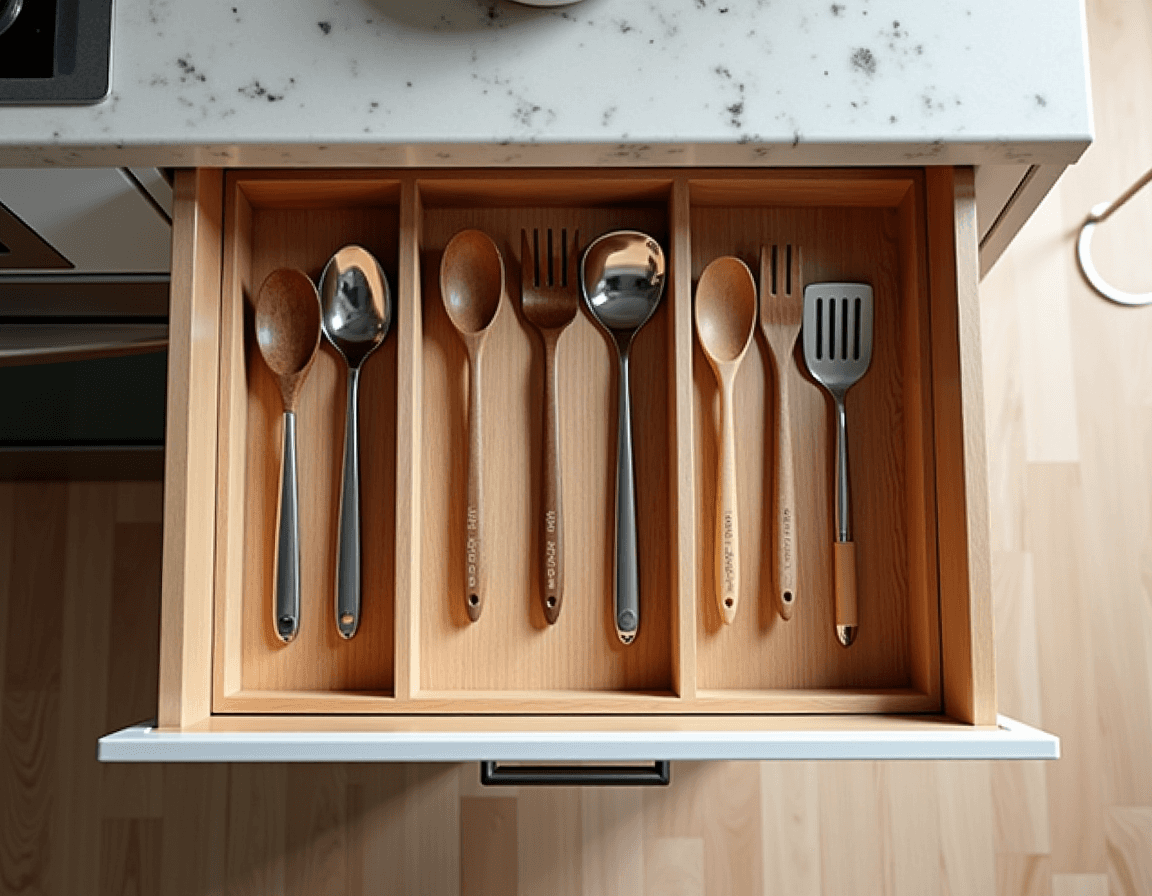
If it sounds like you’re digging for change every time you scour your drawers, then it’s time to grab some drawer inserts. That way, you can keep scrapers together and spoons somewhere else — and avoid burning the garlic while rummaging for a spatula mid-sauté.
Reserve upper shelves for rarely used items
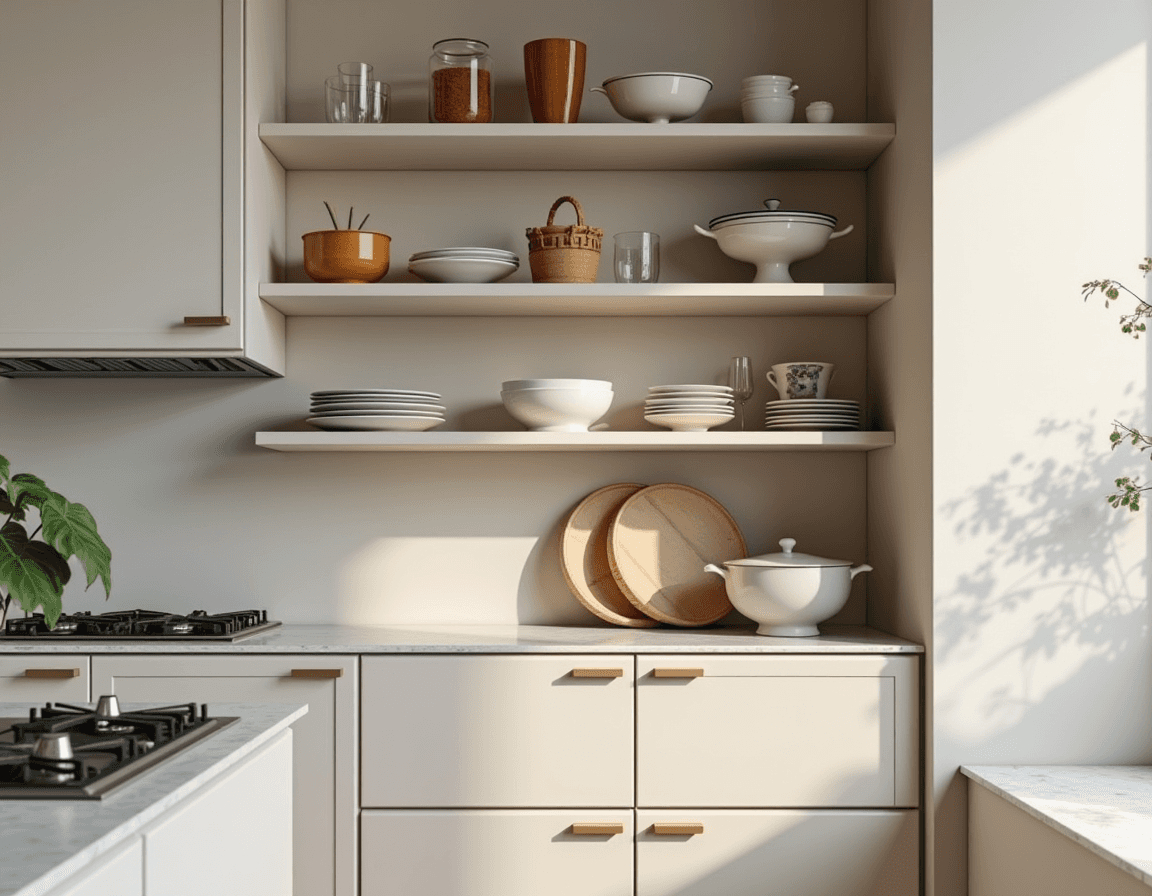
Cake stands, fondue sets, and soup tureens don’t need to be as accessible as regularly used dishware, cups, and cutting boards. Reserve the top shelves of your upper cabinets for items you only use on special occasions.
Remove packaging for uniform storage
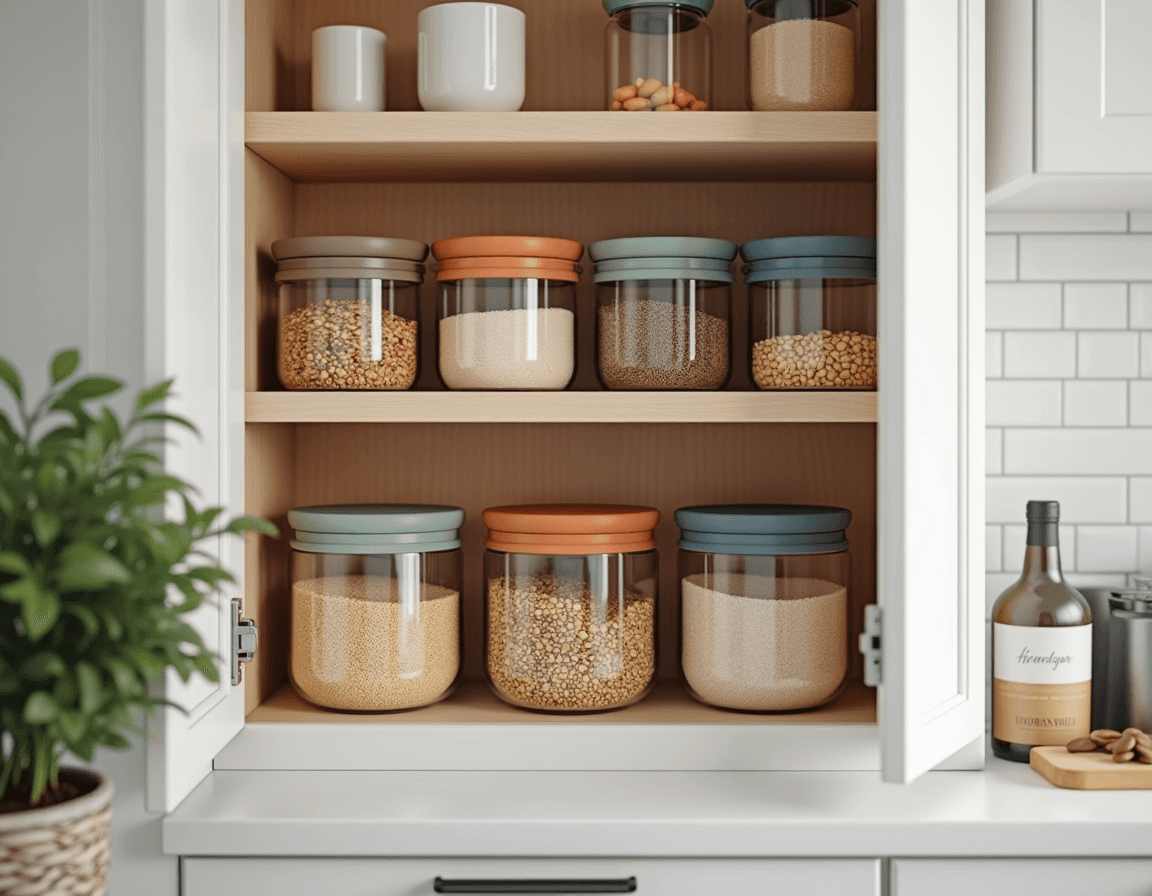
Bags of rice, grains, and coffee grounds hog space and can be difficult to find quickly, especially if you have a lot of them. Decant your goods into matching containers so they fit neatly side by side. It’s practical and, with the right styling, can be stunning. Look for colored lids that match your kitchen decor or cabinet hardware. Think blue for a modern farmhouse or coastal home, or light wood tops for a more modern space.
Store cups and glasses separately
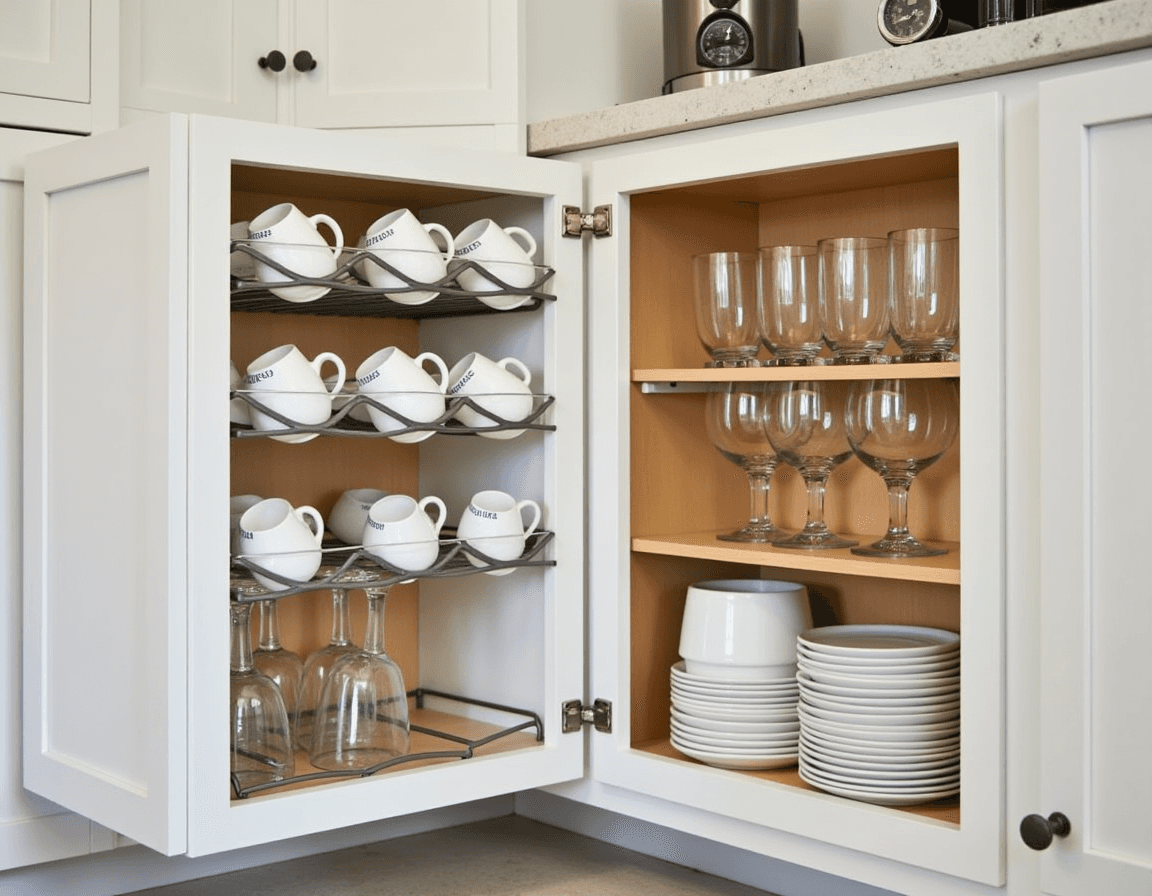
Having to reach over glassware to get the right cup isn’t just annoying: You can break surrounding cups if you aren’t careful. Instead, try clustering glasses of the same type in the cabinet together for easier access. A stemware holder on the underside of an upper cabinet adds storage and makes room for bulkier glassware. And to take advantage of tall shelves, use stackable cup organizers to tier all your drinking vessels.
Use vertical dividers for sheet pans
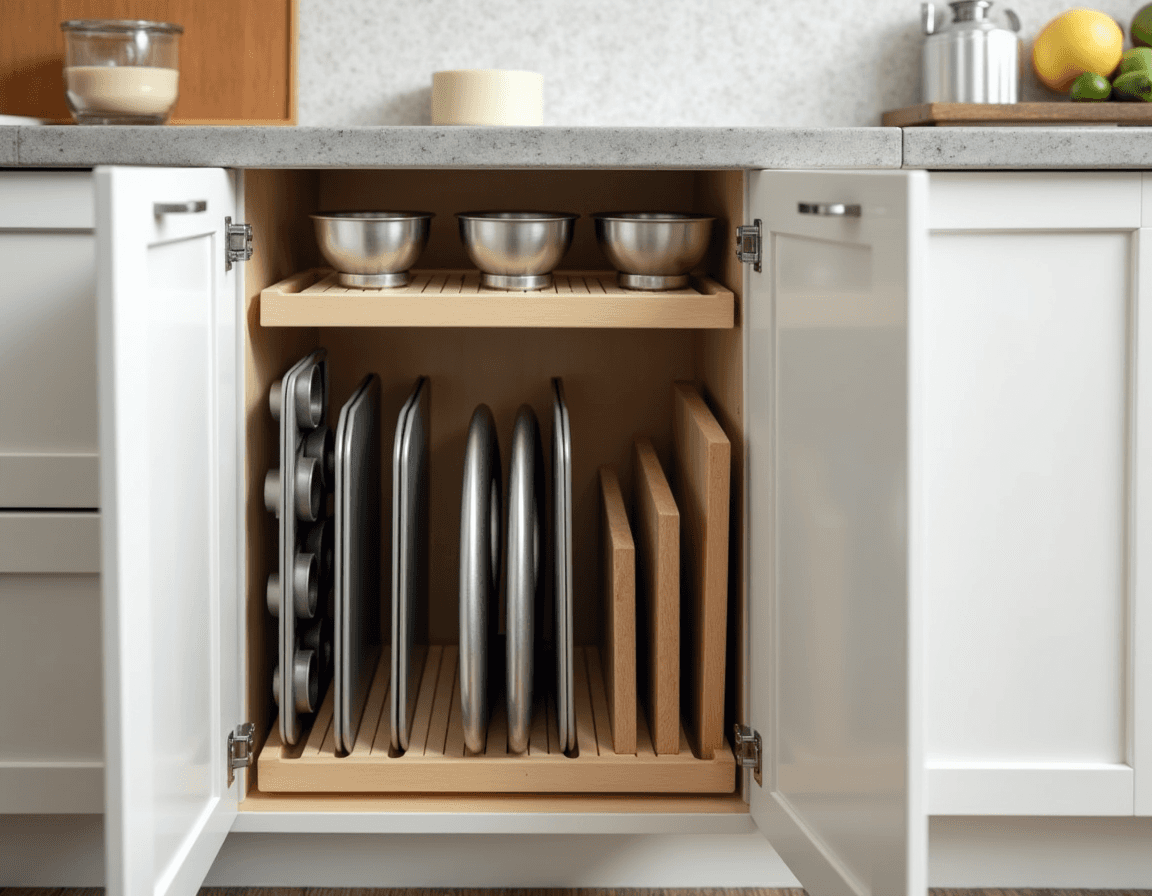
Organizing sheet pans, baking dishes, and muffin tins vertically turns chaotic cabinets into a tidy filing system. Vertical dividers let you slide each cooking sheet into its own slot so you can see and reach exactly what you need without having to dig through your entire toolset.
Explore kitchen cabinet organization ideas with Onton
Ready to get organized? Onton’s AI-powered search engine helps you find storage items to keep your organization system spick and span. Try out prompts like “clear storage containers,” “drawer organizers,” or “Lazy Susans” to get inspired.
Then, bring it all to life with Onton’s Imagine tool. Upload a photo of your space and experiment with kitchen cabinet organization layouts and cabinet styles to see how everything will come together before you commit. Try a prompt like “modern cabinets full of plates, cups, and bowls, with an integrated wine rack” to see how it all looks.
Dream up your ideal organized kitchen with Onton.
Related reading
Keep reading
Design guides, smarter shopping, and AI-powered ways to find what you love
