•
Onton Team
Moving through a smart kitchen layout feels like dancing. You effortlessly prepare a meal without tripping over yourself, moving ingredients from the countertop to the cooktop and stacking clean dishes on the way from the dishwasher to the cabinets.
When it comes to shaping that flow, choose between a kitchen peninsula versus island. Both extend your counter space, build storage, and create a natural gathering spot. But the way they interact with the rest of the kitchen creates two very different vibes.
Read on to see which design might be a better fit for your cooking workspace and overall kitchen aesthetic.
What’s a peninsula in a kitchen?
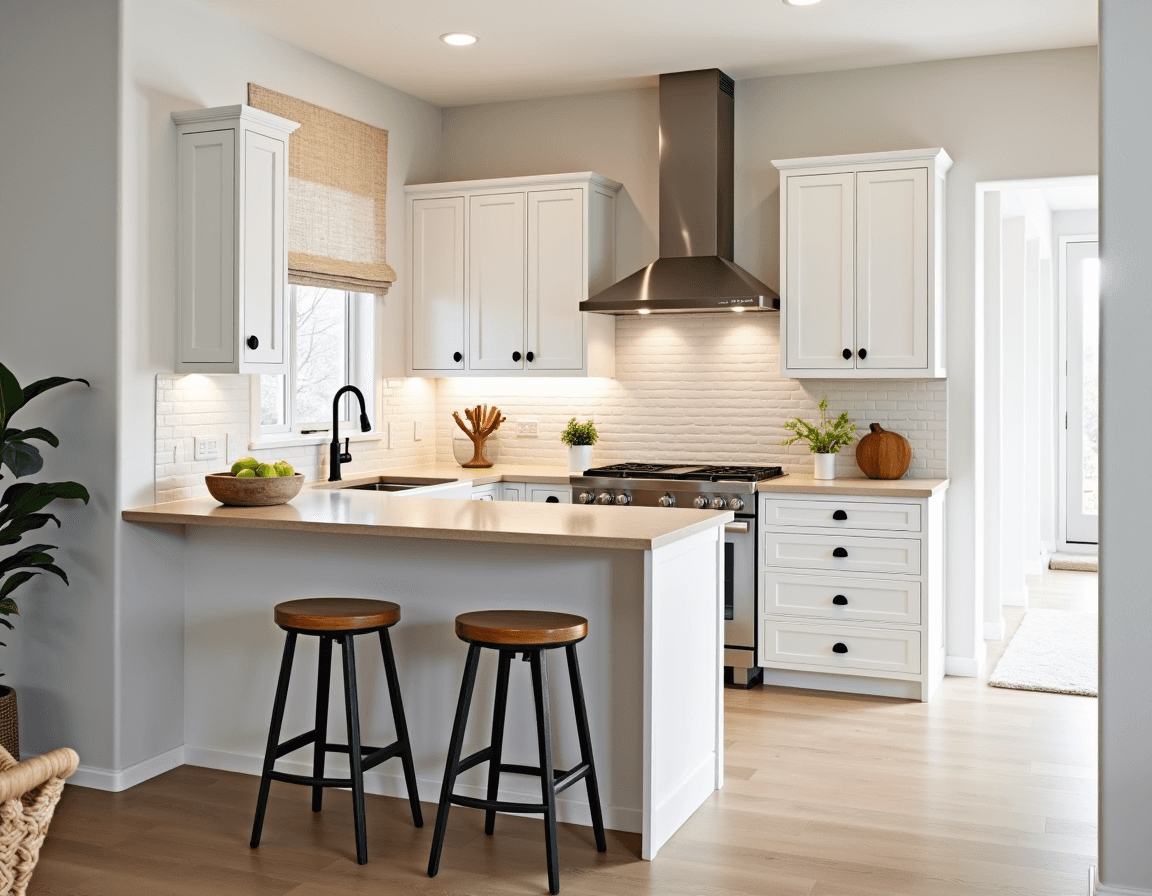
A kitchen peninsula is an extension of your existing kitchen counters. Peninsulas extend from a wall or existing counter, creating a U or L-shaped layout with one end open for seating or circulation (like a geographic peninsula). They tend to act as natural dividers between the kitchen and adjacent living or dining area, adding extra storage and prep space without requiring as much square footage as a kitchen island.
Pros and cons of a kitchen peninsula
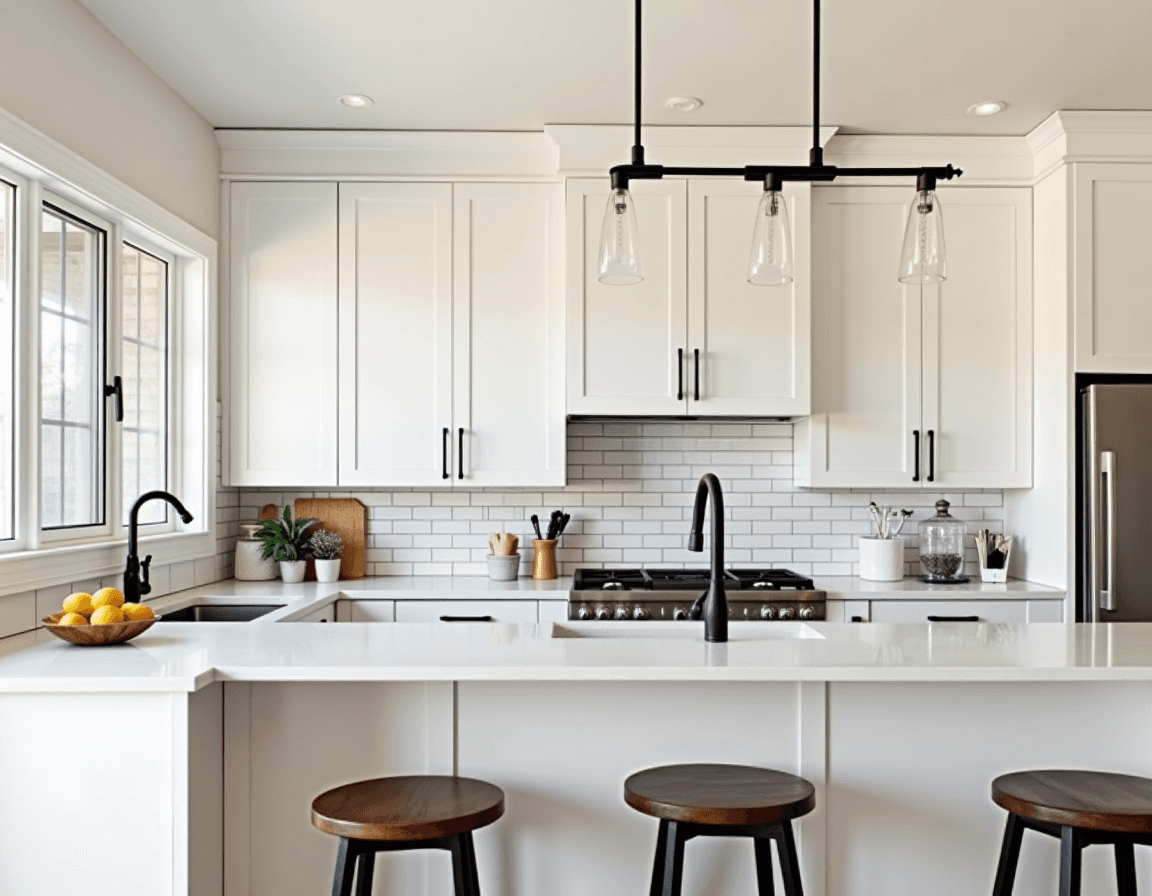
A kitchen peninsula feels cozy for some cooks and stifling for others. Here are the advantages and disadvantages of a kitchen design with a peninsula.
Pros
Smaller spaces: An L or U-shaped countertop squeezes nicely into a small kitchen layout, giving you extra space for food prep, cooking, and casual dining without adding a large piece of furniture.
Space efficiency: Kitchen peninsulas come with cabinets and drawers below, creating more storage space for pots, pans, and appliances.
Additional seating area: A kitchen peninsula naturally separates the cooking area from dining and living room spaces. Many peninsulas come with an overhang or separate counter and bar heights, perfect for adding a few bar stools to create a casual dining area.
Find space-saving cabinet organizers with Onton
Cons
Less cooking flexibility: Kitchens with a peninsula are less flexible than kitchen islands. You can’t access a kitchen peninsula from all sides, giving you fewer options to arrange seating or work from a different angle.
Limited traffic flow: A kitchen peninsula attached to a wall might get in the way of your flow. Peninsulas have a single entry and exit point, which can make the space feel cramped when multiple people cook or move through the space at once. In small kitchens, moving from the fridge to the countertop to the cooktop is more likely to mean bumping into your cooking partner.
Less trendy: Contemporary styles lean into minimalist interior design, which favors open concept layouts and kitchen islands. If you want a more modern interior design, a kitchen peninsula may feel outdated.
What’s a kitchen island?
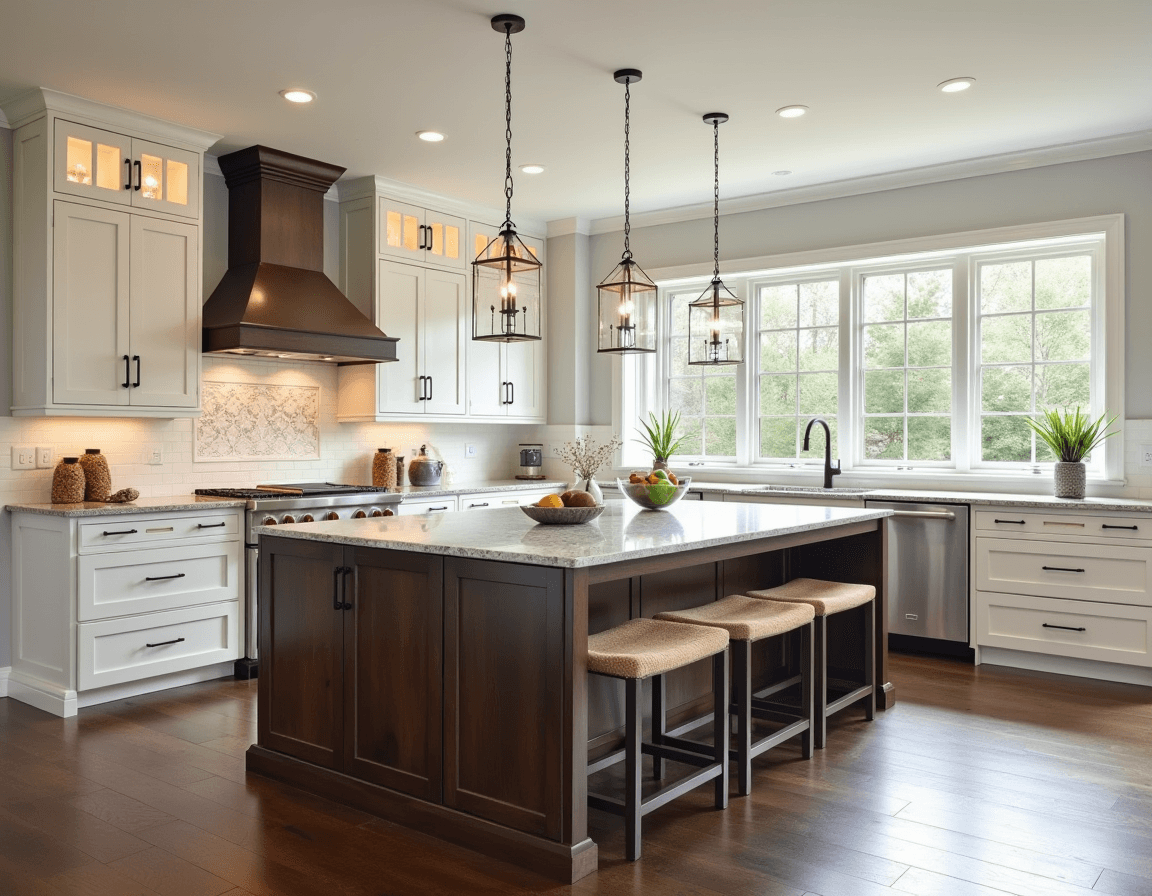
A kitchen island is a freestanding counter that sits in the middle of a kitchen layout. Unlike a kitchen peninsula, an island doesn’t connect to a wall, making it accessible from all sides. Islands serve as a central hub, often including base cabinets and drawers, and some even have built-in sinks and cooktops. Since kitchen islands have four open sides, they can double as a workstation and a dining spot with room to cook on one side and stools tucked below the overhang on the other.
Pros and cons of a kitchen island

Kitchen islands are often the gathering spot in a modern home, but they aren’t everybody’s cooking paradise. Here are the benefits and downsides of a kitchen island.
Pros
More prep space: Kitchen islands offer more food prep space, so you can spread out appliances, cutting boards, and glass bowls of ingredients — and still have enough room for a charcuterie board. The extra space also means more base cabinets for extra storage for all your appliances, cutting boards, and bowls once you finish cooking. Compared to peninsulas, kitchen islands are more likely to have cabinets on both sides.
Modern aesthetic: Kitchen islands are popular in contemporary open-concept layouts. Their clean lines separate the kitchen from the rest of your living space, creating a balanced layout and a flowing sense of openness.
Gathering spot: An kitchen island overhang with bar stools is a win-win for regular entertainers. It keeps guests on one side, happily munching on cheese and crackers, while hosts cook and socialize.
Browse for modern bar stools on Onton
Cons
Higher cost: Installing built-in appliances, electrical outlets, and plumbing to an island in a kitchen remodel gets expensive fast. While kitchen islands don’t have to have these features, they’re the most space-efficient when they also have a sink and a cooktop. Adding a peninsula simply means building onto the existing electrical or plumbing system without having to break ground, which typically costs less.
Breaks the work triangle: In design, the work triangle is a line that goes from the refrigerator to the sink and range. If an island sits in the middle of that triangle, it can interrupt the flow and make everyday cooking feel inefficient.
What’s the difference between a kitchen island and a peninsula?
Need a little extra help deciding between an island and a peninsula? Let’s compare the two:
Structure: Kitchen islands are freestanding, accessible from several sides, and often become the focal point of a room as a separate installation. Kitchen peninsulas attach to a wall or existing counter, anchoring it to the pre-existing layout.
Space requirements: Although kitchen island dimensions may be similar to a peninsula, they require more open floor space. You’ll need 36 to 42 inches of clearance on each side of an island to keep traffic flowing. Peninsulas tuck neatly into small kitchens as an extension of existing cabinetry, while still expanding countertop and cabinet space.
Ideal kitchen types: Kitchen islands work magically in large kitchens, especially those with open concepts. Peninsulas do wonders for small kitchens or galley-style layouts where you need a little separation without closing off or crowding the room.
Kitchen peninsula versus island: Which kitchen layout is best?
When it comes down to the nuts and bolts of your decision between a kitchen island and a peninsula, three factors matter most: how much space you have, where your fridge and stove sit, and what you like.
Available space and room layout
If your kitchen is smaller than average or connected to other rooms without a lot of space to stretch, a peninsula may fit more comfortably. In large kitchens, a kitchen island doubles as a workstation and a social hub, and separates open concept spaces. A kitchen with an island and peninsula can work in very large kitchens for maximum prep, storage, and seating.
Appliance placement
Before deciding between a kitchen island and peninsula for your kitchen, imagine where your sink, stove, and fridge will go. The work triangle should be open for the most efficient movement. Islands give you flexibility to add a sink, cooktop, or dishwasher in the middle of the kitchen, while peninsulas keep everything along the perimeter. If your work triangle looks more like a loop or an “L,” the layout will feel cramped and clunky.
Design preference
Peninsulas create a natural wall between cooking spaces and the dining or living areas, or sit neatly on their own. Islands encourage people to gather around and come into the kitchen while you cook. They also have extra space to add character with kitchen island decor or an overhead pendant light.
Use AI to imagine the perfect kitchen layout
Design your dream kitchen with Onton
Embarking on a kitchen remodel? Onton’s AI-powered search engine helps you explore all your modern kitchen ideas, whether it’s a cozy kitchen peninsula or an expansive kitchen island. Decorate the space with prompts like “kitchen bar stools,” “utensil containers,” or “woven runner rug” to discover pieces that complement your design.
Once you find a few favorites, use Onton’s Imagine tool to preview how they’ll look in your kitchen. Just upload a photo and start experimenting with layouts, materials, and decorative accents. Or try a prompt like “small mid-century modern kitchen with peninsula and terrazzo countertops” to see a whole new room.Dream up your ideal kitchen with Onton.
Related reading
Keep reading
Design guides, smarter shopping, and AI-powered ways to find what you love
