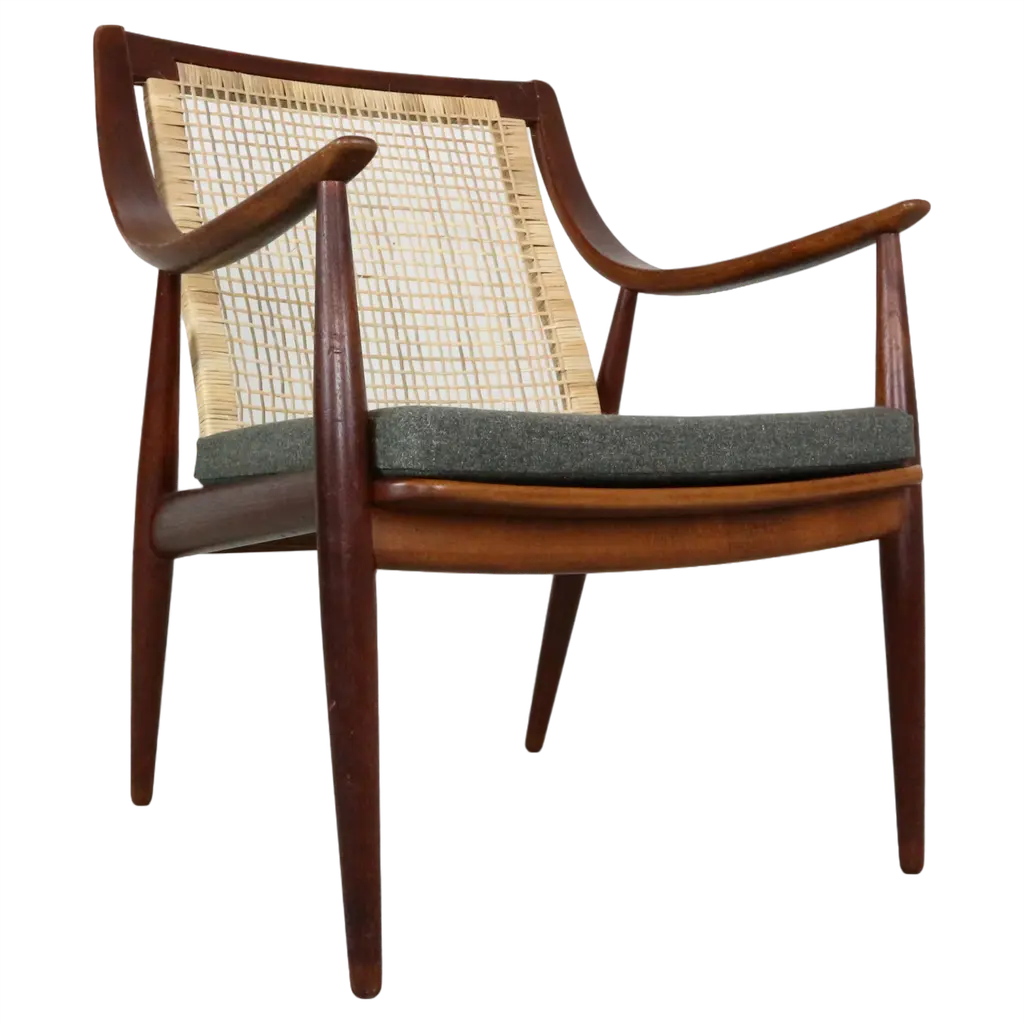
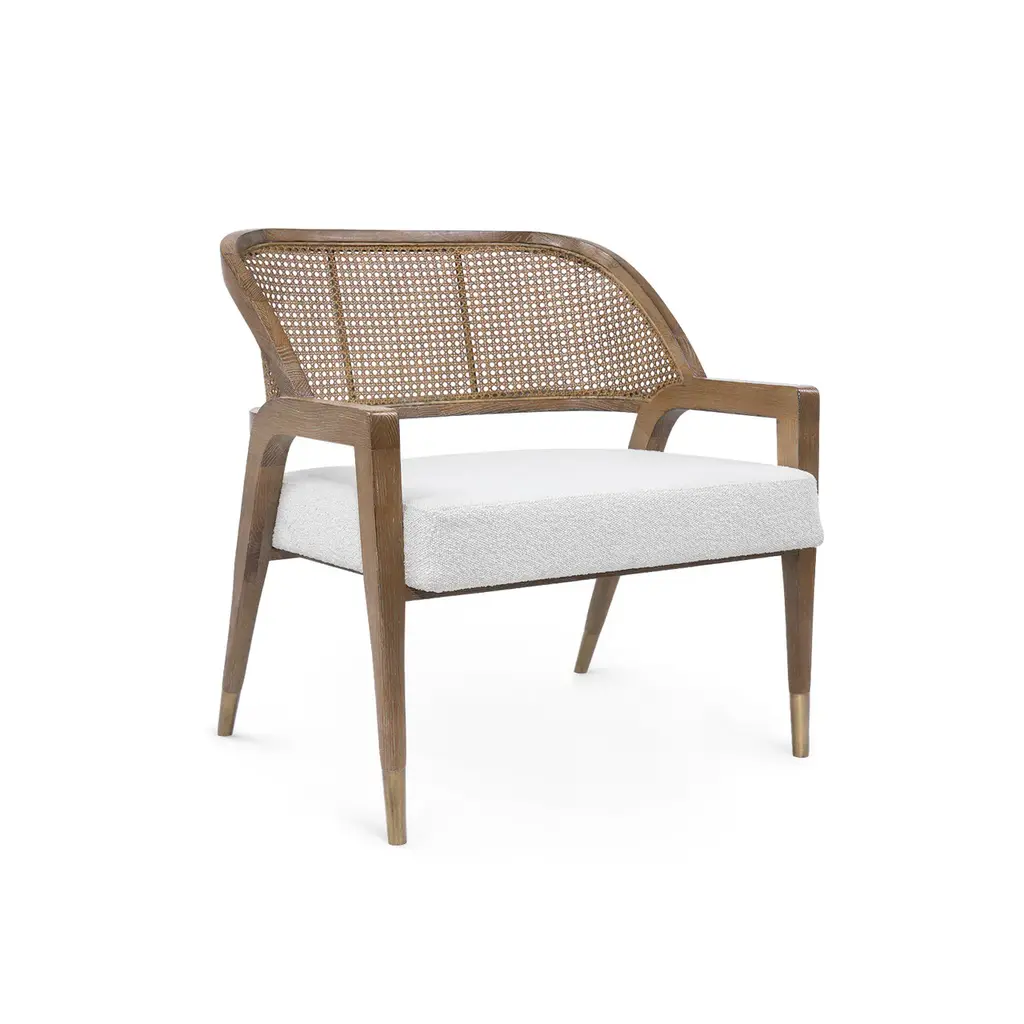
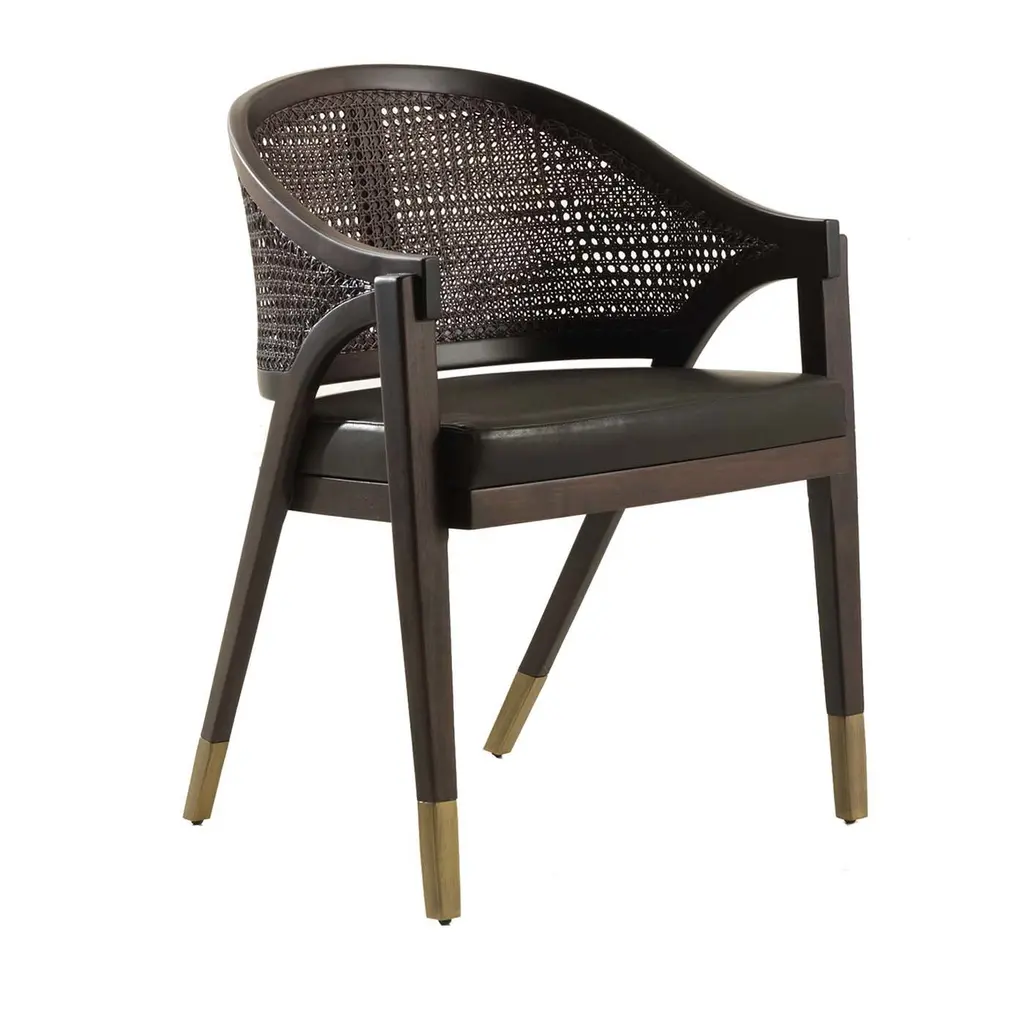
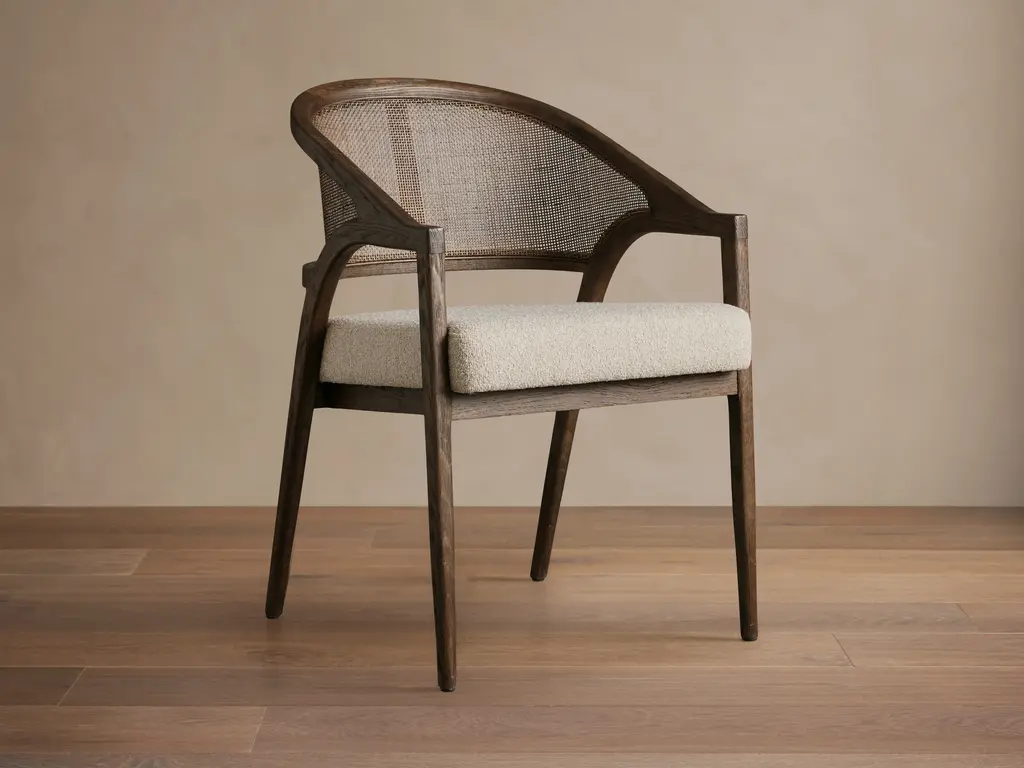
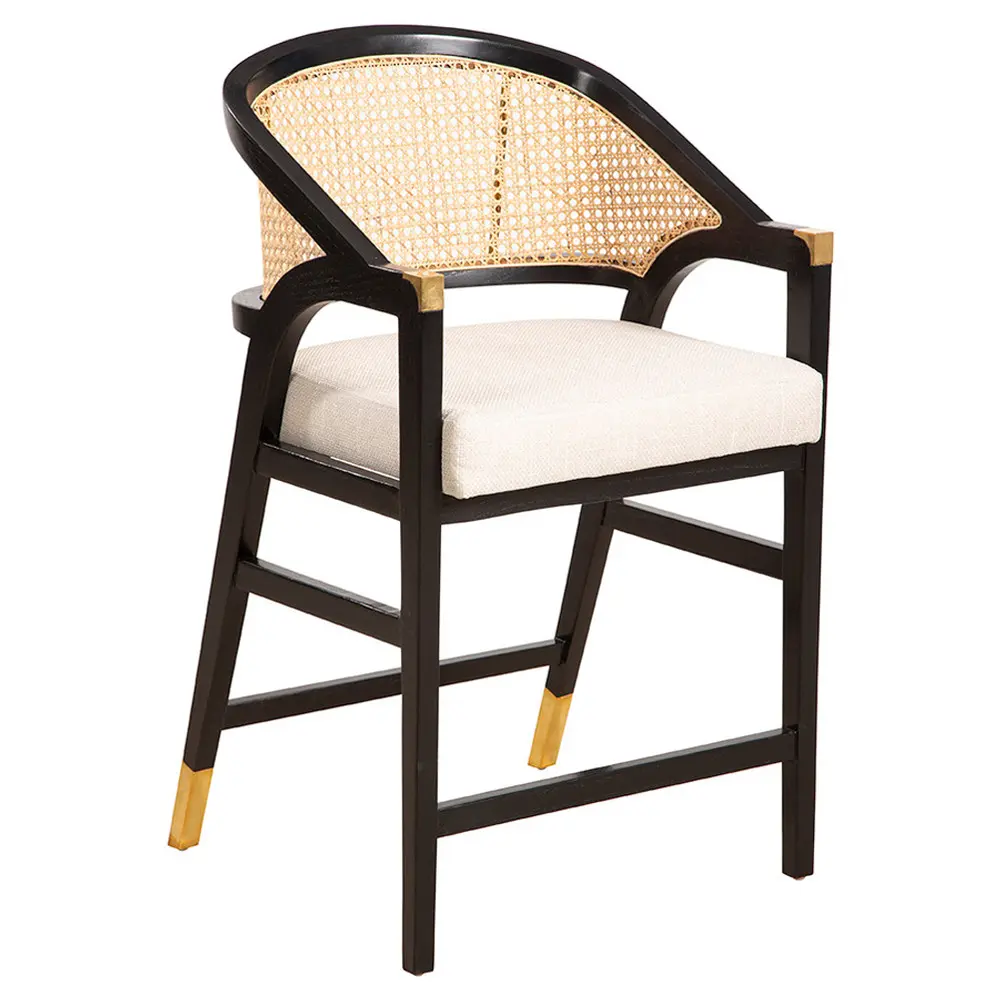
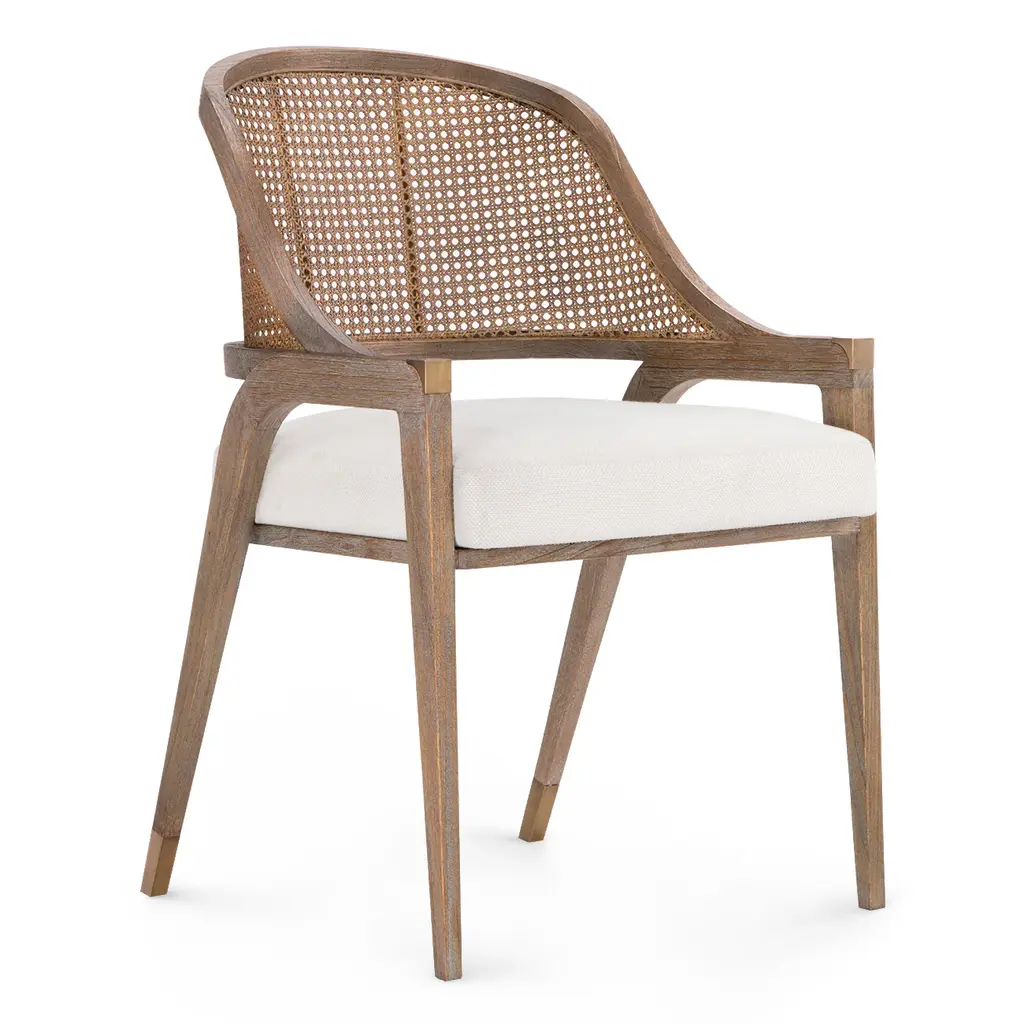
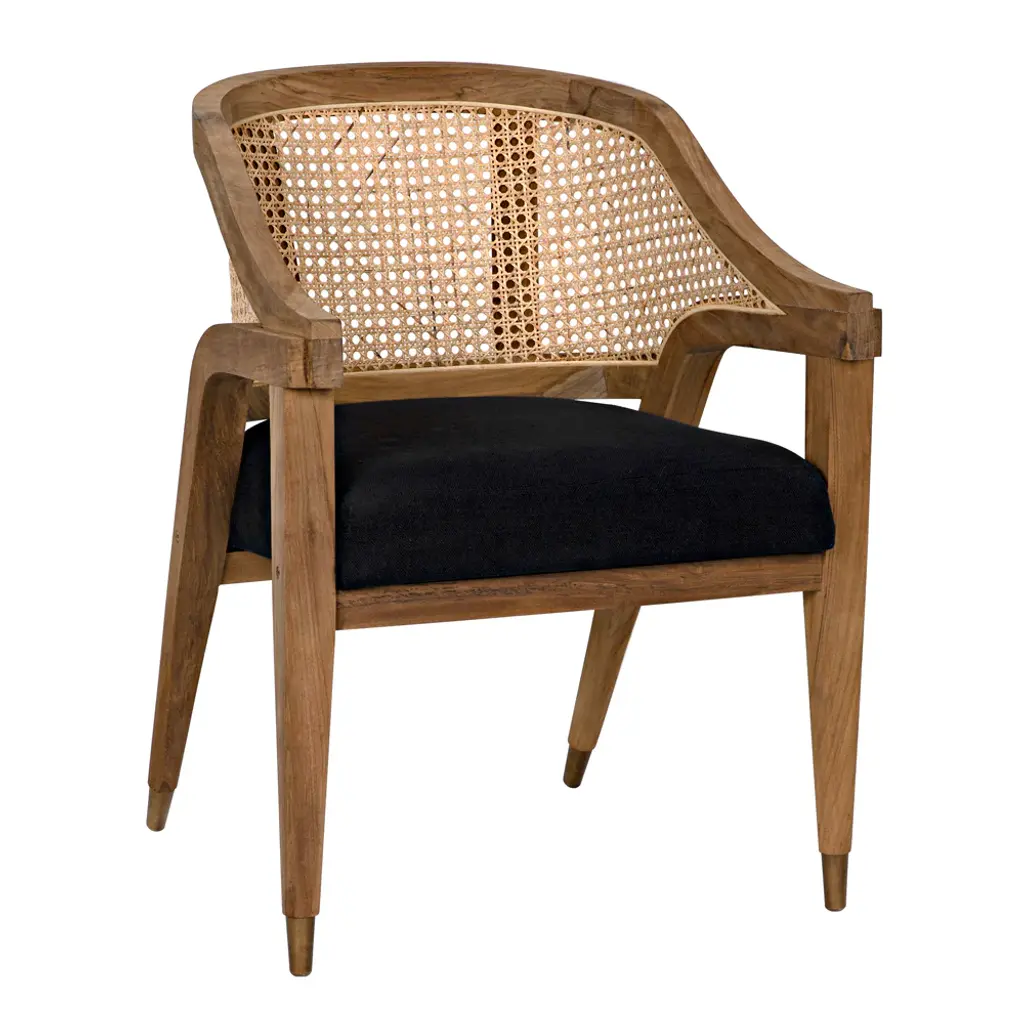
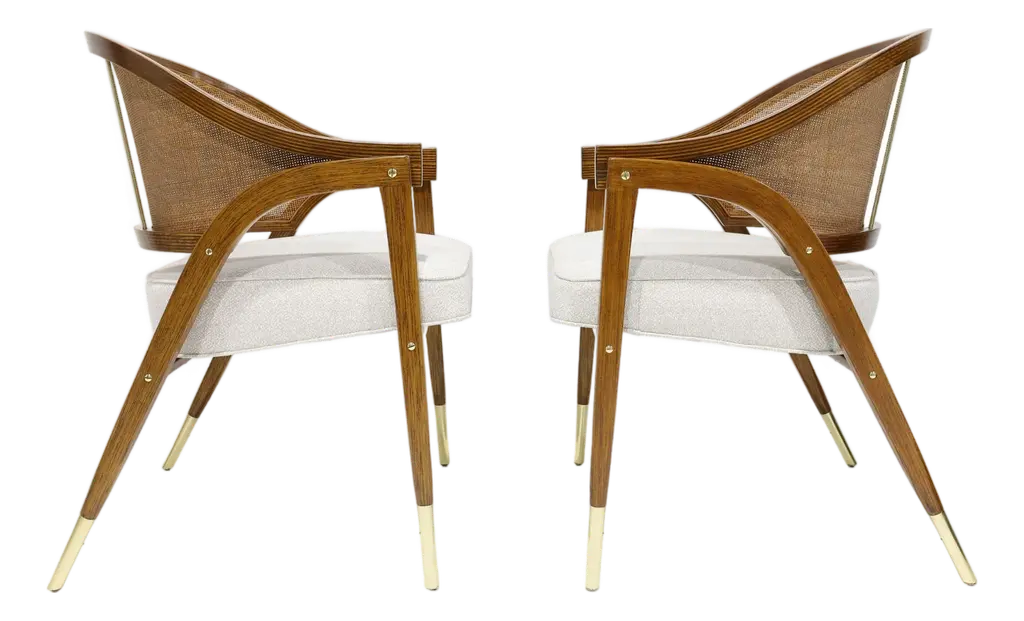
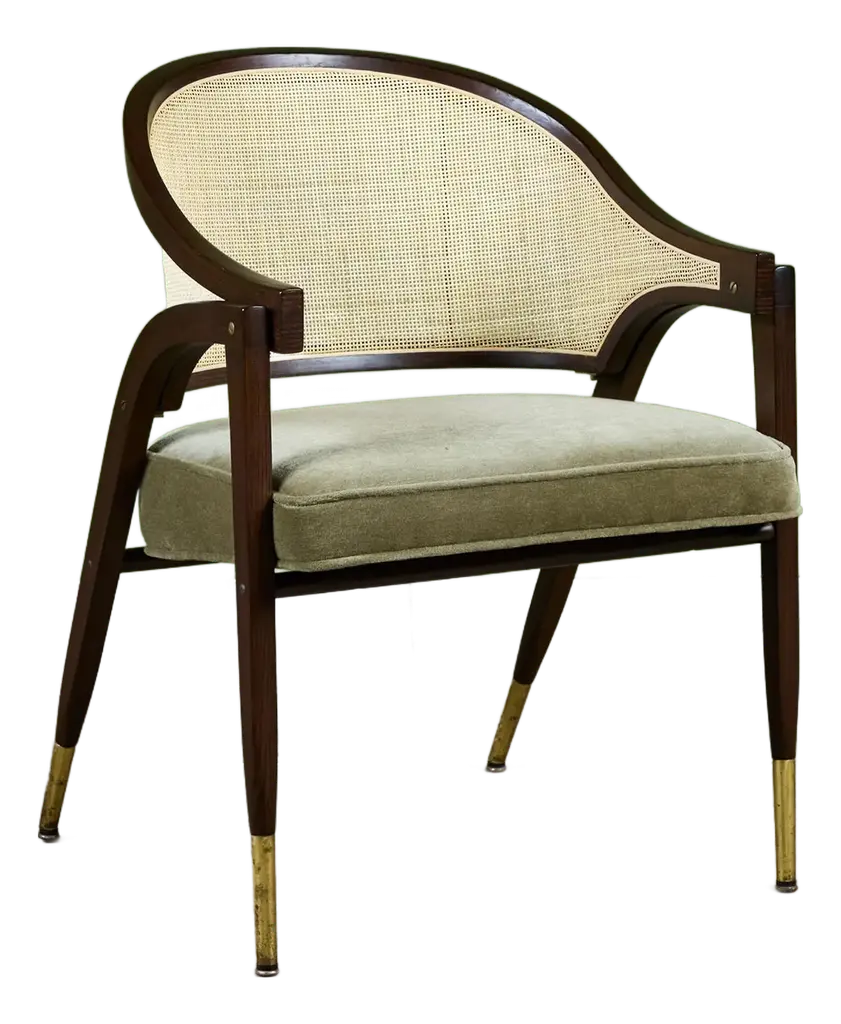
A chair is an argument about how to sit—and more broadly, how to live. The Captain's Chair by Edward Wormley makes its case with understated eloquence: that American furniture tradition can inform contemporary sophistication, that structural honesty needs no embellishment, and that the most enduring designs are those that honor both craft heritage and modern life.Conceived by Wormley in 1954 during his most innovative period at DUNBAR, this Captain's Chair represents a masterful distillation of the traditional American Windsor form through the lens of mid-century modernism. Where colonial chair-makers worked within the constraints of available tools and local materials, Wormley brought to bear the full resources of DUNBAR's Berne, Indiana workshops—originally using a bent laminate for the back legs craftsmen now use steam-bending solid hardwood for the legs which gives the chair its distinctive, flowing stance. This isn't mere homage to American furniture history; it's a thoroughly contemporary interpretation that speaks to Wormley's belief in evolutionary rather than revolutionary design.The chair's most striking feature—those gracefully curved legs achieved through steam-bending—demonstrates DUNBAR's commitment to traditional craft techniques in service of modern aesthetics. Each leg begins as select American walnut or ash, carefully chosen for straight grain that will withstand the bending process. Master craftsmen steam the wood until pliable, then carefully bend it to Wormley's precise specifications, creating curves that would be impossible through carving alone. The result is legs that possess both visual lightness and structural integrity, their gentle curves echoing the ergonomic arc of the seat back while providing exceptional stability.The frame construction employs time-honored mortise-and-tenon joinery throughout, each joint cut by hand to ensure perfect fit without reliance on hardware or modern adhesives. The continuous arm rail flows seamlessly into the crest rail, carved from a single piece of hardwood to eliminate weak points while creating an unbroken line that embraces the sitter. The back spindles—turned and tapered with mathematical precision—provide flexible support while maintaining the visual transparency that keeps the chair from overwhelming dining spaces.What makes this Captain's Chair endure is its remarkable versatility within domestic spaces. Around a dining table, it offers hours of comfortable support without the bulk of upholstered seating. As a desk chair, it provides proper posture support while maintaining mobility. Pulled into a bedroom or entry, it serves as both functional seating and sculptural presence. This adaptability reflects Wormley's understanding that American homes require furniture that can gracefully transition between formal and casual use.The chair represents American modernism at its most livable—a design that respects its colonial antecedents while serving contemporary life without nostalgia or pastiche. Hand-crafted in High Point, North Carolina with each chair carrying forward DUNBAR's 115-year commitment to furniture that improves rather than merely endures with age. The lacquer finish, hand-applied in multiple coats and rubbed between applications, creates a surface that will deepen and warm with decades of use, developing the kind of patina that transforms furniture into a family heirloom.
Similar products