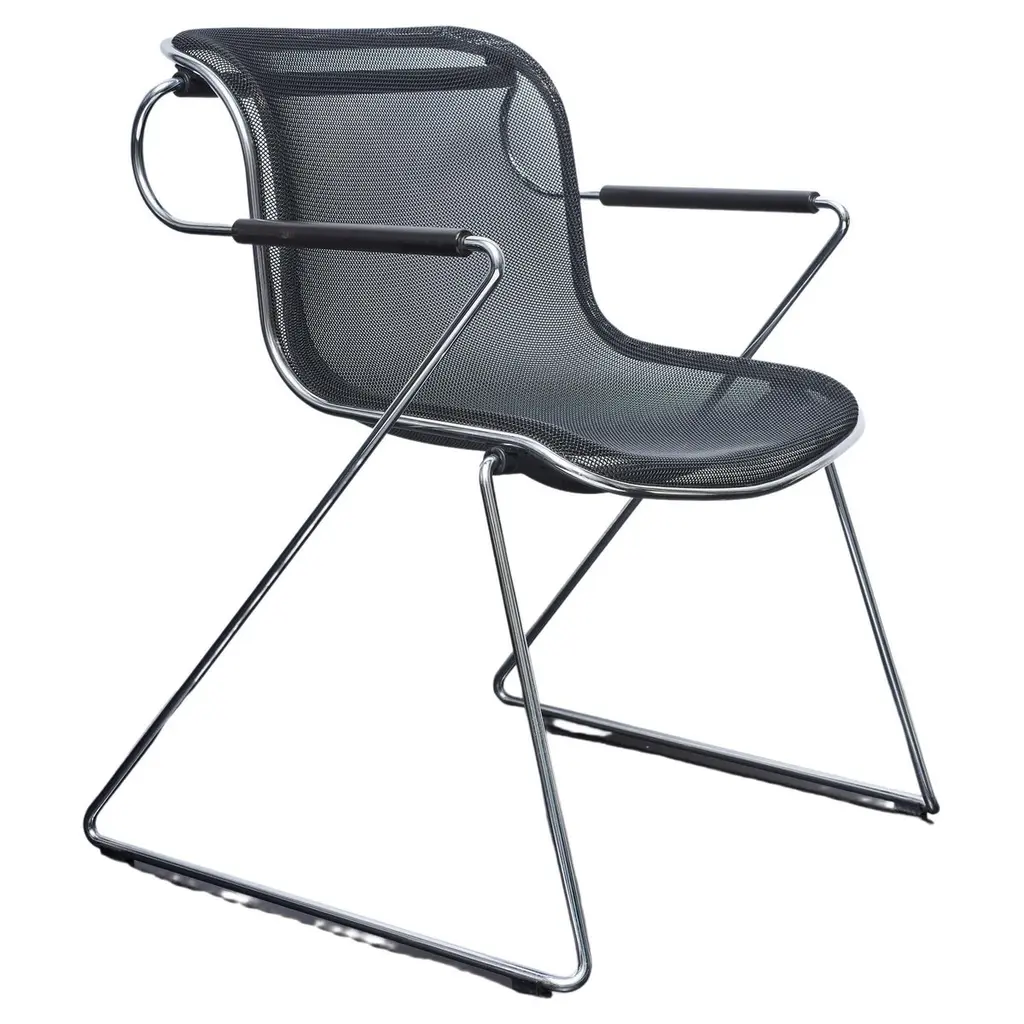
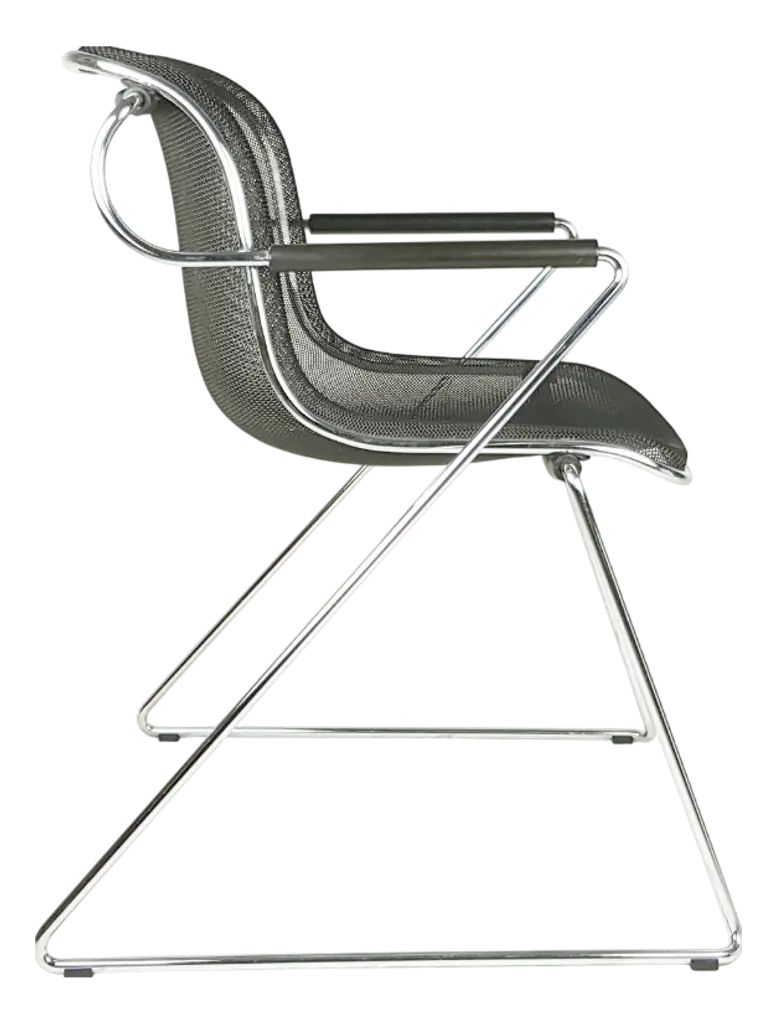
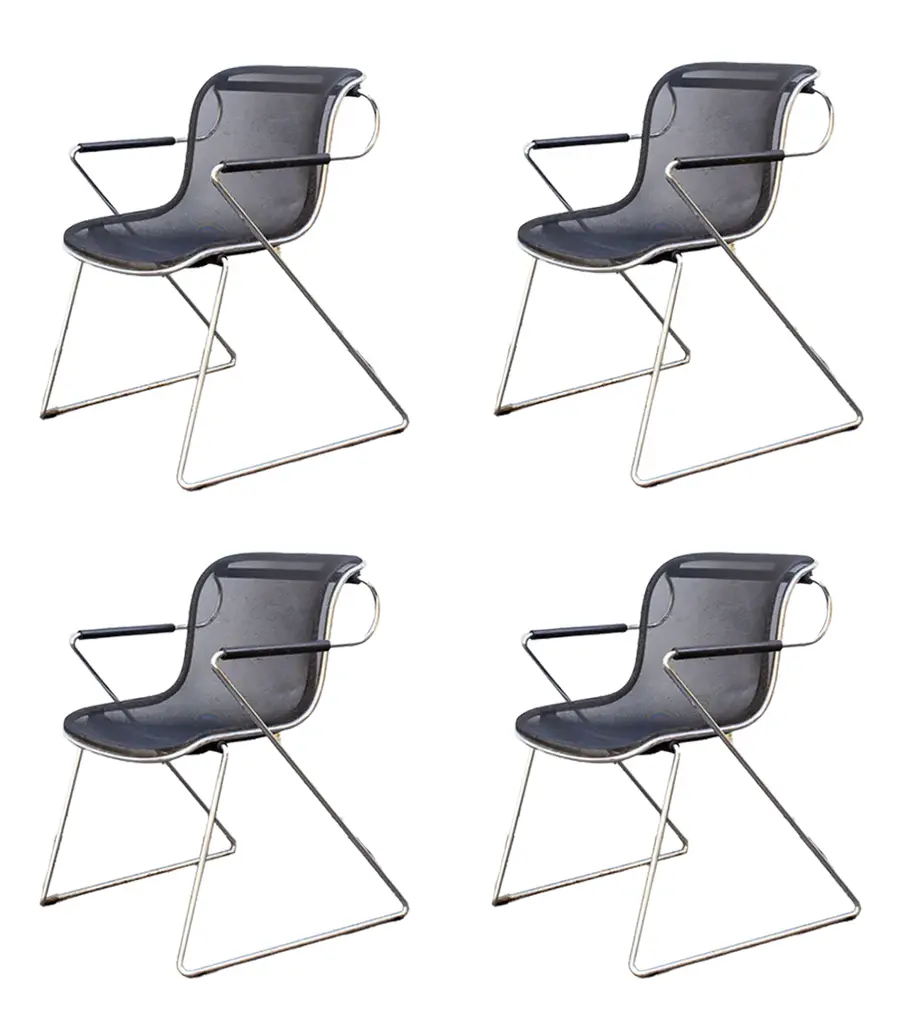
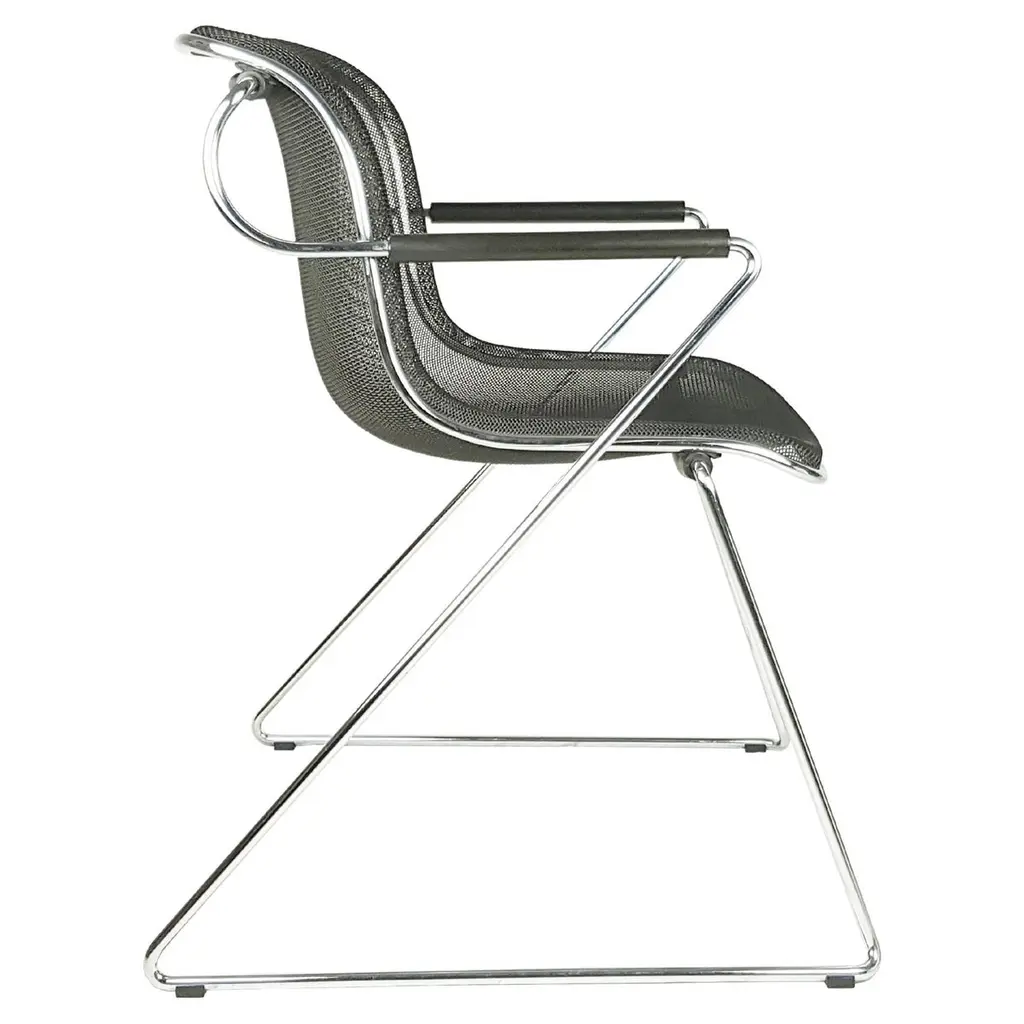
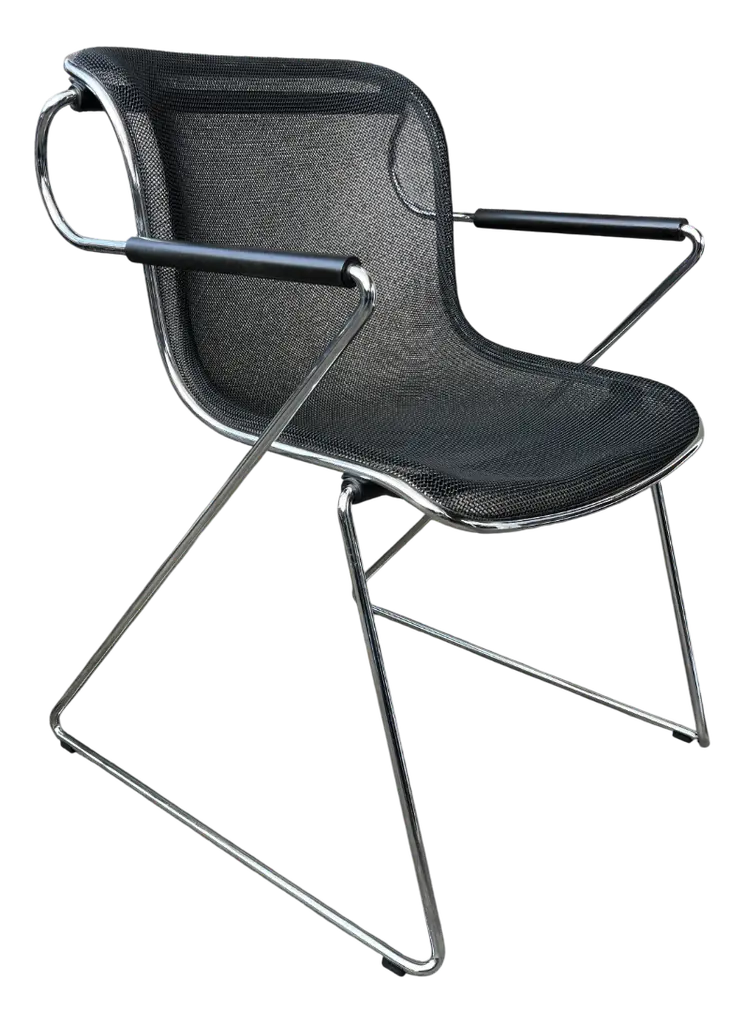
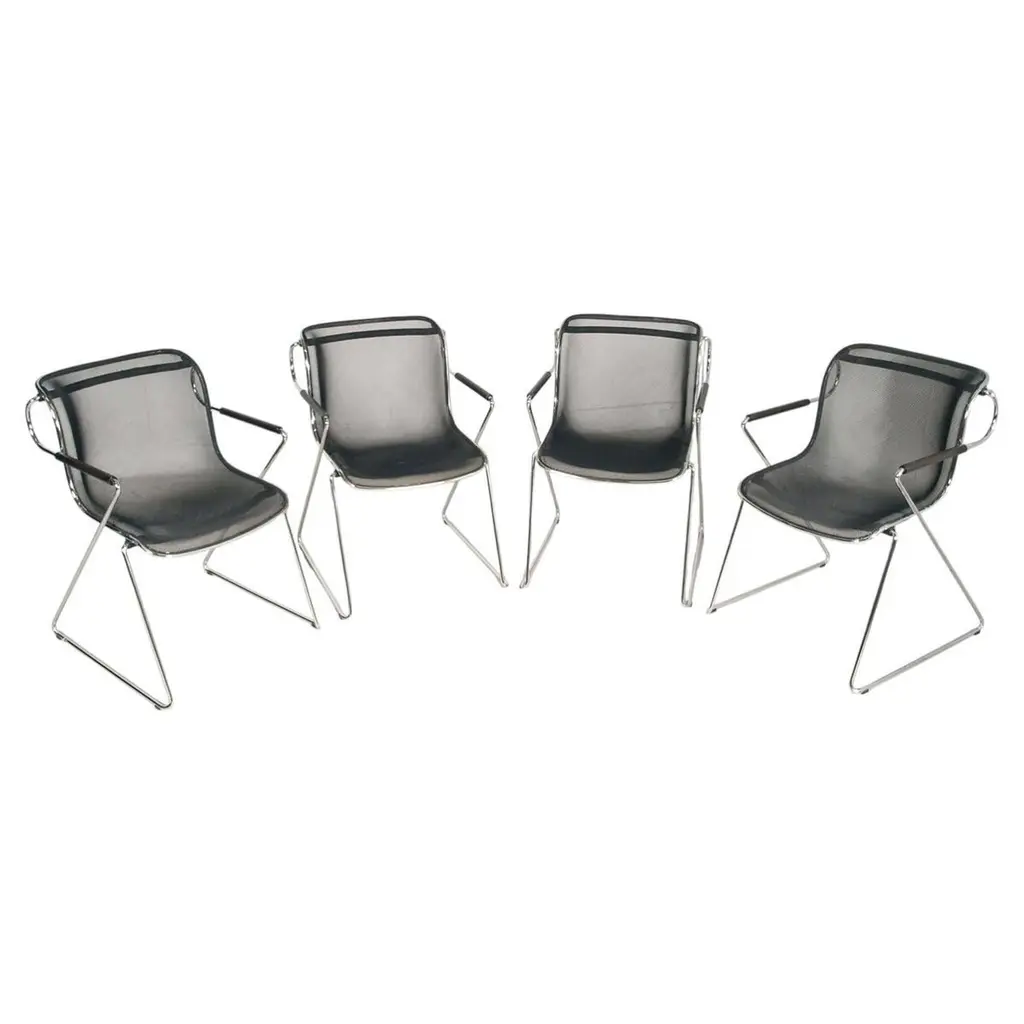
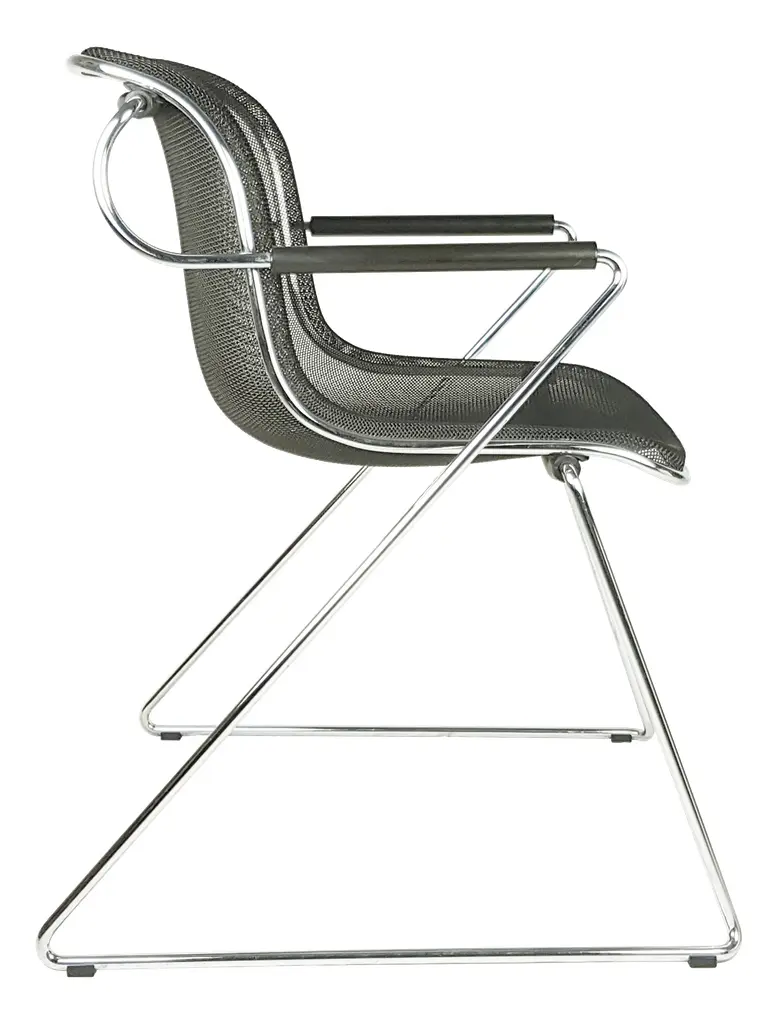
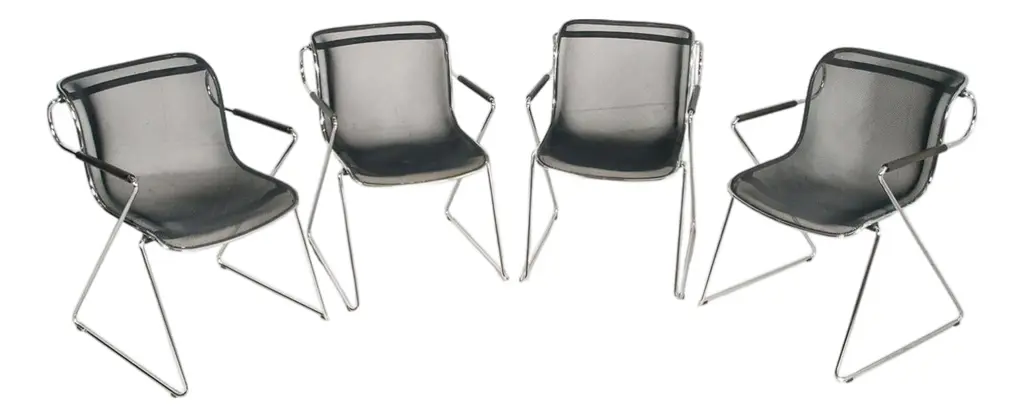
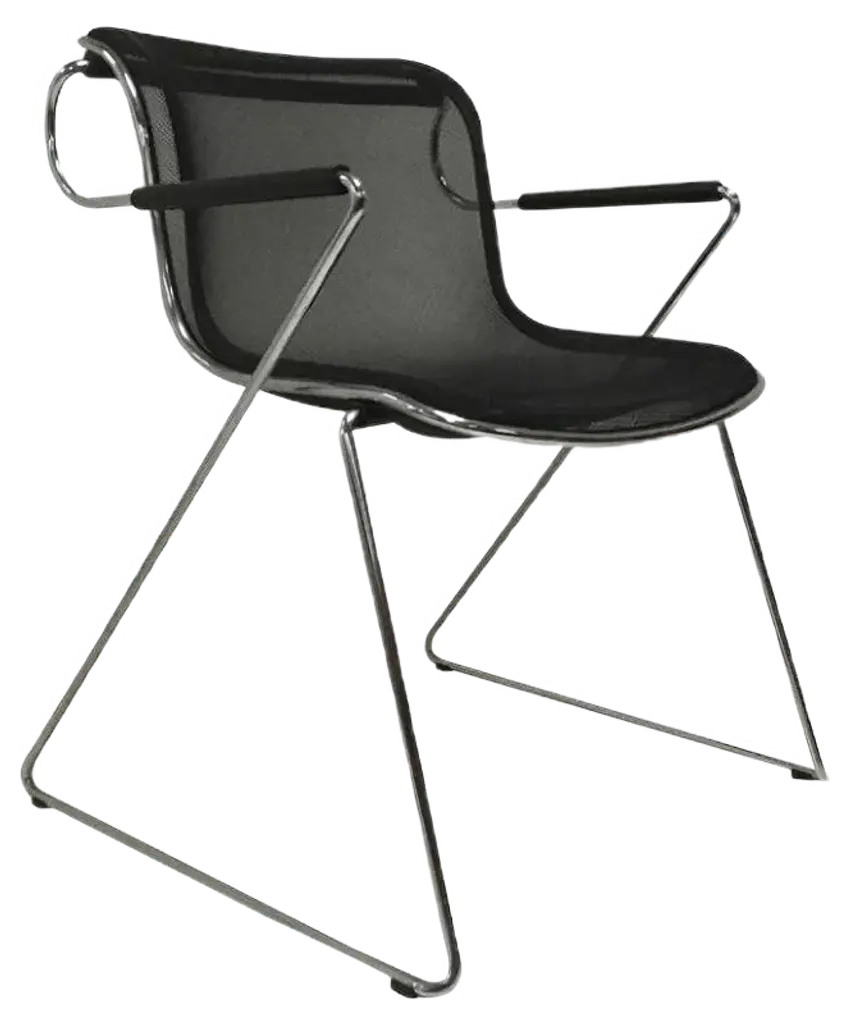
Acquire the Penelope chair by Charles Pollock (Castelli, 1982). A modernist masterpiece in chromed steel and mesh. A collector's item. Treat your home to a centerpiece of 20th-century design. The Penelope chair by Charles Pollock combines the rigor of a chromed steel sled base with the innovation of ultra-comfortable black mesh. An absolute modernist icon that structures space with a captivating visual lightness. You need it. Product Imagine the visual impact of a continuous line of chromed steel traversing your contemporary workspace or living area. Designed in 1982 by the renowned American designer Charles Pollock for the prestigious Italian company Castelli, the "Penelope" chair is a true aesthetic and technical revolution. Nearly twenty years after the global triumph of his famous Executive chair with its opulent lines, Pollock once again surprised the design world by unveiling this seat of absolute purity. As specialists in collectible vintage furniture and high-end 20th-century decor, we are immensely proud to offer this iconic piece at Les Merciers. The Penelope chair brilliantly illustrates the transition to industrial minimalism in the 1980s. Its ingenious sled base, crafted from a continuous steel wire, gives the structure a gentle rocking motion that naturally follows the body's movements, while ensuring exceptional structural integrity. But the true stroke of genius in this creation lies in the design of its seat. Abandoning traditional upholstery, Pollock conceived a completely breathable surface: a steel wire mesh cleverly covered and treated with a black synthetic resin. This ergonomic mesh chair conforms perfectly to the user's contours, offering exceptional support and unparalleled thermal comfort, even during extended work sessions. Exact Dimensions: Height: 80 cm Width: 58 cm Depth: 65 cm This piece is attributed to the mentioned designer/maker. It has no attribution mark and no official proof of authenticity, however it is well documented in design history. I take full responsibility for any authenticity issues arising from misattribution
Similar products