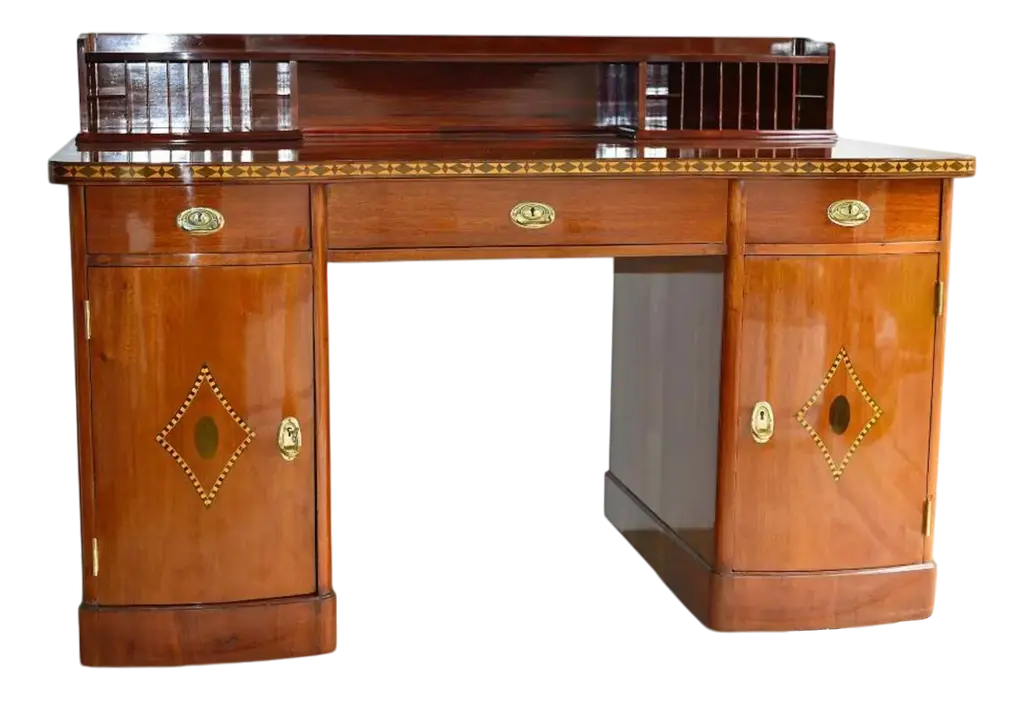
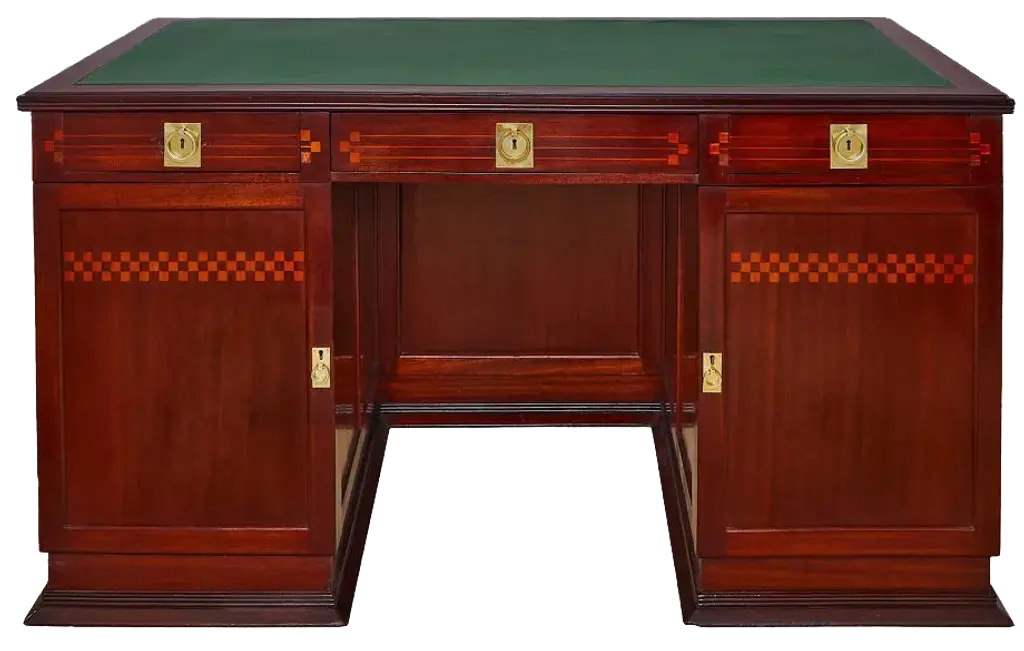
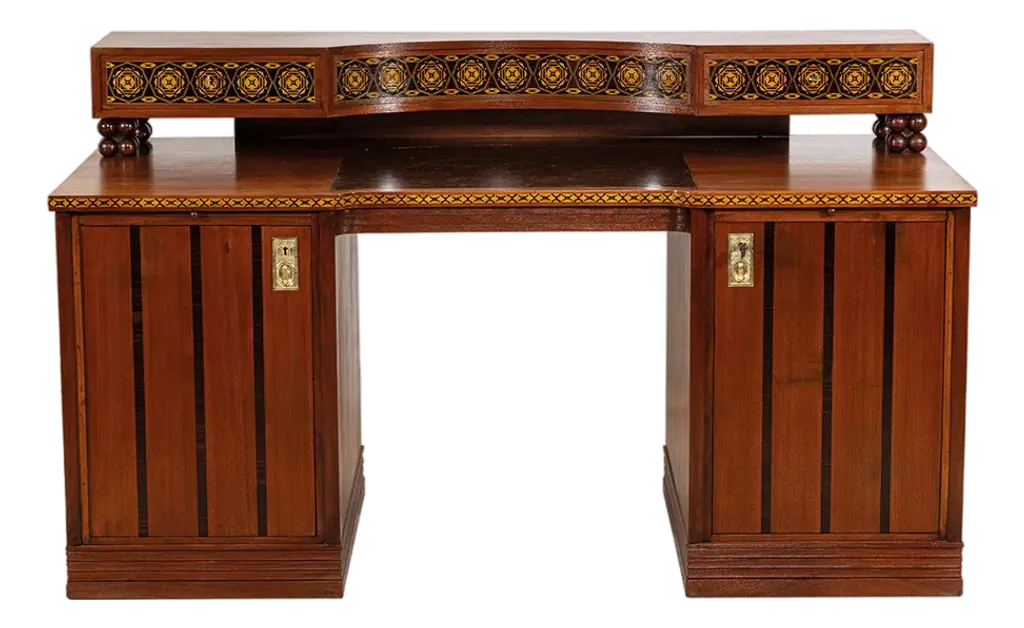
Object: men's desk (freestanding) design: architect matthias feller (munich, 1912) model number: - manufactured by: court furniture factory moritz ballin (munich, 1912) dimensions in cm (h x w x d): 97 x 162 x 79 material: american walnut (ruby polished shellac), brass, celluloid, leather condition: expertly restored provenance: graz, private collection literature: interior decoration, my home, my pride, volume 15, 1904, p. 189 / decorative arts - illustrated journal of applied arts, volume 15, 1907, pp. 330-331 / interior decoration, my home, my pride, volume 19, 1908, p. 328 / interior decoration, my home, my pride, volume 21 1910, p. 191 / interior decoration, my home, my pride, volume 23, 1912, p. 200 this original gentleman's desk was created in 1912 based on a design by the architect matthias feller, who had been artistic director of the renowned moritz ballin court furniture factory in munich since 1908. this piece of furniture is an outstanding example of late south german art nouveau, which combines functional clarity with prestigious elegance. Crafted from american walnut, the desk impresses with its circumferential, extremely finely crafted inlay of celluloid and wood, displaying a geometric decoration with great precision and design discipline – typical of the influence of viennese aesthetics on south german design culture of the time. the original leather writing surface and the fully preserved brass fittings underscore the authentic condition of the piece. Conceived as a freestanding piece of furniture, the desk's architecturally structured structure and clear volume clearly demonstrate the influence of a prominent predecessor: the state desk designed by joseph maria olbrich in 1907 for privy councilor dr. Theodor lewald, reich commissioner for the world's fair in st. Louis. This reference lends the present object additional historical and formal depth. This piece has an attribution mark, i am sure that it is completely authentic and take full responsibility for any authenticity issues arising from misattribution
Similar products