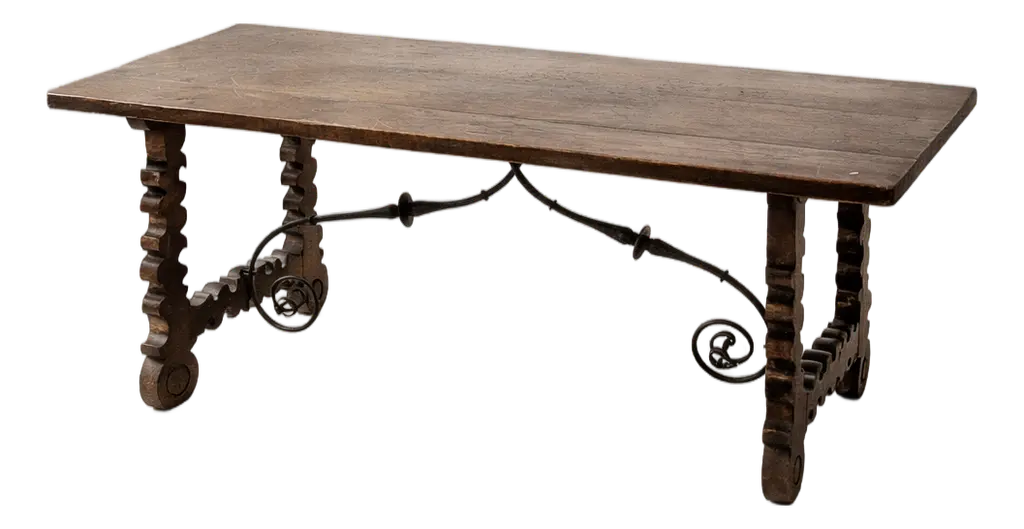
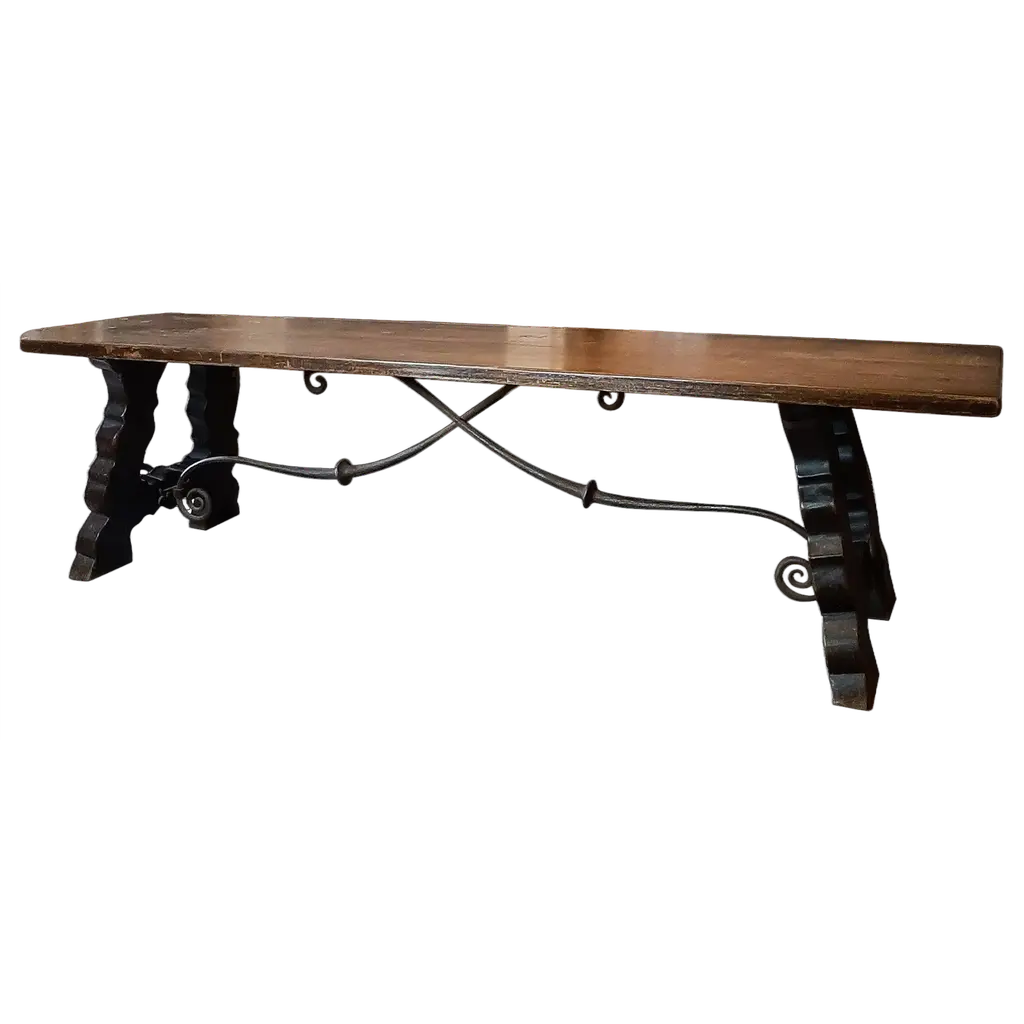
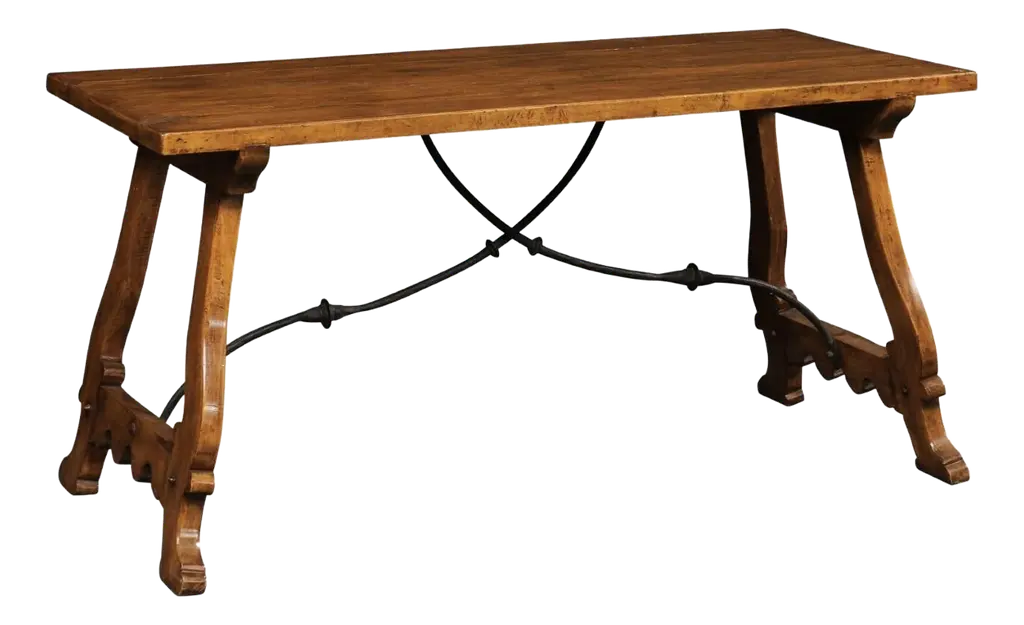
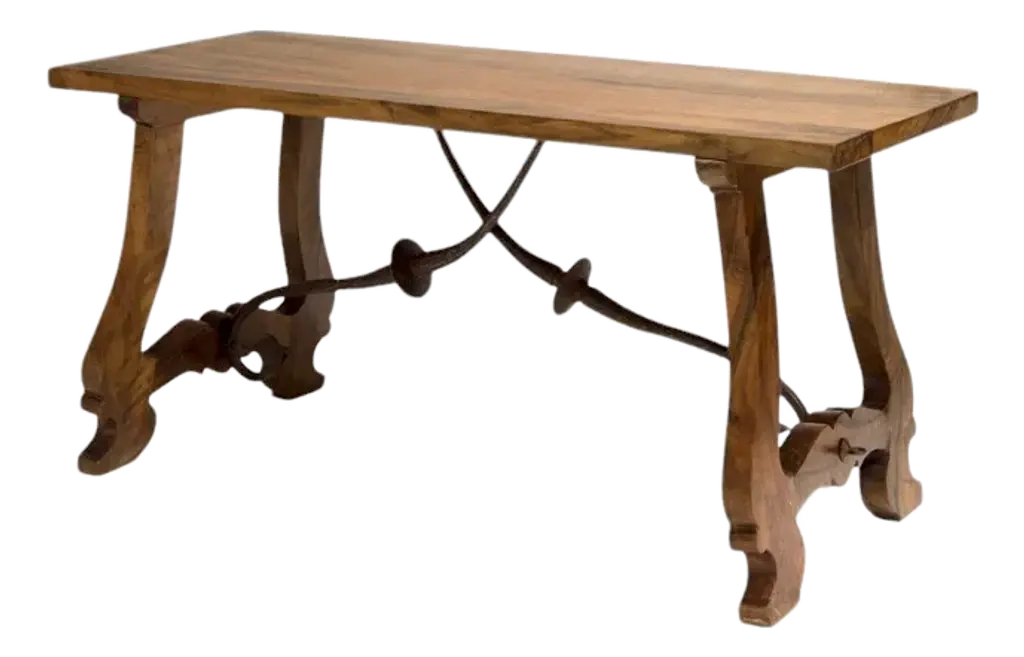
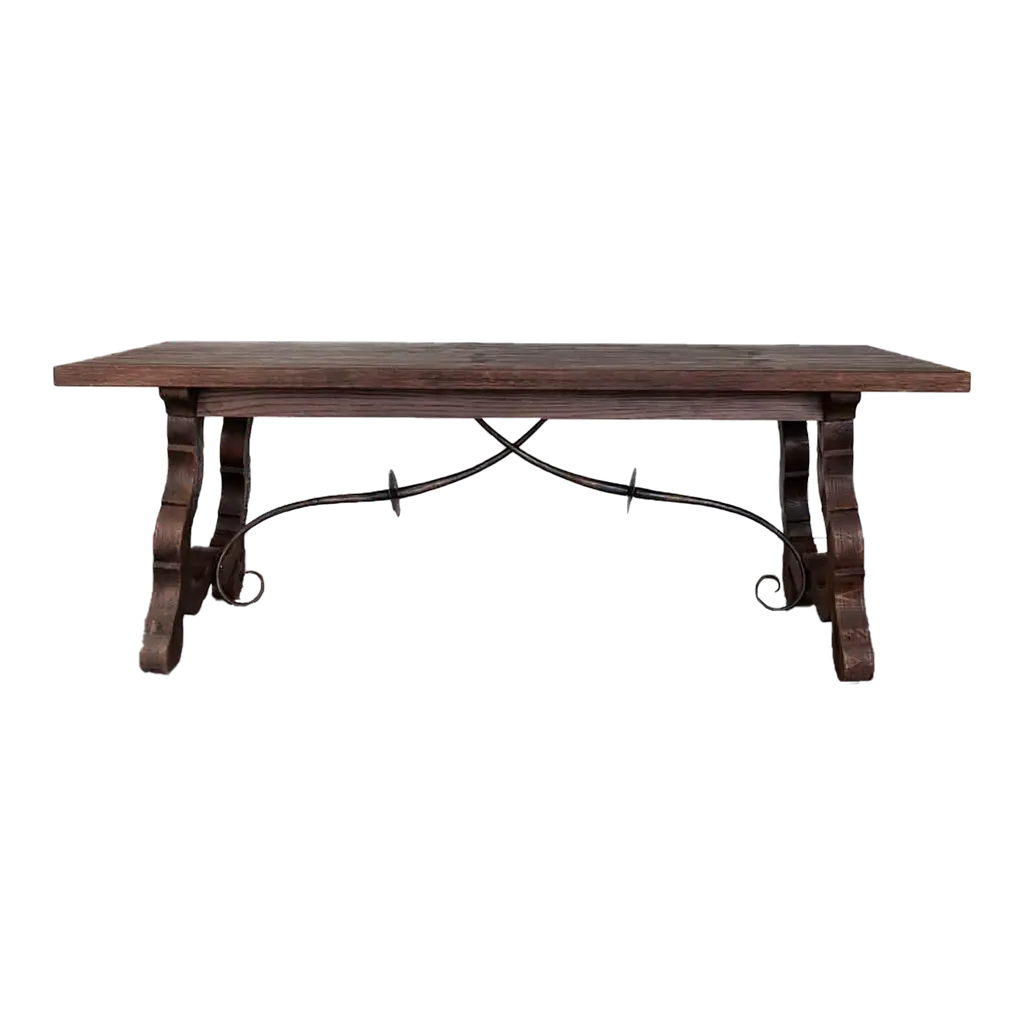
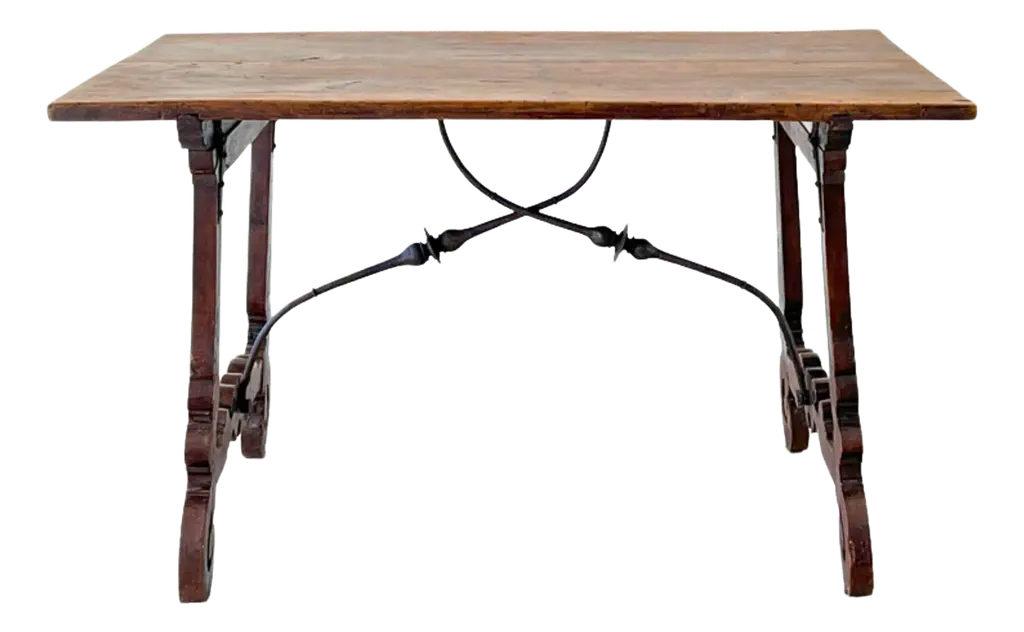
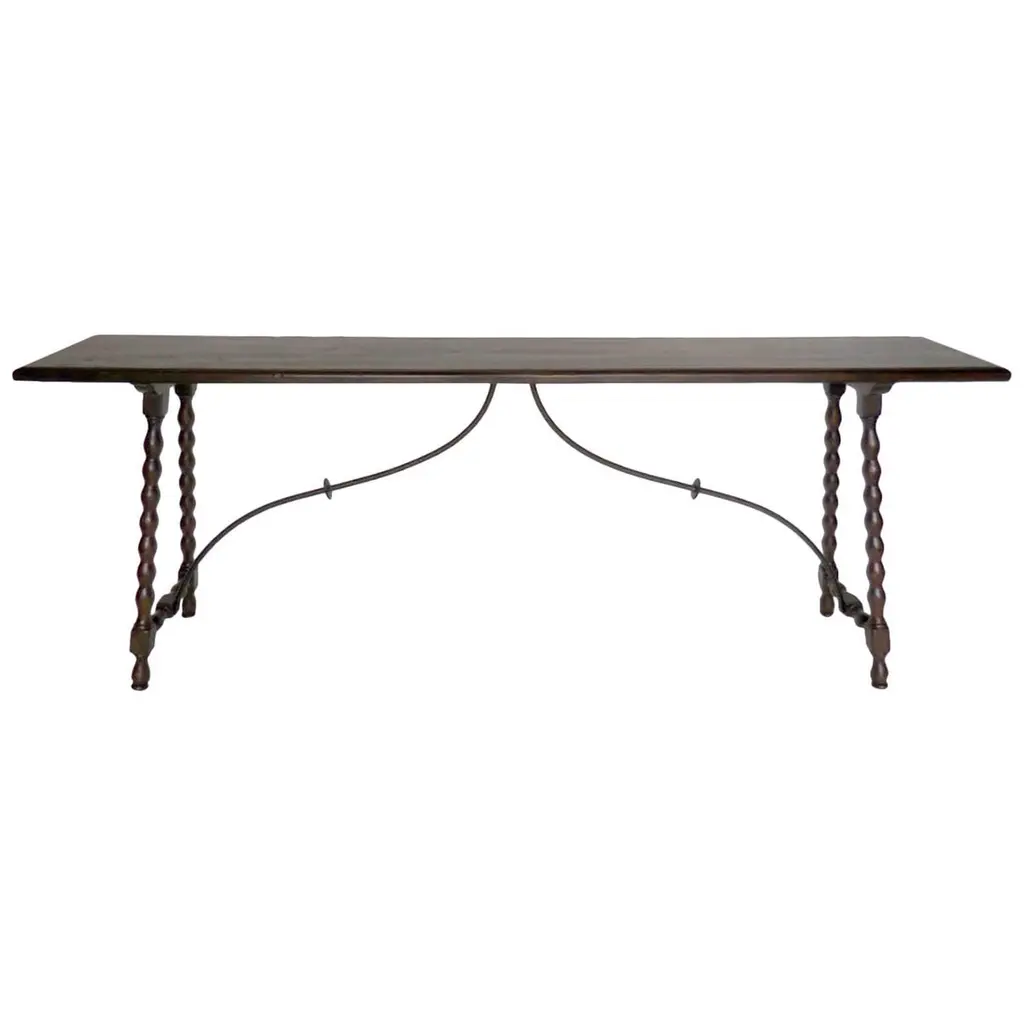
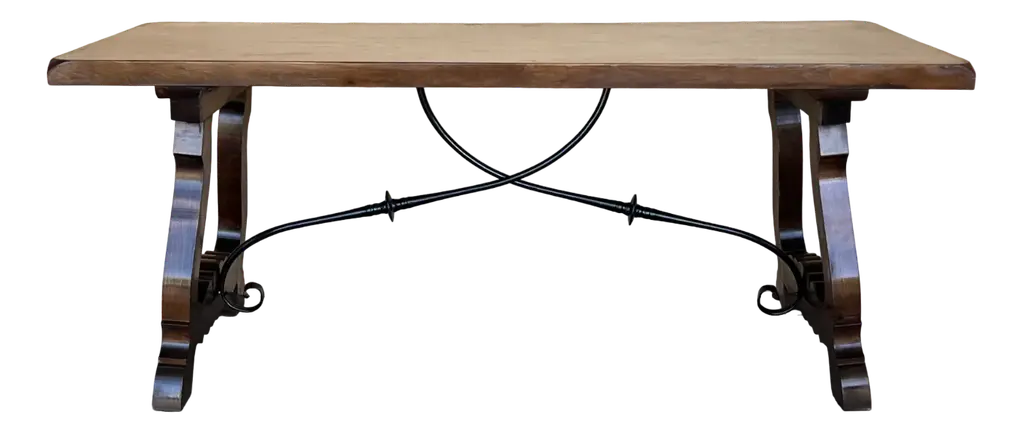
with its raw yet refined presence, this dining table is a masterpiece of continental cabinetmaking, likely originating from Spain or the South of France. Made in the 18th century, it perfectly embodies the rustic Baroque style, where the nobility of oak (or walnut, depending on the examination) meets the strength of wrought iron. The generously thick tabletop bears the marks of time that contribute to its charm: stabilized natural cracks and signs of use that attest to centuries of conviviality. It rests on a richly sculpted lyre-shaped base, connected by a superb double-curved wrought iron stretcher. This ironwork, typical of monastery tables or grand Mediterranean residences, ensures perfect stability while visually lightening the structure. The mortise and tenon joints are held together by visible wooden pegs, and the iron is secured with original wedges, guaranteeing the piece's authenticity. The deep, warm patina was enhanced with wax to reveal the wood grain. This table is more than just a piece of furniture; it's a historical artifact capable of comfortably seating your guests while adding architectural strength to a dining room, whether classic or decidedly contemporary.
Similar products