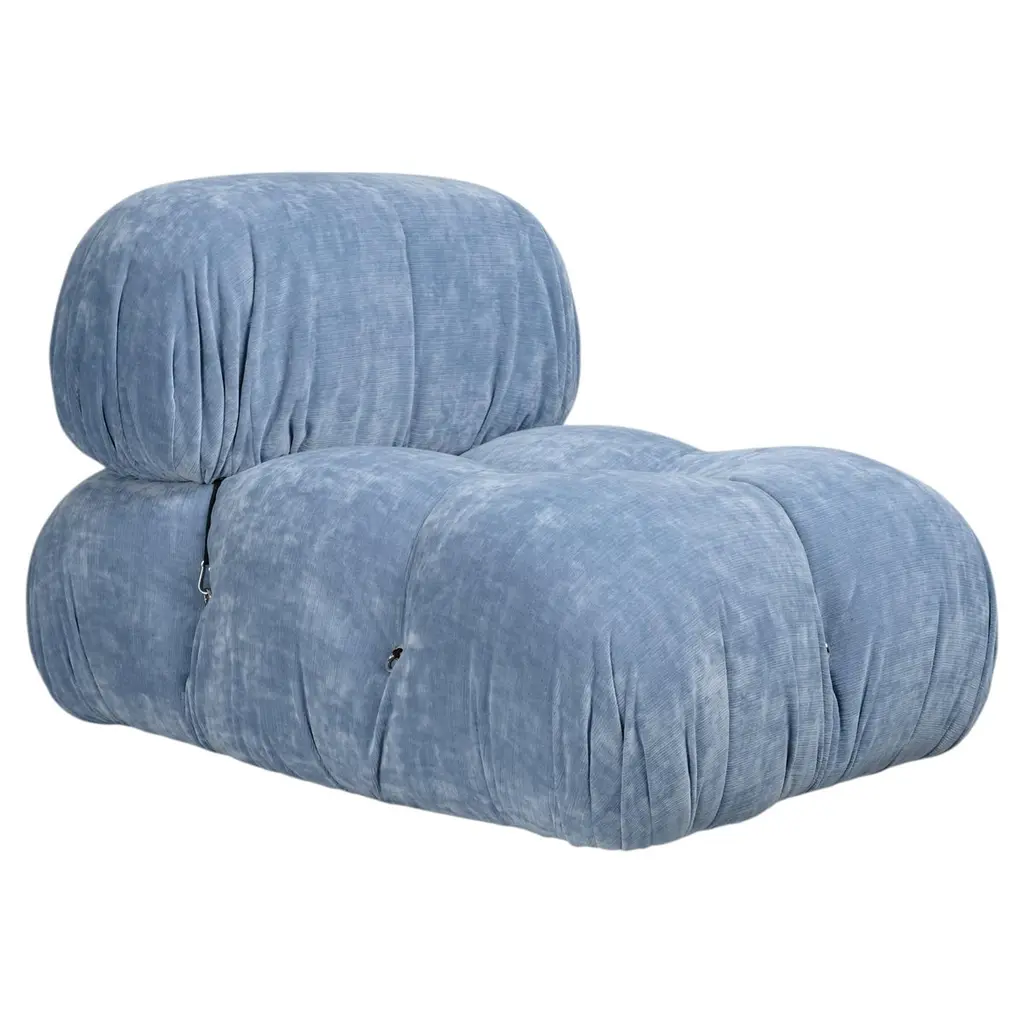
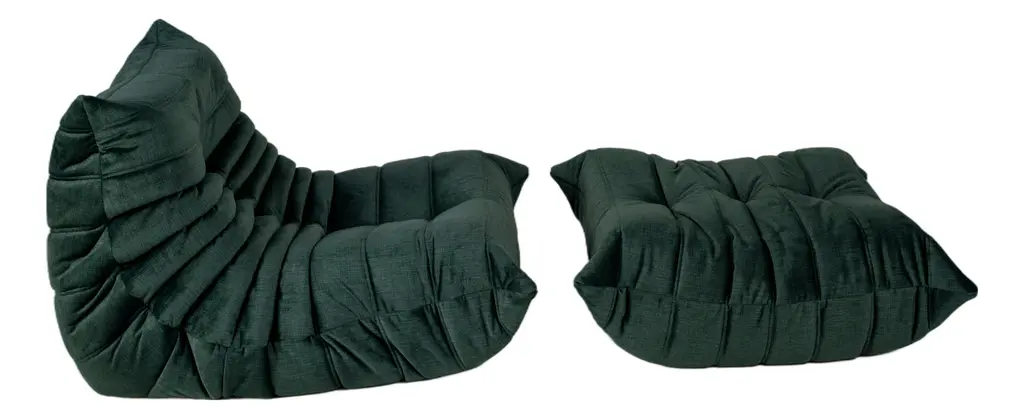
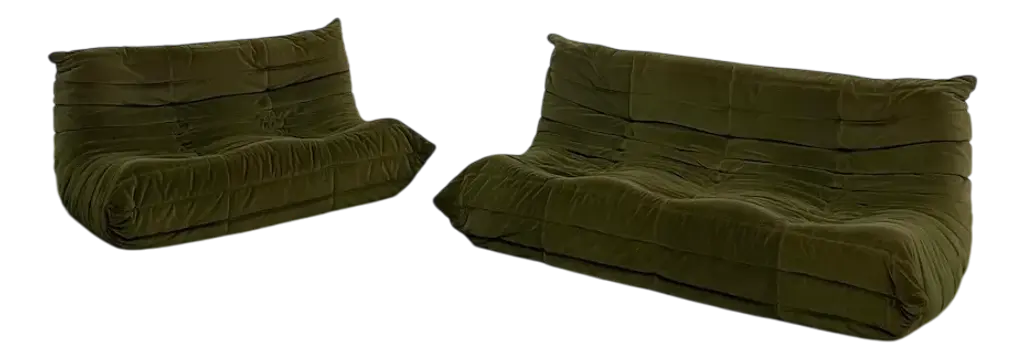
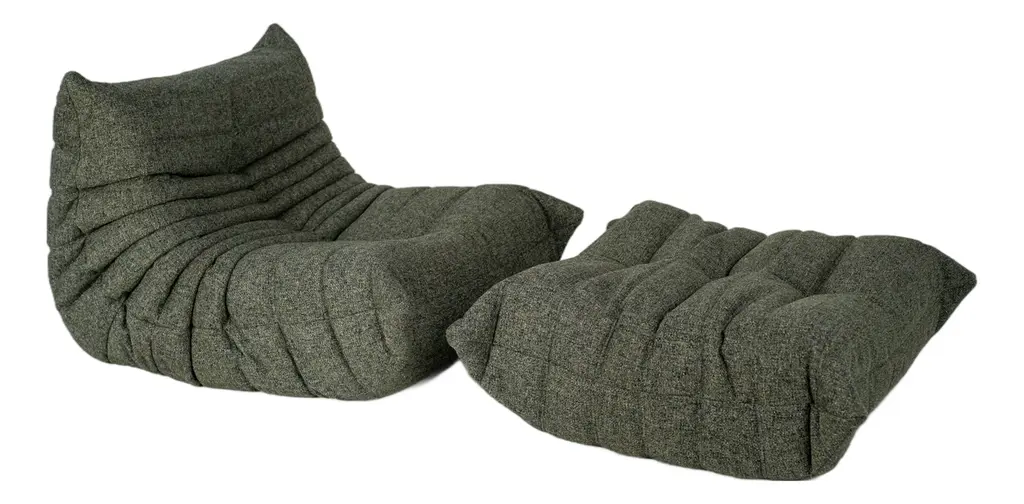
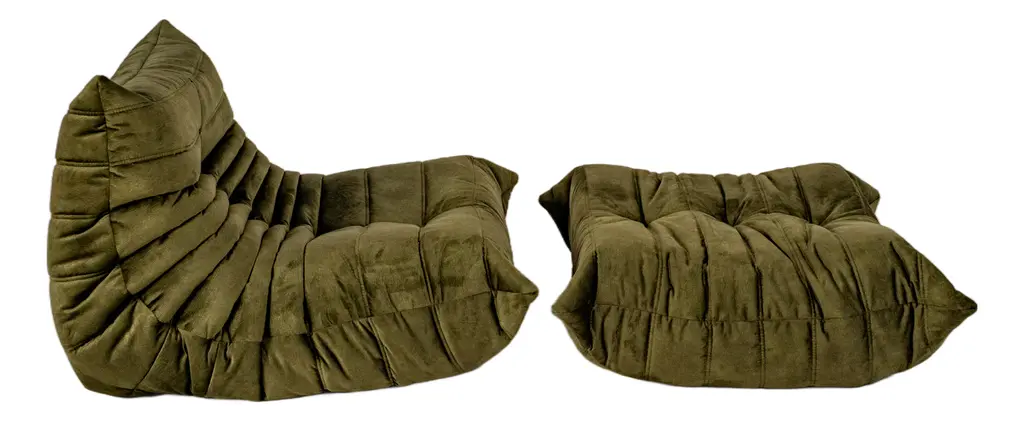
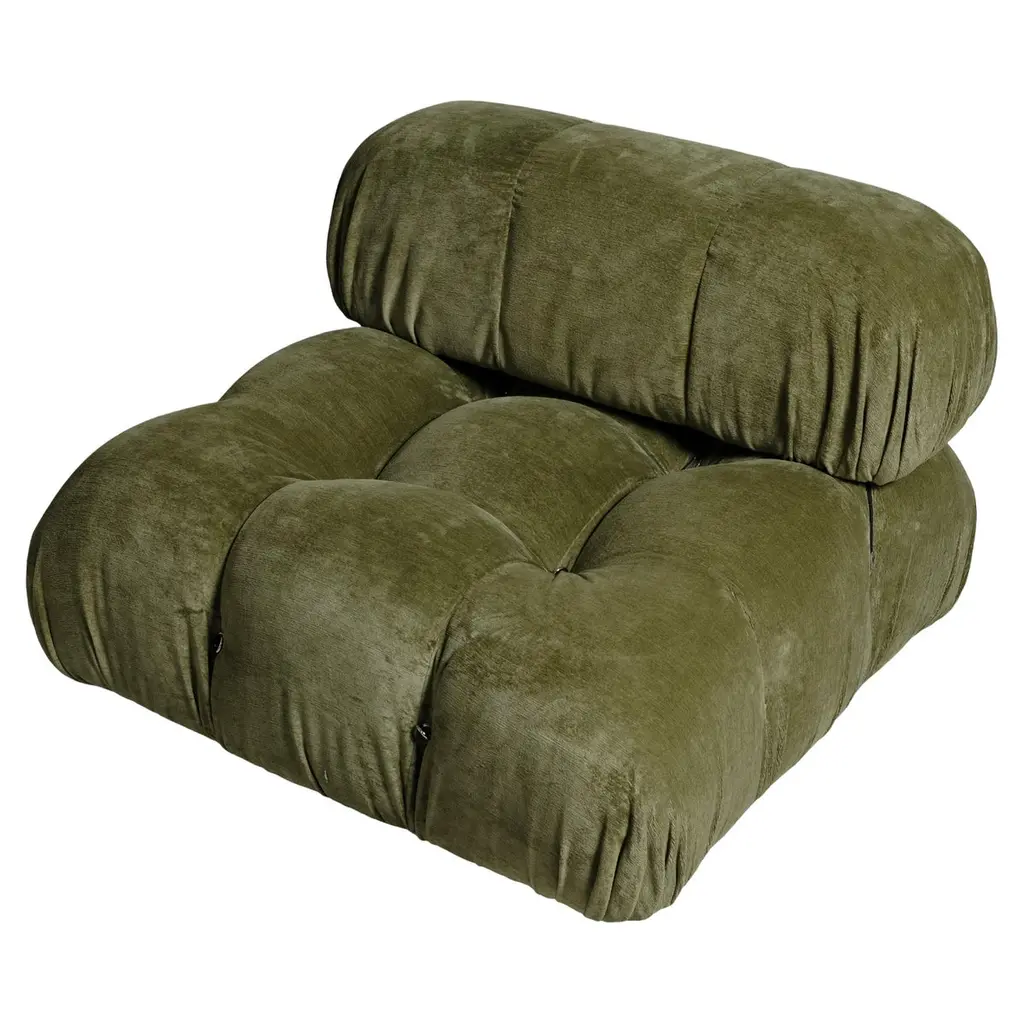
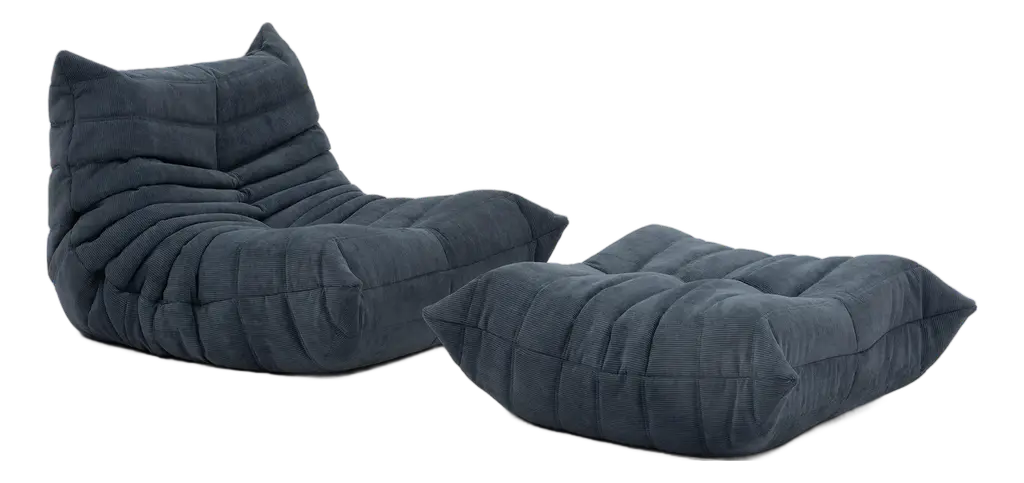
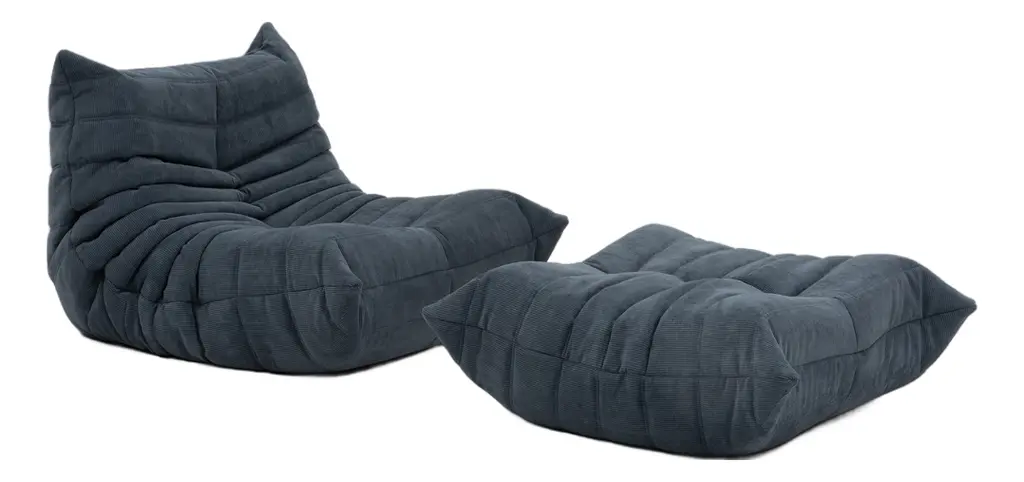
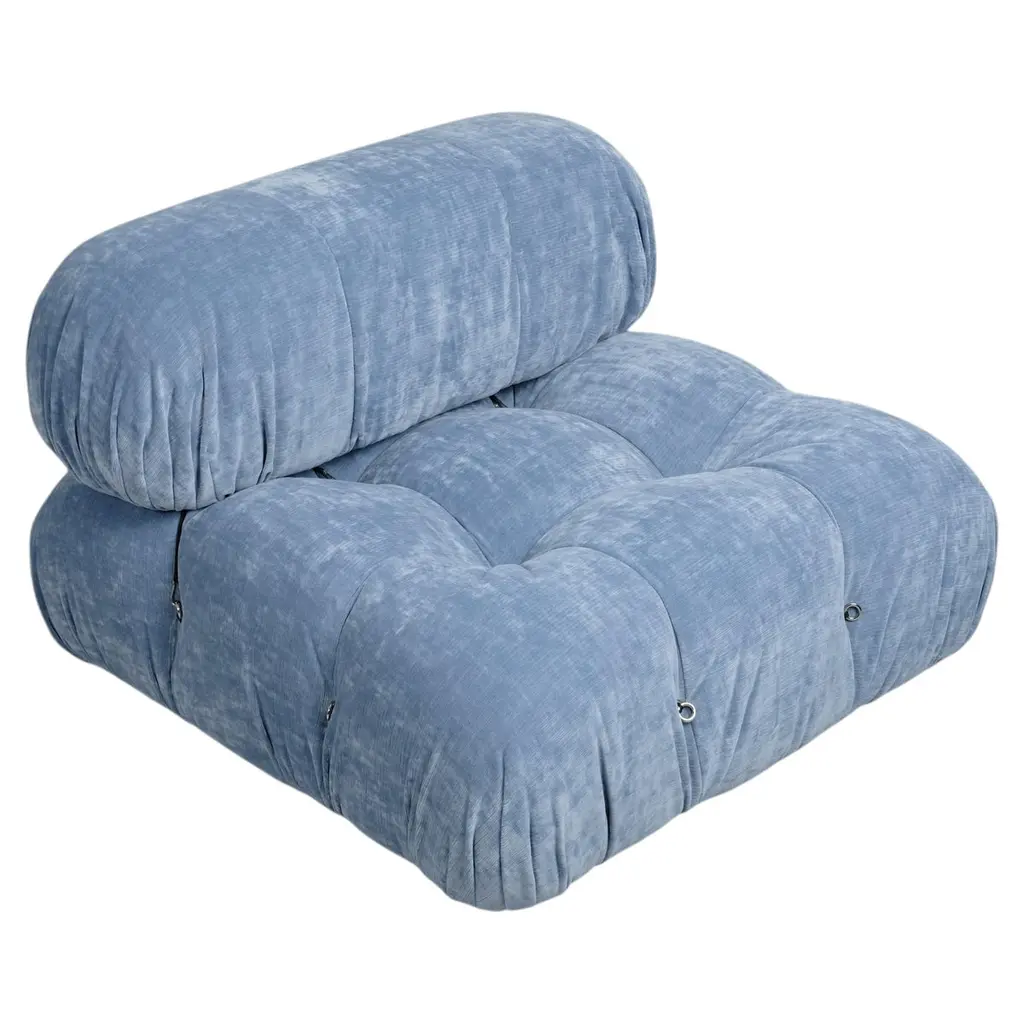
This rare pair of “Pagrù” lounge armchairs, designed in the 1970s by Claudio Vagnoni, represents one of the most expressive and sculptural contributions to Italian radical seating design. Conceived for 1P – Industria Chimica per l’Arredamento, the Pagrù series exemplifies the manufacturer’s experimental approach to polyurethane furniture forms at a time when Italian designers were pushing the boundaries of softness, ergonomics, and informality. The Pagrù stands out for its organic, continuous silhouette, which unfolds in a fluid S-shaped curve from the floor to the upper backrest. This uninterrupted profile is characteristic of Vagnoni’s work and reflects the broader 1970s shift toward furniture conceived as monolithic, tactile, and enveloping objects, blurring the line between sculpture and seating. The armchairs are marked by a sophisticated system of horizontal gathers and ruched upholstery, a technique that enhances the rhythm of the form and accentuates the tension between fullness and contour. The folds create a dynamic interplay of light and shadow along the velvet surface, emphasizing the chair’s sinuous geometry. The rich pile of the fabric reinforces the armchairs’ softness and gives the sculptural form a luxurious, almost liquid sheen. The internal structure—executed in dense molded foam typical of Italian production in the 1970s—ensures both comfort and stability. Each armchair retains its original manufacturer’s label on the underside, marking the model name and confirming production by 1P, one of the leading Italian companies experimenting with polyurethane technologies during that decade. Despite their bold sculptural character, the Pagrù armchairs are remarkably comfortable. Their low, reclining posture and generous width create a welcoming cradle-like seat, ideal for relaxed environments. They work beautifully as statement pieces in a living room, reading area, or contemporary minimal interior, where their distinct presence can be appreciated from all angles. As a pair, they form a harmonious and balanced ensemble, offering strong visual impact and a sense of curated symmetry. This piece is attributed to the mentioned designer/maker. It has no attribution mark and no official proof of authenticity, however it is well documented in design history. I take full responsibility for any authenticity issues arising from misattribution
Similar products