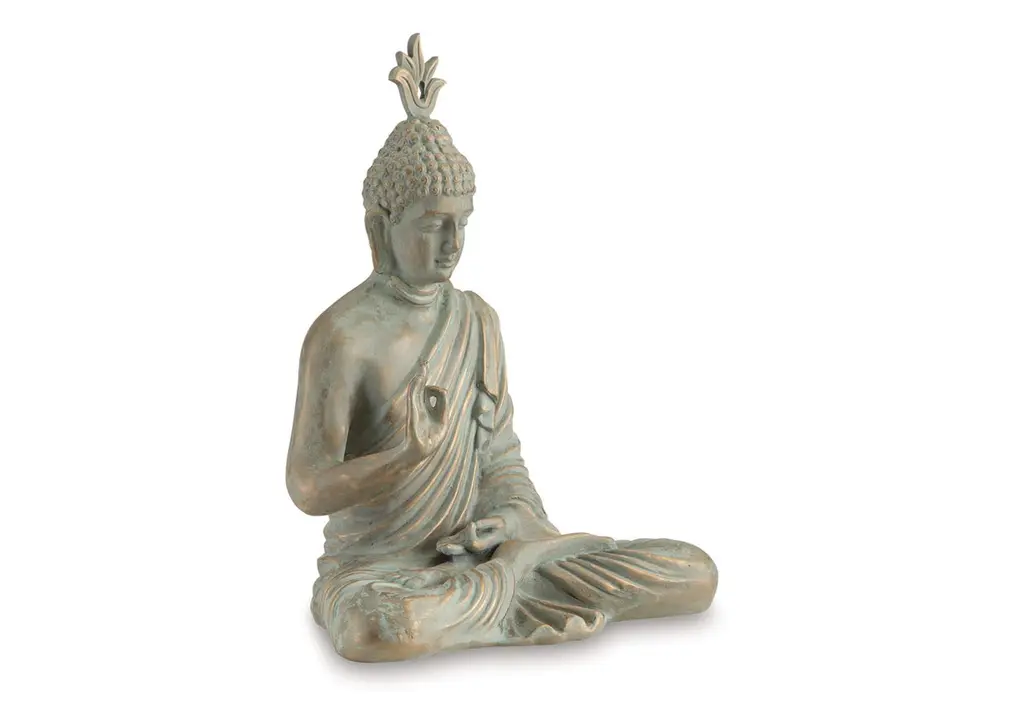
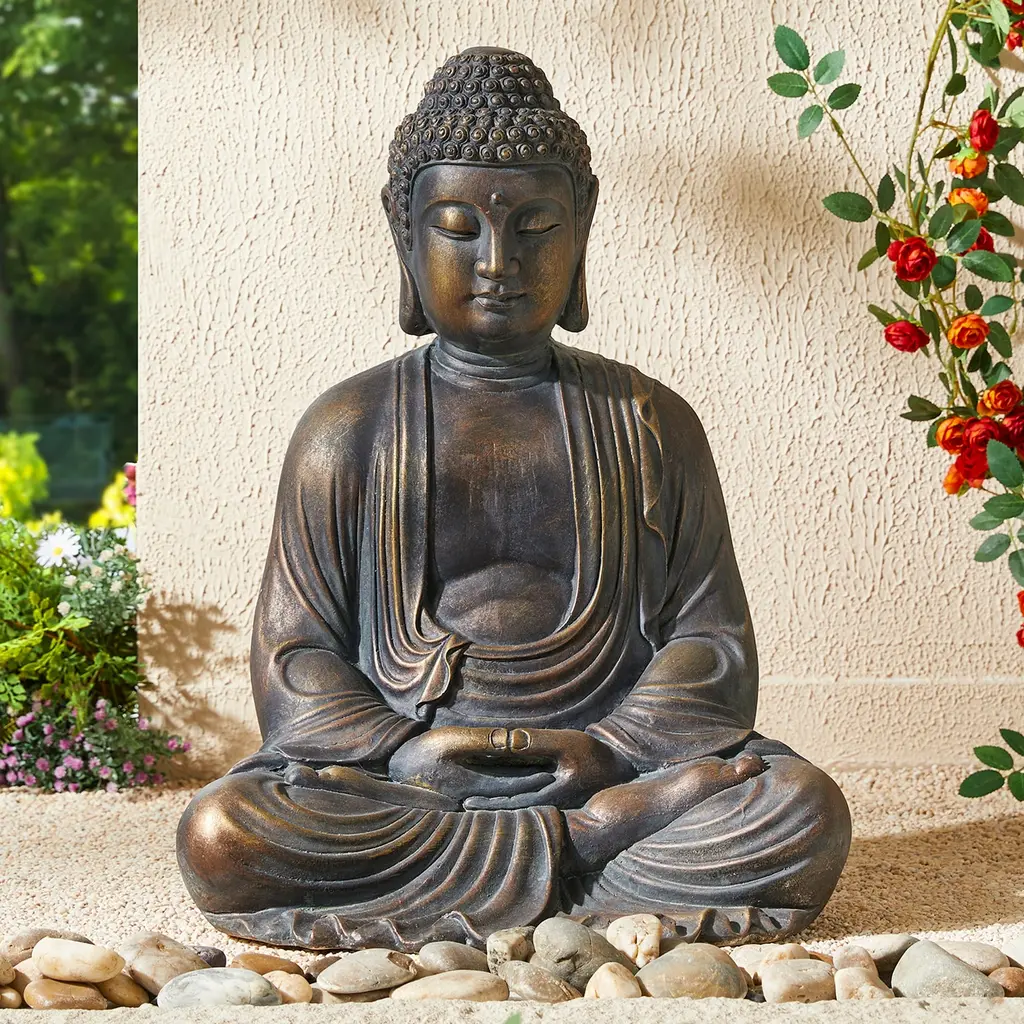
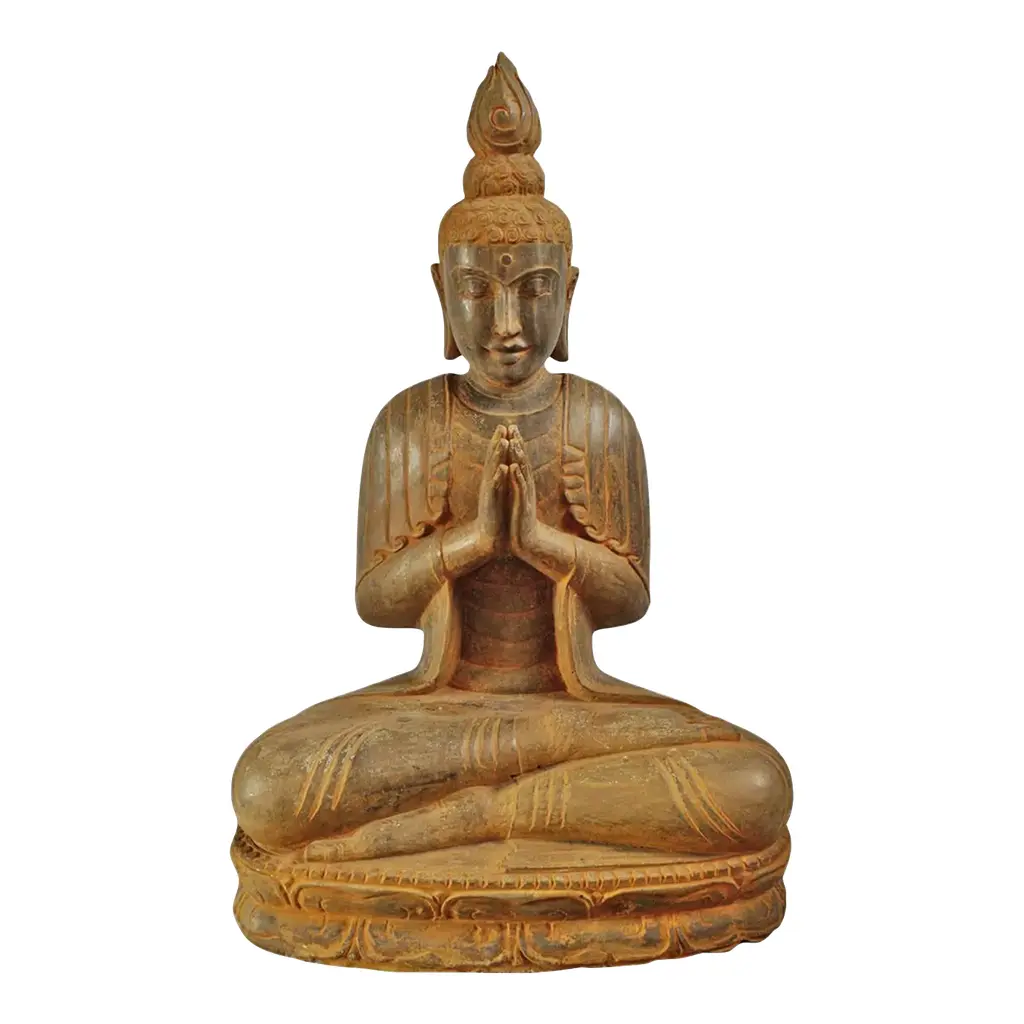
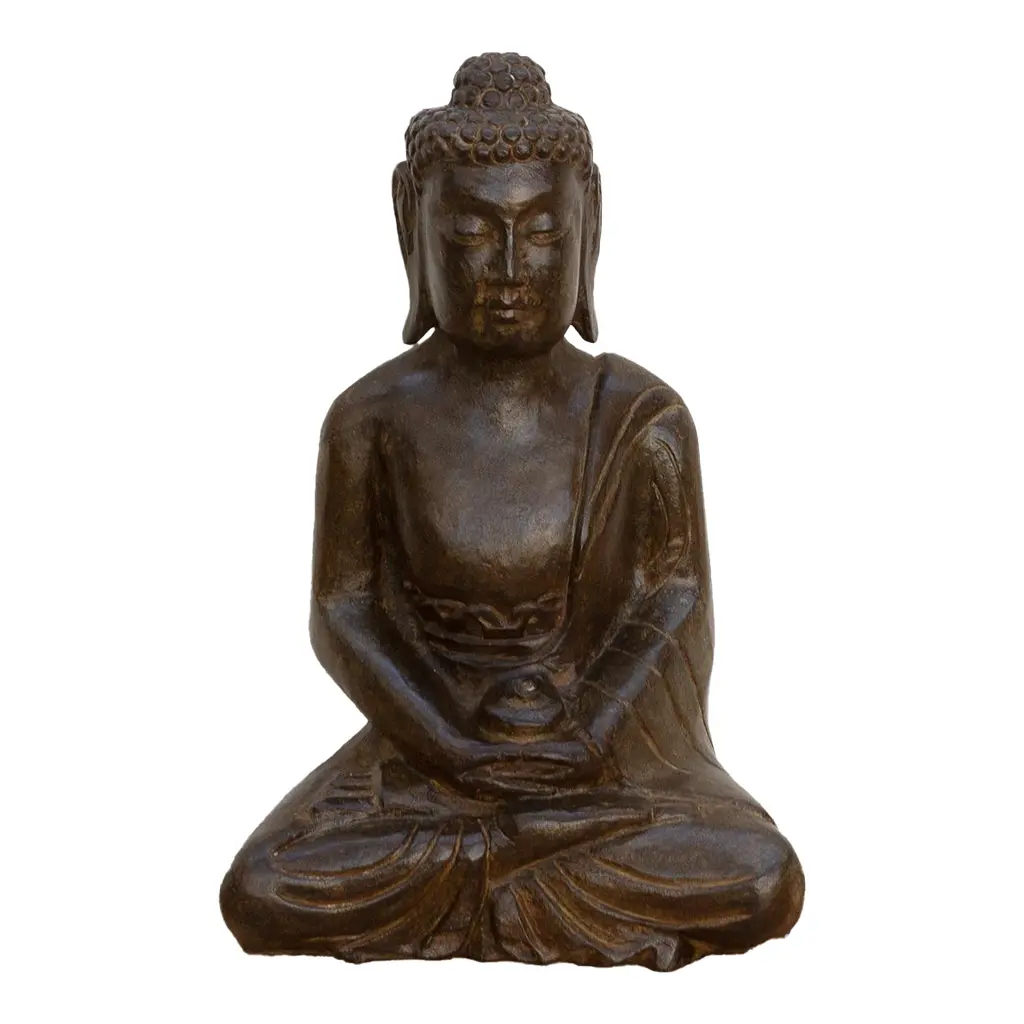
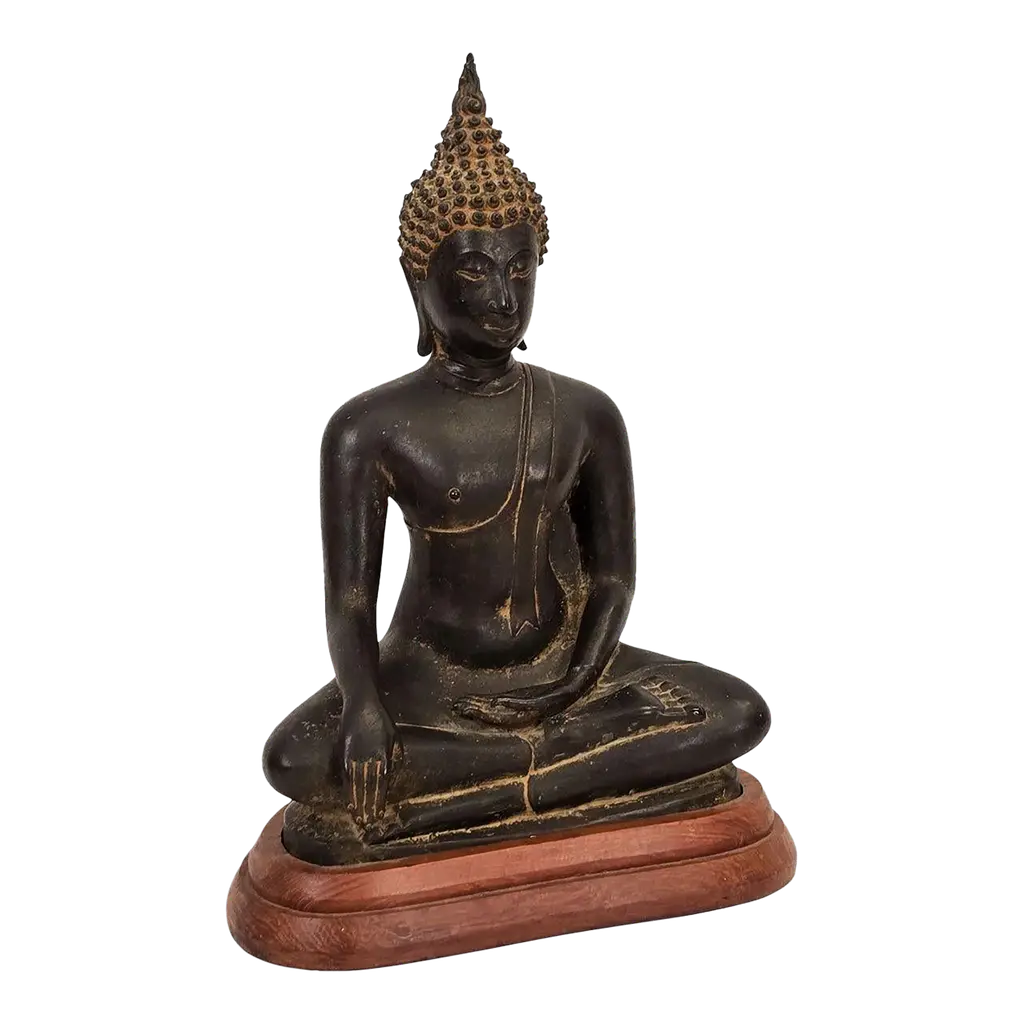
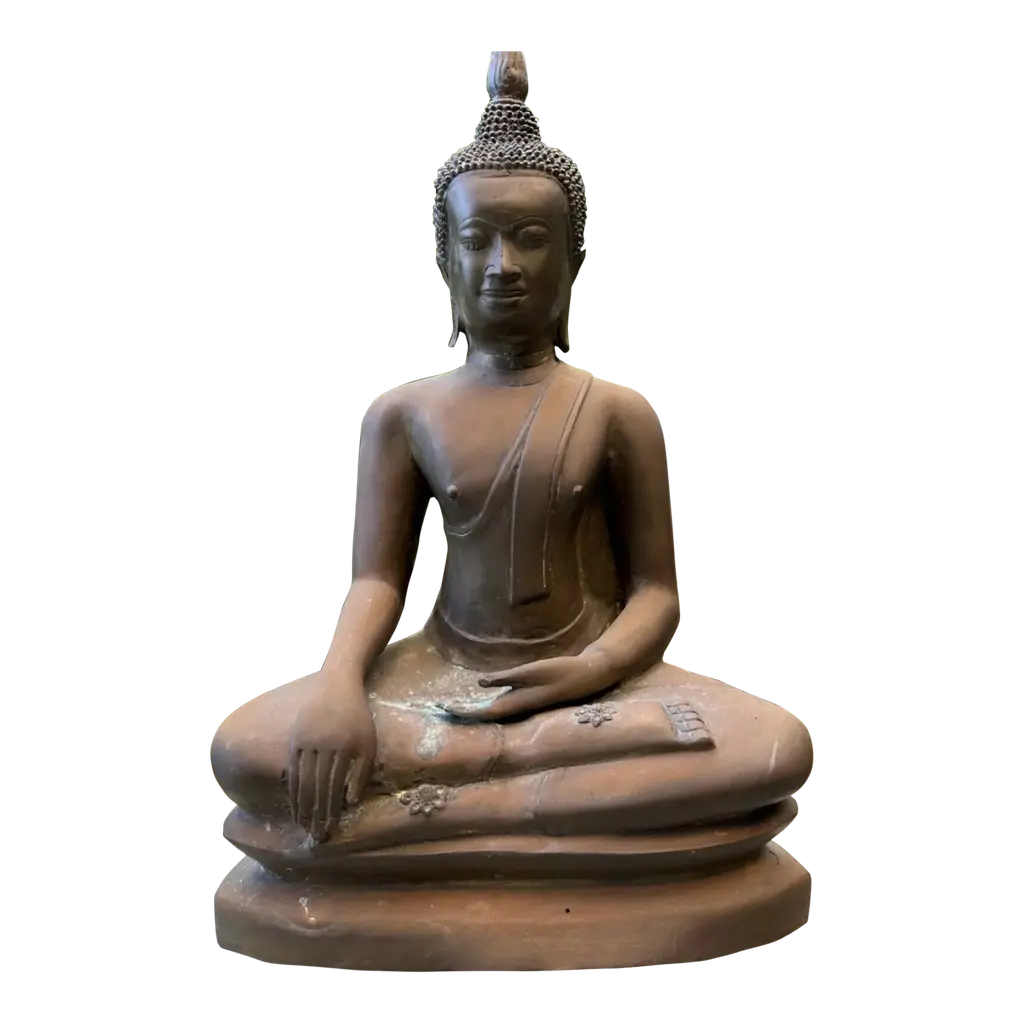
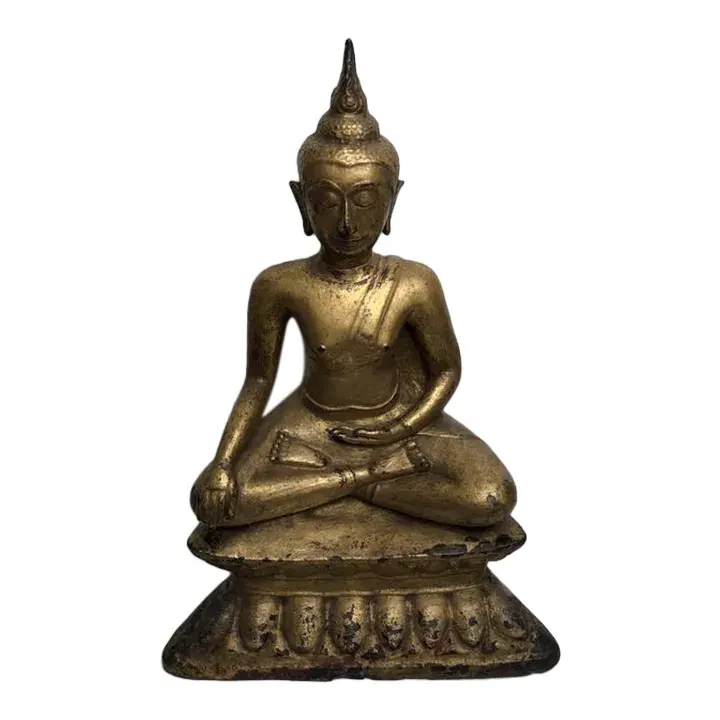
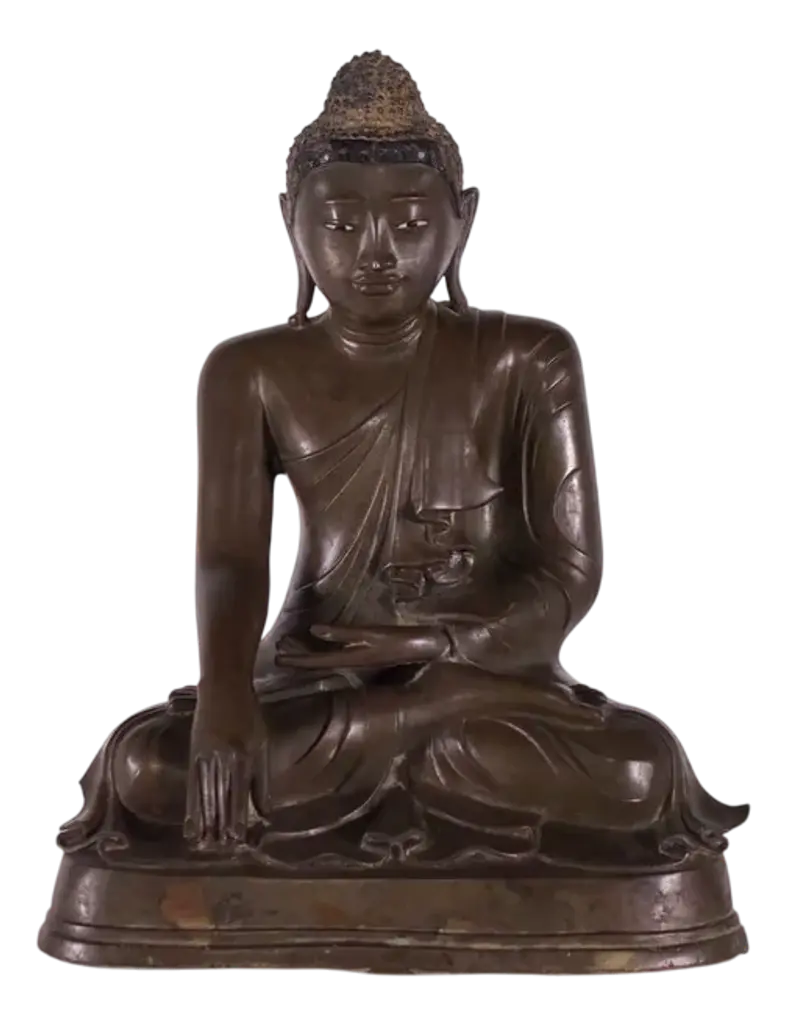
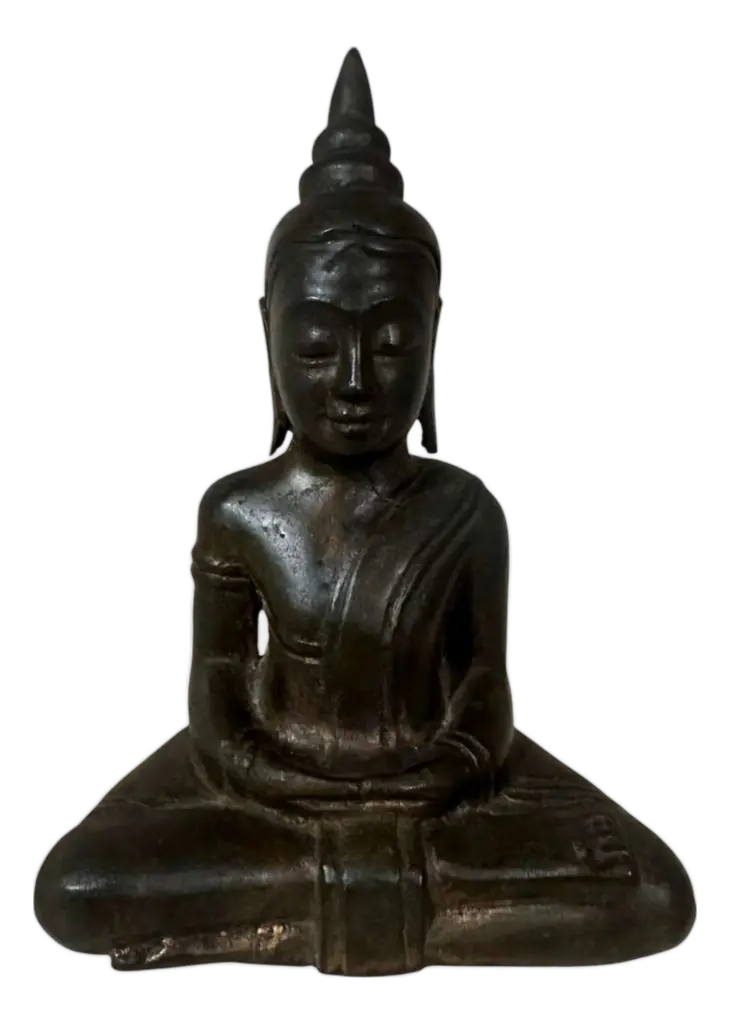
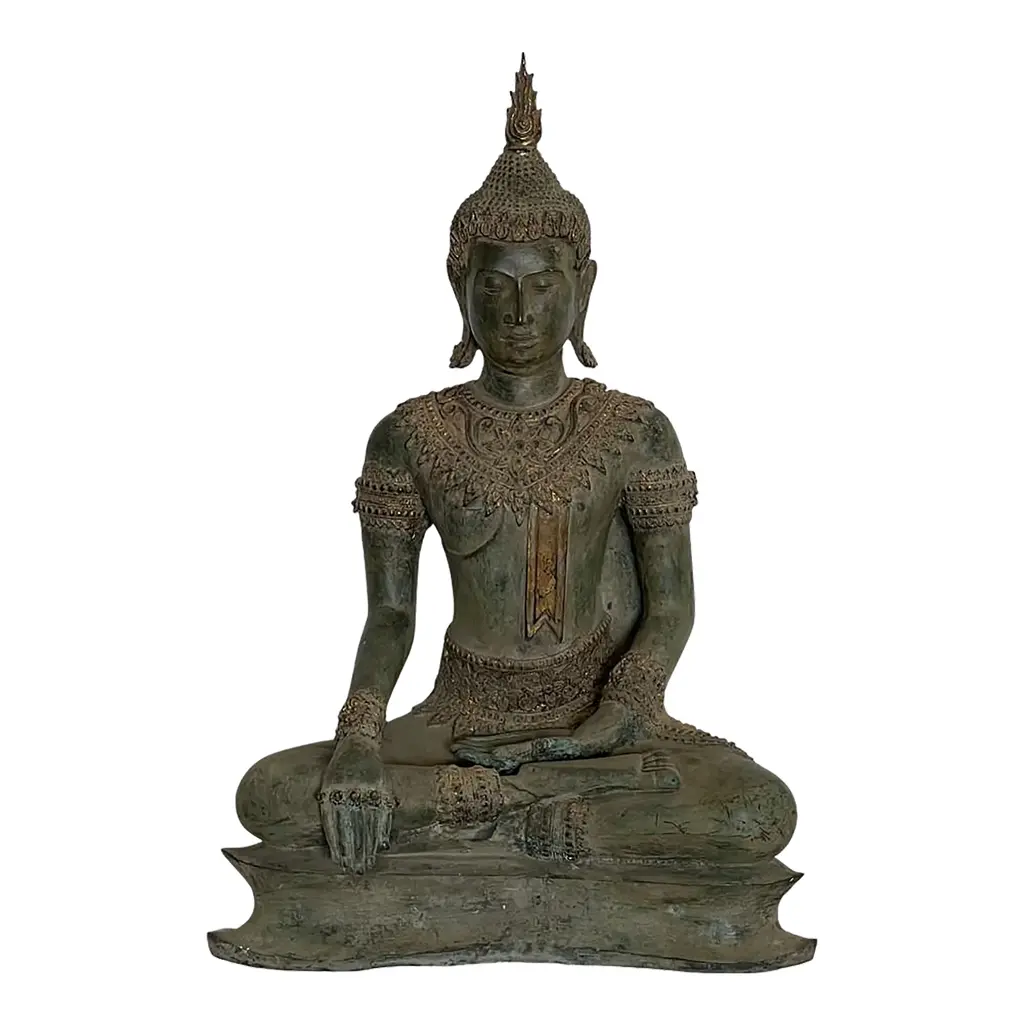
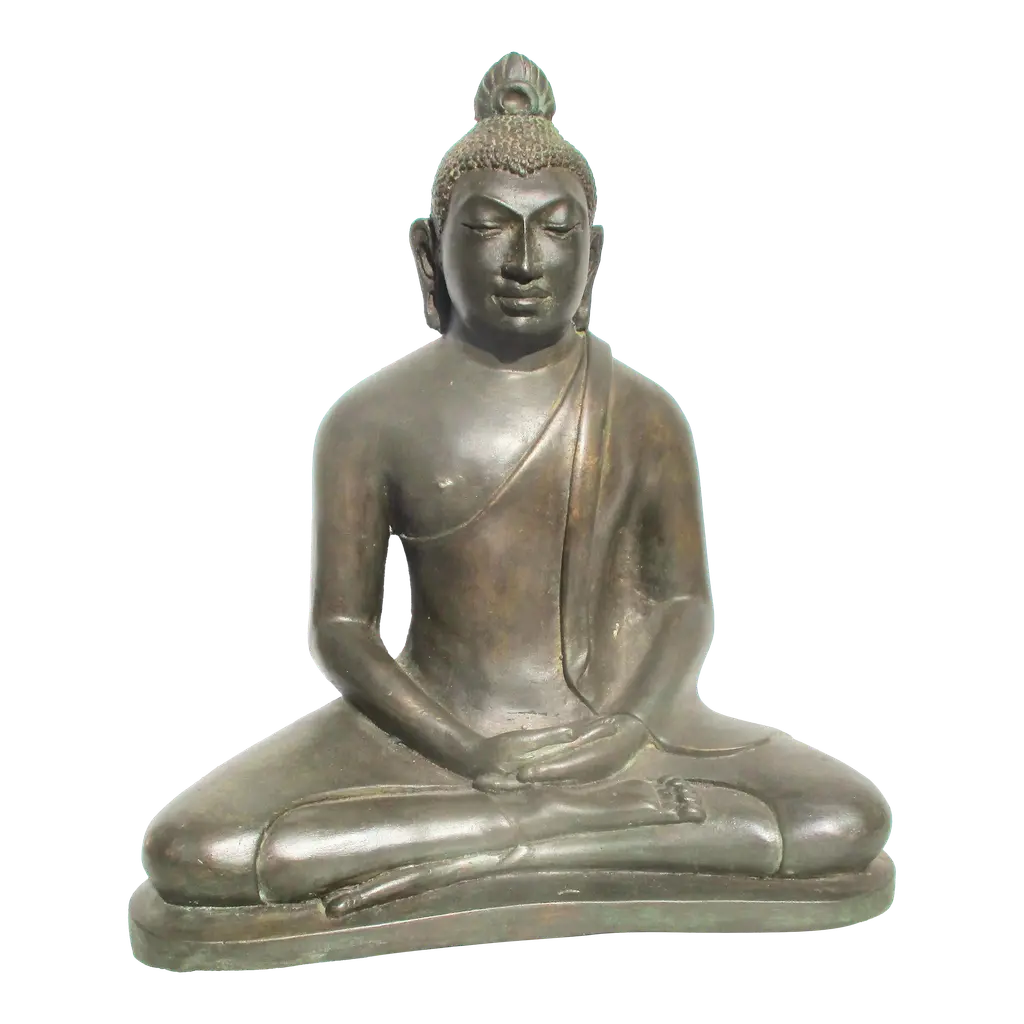
A finely cast bronze statue of Buddha from Thailand. Thai images of Buddha often had a flame-shaped aureole, finely curled hair, a slight smile, broad shoulders and an oval face. This Buddha is in the typical style of Sukhothai Buddha. The Sukhothai Buddha is composed of sinuous curves and cylindrical forms, creating a boneless, weightless elegance. The various portions of the body follow abstract ideals based on analogy with natural forms, such as shoulders like an elephant's trunk, a torso like a lion, and a nose like a parrot's beak. This Buddha is in the double-lotus seating position. Attired in flowing robe with open chest and a high knotted belt, the Buddha posts a bhumisparsha mudra, known also as touching the earth or calling the earth to witness mudra. It symbolizes Buddha's victory over the attack of the demon Maras before he reached nirvana under the Bodhi tree. This piece has a hollow base, suggesting that it was probably seated on a lotus throne originally.
Similar products