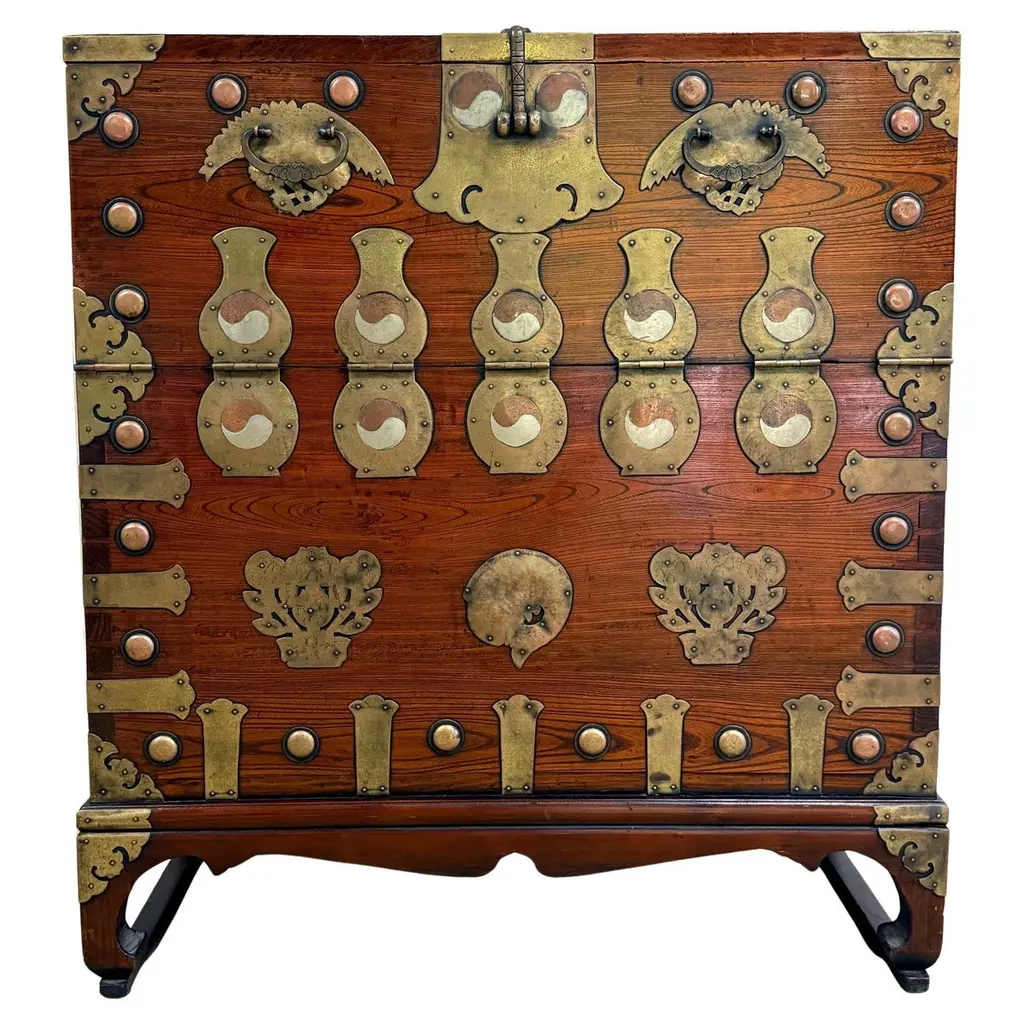
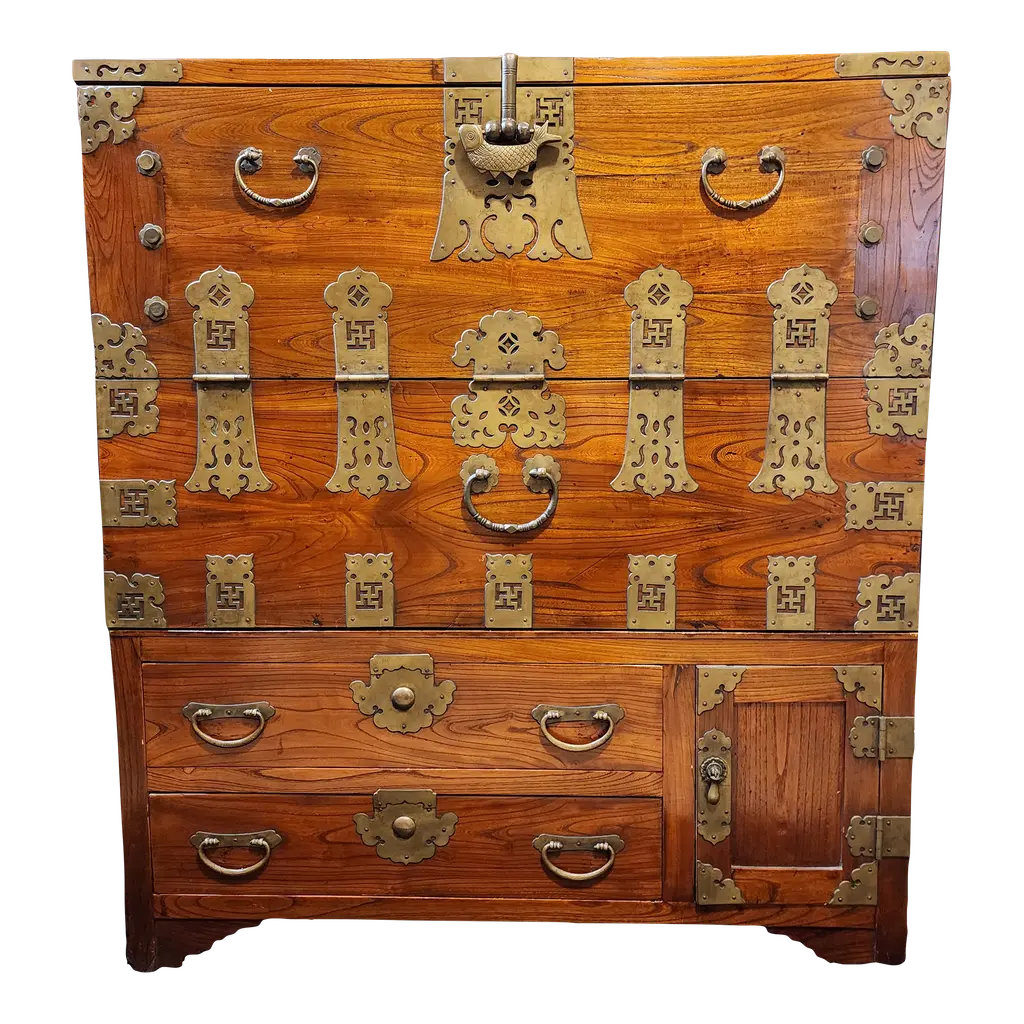
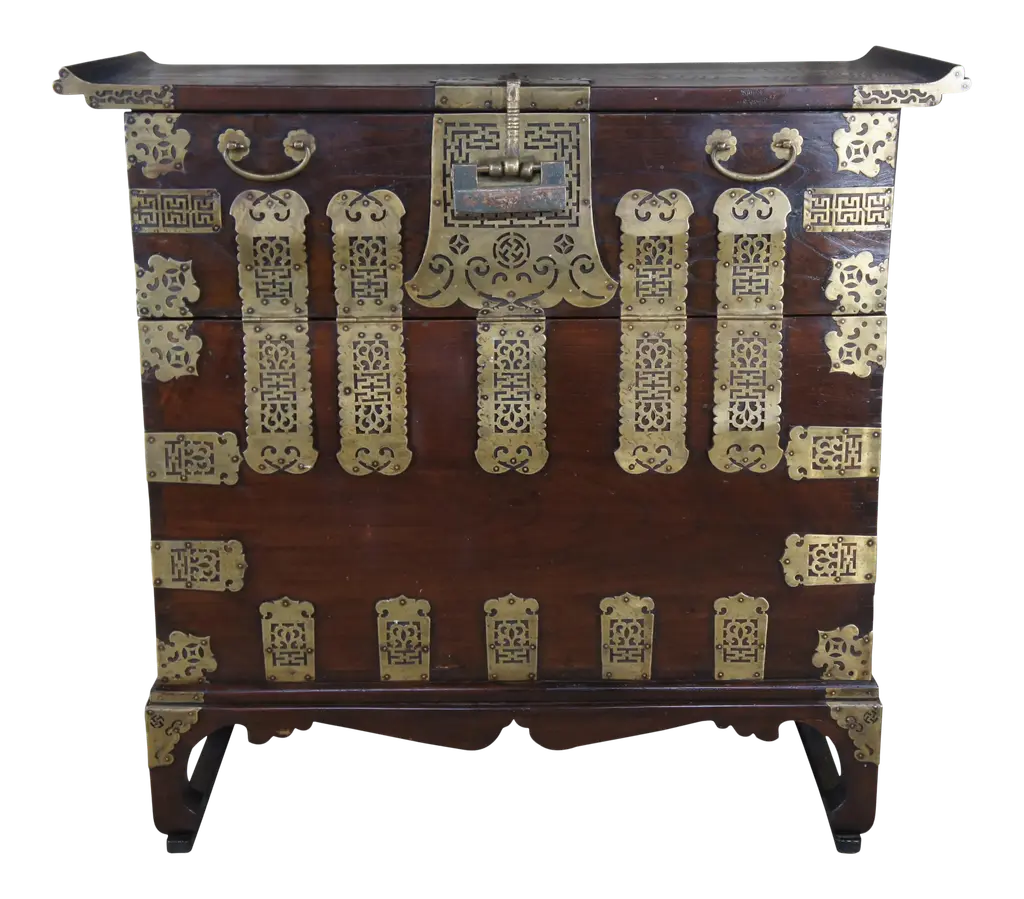
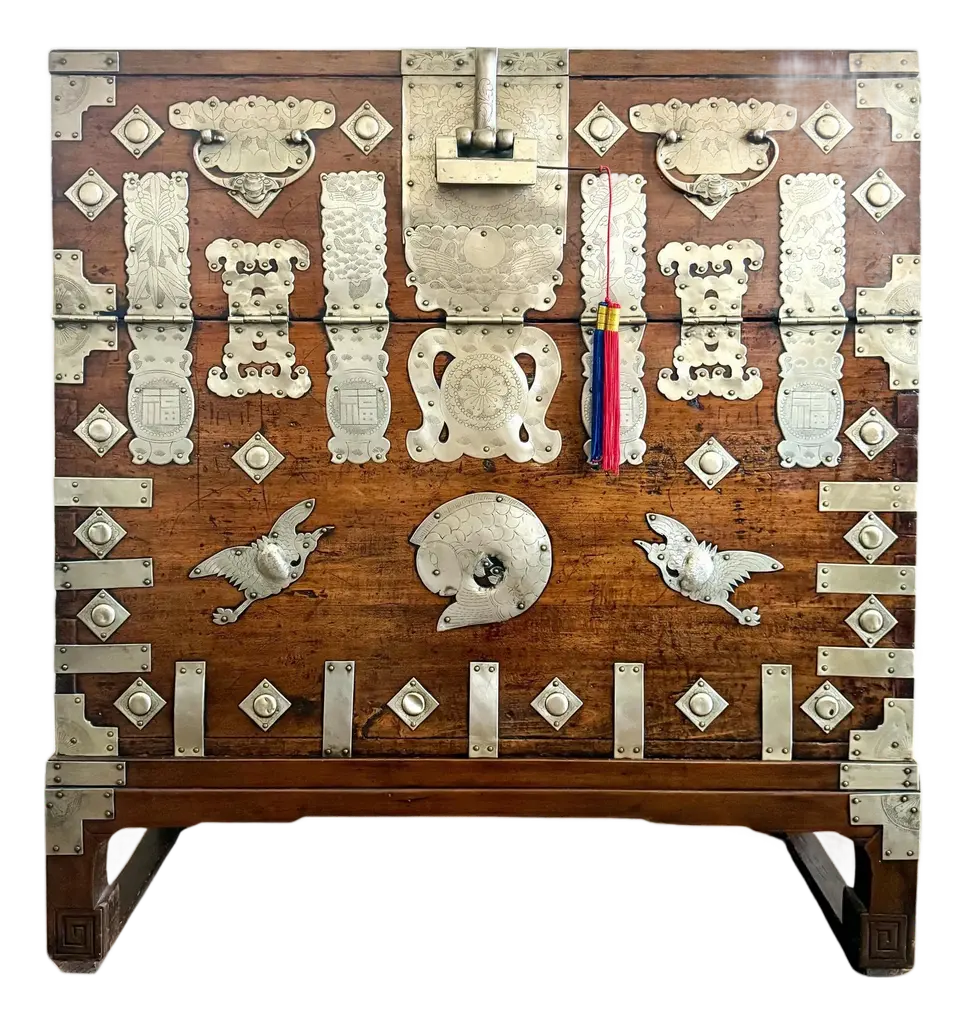
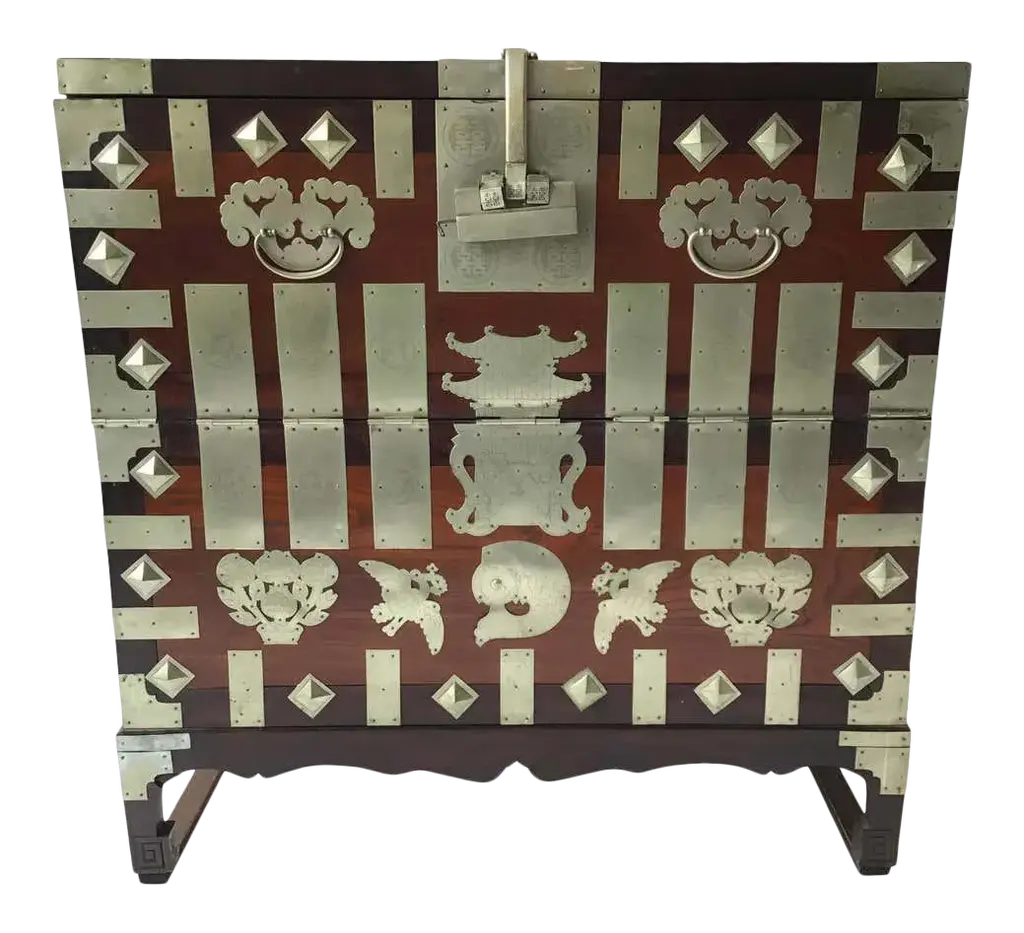
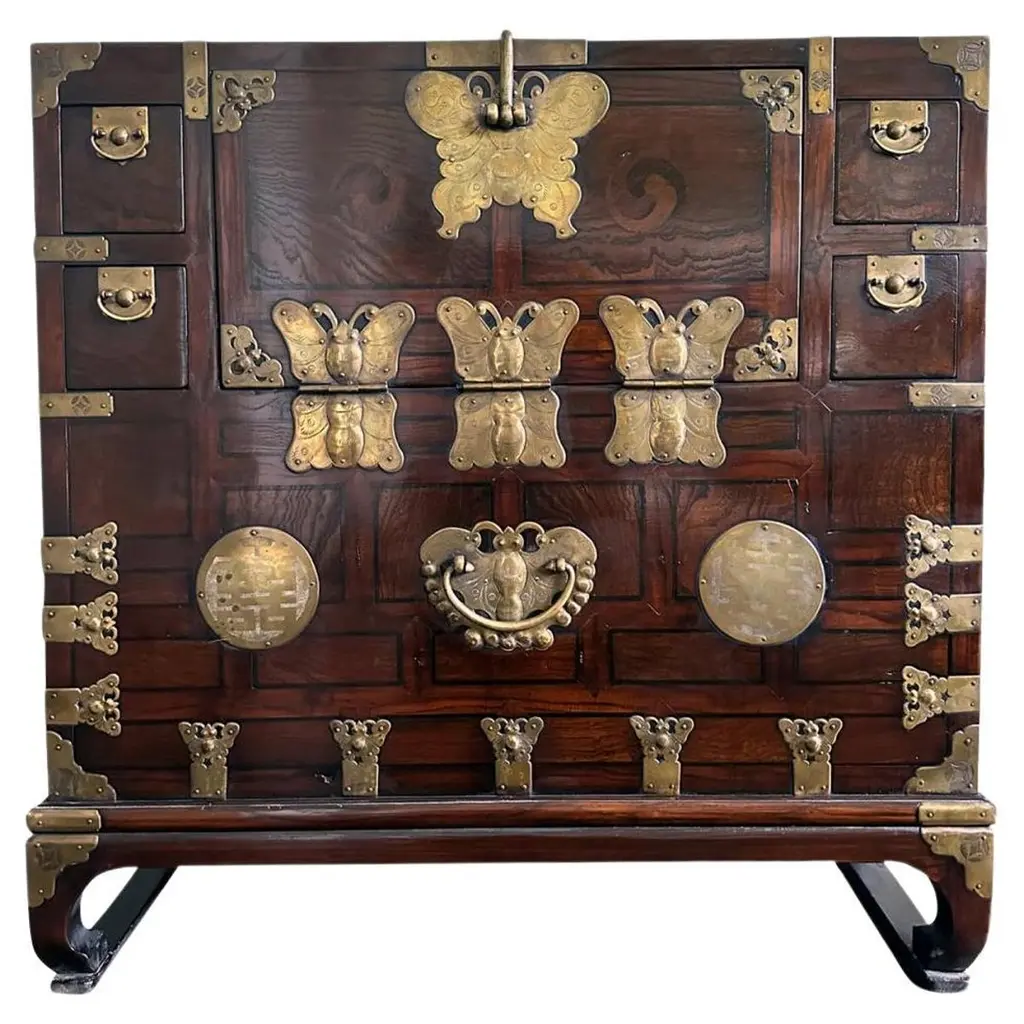
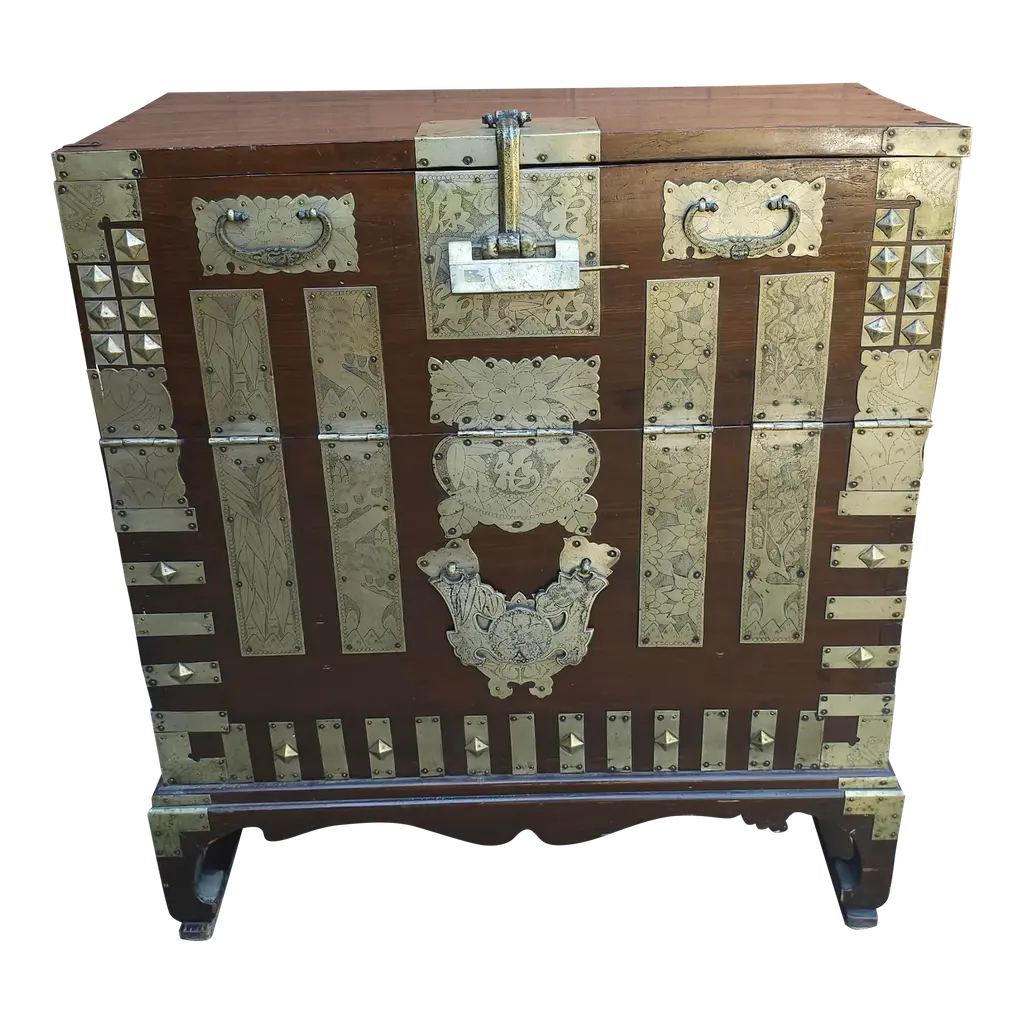
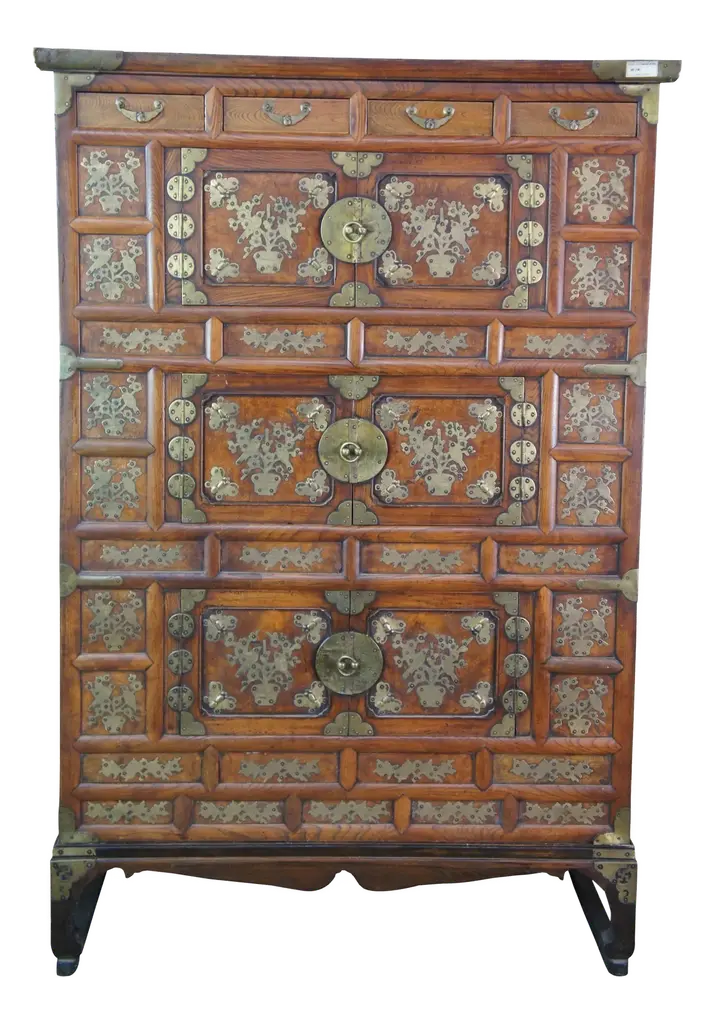
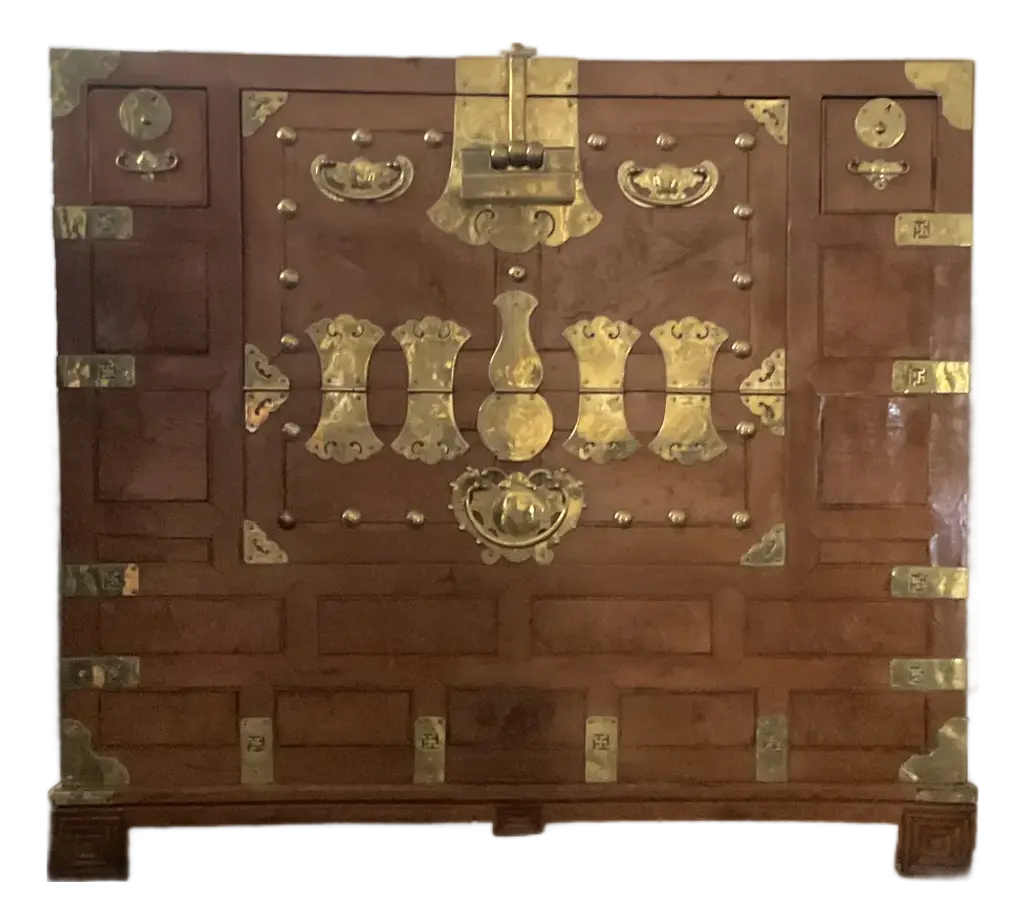
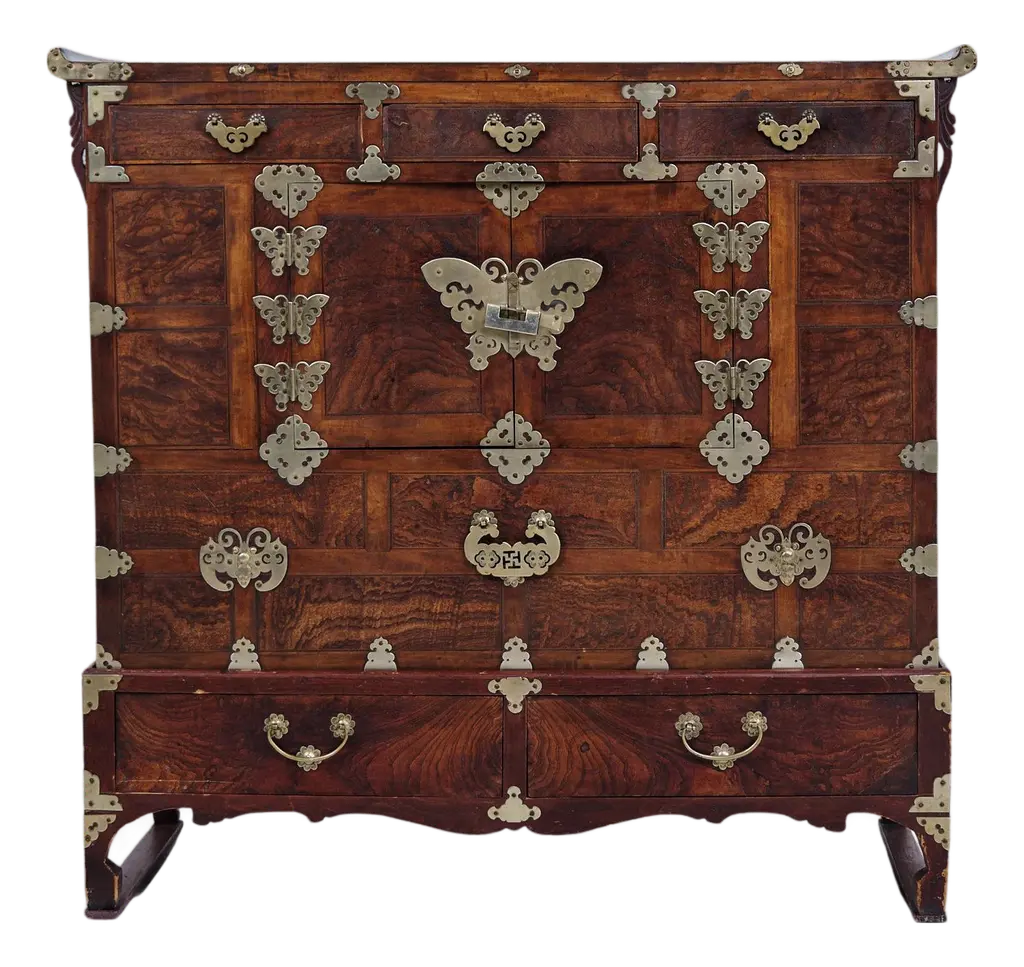
A striking Korean wedding Bandaji with beautiful original condition and patina circa 19th century (late Joseon Dynasty). Bandaji is known as drop front half-opening chest that was used to store family valuables and beddings. The Bandaji on offer was made in Pyongyang area in old Pyongan Do province in now North Korea. Constructed in Zelkova (Korean Elm) and secondary pinewood backing, the chest was sumptuously decorated with white nickel-copper (Paktong) plates, handles, stripes and studs. Covering nearly the entire facade of the cabinet, the metal plates were placed with eye-pleasing symmetry. The surface was profusely chase-etched with numerous auspicious Chinese Hanja characters such as "Double-Happiness" (an indication of the wedding occasion), "Fu" (Fortune), Shou (Longevity), Kang (Health) and Sheng (Prosperity) and Ling (Peace) in the roundels. Motifs such as peonies, magpies, carp, tray of peaches were shaped into ornamental plate. The large lock handle on the center was triple decorated with double-happiness character. Large, raised pyramid shape studs were placed along the edges. The front door drops to reveal a row of two small drawers with pulls and a shelf in the center, tucked under the top surface, storage for small, valuable items. The lining mulberry papers remain in good condition, and it was of a later period. The chest is supported on a well-carved base with stretchers. The back of the chest was covered in secondary pine plank. The traditional paper cover was mostly stripped away, leaving only traces. Original lock and key with chases characters accompany this chest. The piece is striking in person. The hardware shines in the dark with a mysterious aurora. The original condition is impeccable with all metal pieces intact. It was probably taken from North to South Korean before it travelled with the owner to America and cherished in the family. It is a well-cared antique piece with patina, a piece of strong sense of history and tells stories.Among the collection of the Korean furniture, the largest in the world, in Weisman Art Museum at the University of Minnesota in Minneapolis, Minnesota, there is a similar Bandaji (shown in the last picture; item no.1987.22.28). The placement of all the metal plates and the detailed decoration on the plates are very much comparable.
Similar products