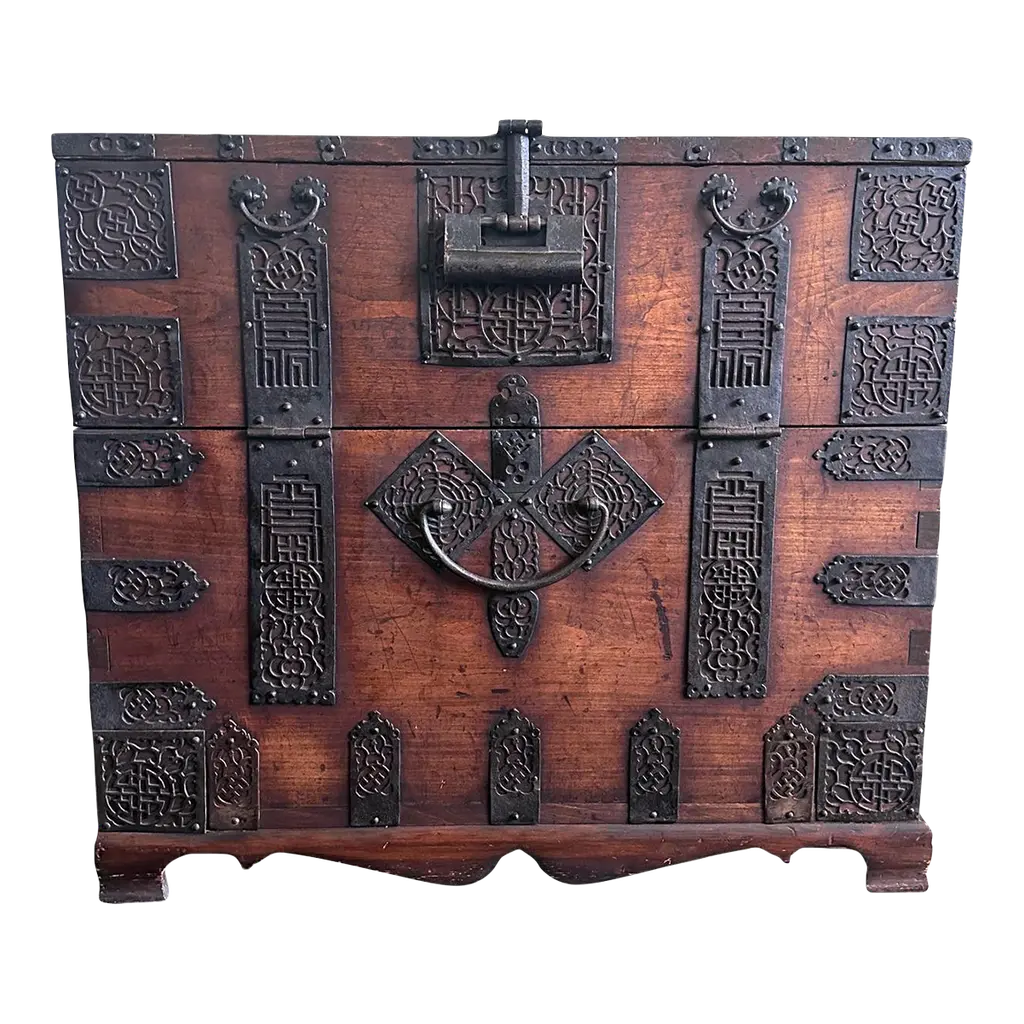
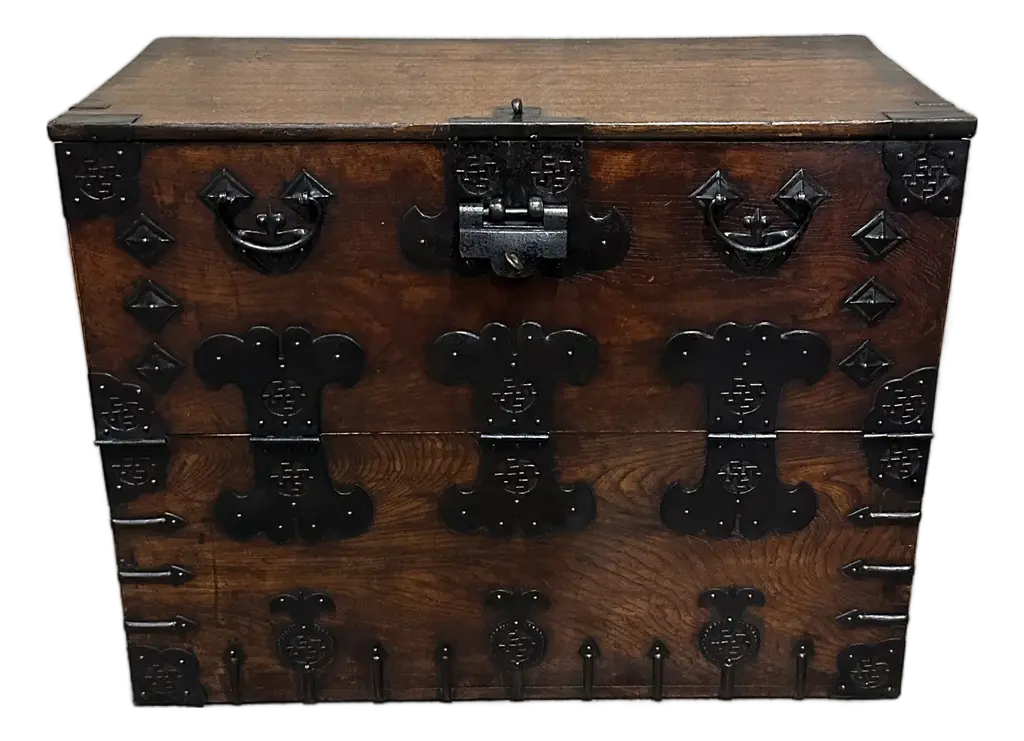
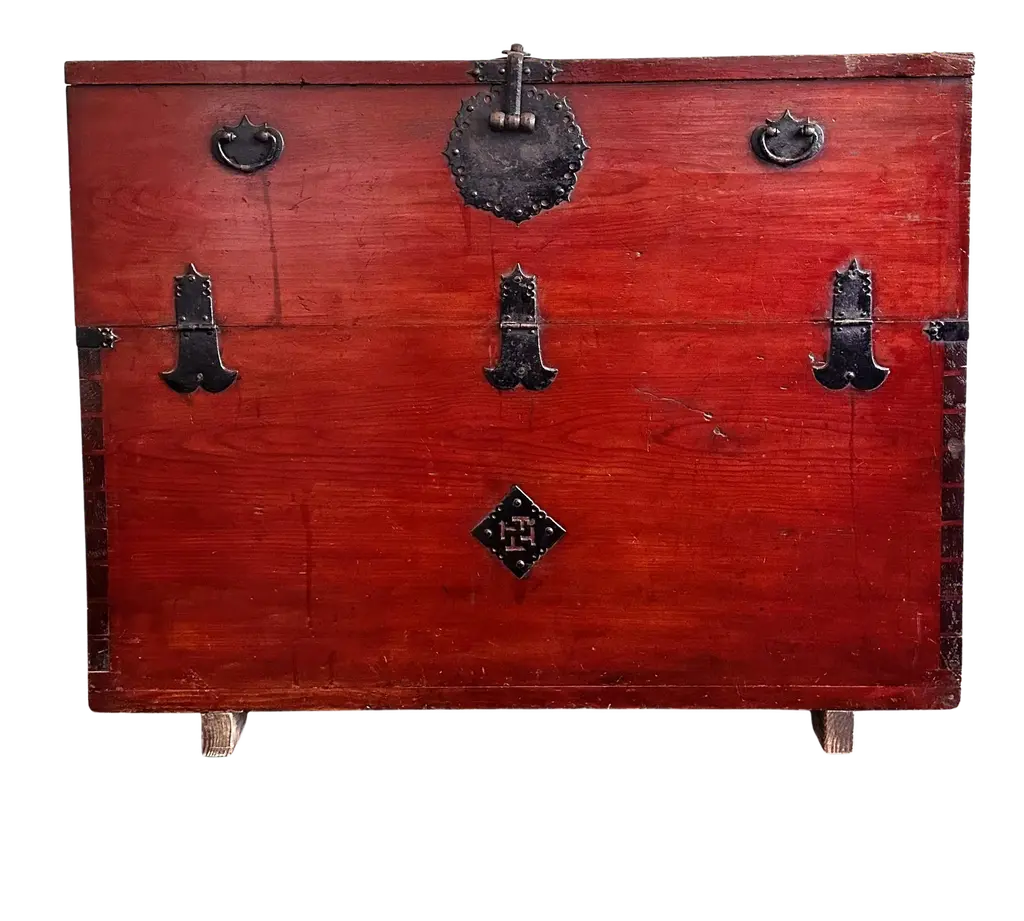
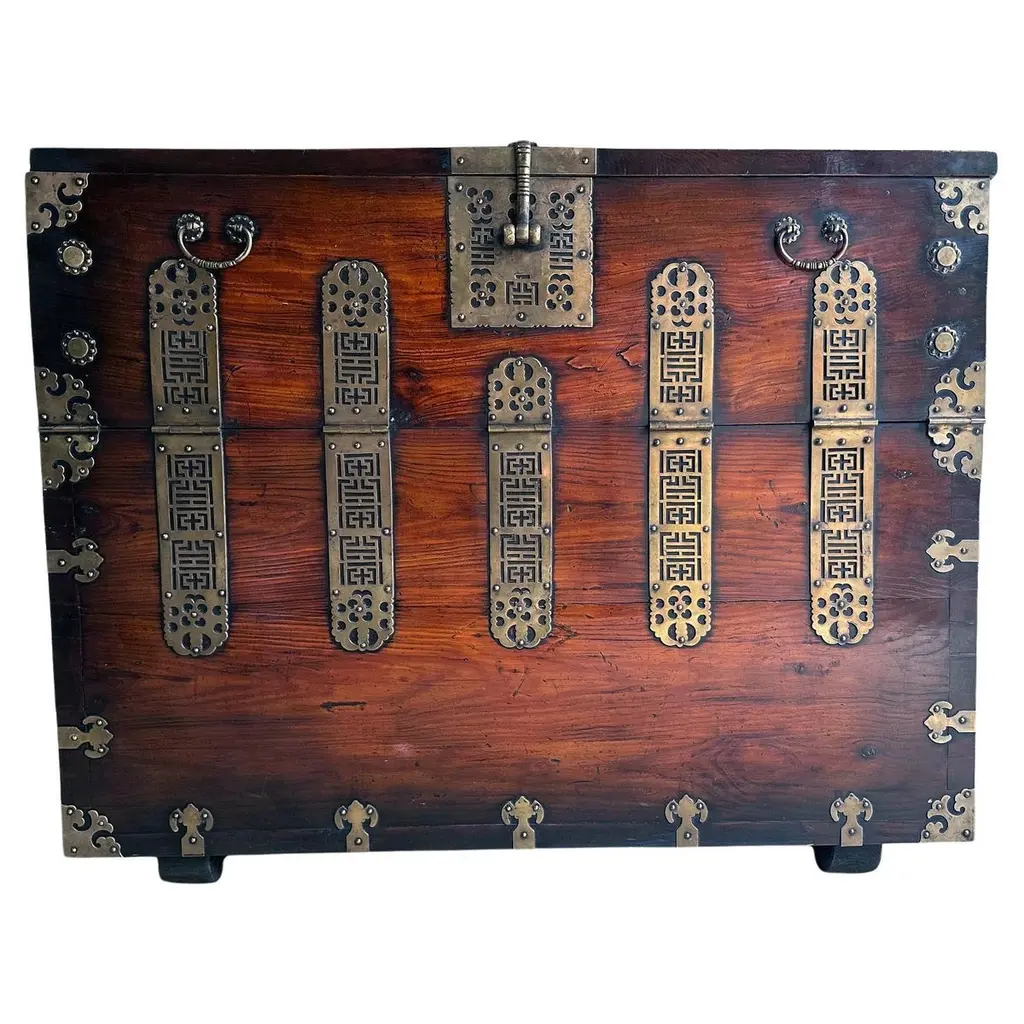
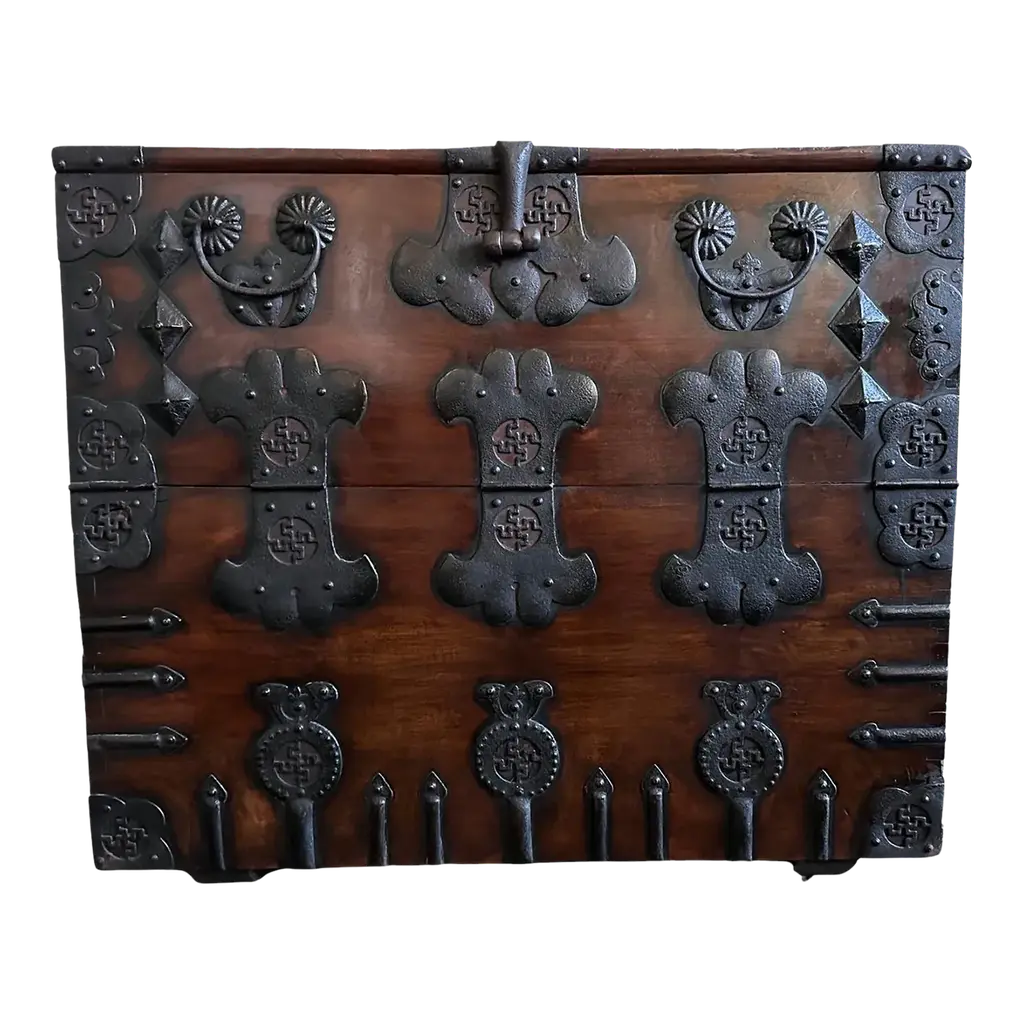
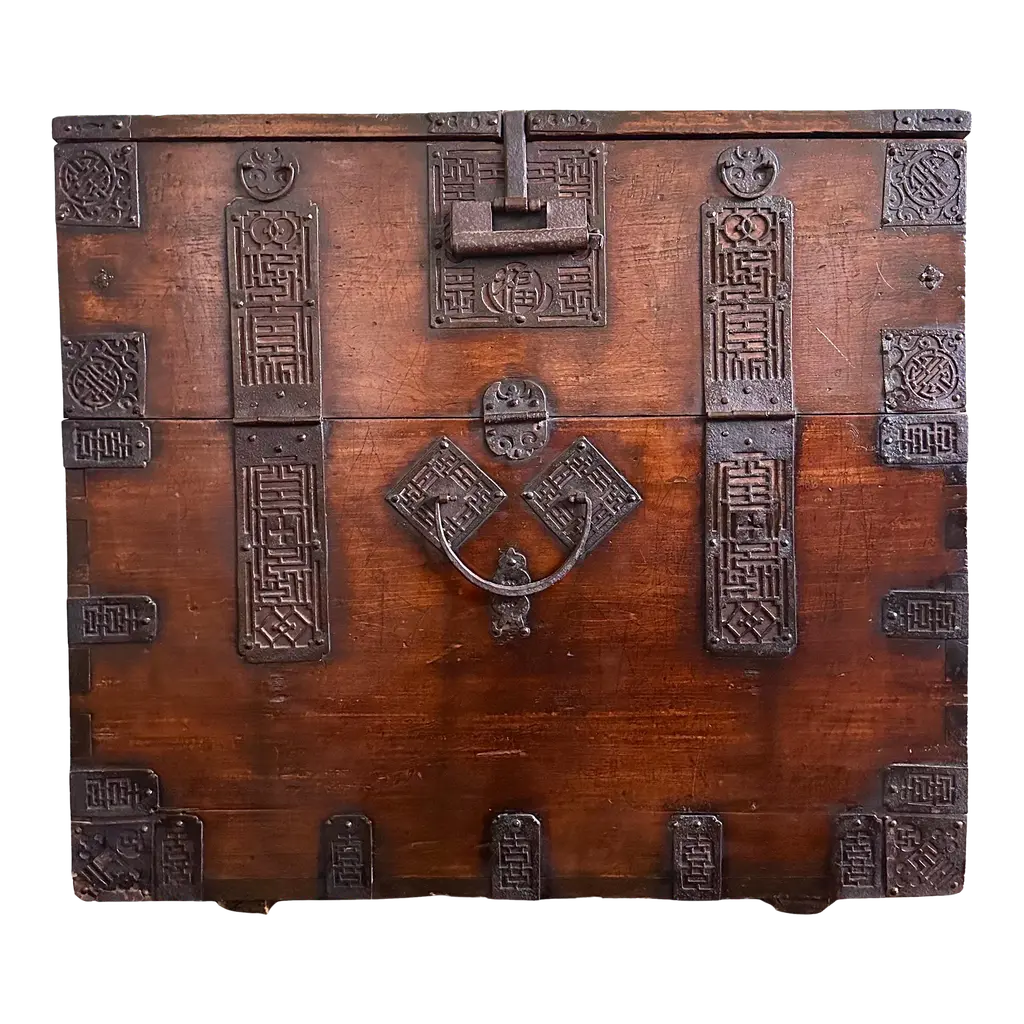
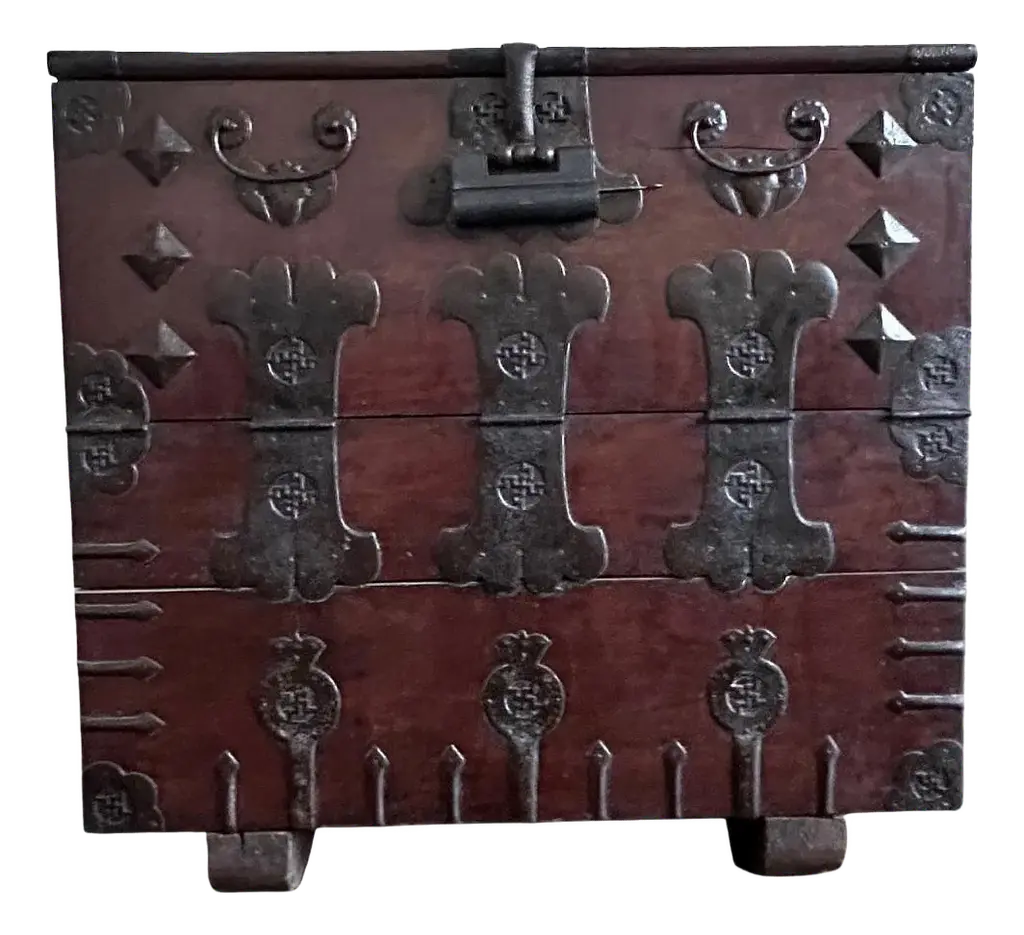
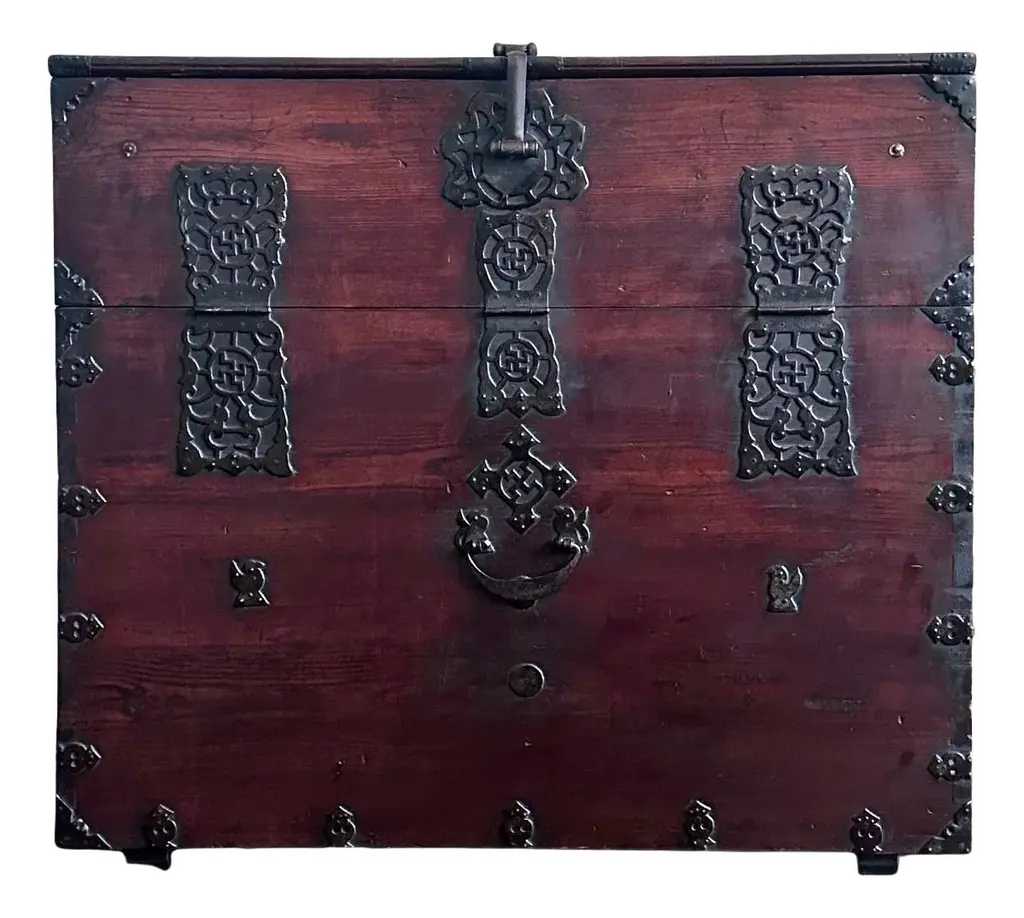
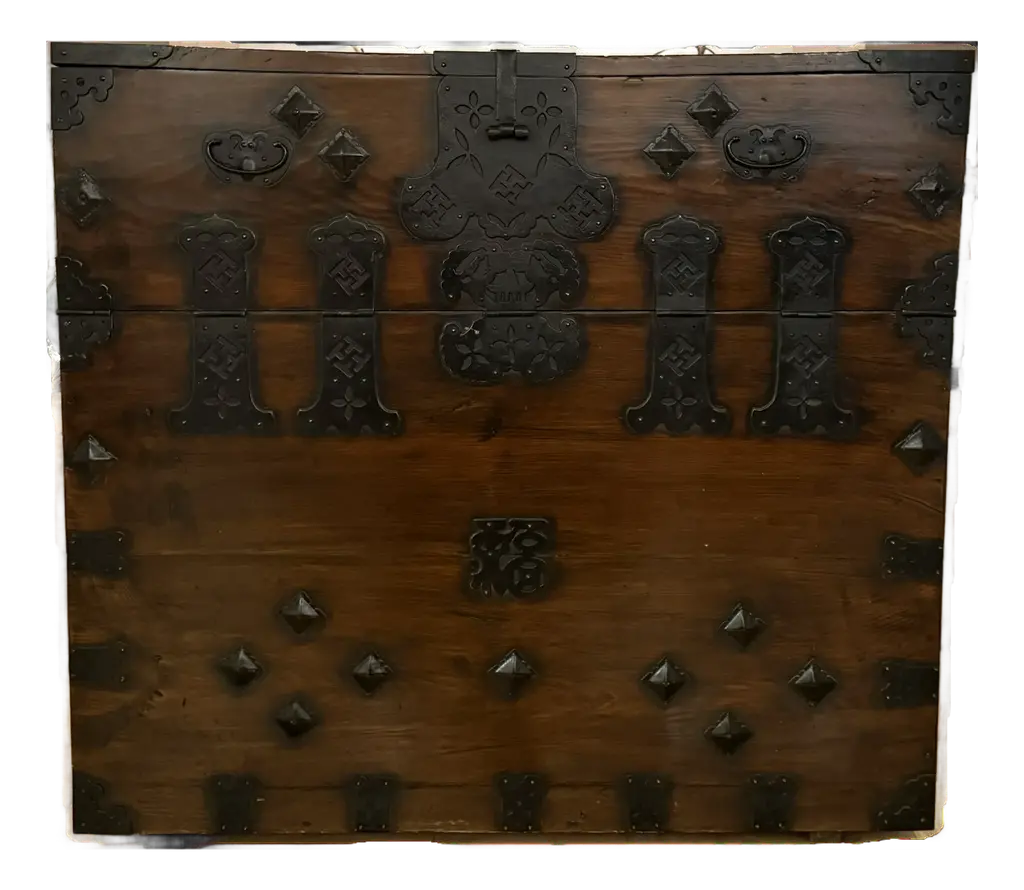
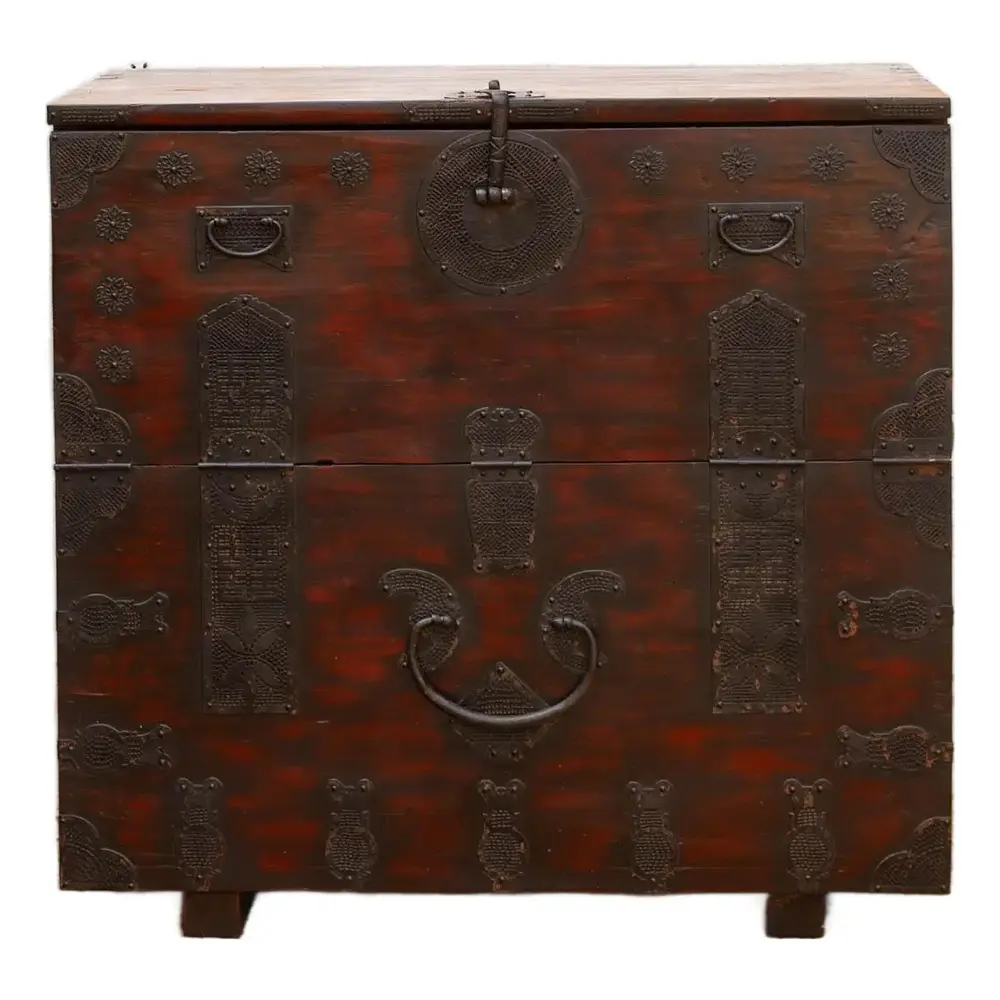
A Korean Bandaji (drop front storage chest) from Hwanghae Do province (nowadays in North Korea) circa 19th century. Documented Bandaji from this northern province is very rare making this piece a particularly important example for a serious collector. A very similar Bandaji was in the collection of National Folk Museum of Korea, relic no. 024353.Located in the northwest of Korean peninsula, following the second world war in 1946, Hwanghae-do was divided along the 38th parallel. As a result, most of the province became part of North Korea, except a small southernmost area joined Gyeonggi Province in South Korea.Made from pine with an oil red finish, this Bandaji has a nearly square form that is supported by two short block feet. The naturally preserved characters from the wood such as knots, grains and an unusual dimple contrast with the finely hand-wrought iron fittings that are characteristic for the region. The cut-out work showcases scrolling floral pattern with Buddhism symbol Manja in the center. The smaller hinges on the peripheral are in the shape of pomegranate. Note that on the lower portion of the body, there were two decorative plaques in the shape of small birds, which were also used on the handle in the middle. This decorative motif appeared to be unique to Hwanghae-do region based on the research on the existing examples. The interior of the Bandaji retains most of its paper lining with Chinese characters. As the lining would have been periodically updated, this is likely a historical replacement. The chest shows extensive patina from use, very charming and honest in its wabi-sabi spirit with unhidden imperfection. It is an authentic period piece of furniture, and a rather rare find as it is. Dated from 19th century of the late Joseon period.
Similar products