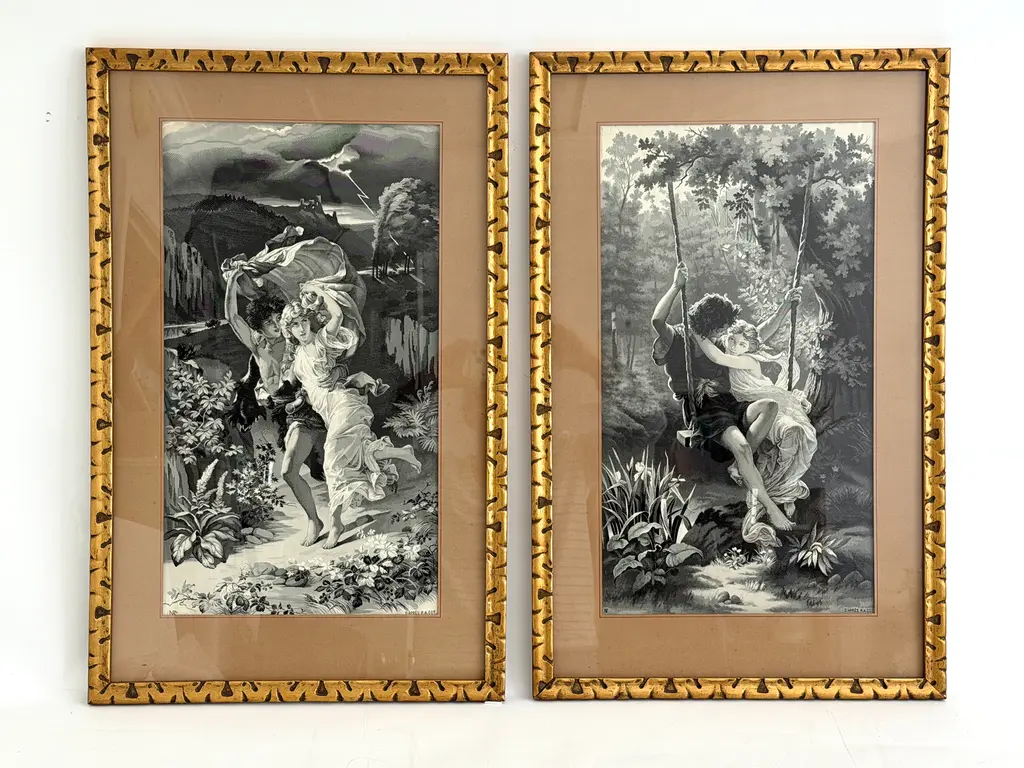
1980s Allegorical Scenes With Natural Elements, Possibly By Johann Elias Ridinger (1698-1767)
Chairish$3,000
1980s Allegorical Scenes With Natural Elements, Possibly By Johann Elias Ridinger (1698-1767)
Chairish$3,000
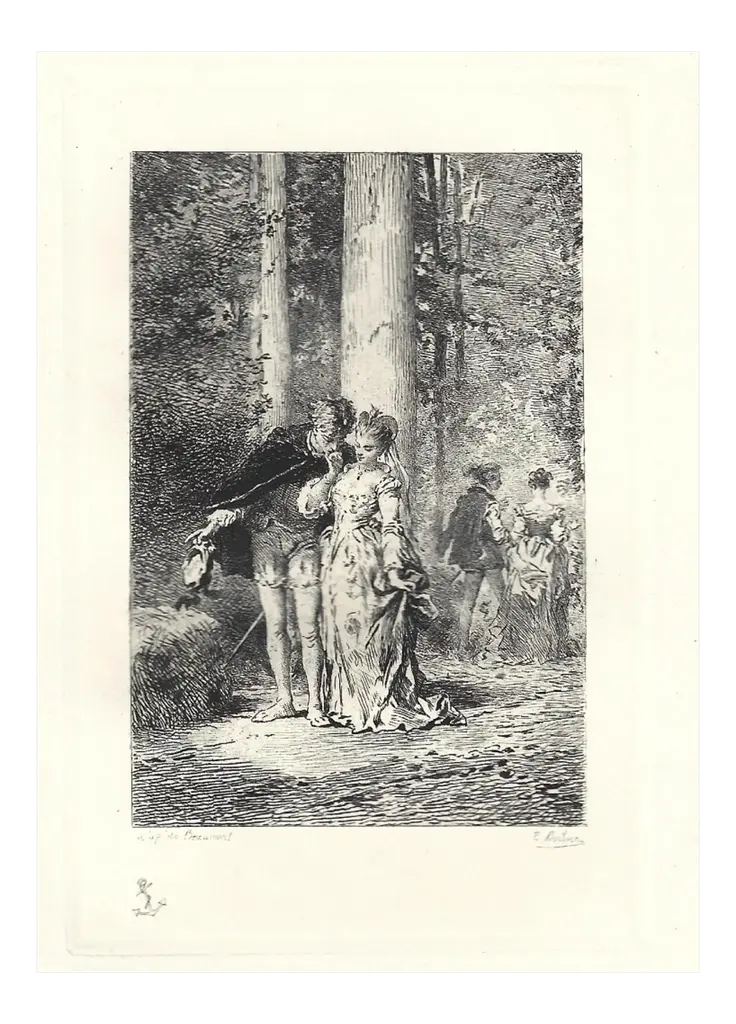
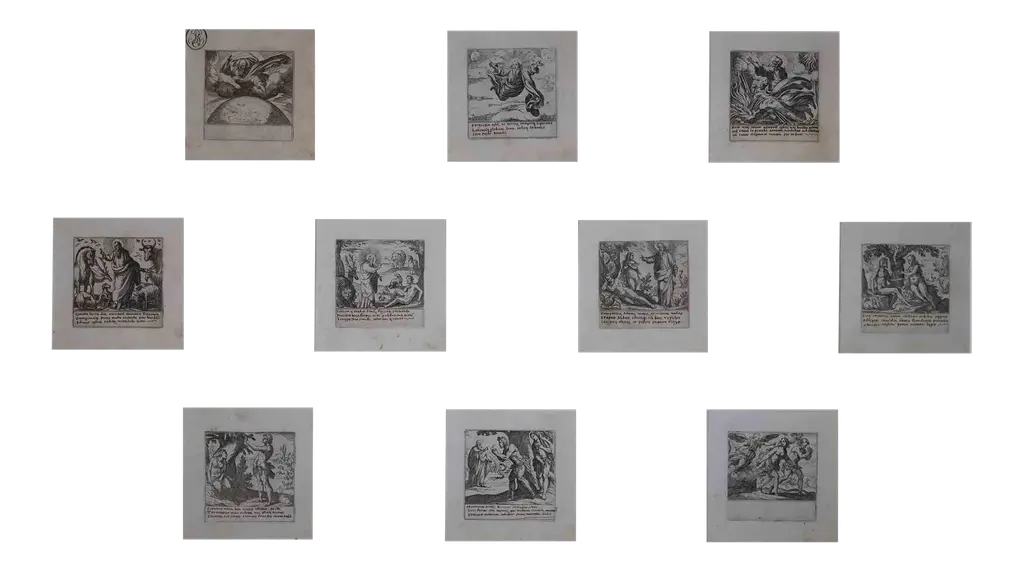
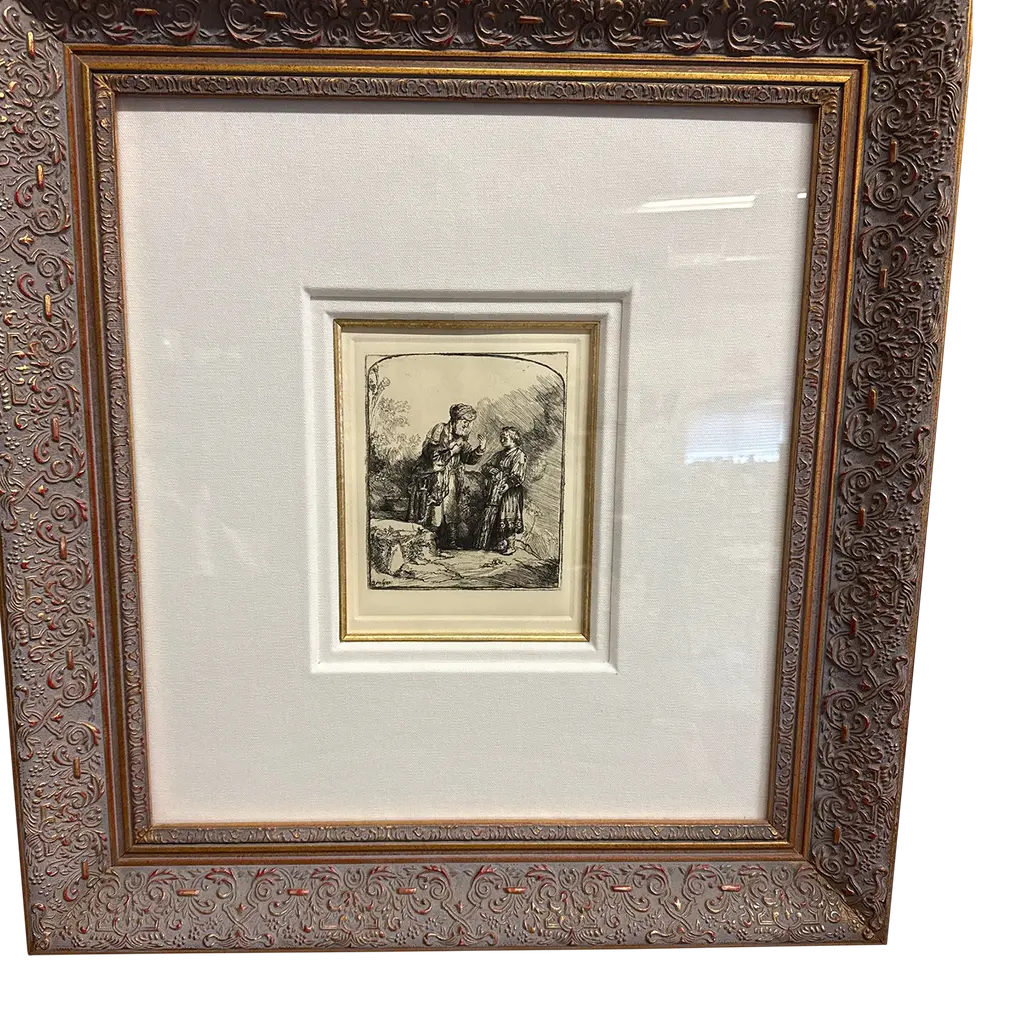
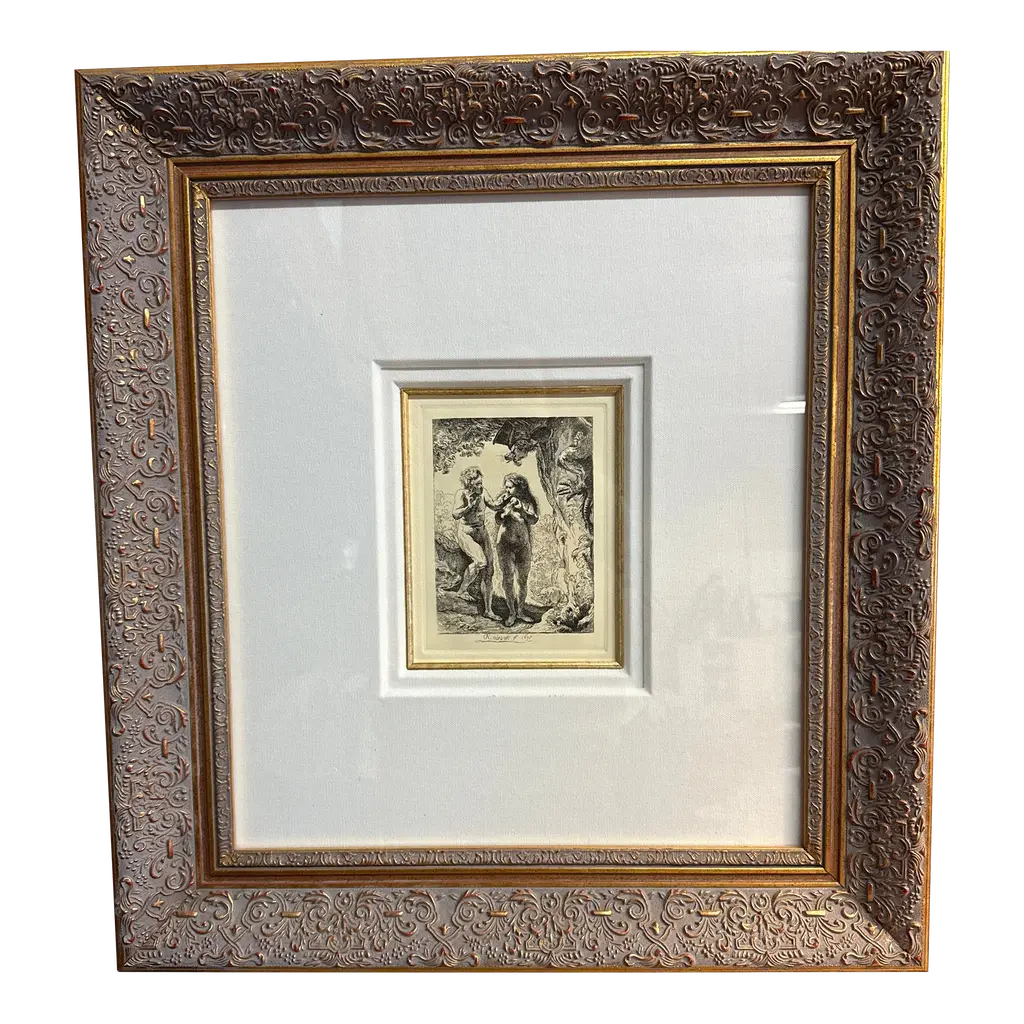
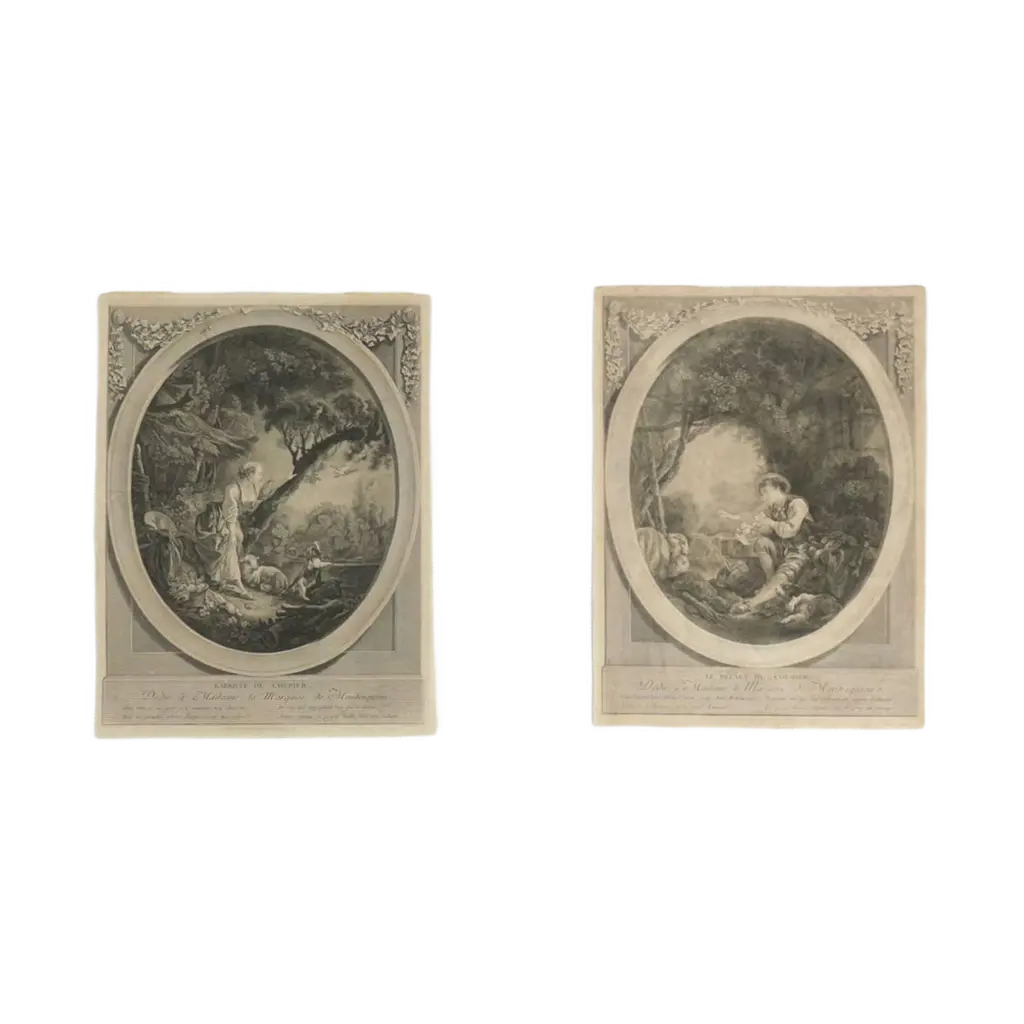
This is an antique etching, measuring 17" x 12", that presents a diptych of allegorical scenes within ornate, naturalistic frames. The artwork is executed in a monochromatic palette, likely black ink on off-white paper, typical of etchings.The left panel appears to depict a classical or allegorical figure, possibly a woman, interacting with a bird (perhaps an owl or raven) perched on a structure, all set within a dense, almost overgrown natural environment with trees and foliage. There's an inscription below this panel, partially visible, which seems to be in German: "Der Lust so lieb-gewoget-Homerus-Wohllebens gebiert./Der Grewal-guet-derer cameron unter alle, ist dieser." (This roughly translates to: "Homer, so dear to pleasure, gives birth to well-being./The horror-good of those cameron above all, is this.").he right panel similarly features figures intertwined with natural elements. One prominent figure appears to be a woman, possibly in distress or repose, surrounded by trees and a more chaotic, dynamic composition of figures and nature. The inscription below this panel is in Latin: "Stuck Indignans sibi sumit ab hostibus bella lacessens./At veneration, oculis me cepit amicus tenellis." (This translates to: "Stuck indignantly takes up wars provoking from enemies./But with reverence, my friend captured me with tender eyes.").The style suggests a Neoclassical or early Romantic period, characterized by detailed draftsmanship and allegorical narratives. The dual language inscriptions (German and Latin) indicate a learned audience and perhaps a print from a central European context. The work is framed by a simple, light-colored mat.
Similar products