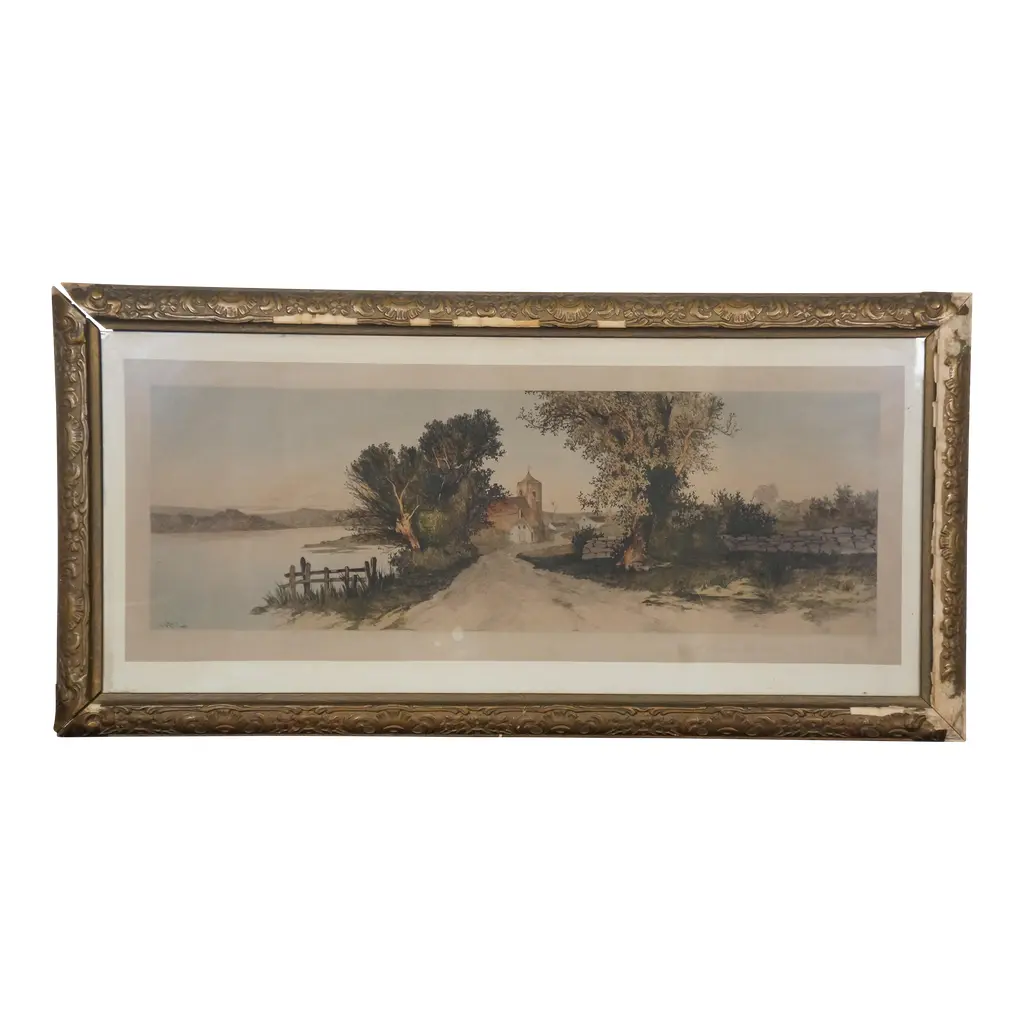
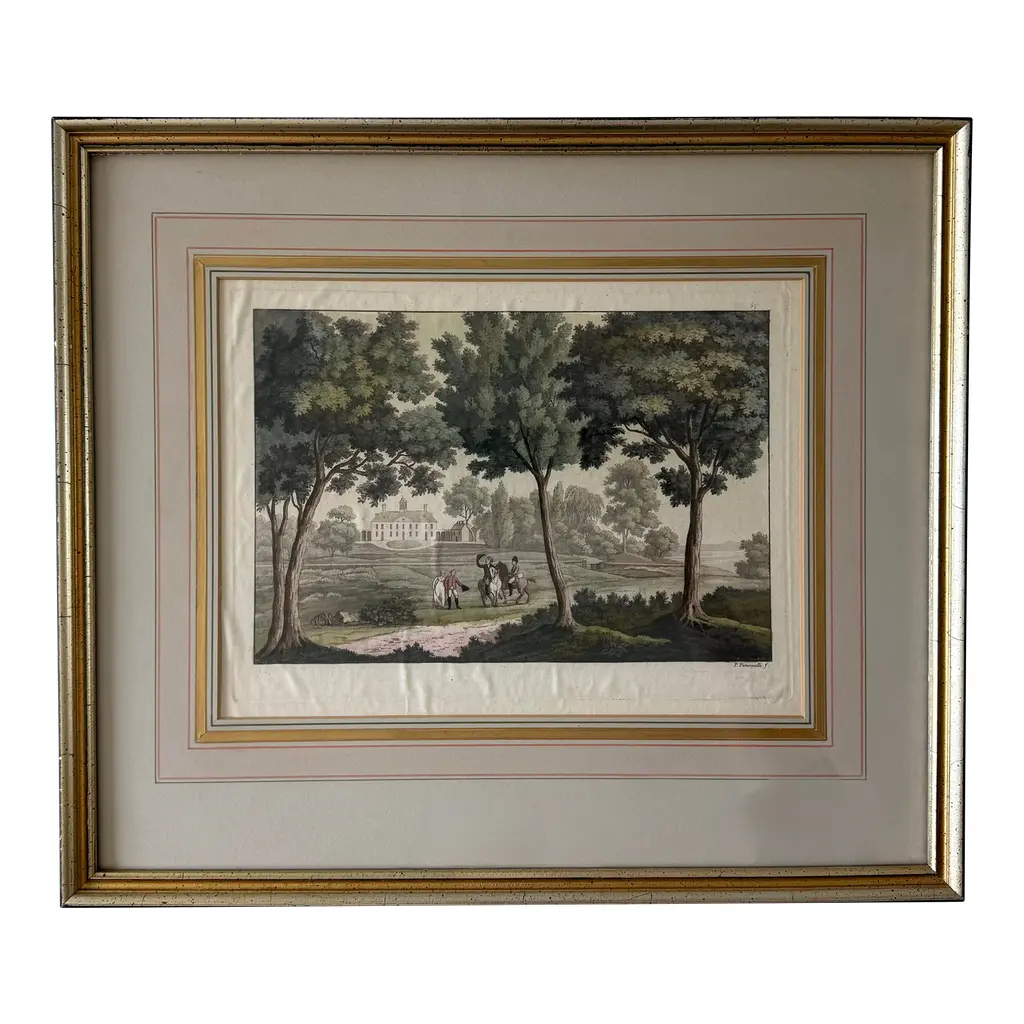
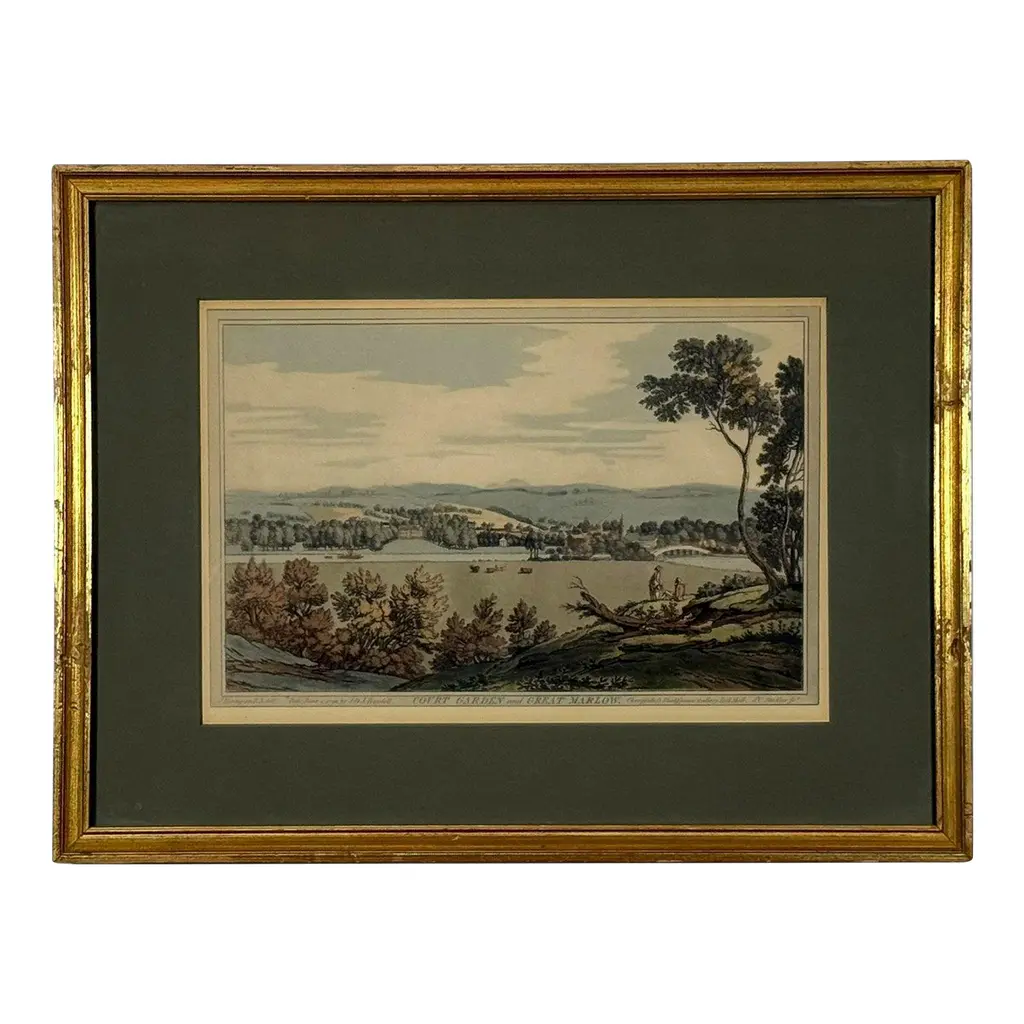
Antique 1793 Joseph Farington River Thames Hand-Colored Aquatint Walton Bridge Boydell This rare 1793 topographical print captures the serene beauty of the River Thames during the Georgian era. Part of the iconic J&J Boydell publication "An History of the River Thames," this hand-colored aquatint offers a masterclass in 18th-century landscape art. The "View of Walton Bridge from Oatlands" showcases a delicate balance between an architectural landmark and the rolling natural landscape, rendered with the soft, atmospheric tones unique to the aquatint process. This method used a granulated ground to create wash-like textures, which were then meticulously tinted by hand with watercolor to produce soft, natural hues that remain elegant and understated over two centuries. About the Artist Joseph Farington, R.A., was more than just a landscape painter; he was a pivotal figure in the Royal Academy and a prolific diarist who documented the inner workings of the London art world. His drawings provided the foundation for some of the most celebrated British topographical series of the late 1700s. Working in tandem with Farington, the German-born engraver Joseph Constantine Stadler brought these visions to life. Stadler was a master of the aquatint medium, a complex intaglio technique that enabled depth, texture, and tonal variation that traditional line engraving could not achieve. Historical Significance Published in London at the height of the British Enlightenment, this print is a product of the legendary Boydell firm. John and Josiah Boydell were instrumental in establishing a global market for British prints, effectively shifting the artistic center of gravity from Paris to London. This specific series, "An History of the River Thames," was a monumental undertaking designed to celebrate the river as the lifeblood of British commerce and culture. These prints were originally produced for bound volumes but were often prized as individual leaves, representing the early development of the topographical tradition that would eventually pave the way for the Romantic movement. Specifications and Dimensions Height: 14 inches Width: 18 1/2 inches Depth: 1 inch Artist: Joseph Farington, R.A. Engraver: Joseph Constantine Stadler Publisher: J&J Boydell, London Date: June 1st, 1793 Medium: Hand-colored aquatint on paper Subject: Topographical British landscape Condition Report As an authentic 18th-century work on paper, this aquatint exhibits a graceful, aged character consistent with its 230-year history. The paper shows natural yellowing and minor age-related staining, which are typical hallmarks of genuine antique prints that were once housed in bound volumes. The hand-applied watercolors remain remarkably soft and legible. The custom frame displays a beautiful vintage patina, including some marring and localized loss of gilding on the edges, which serves to enhance the historical integrity and "Old World" charm of the piece. It is housed behind glass and ready for immediate display. Designers Note This piece epitomizes the English Country House style. Its horizontal orientation and soft, organic color palette make it an ideal anchor for a gallery wall in a library, a home office, or a sophisticated dining room. To maximize its visual impact, I suggest pairing it with other topographical or botanical prints of a similar scale. The muted greens and blues of the Thames landscape harmonize beautifully with traditional mahogany furniture or more contemporary, neutral-toned upholstery. The gilded frame adds a touch of classic Regency glamour to a mantel or console table. Investment Potential Early topographical prints from the Boydell Thames series are increasingly sought after by collectors of British art and history. Because these prints were produced using the labor-intensive hand-colored aquatint process, no two surviving examples are exactly identical in their tinting. Owning an original Farington-Stadler collaboration is not only an aesthetic choice but also a commitment to preserving a significant artifact of the 1790s London print-selling boom. This original 1793 aquatint is a historically significant work that effortlessly blends British heritage with timeless decorative appeal. It offers a rare opportunity to own a tangible piece of Georgian-era history, perfectly suited for the discerning collector of fine art and antique topography.
Similar products