Antique 1898 Japan Woodblock Print Kiyohime Change Into Serpent Toyohara Chikanobu, Framed
Chairish$3,850
Antique 1898 Japan Woodblock Print Kiyohime Change Into Serpent Toyohara Chikanobu, Framed
Chairish$3,850
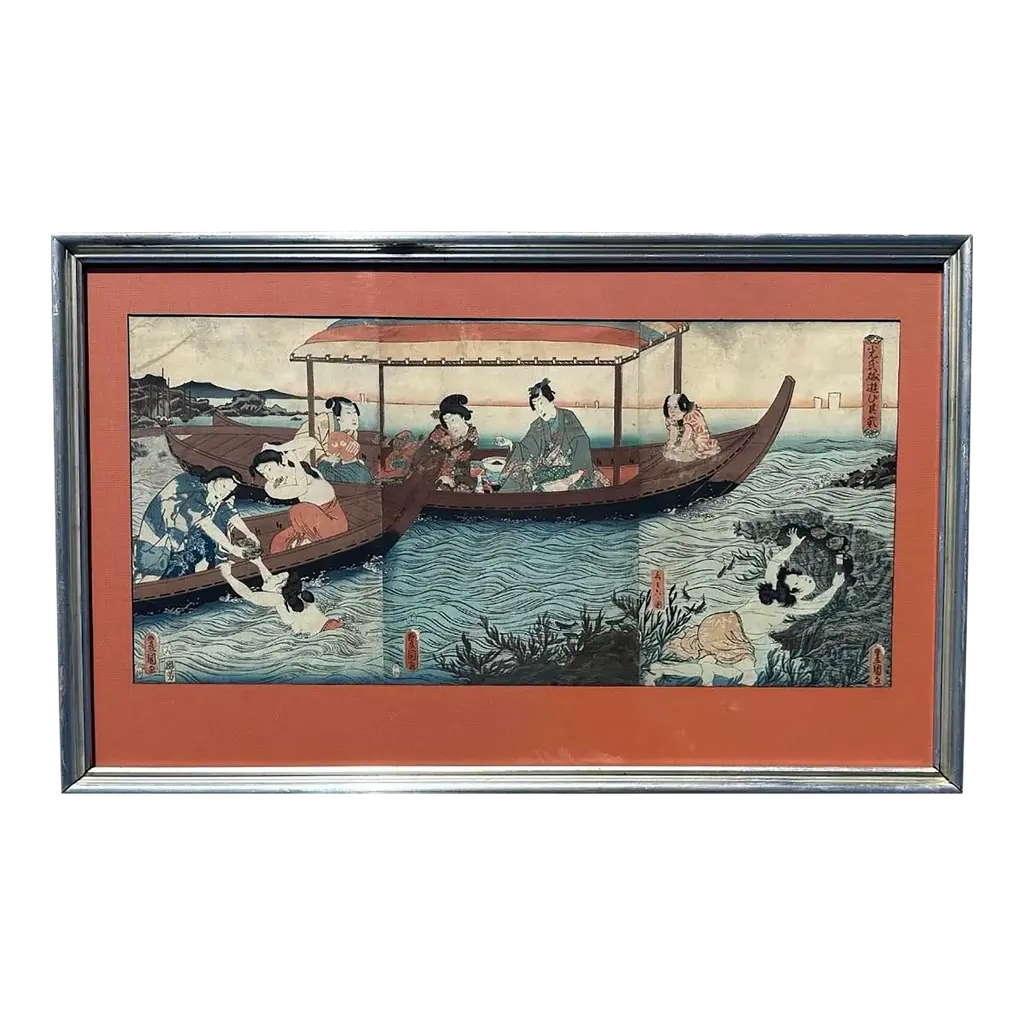
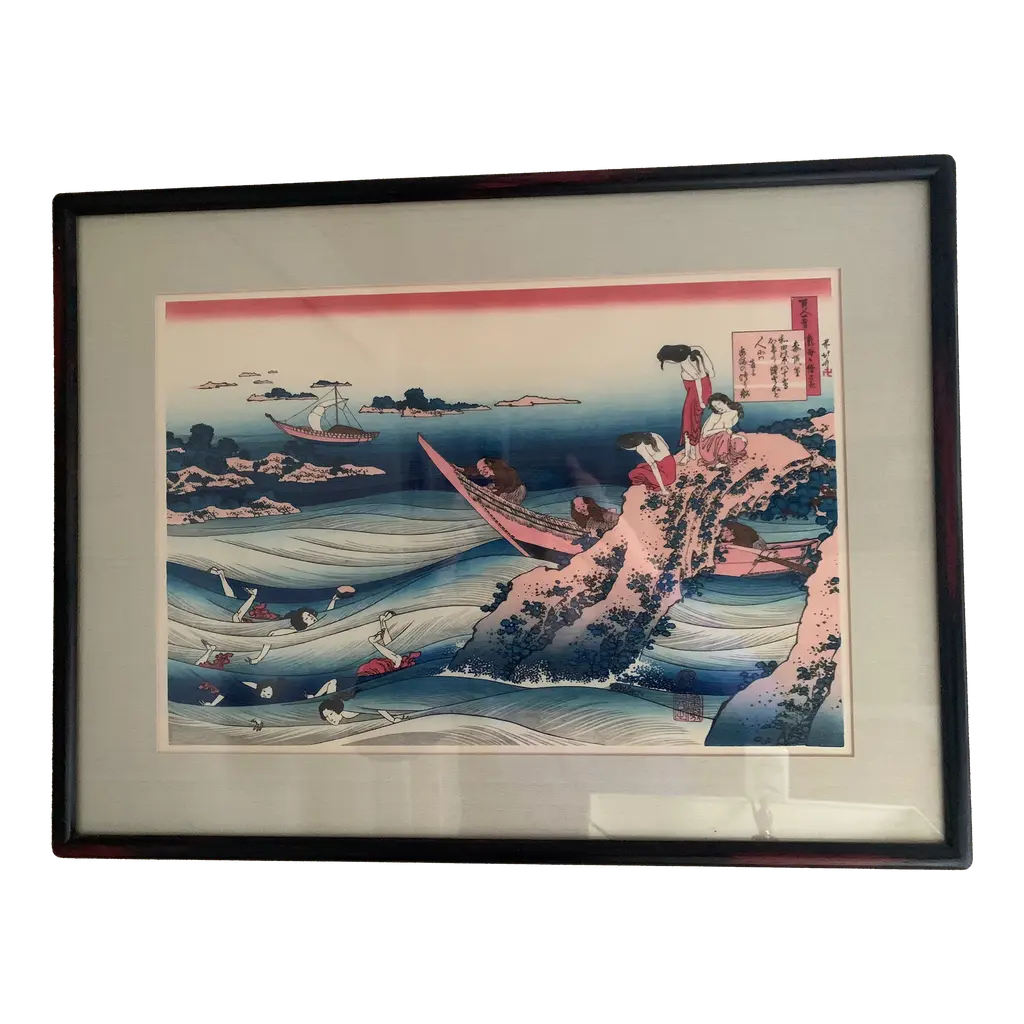
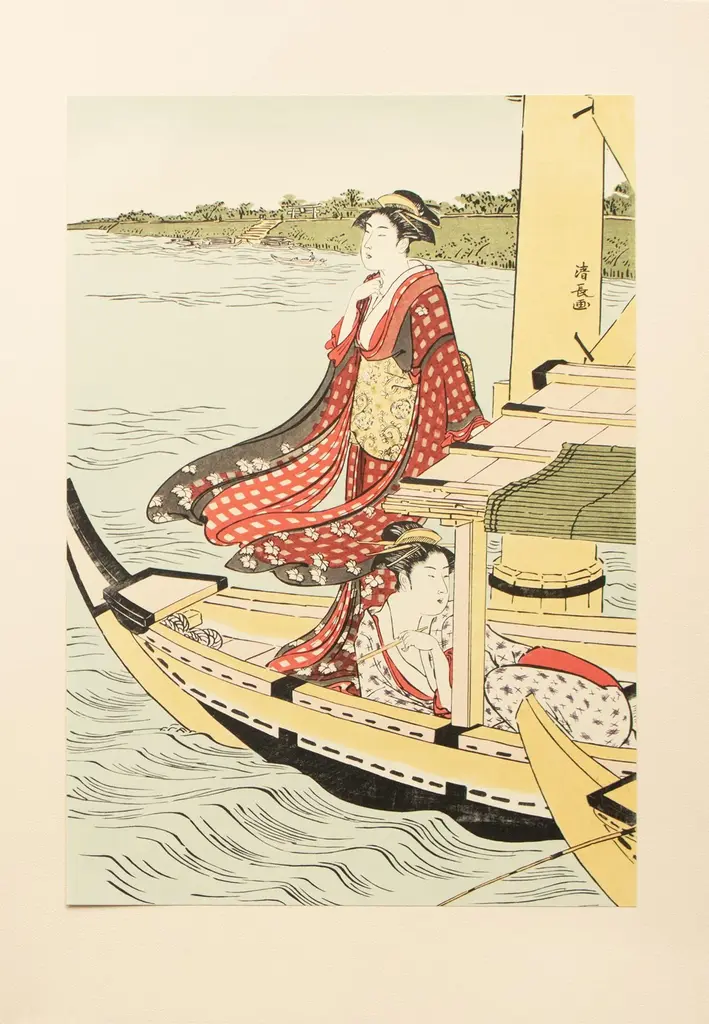
Antique 1898 Framed Japanese Woodblock Print – Kiyohime Changing into a Serpent Artist: Toyohara Chikanobu (1838–1912) Title: Kiyohime Changing into a Serpent Series: Bamboo Joints (Take no Kankei) Date: 1898 Medium: Original Japanese woodblock print (ink on paper) Presentation: Framed with archival tan matting, protected behind glass Framed Dimensions: 33 1/4" L × 20 1/4" H × 1" D Mat Opening (Visible Print Area): 27 1/2" L × 14" H Frame Style: Gilt silver with soft antique patina, tan matting Description: This captivating original woodblock print by renowned Meiji-era artist Toyohara Chikanobu presents a powerful scene from Japanese folklore. The artwork illustrates Kiyohime Changing into a Serpent, a tale of heartbreak and supernatural vengeance. After being spurned by the monk Anchin, Kiyohime transforms into a serpent and pursues him across the Hidaka River. The print captures her dramatic metamorphosis, with her lower body turning serpentine as two figures look on from a boat. Rendered in Chikanobu’s signature style, the piece showcases: Vibrant Meiji-period colors Exquisite kimono pattern detailing Dynamic storytelling composition This is a rare and visually striking example from the 1898 Bamboo Joints series (Take no Kankei), which blends traditional folklore with the refined aesthetics of late 19th-century Japan. Condition: This beautiful woodblock print captures the natural movement and rhythm of ocean waves, with intricate details and organic ripples that are characteristic of traditional woodblock techniques. The print is framed and ready to display, offering a serene and timeless depiction of the sea. Please note: while the print’s textured waves are an intentional part of the artwork, there are also some ripples in the paper itself. These are minor and do not detract significantly from the overall visual appeal, but they are present The print is in good condition considering its age, with minor age-related wear as expected for a 19th-century piece. It is professionally framed behind glass in a contemporary gilt silver frame with archival tan matting, designed to protect and showcase the artwork. About the artist Chikanobu Toyohara (also known as Chikanobu Yoshu) was a leading woodblock print artist of the Meiji Period. Born in Niigata prefecture as Naoyoshi Hashimoto, Chikanobu began his life as the son of samurai in the service of the Sakakibara clan. During the Meiji Restoration, he joined the shogitai, an elite samurai brigade in direct support of the waning Tokugawa Shogunate and fought bravely in the Battle of Ueno in 1868. Though captured in the fray, he was released unharmed. As the Shogunate fell, Chikanobu focused on a career in art. Though trained in Kano school painting from an early age, Chikanobu shifted his attention to ukiyo-e around 1852. Chikanobu began his woodblock printmaking career under the tutelage of Utagawa School masters Kuniyoshi, Kunisada and Kunichika. Like many of his contemporaries, Chikanobu Toyohara worked as a newspaper illustrator as well as a print artist. By 1871, he had established himself as a leading print artist. He designed across all genres, from kabuki actors and beauties to military exploits of past and present. During the 1870s, Chikanobu captured Meiji Japan’s rapid modernization through kaika-e, or “enlightenment pictures.” Attuned to current events and public taste, he produced designs of both the 1877 Satsuma Rebellion, an ill-fated insurrection against the Meiji government, and well as the 1882 Imo Incident in Korea. Chikanobu’s reflected his changing world not only through his subject matter, but also in his materials. Incorporating the purples and reds of imported aniline dyes, he achieved an element of subtlety and sophistication rarely seen in his era. By the 1880s, a wave of national nostalgia for a Japan past prompted designs exploring traditional Japanese culture, values, and heroes. Through explorations of female beauty, Chikanobu Toyohara personified moments in Japanese history through fashion, manners and customs. In 1912, he died of stomach cancer.
Similar products