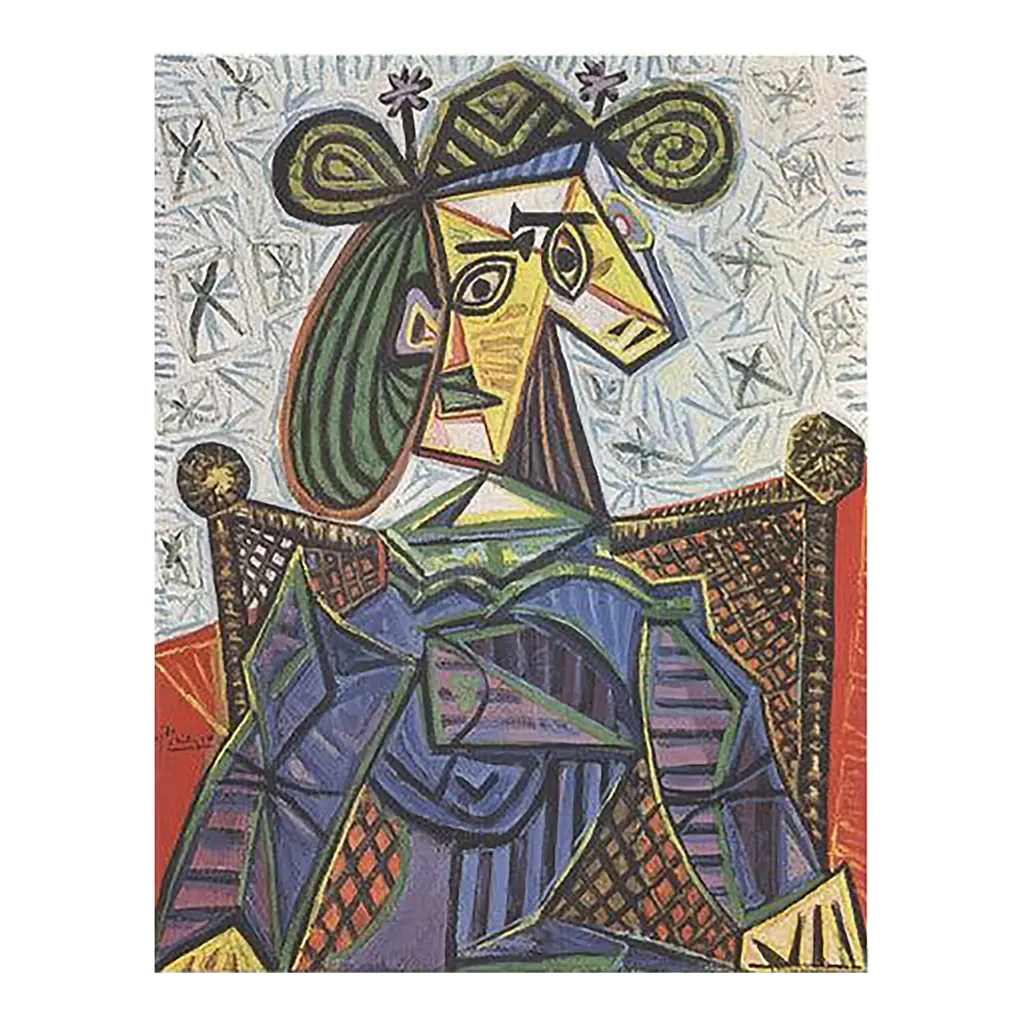
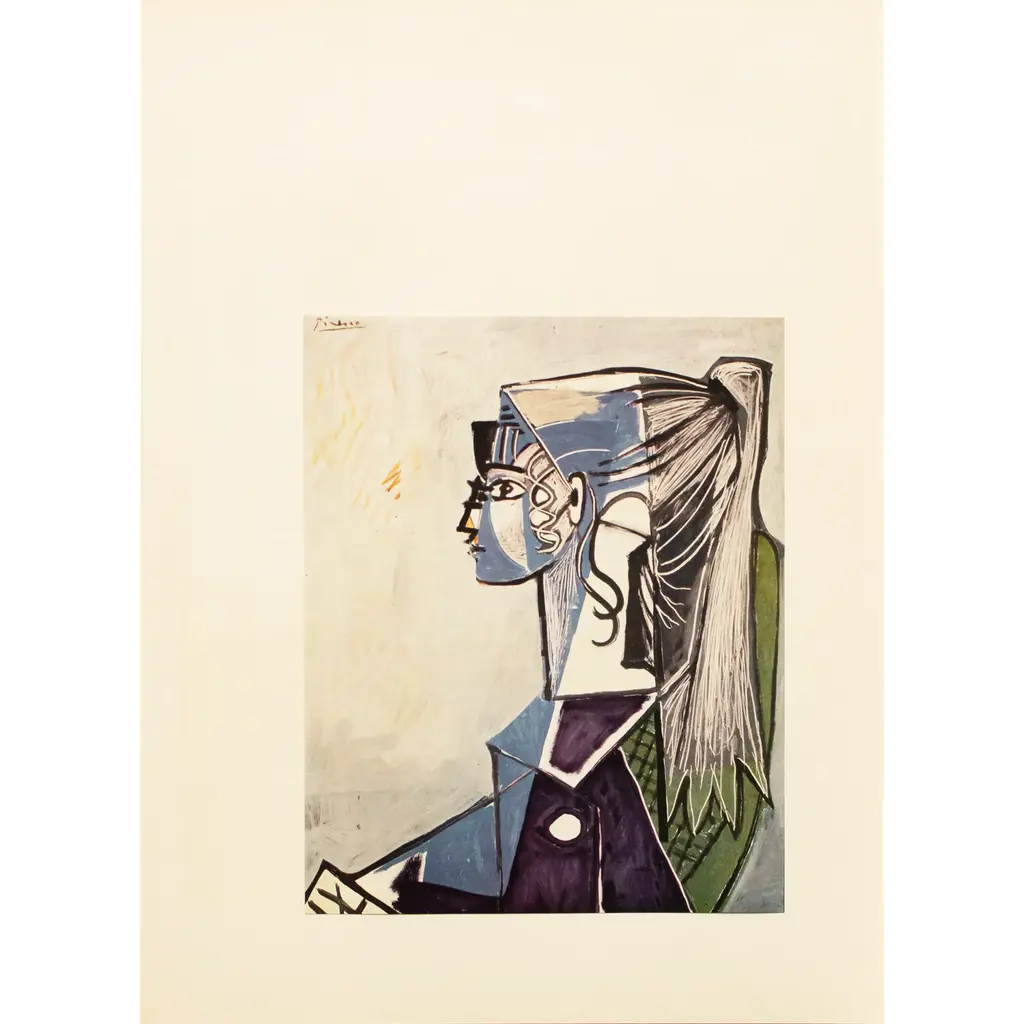
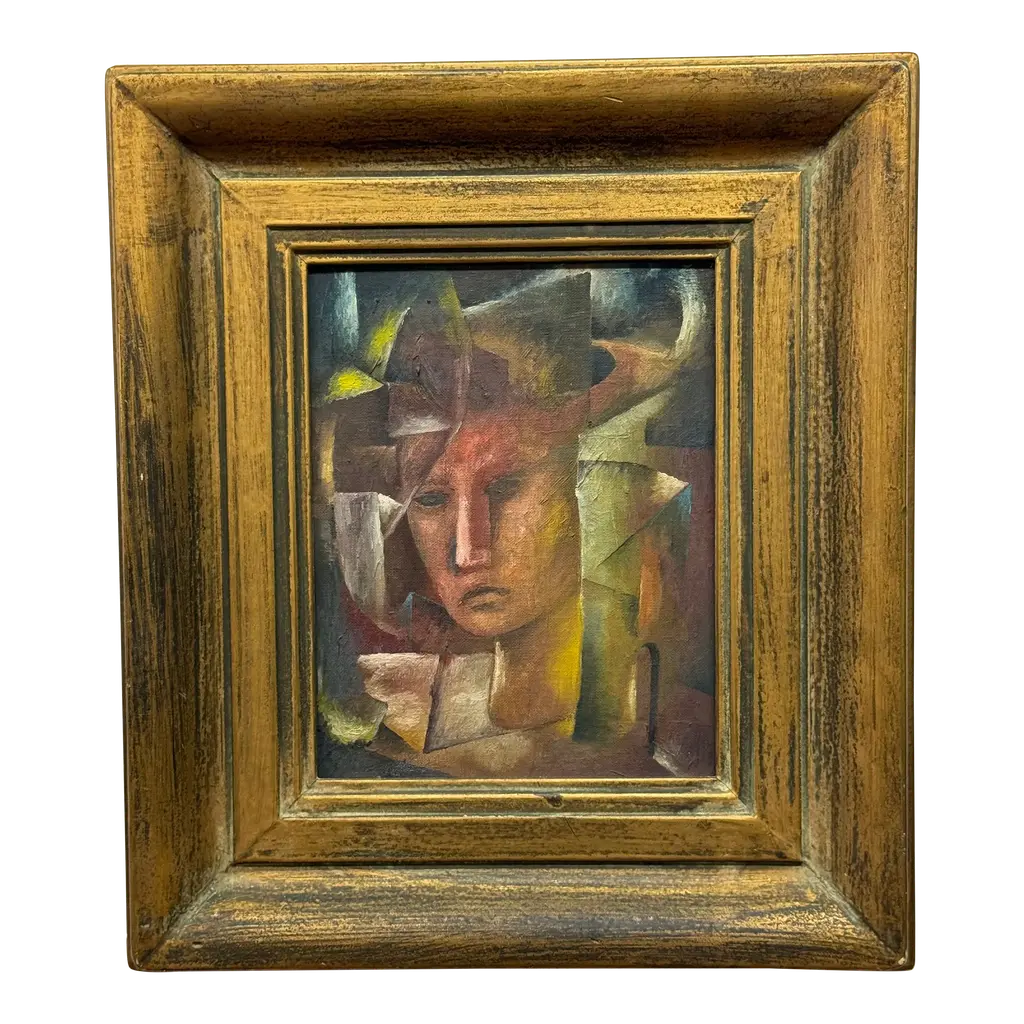
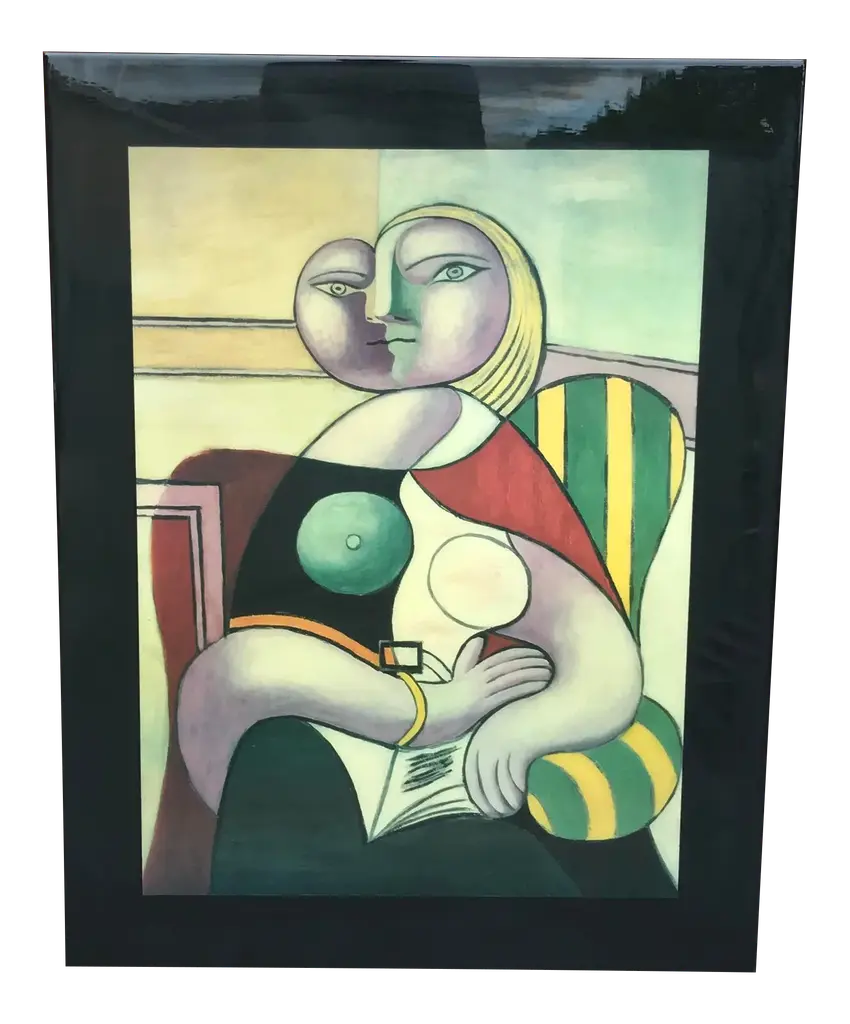
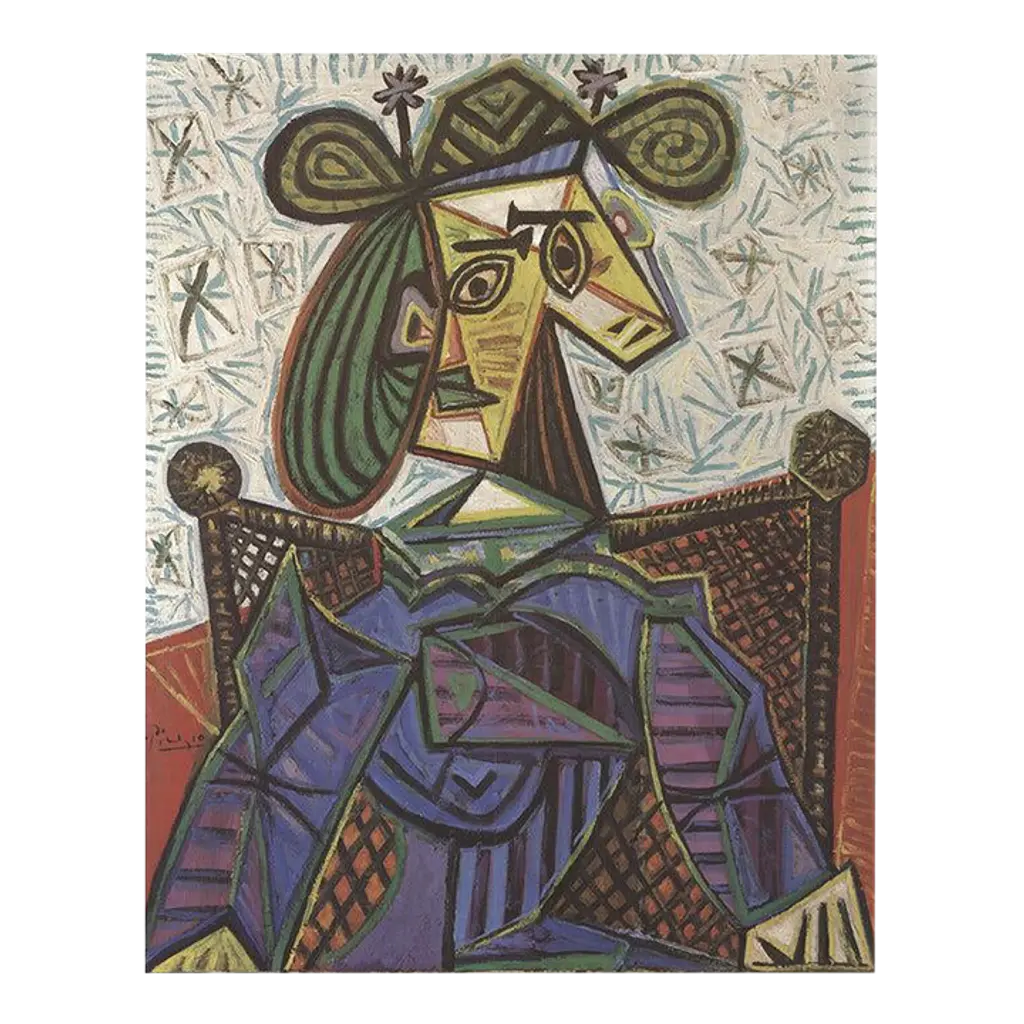
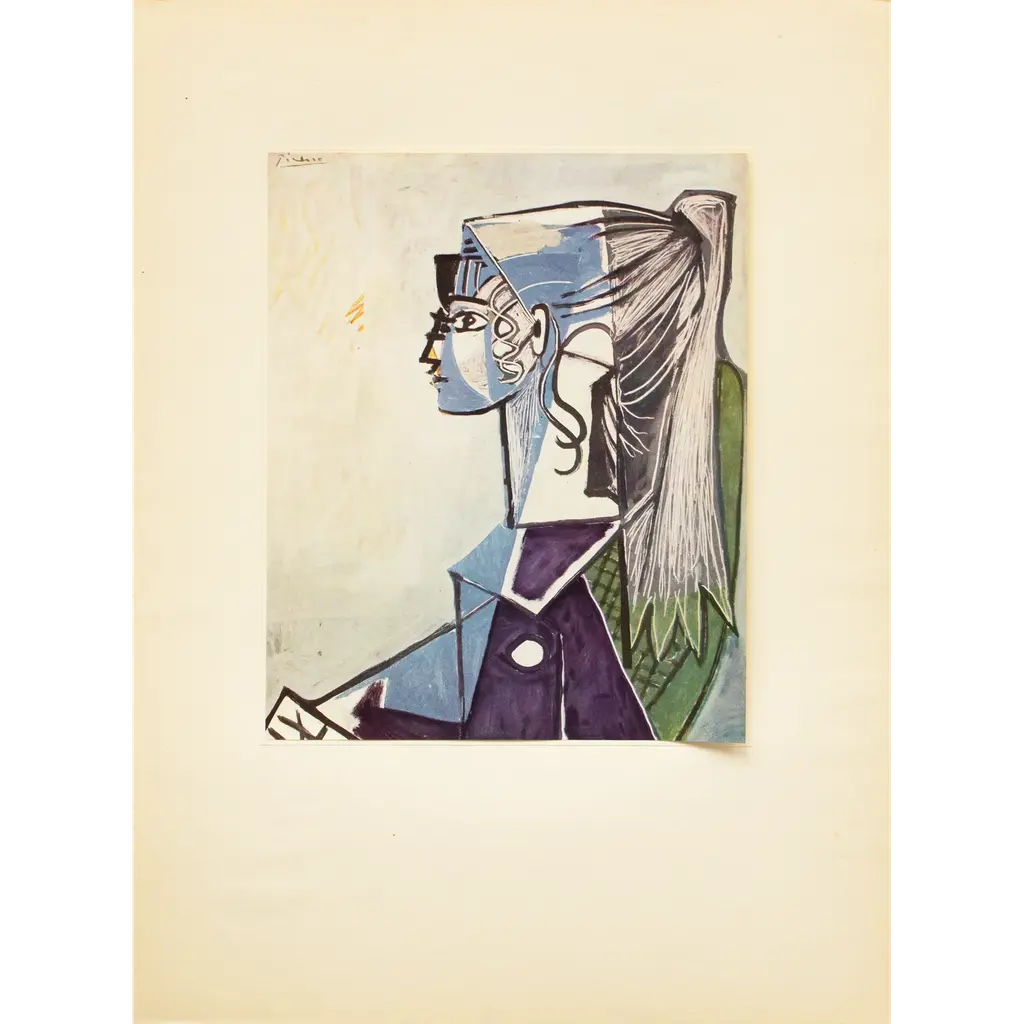
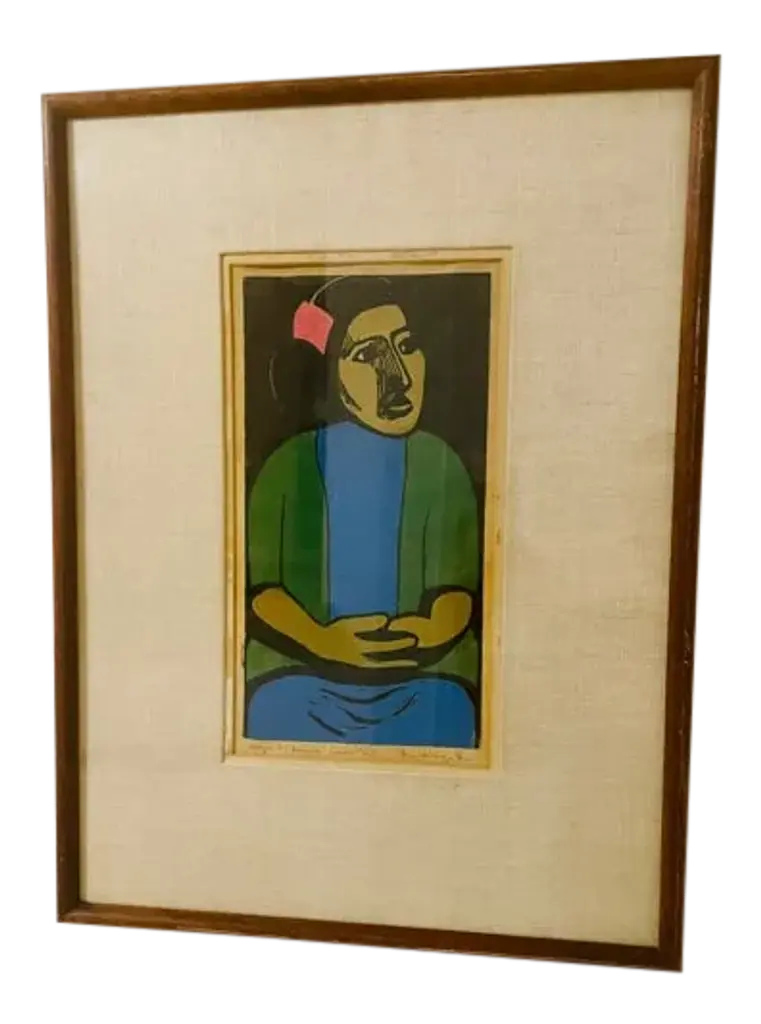
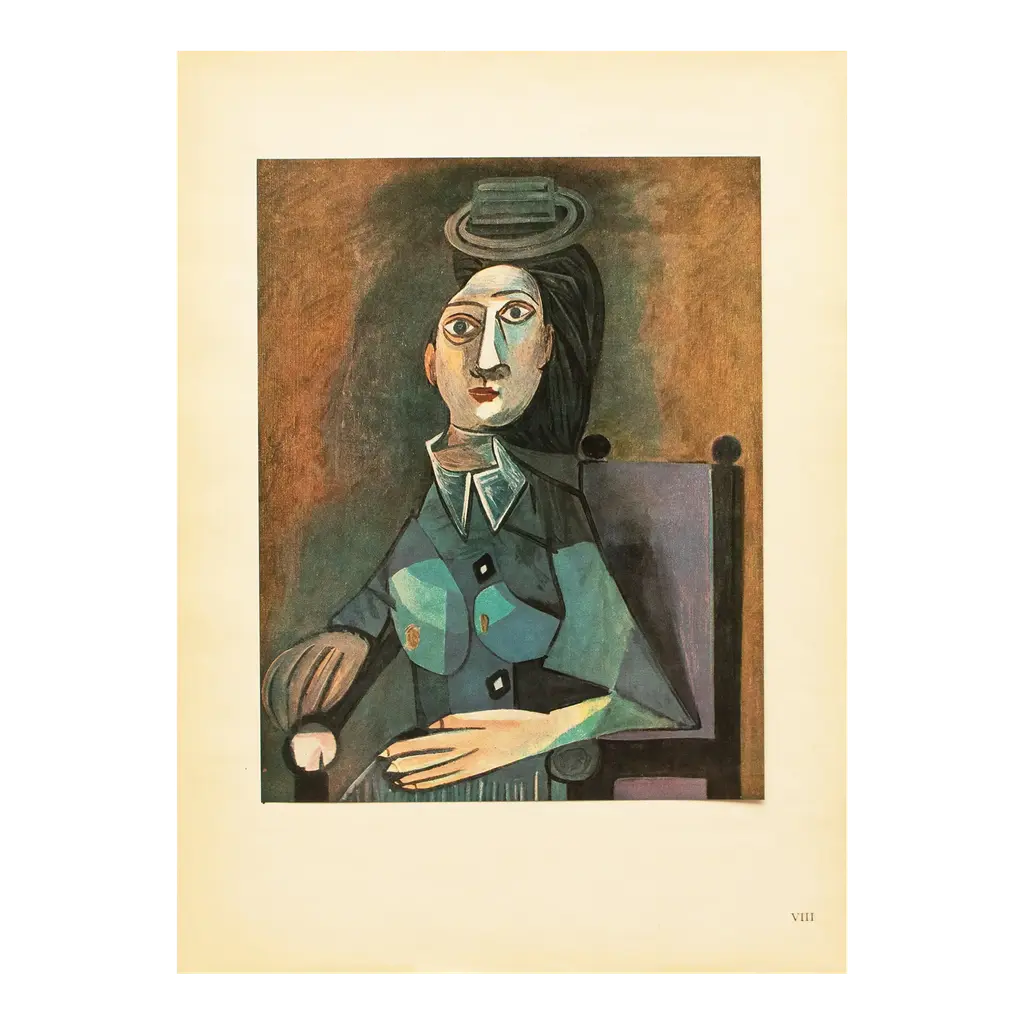
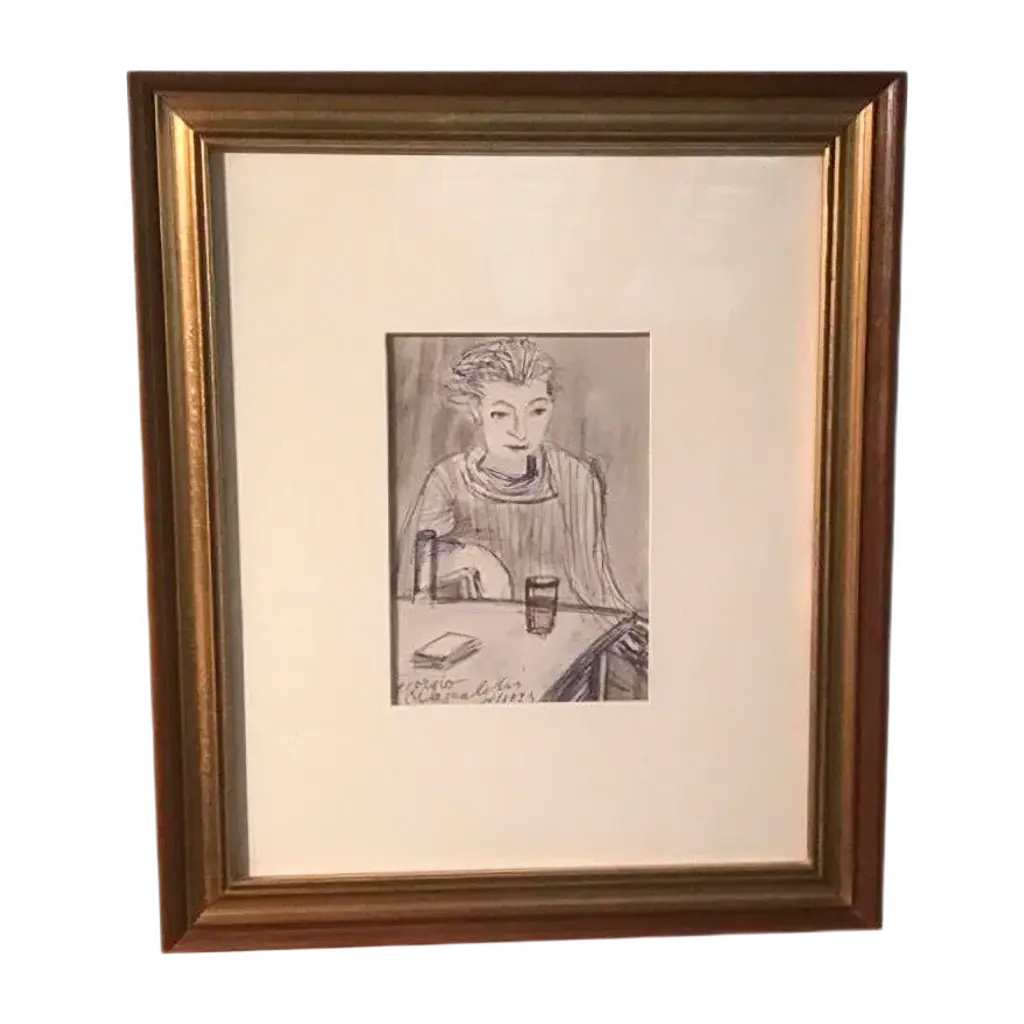
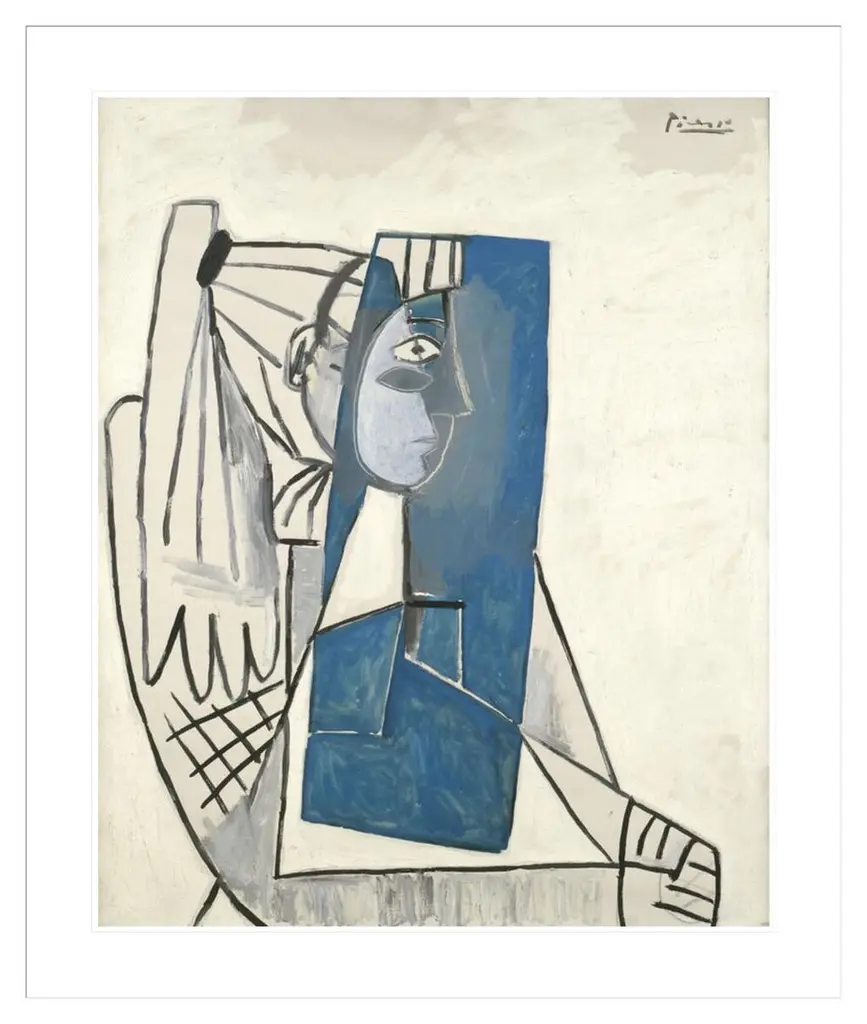
A striking and iconic composition after Pablo Picasso’s Femme Assise (1953), one of the artist’s enduring explorations of the seated female form during his mature postwar period. Rendered in bold, angular linework and simplified planes of color, the figure exemplifies Picasso’s late Cubist language—simultaneously fractured and composed, expressive yet controlled. The subject’s asymmetrical visage, graphic contour lines, and muted palette of soft greys, black, and green reflect Picasso’s continued investigation into psychological presence and formal abstraction. The seated pose, a recurring motif throughout his career, is treated here with confidence and immediacy, balancing figuration with modernist distortion. This example is finely printed as a giclée on French linen blend paper, lending the surface a subtle textile character and softening the graphic elements with a refined, matte texture. The print is housed in a substantial Italian gilt wood frame with a deeply stepped, reeded profile and warm gold finish. The frame’s architectural presence enhances the work’s visual weight, creating a compelling dialogue between modernist imagery and classical craftsmanship. An elegant and timeless presentation well-suited to both contemporary and traditional interiors, offering the unmistakable visual language of Picasso in a richly decorative format. Style Modern Cubist Mid-Century European Creator Pablo Picasso (Spanish, 1881–1973) Title Femme Assise Date After the original, 1953 Materials Fine giclée on French linen blend paper Italian gilt wood frame
Similar products