Gratiane De Gardilanne And Elizabeth Whitney Moffatt, Colorful Doornspyk Market Women In Apenjak Coats, 1932, Print
Chairish$589
Gratiane De Gardilanne And Elizabeth Whitney Moffatt, Colorful Doornspyk Market Women In Apenjak Coats, 1932, Print
Chairish$589
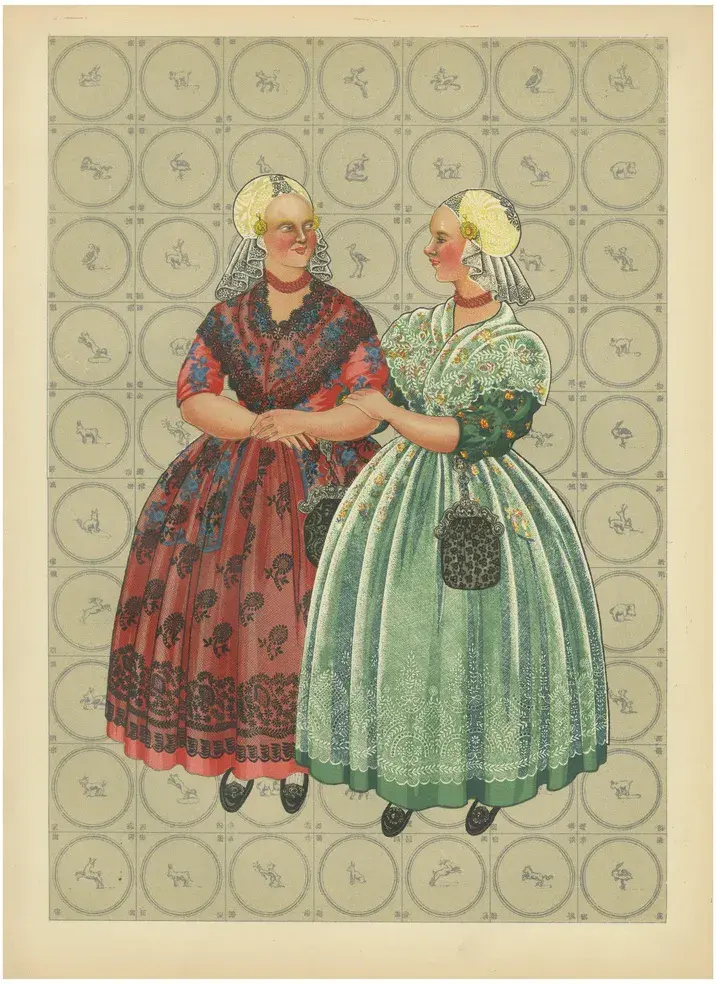
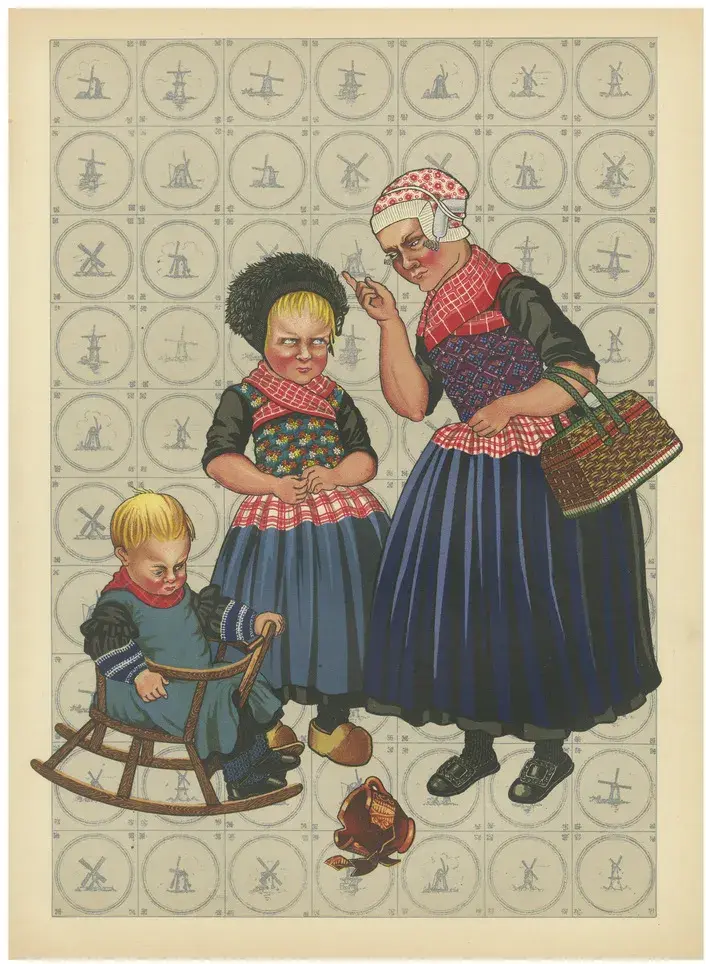
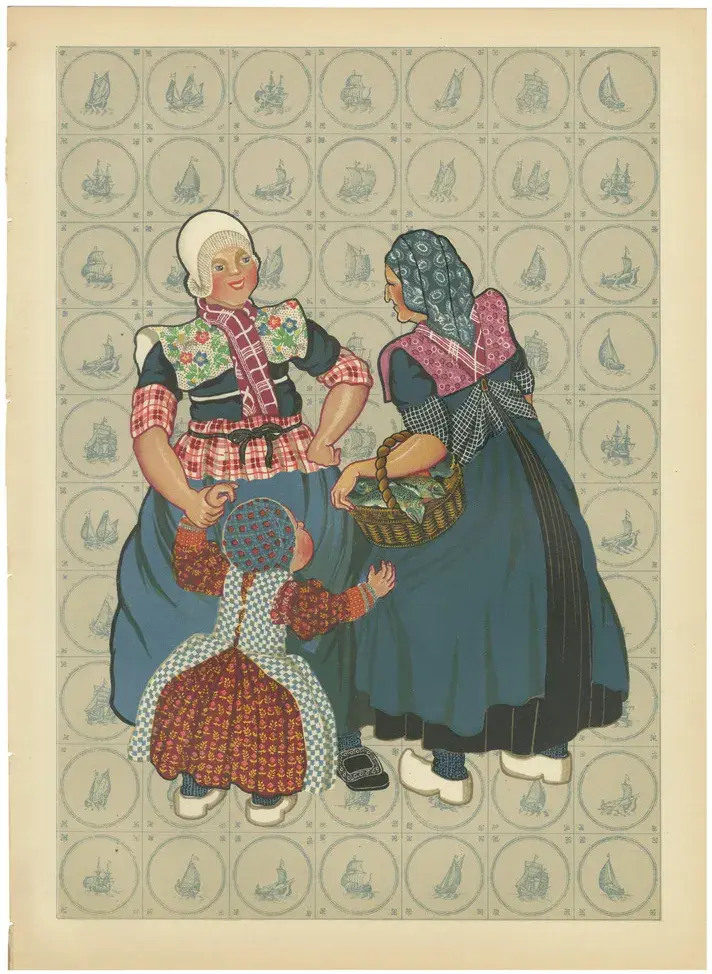
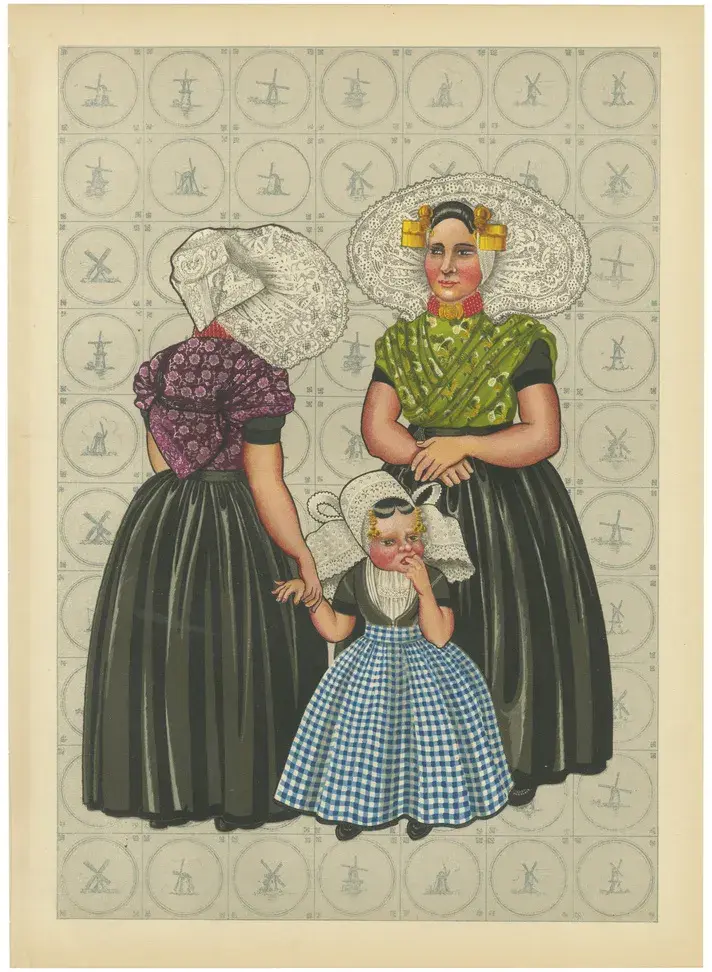
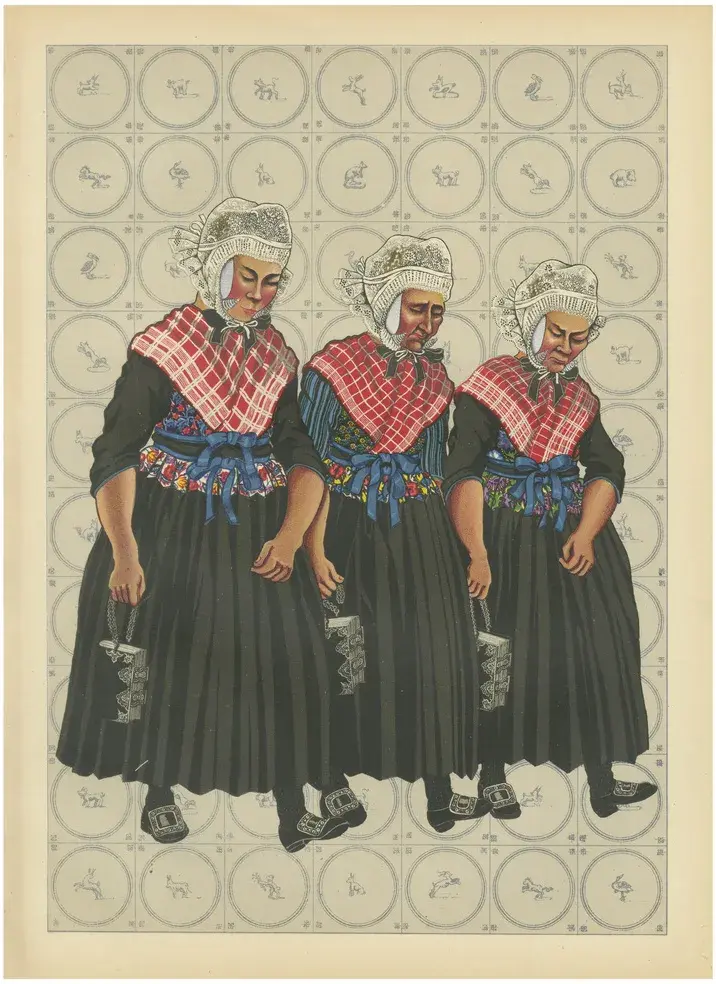
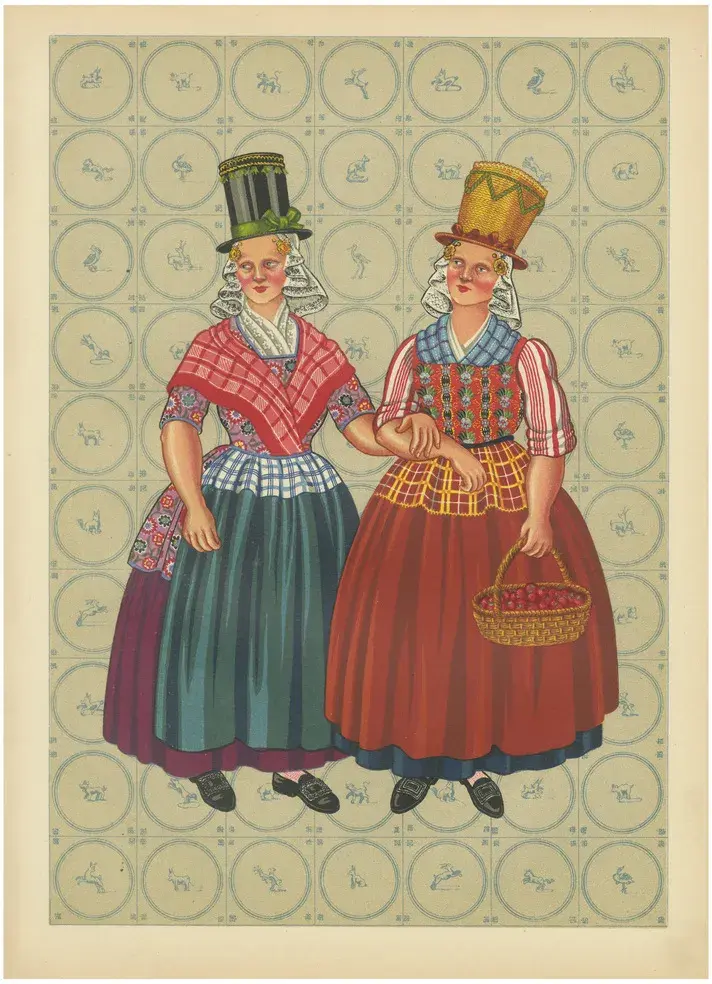
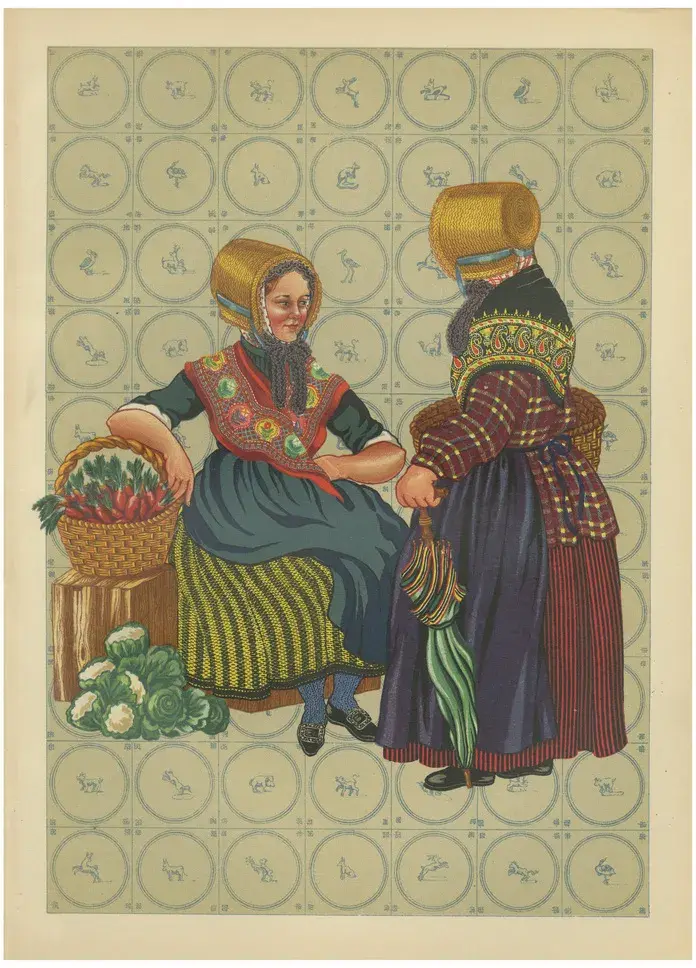
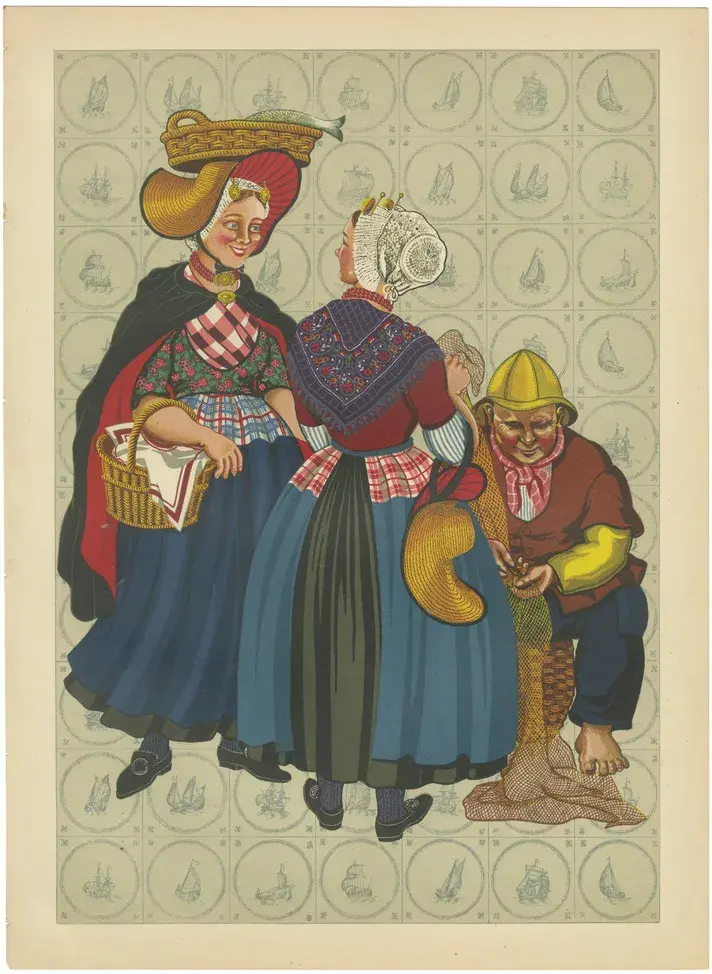
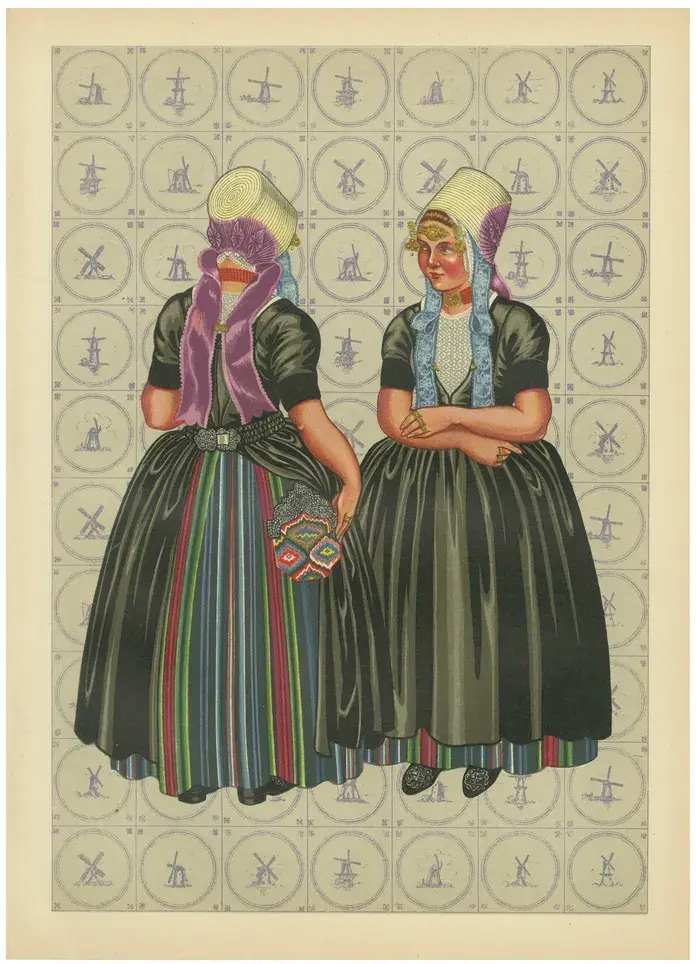
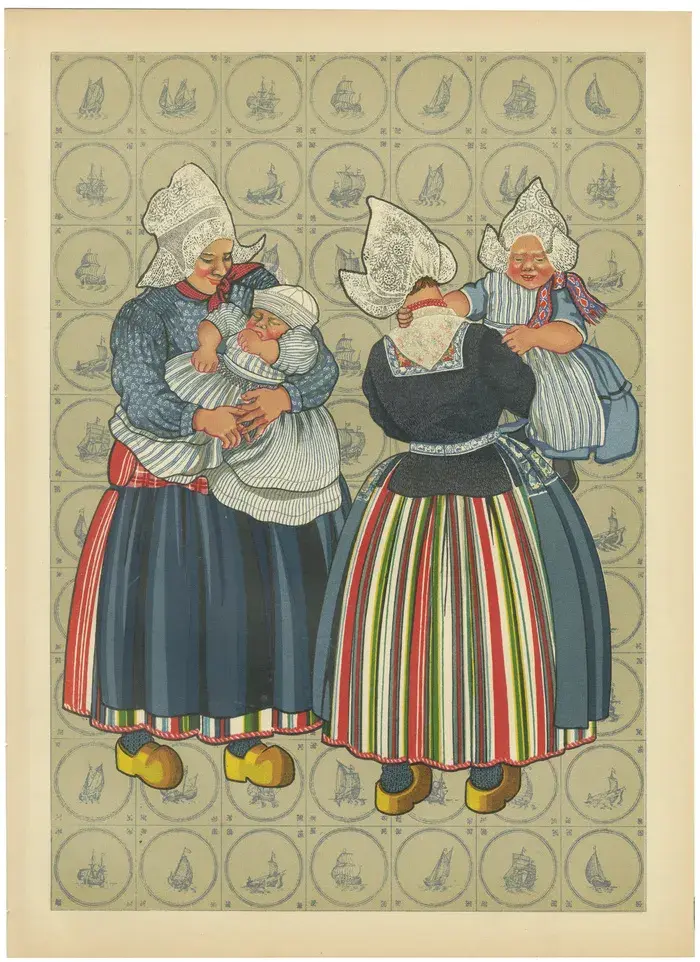
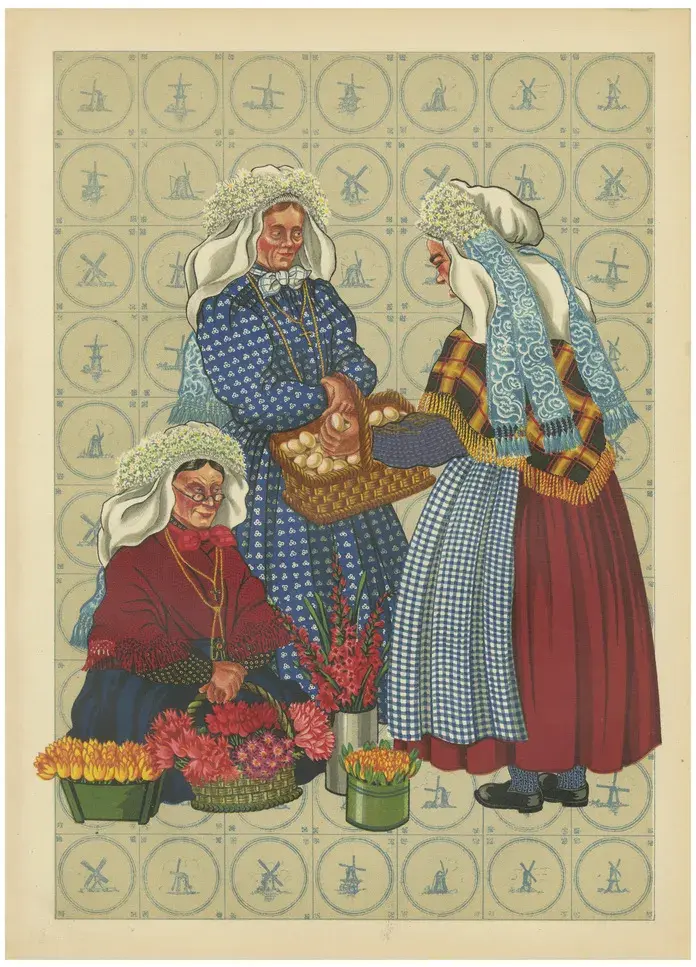
Colorful Doornspyk Market Women in Apenjak Coats – Dutch Costume Print, 1932 This charming original print, published in 1932 as part of the rare portfolio *The National Costumes of Holland* by Gratiane de Gardilanne and Elizabeth Whitney Moffatt, captures two women from Doornspyk (Doornspijk), a village on the southern edge of the Zuider Zee, preparing for a weekly market visit to Elburg. The scene is a vibrant and detailed representation of regional Dutch folk dress from the early 20th century, specifically of the Veluwe district in Gelderland. The women’s distinctive headgear includes a red-and-white flowered cotton under-cap topped with a white lace cap, framed elegantly around the face with a band of lace. The *oorijzer*, a silver decorative band, loops tightly around the face and ends in small spiral ornaments near the ears—a detail rooted in 17th-century Dutch tradition. Their black under-bodices, known as *thibet*, form a stark but elegant contrast to the rich color and patterning of the rest of the attire. The woman on the left wears a boldly flowered *doek* (head scarf) and a green *kroplap* with a subtle herringbone pattern, while her apron is of blue cotton with delicate self-colored stripes and a red checked cotton bow at the neck. Her companion at right wears a striking *doek* striped in shades of red, while her *kroplap* is tawny yellow, embroidered with vibrant Indian red and royal blue floral motifs. A charming blue-spotted neck bow is pinned at her throat, and her dark blue cotton apron is finished with a colorful red, white, and blue yoke pattern. Both women wear the characteristic *apenjak*, or “apes’ coat,” named so for its resemblance to circus performers’ jackets. These are full-sleeved black garments with gathered waists and collar bands. They also sport hand-knit woolen cuffs intricately beaded with tiny white dots, and traditional blue knitted stockings paired with stout leather shoes featuring silver buckles. The print itself is hand-colored and set against a decorative background of Delft-style windmill tiles, a motif recurring throughout the series. The color palette is striking and harmonious, and the scene is filled with quiet storytelling—baskets full of produce, a wrapped umbrella, and expressive facial details. Condition: Excellent original condition with vivid hand-coloring and clean margins. Minor edge wear from original binding is present but does not affect the image area. No tears or foxing visible. Framing Tips: This piece would display beautifully in a wide ivory or off-white mat with a subtle patterned frame in soft grey or antique oak. To emphasize the Dutch folk theme, consider a frame with light blue or Delft tile-inspired accents. UV-protective glass is recommended to preserve the vibrant hand-coloring.
Similar products