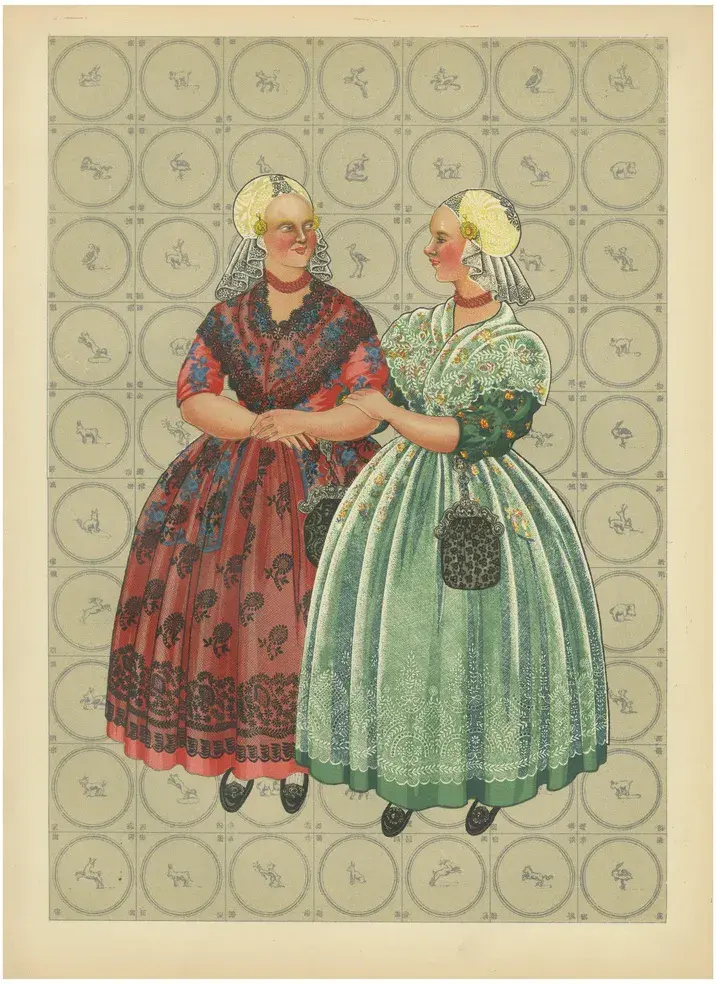
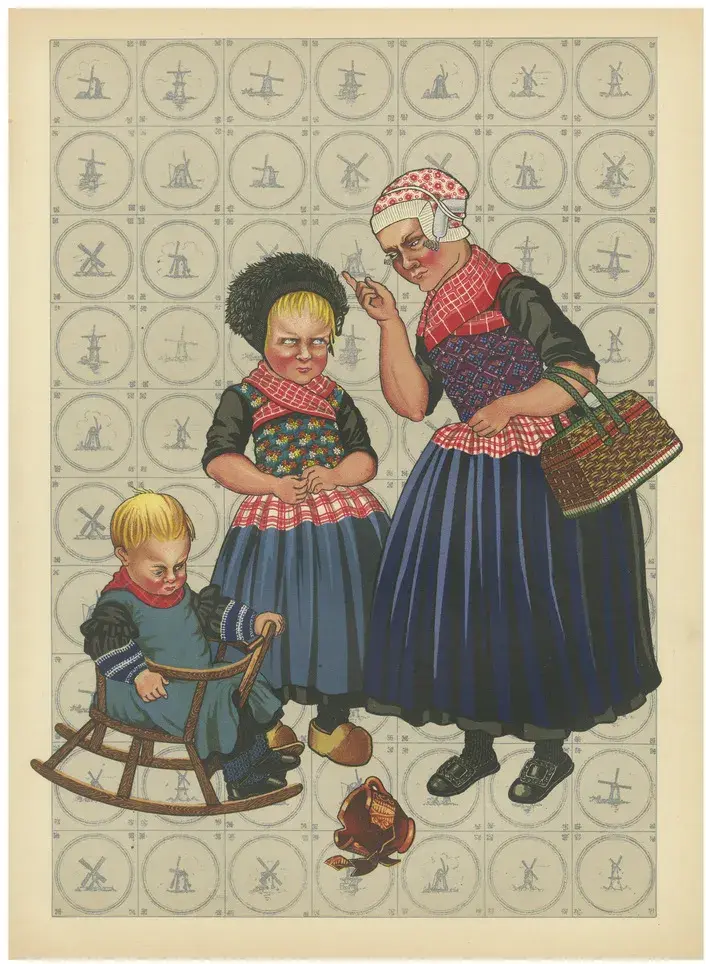
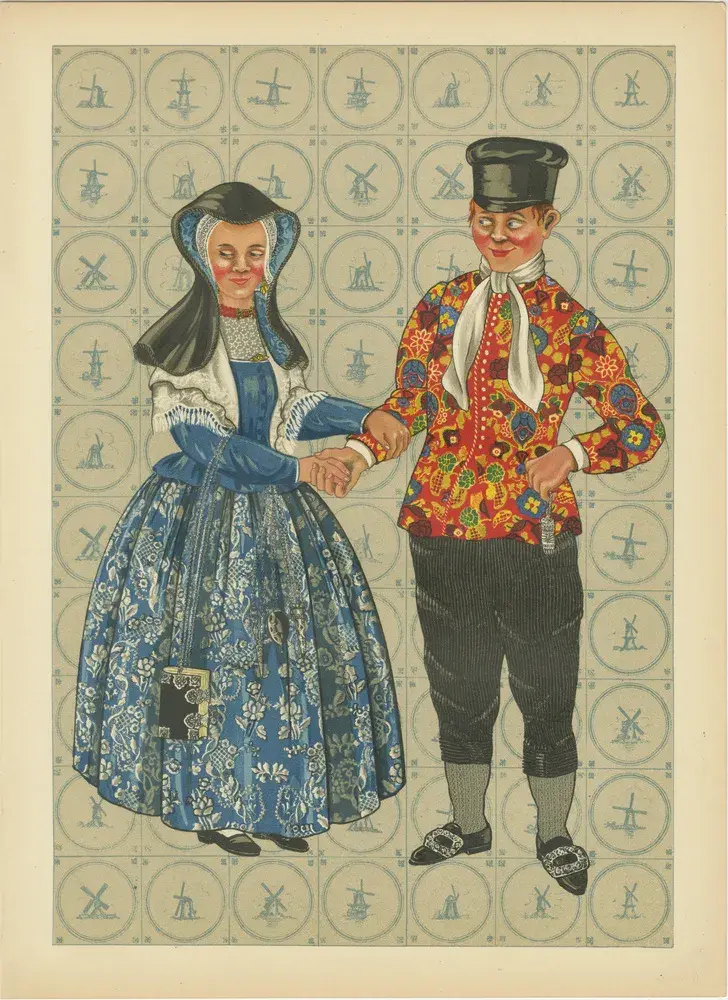
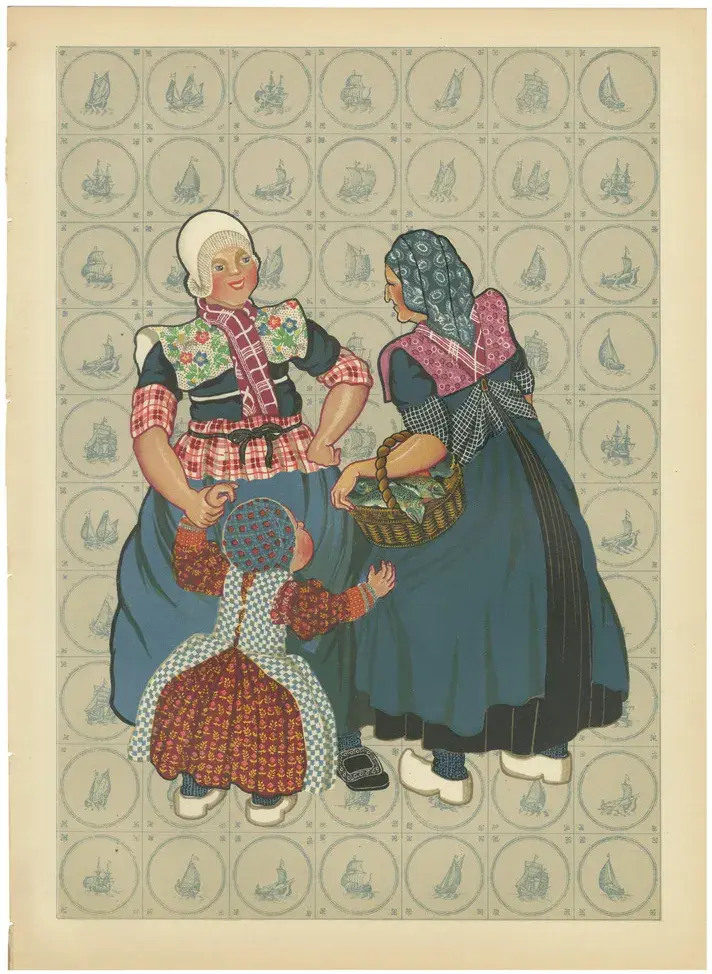
Gratiane De Gardilanne And Elizabeth Whitney Moffatt, Walcheren Women's Daily Dress With Bonnets And Beuk, 1932, Print
Chairish$589
Gratiane De Gardilanne And Elizabeth Whitney Moffatt, Walcheren Women's Daily Dress With Bonnets And Beuk, 1932, Print
Chairish$589
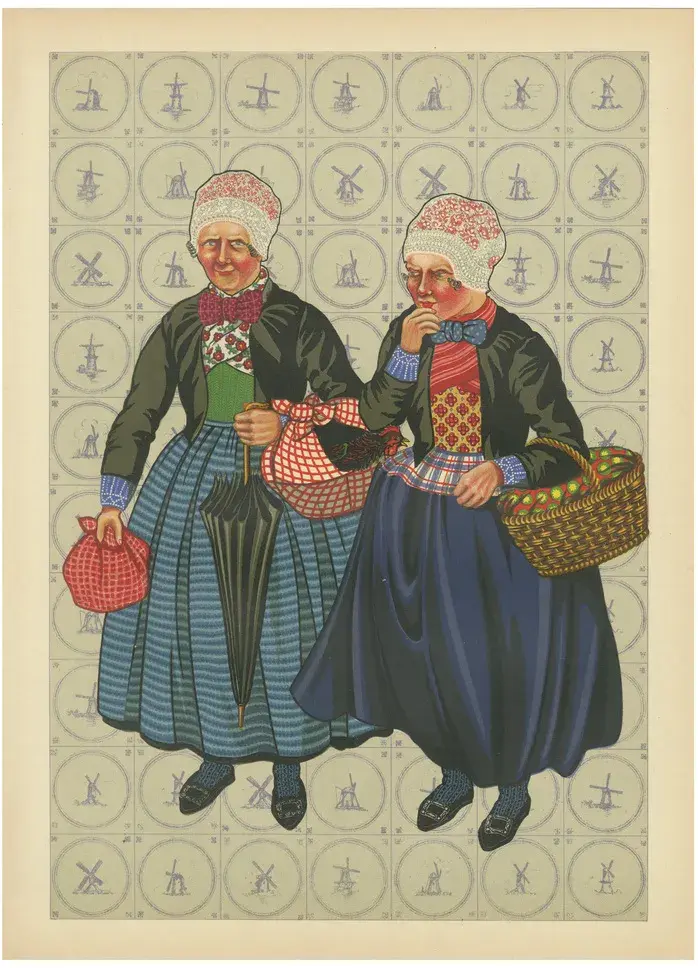
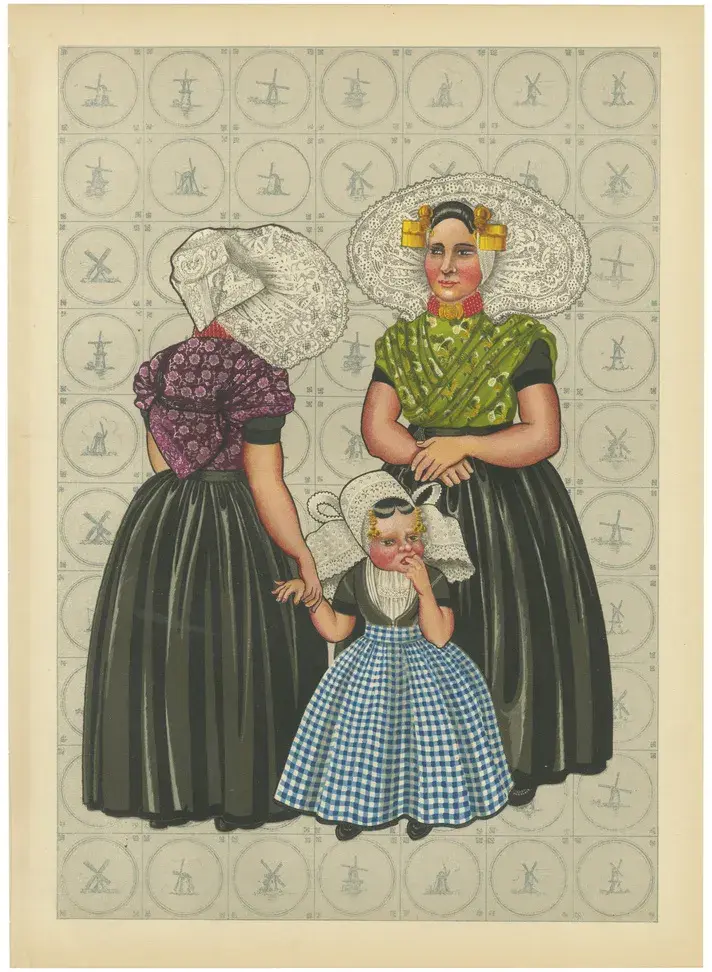
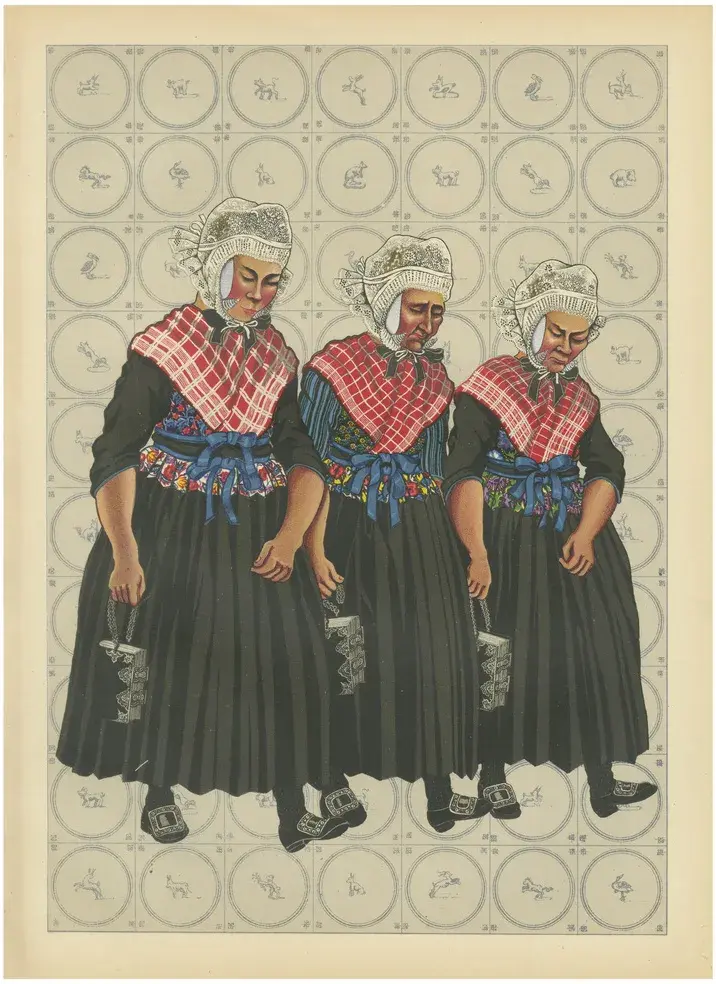
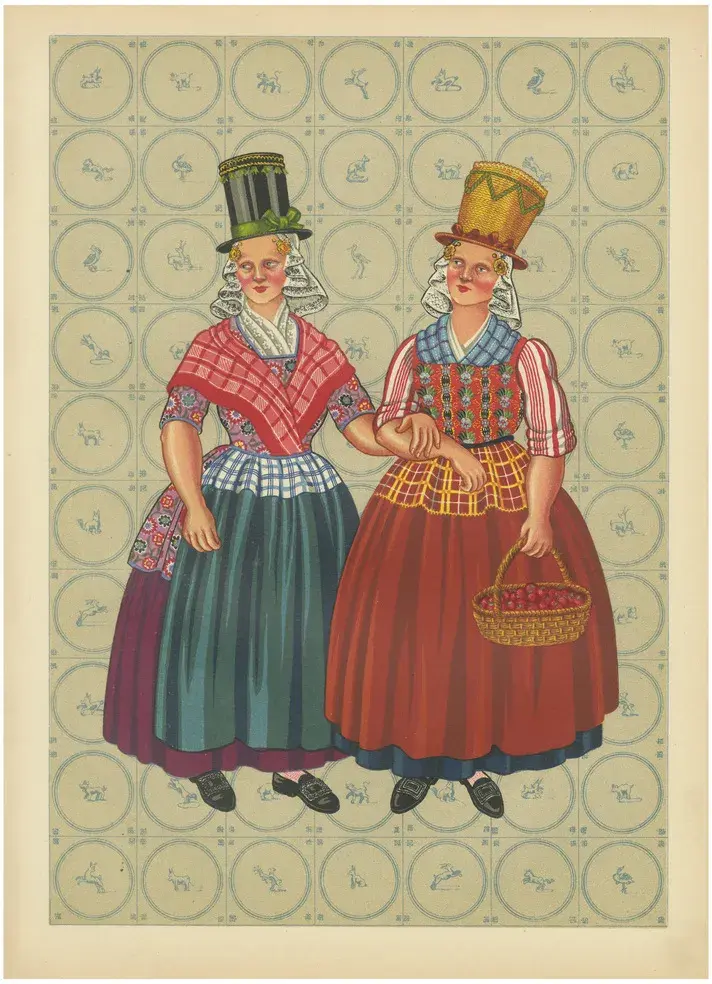
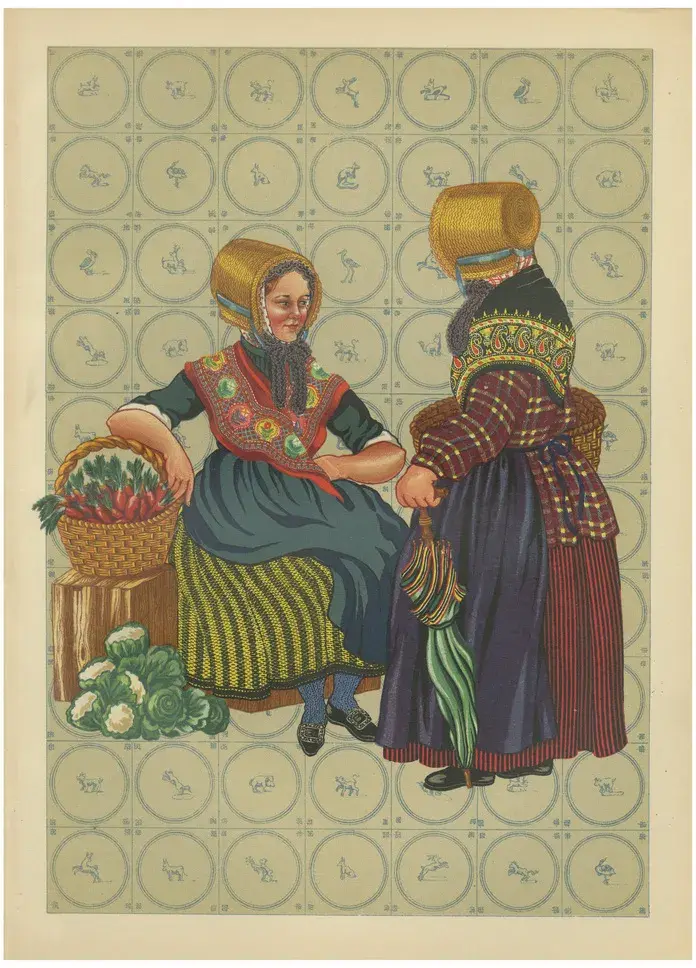
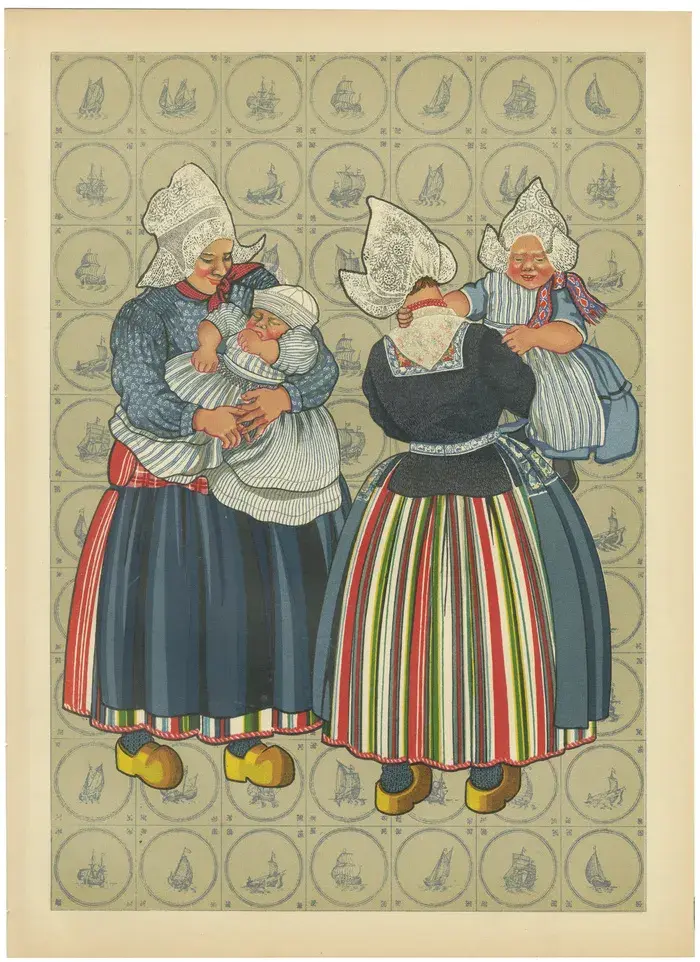
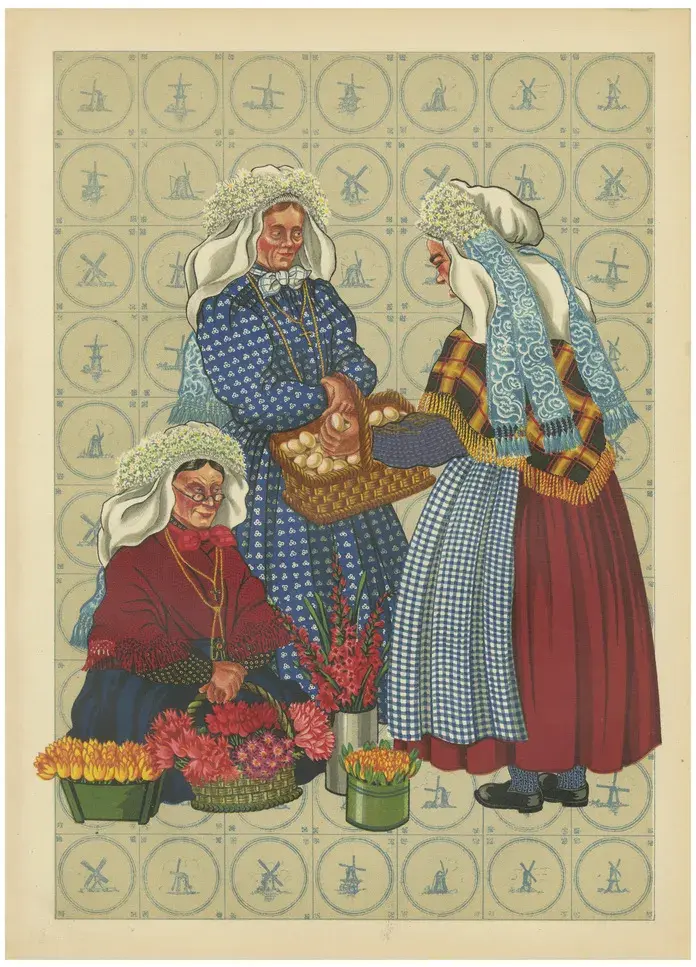
Walcheren Women’s Daily Dress with Bonnets and Beuk, ca. 1860–1890 This vibrant and finely detailed lithograph, originally published in *The National Costumes of Holland* (1932) by Gratiane de Gardilanne and Elizabeth Whitney Moffatt, captures two women from the island of Walcheren in Zeeland wearing traditional everyday attire as worn between approximately 1860 and 1890. This was a particularly picturesque period in Dutch costume history, where peasant women’s fashion reached an ornate peak, especially for special occasions or market days. Both women are dressed in the characteristic dark skirts and black bodices typical of Zeeland peasantry, yet their garments are elevated by striking accessories and rich underlayers. The headdresses are especially notable: consisting of a lace-edged under-cap, these are fixed with a silver *beugel* (or forehead band) and topped with a high, cylindrical lace-covered bonnet known as a *trek muts* or *drawn-in cap*. This upper cap is tied at the back with wide silk ribbons that trail dramatically down the back—violet for the woman at left and light blue for the woman on the right. These bonnets, derived from early 19th-century *coal-scuttle* hats, are distinctly Belgian in origin and became increasingly popular in Antwerp and surrounding areas during the 1800s. The ensemble is anchored by the *beuk*, a bib-like chest covering made of white glazed cotton with a conventional printed motif. It is worn over a very narrow *doek*, a neckerchief of muslin or cambric, often tucked just beneath the bodice. In this illustration, the woman on the left wears a striped skirt in vivid vertical bands of green, red, blue, and violet—a style which echoes the festive nature of Zeeland’s costume during this period. This colour scheme was typical of market-day or *kermis* (fair day) attire, where the peasantry would don their most dazzling dress. The over-bodices are made from black French merino (often velvet in Domburg), with tight short sleeves edged in black velvet and a short *basque* skirt panel hidden beneath the main garment. These outfits were not simply for display; they were worn on Sundays, at festivals, and even during courtship rituals and local celebrations. They also provided ample room for the display of elaborate gold jewelry and coral necklaces, though these elements are not the focus in this composition. This plate, number XLV in the series, beautifully preserves the visual legacy of a vanishing rural culture at the height of its decorative richness. It offers collectors and historians alike a vivid window into Dutch folk costume traditions at a time of transition between rural and bourgeois styles. Condition Notes: Bright, vivid original colours and excellent impression. The print is clean and crisp with minimal toning. Light edge wear consistent with age; suitable for immediate framing. Framing Suggestion: A dark wood or black lacquered frame with a cream or linen mount would enhance the vibrant costume colours and intricate lace details. Consider museum glass to protect and highlight the fine textures of the lithograph.
Similar products