Harvest Sugar Cane Oil On Panel Charles Martin-Sauvaigo 1881-1970 Workshop Stamp On The Back
Chairish$6,880
Harvest Sugar Cane Oil On Panel Charles Martin-Sauvaigo 1881-1970 Workshop Stamp On The Back
Chairish$6,880
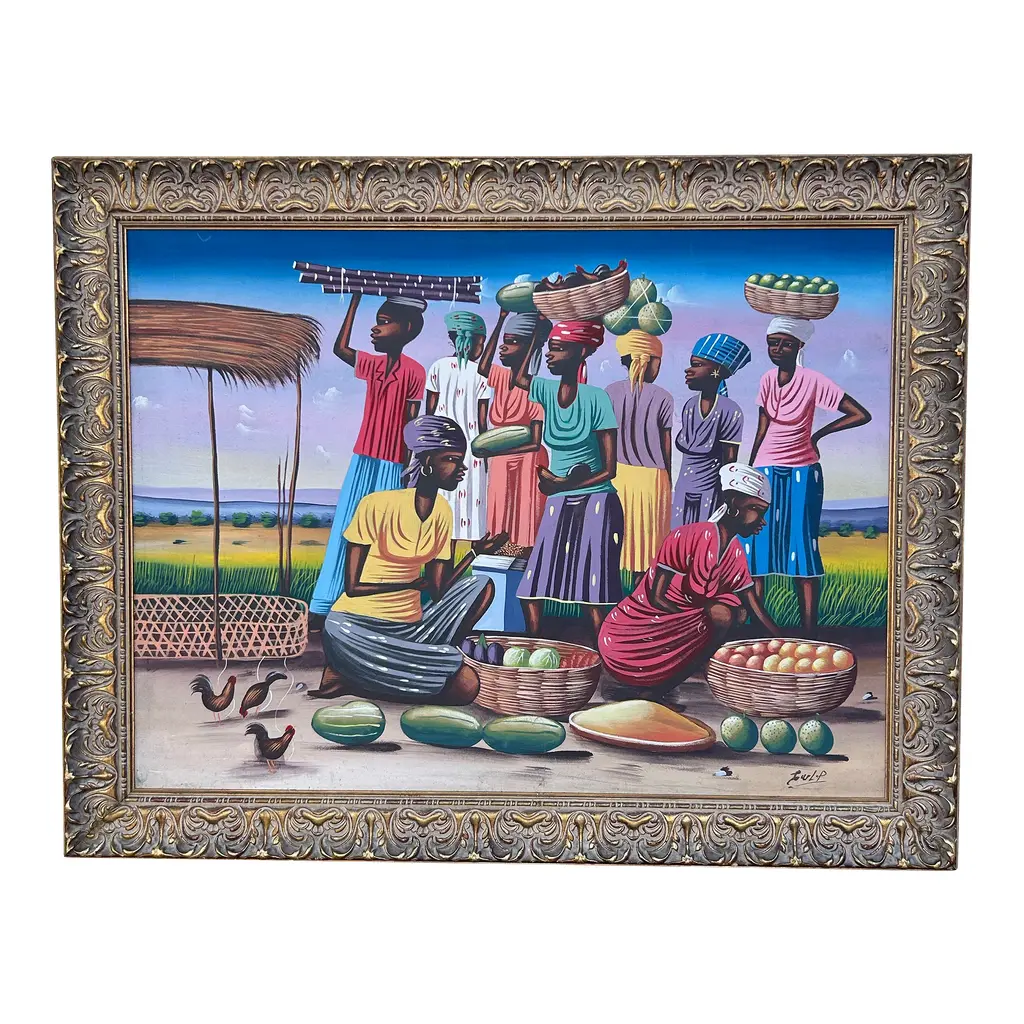
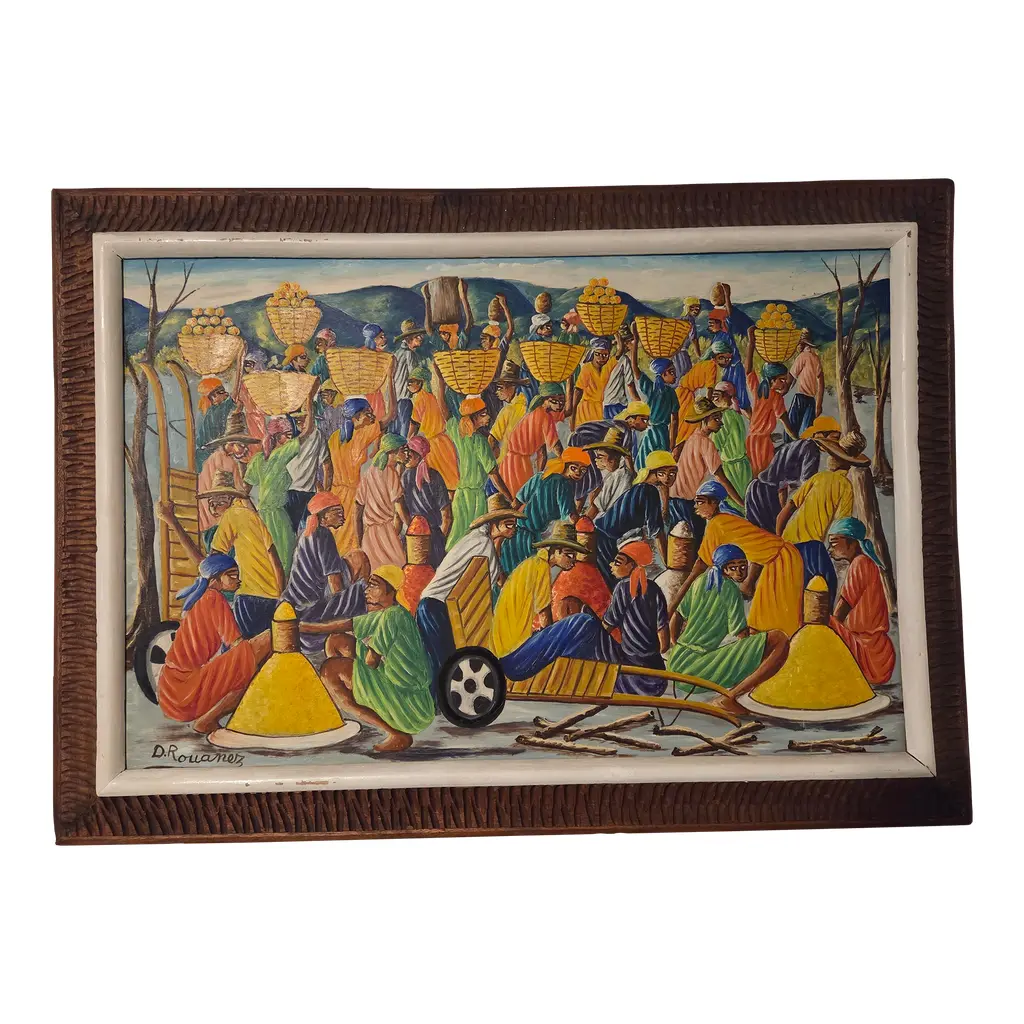
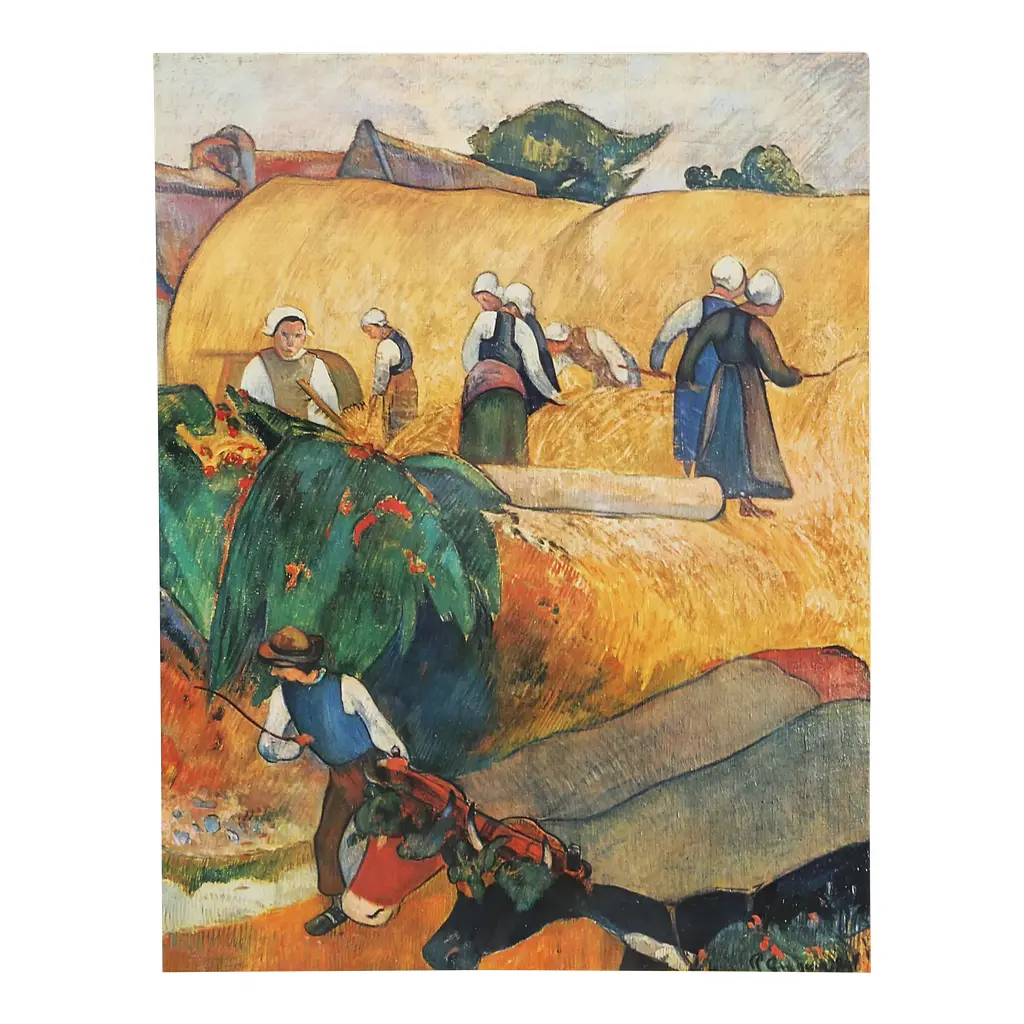
Impressionist painting is a rare testimony to Creole life in the Caribbean in the 1930s. A number of men and women are active in different agricultural tasks. Everyone has their task, some curves cut the sugar cane, others take bundles to the carts. The clothing is colorful and shimmering and contrasts with the lush green background. In the foreground, a woman dressed in red, orange and yellow adorned with jewelry carries a bundle of canes on her head. In the background, a multitude of characters active in various tasks, oxen, houses and a hill are represented. This scene of traditional Creole life is unique because of the theme and its presentation. This painting is really a direct testimony of his trip to the Caribbean in 1934. Charles Martin-Sauvaigo is a French painter born in Nice on February 7, 1881 and died in Paris on November 9, 1970. During his youth, at the instigation of Félix Ziem who had noticed his qualities, Charles Martin-Sauvaigo turned towards drawing and painting. After having spent some time under the direction of Alexis Mossa at the school of decorative arts in Nice, he came to Paris and was admitted to the École nationale supérieure des beaux-arts in November 1900 in the workshops of Léon Bonnat (until 'in 1905), then Luc-Olivier Merson (until 1911). Appointed official painter of the Navy in 1922, he was one of the founders of the Society of Fine Arts of the Sea and brought together artists from his native region. Linked to the Decorative Arts movement of the Société des arts français, he participated in the international exhibition of modern decorative and industrial arts of 1925, of which he was a winner. Charles Martin-Sauvaigo also exhibited at the Paris International Colonial Exhibition of 1931 with several large dioramas, and finally at the 1937 Universal Exhibition in Paris, where his immense diorama of more than 440 square meters decorated the Côte d'Ivoire pavilion. 'Azure.
Similar products