Huge Equestrian Oil Painting Miss Beatrice Mary Clifford (B.1861), Aged 14 – Equestrian Portrait C.1875
Chairish$22,500
Huge Equestrian Oil Painting Miss Beatrice Mary Clifford (B.1861), Aged 14 – Equestrian Portrait C.1875
Chairish$22,500
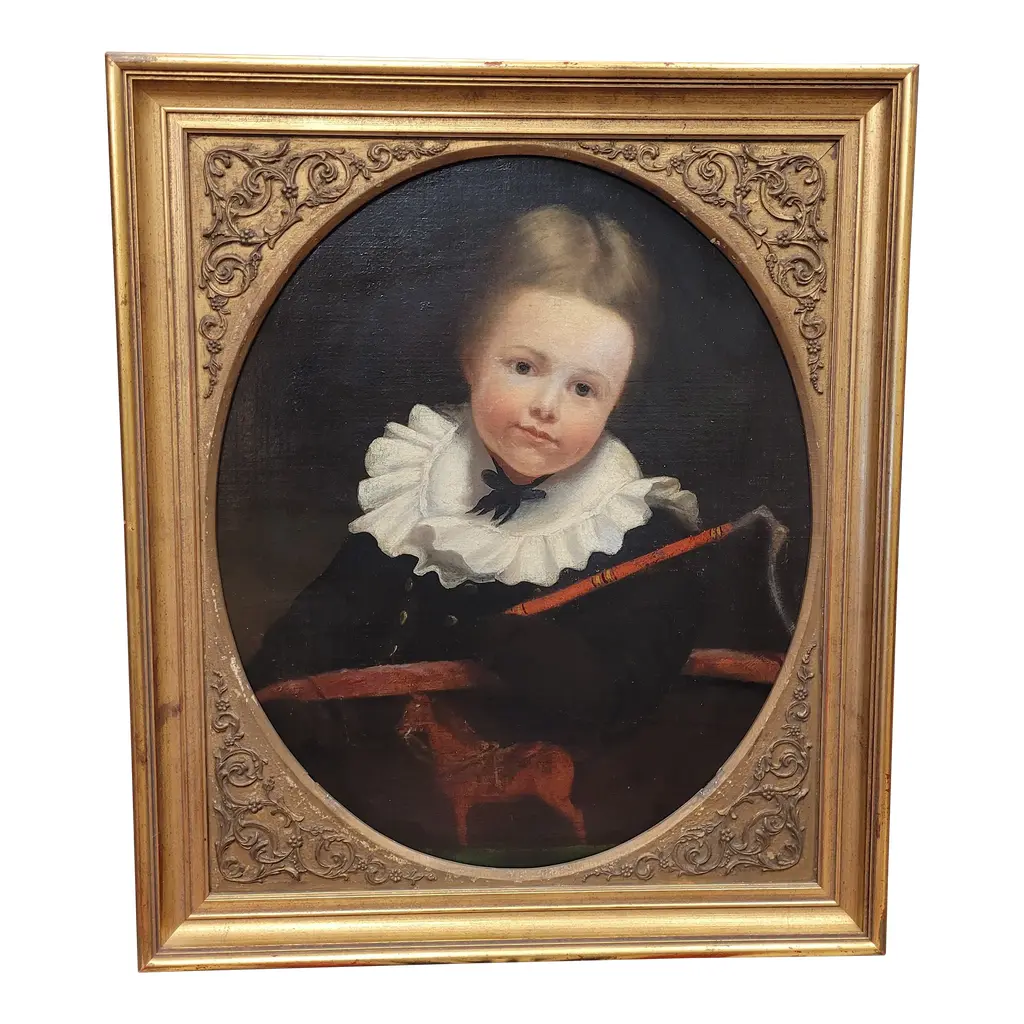
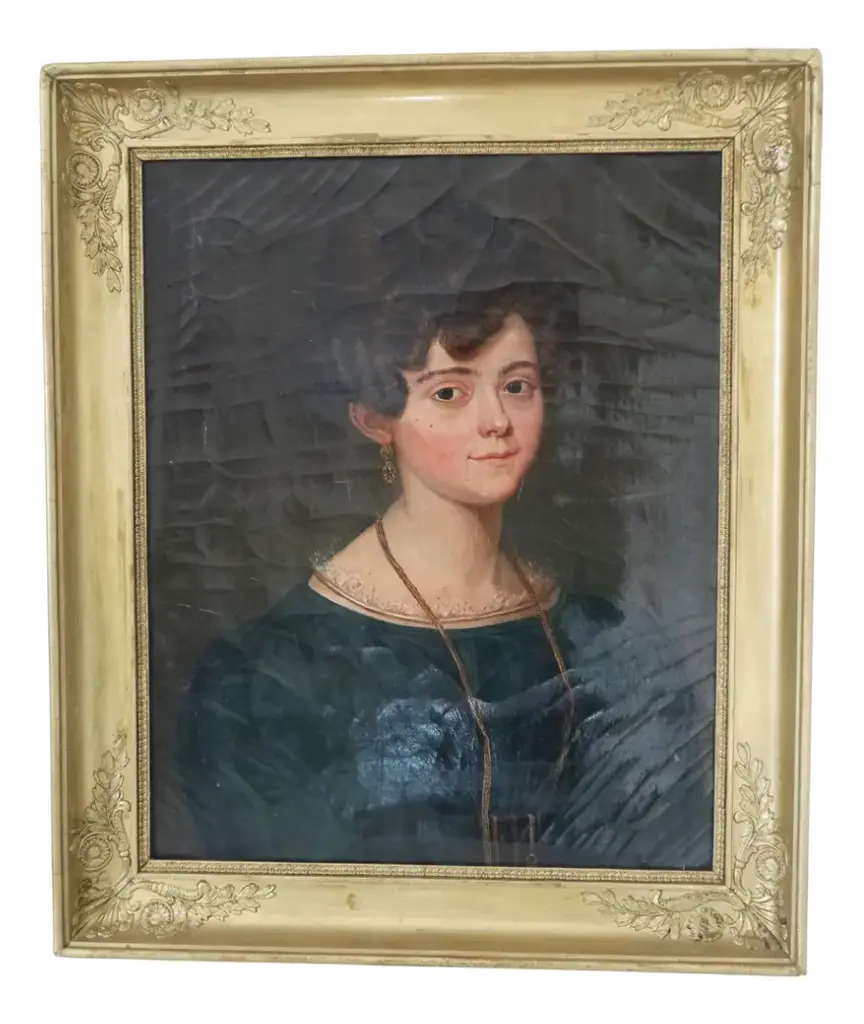
Equestrian Oil Painting Believed to Be Possibly Miss Beatrice Mary Clifford (b.1861), Aged 14 – Equestrian Portrait, Signed “A. Maclean”, c.1875 Attributed to Alexander Maclean (Scottish, 1840–1877) Oil on Canvas, Circa 1875 Original Giltwood Frame | Phelps–Clifford Family, Chestal, Dursley, Gloucestershire Overview A captivating and finely rendered Victorian oil on canvas portrait of Miss Beatrice Mary Clifford, a young equestrienne of distinguished Gloucestershire heritage, painted around 1875 when she was fourteen years old. This elegant work, signed “A. Maclean” and attributed to the Scottish painter Alexander Maclean (1840–1877), beautifully captures the grace, confidence, and refinement of a young lady from the Phelps–Clifford family of Chestal House, Dursley. Presented in its original ornate giltwood frame, richly carved and gilded, the portrait exemplifies the harmony, delicacy, and composure characteristic of the best Victorian portraiture. The Sitter believed to be– Beatrice Mary Clifford (1861–c.1930) Born in 1861 to William Henry Clifford (1821–1908) and Caroline Clifford (née Phelps, 1829–1916) of Chestal House, Dursley, Beatrice was the eldest daughter of one of Gloucestershire’s most respected families. Her grandfather, James Phelps, was a prosperous wool merchant and banker who built Chestal House around 1848, merging industrial success with landed heritage. Amid Chestal’s parkland and equestrian stables, Beatrice was raised in comfort and refinement. This portrait commemorates her transition from childhood to young womanhood — a visual testament to grace, composure, and genteel accomplishment. No documentary evidence confirming the identification accompanies the painting and the association should therefore be regarded as a traditional attribution. The identification of the sitter is offered as a non-guaranteed professional opinion based upon evidence available and should not be regarded as definitive statement of fact. Nevertheless, the connection adds considerable cultural and historical interest to the work Subject & Medium Medium: Oil on canvas Date: Circa 1875 Depicts: Miss Beatrice Mary Clifford, age 14 Attire: Black riding jacket, white blouse, turquoise cravat, golden-brown gloves Mood: Elegant, poised, introspective Style: Romantic realism of the late Victorian era The composition reflects the popularity of female equestrian portraiture in the 1860s–1870s, celebrating both refinement and moral fortitude within the genteel ideals of the British upper class. Composition & Technique Maclean’s painterly technique is marked by sensitivity and precision: Deep blacks and cool greys offset the sitter’s warm complexion and glove tones Turquoise accents add freshness and distinction Smooth facial modelling contrasts with expressive brushwork in the clothing Balanced chiaroscuro imparts depth, serenity, and quiet luminosity Fine, even craquelure throughout the surface testifies to its period authenticity and excellent preservation. Signed The painting bears the clear inscription “A. Maclean” in the lower corner, written in fine script.. The brushwork, placement, and pigment tone align with other verified signatures by Alexander Maclean (1840–1877), who exhibited at the Royal Academy in the 1870s. The signature remains crisp beneath the original varnish, affirming its authentic period execution. The Artist – Alexander Maclean (1840–1877) A talented Scottish painter educated in Helensburgh and Edinburgh, Maclean refined his art in Rome, Florence, and Antwerp. His work synthesizes classical technique with the emotive realism admired in Victorian portraiture. Exhibited regularly at the Royal Academy (1872–1877), he achieved acclaim for Covent Garden Market and At the Railings, St. Paul’s. Later Life of Beatrice Clifford Archival evidence suggests Beatrice remained unmarried and lived much of her life at or near Chestal, supporting her widowed mother and managing family affairs. When Chestal House was sold in 1967, several family portraits were dispersed — including this one — prompting the “Missing Phelps Portraits” appeal by the Gloucestershire Archives. This portrait now endures as a poignant record of a young Victorian woman poised between tradition and independence. Frame Presented in its original ornate giltwood frame, richly carved with floral motifs and retaining much of its original gilding. Shows gentle age-related wear — light scuffs, minor repairs, and subtle overpainting — yet remains structurally sound and visually striking. Dimensions (Framed): Height: 140 cm | Width: 106 cm | Depth: 5 cm Provenance Likely Commissioned by the Clifford family of Chestal By descent within the family Private Collection, UK Referenced: Gloucestershire Archives, D3831, Phelps–Clifford Family Papers “Missing Phelps Portraits,” Gloucestershire Heritage Hub (accessed 2025) W.A. Smith (Late J. Green) D.T. Beesley Ltd Phelps No. 115 Private Collection, Greater London Privately Loaned & Exhibited: Famous Lord Hill Museum Collection of Cheshire Antiques Consultant LTD Each provenance note reinforces this work’s authenticity and distinguished heritage. Why You’ll Love It A masterful Victorian portrait uniting history, craftsmanship, and beauty Signed “A. Maclean” — rare work by an accomplished Scottish painter Original giltwood frame Perfect for collectors, interior designers, and lovers of fine 19th-century art A portrait that speaks across centuries — dignified, radiant, and profoundly human. Click “Buy It Now” to make it yours before it’s gone. Add this exceptional Victorian equestrian portrait to your collection today. Explore our online gallery Cheshire Antiques Consultant LTD for more curated fine art and antiques. Questions? We’re here to help — message us anytime.
Similar products