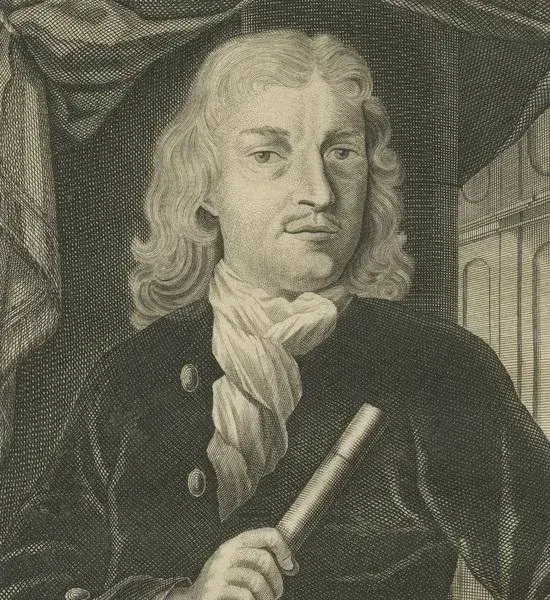
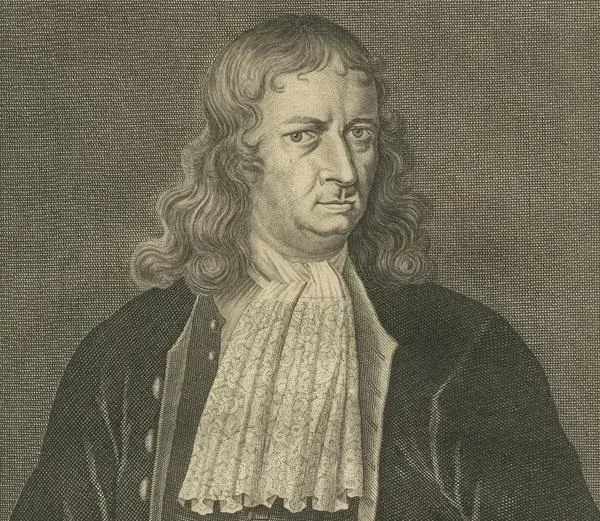
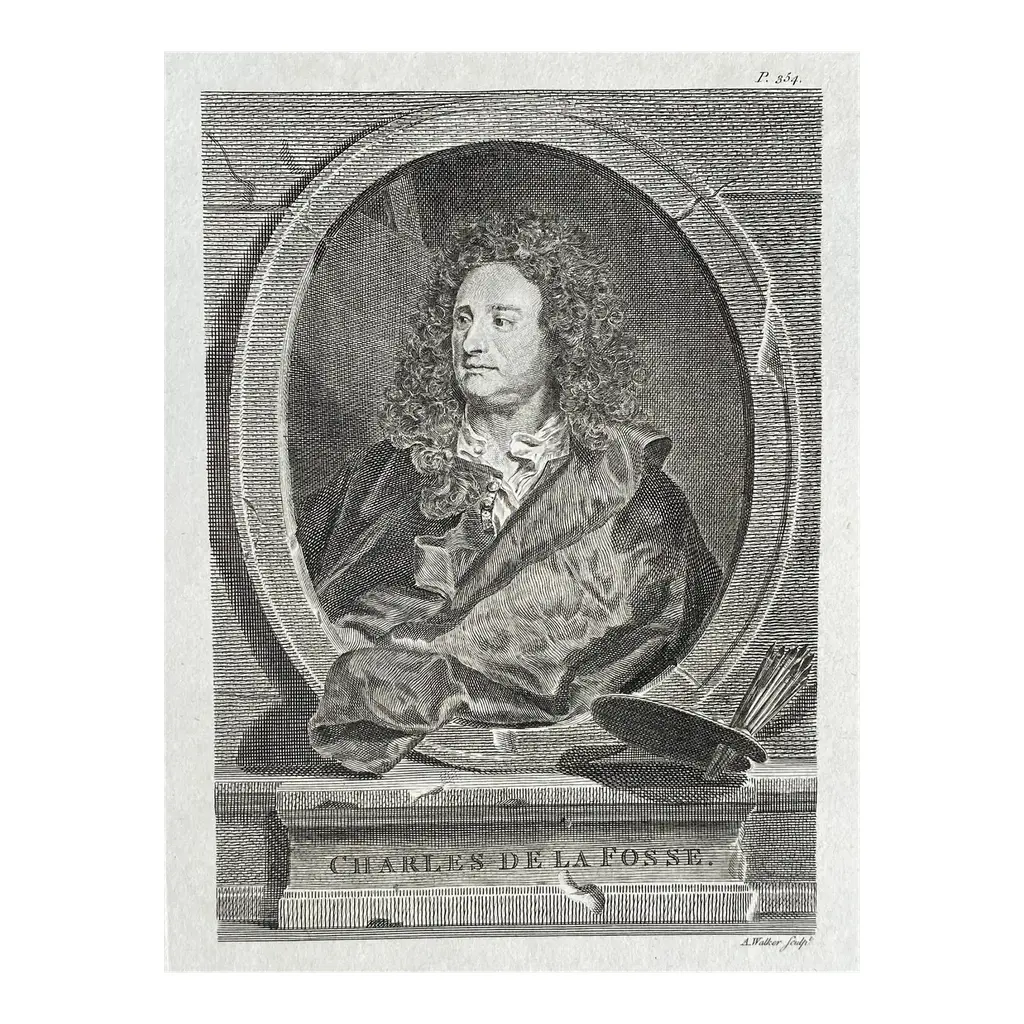
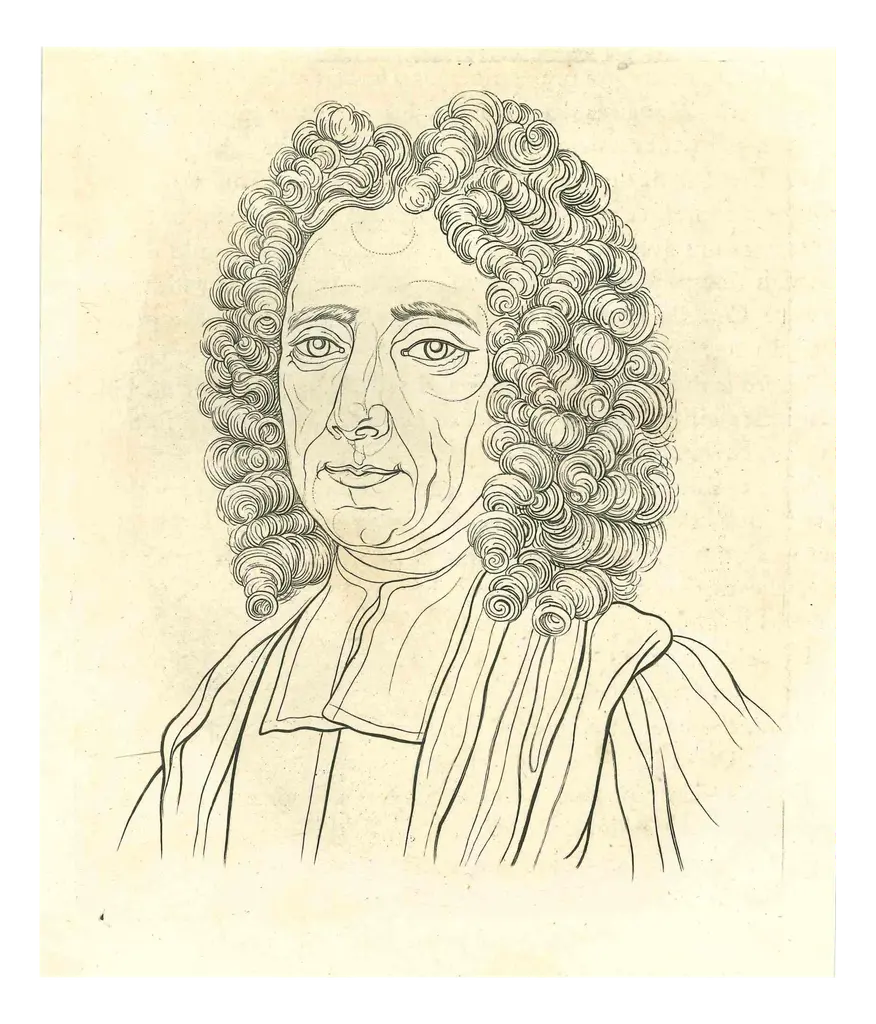
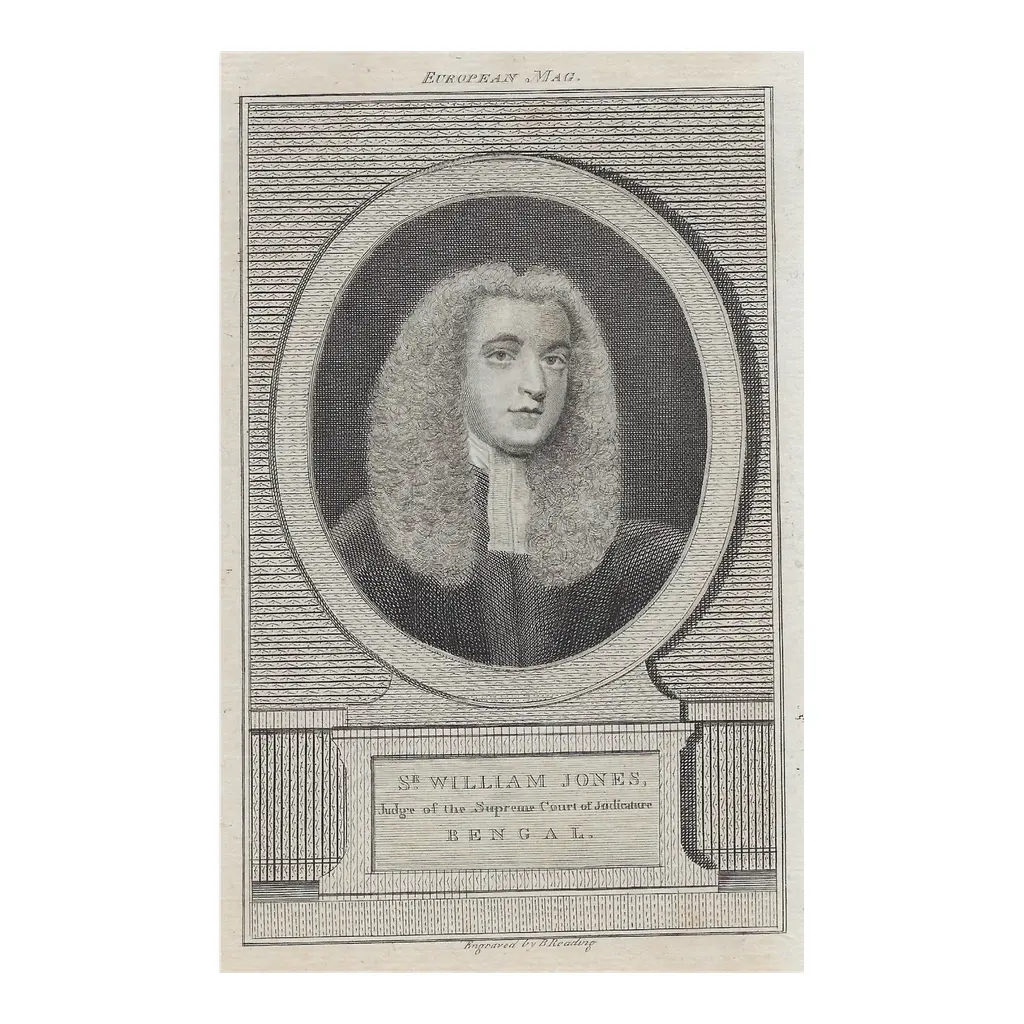
The engraving from 1724 of ioannes camphuys is artistic representation of his legacy long after his tenure as the governor-general of the dutch east india company (voc) in the dutch east indies, which was from 1684 to 1691. The artwork features camphuys in the regalia befitting a governor-general of the time. He is wearing a formal wig, as was customary for men of his stature in the 17th century. His attire consists of a justaucorps, which is a knee-length coat, a waistcoat, and breeches, along with a cravat or stock at the neck, all crafted from luxurious fabrics indicative of his high social and professional standing. The engraving may include symbolic elements such as the insignia of the voc or maritime symbols reflecting the company's naval dominance. **about ioannes camphuys:** ioannes (or johannes) camphuys was born on july 18, 1634, in haarlem, netherlands. His career with the voc began when he traveled to the east indies in 1652. Over the years, he worked his way up through various positions within the company, demonstrating his administrative skills and his capacity for governance. As governor-general, camphuys is noted for his contributions to the administrative organization of the voc's territories and his efforts to compile comprehensive s of the cultures and economies under dutch control. His term saw relative peace and prosperity in the region, and he is remembered for his more diplomatic approach to the indigenous populations, as opposed to the more military-focused methods of some of his predecessors and successors. After his term ended, camphuys chose to remain in batavia (present-day jakarta), where he passed away on july 18, 1695. His remains were interred in the church of batavia, a testament to his prominence in the colony. His contributions and governance style left a lasting impact on the dutch administration of the east indies. From the monumental work by françois valentyn: “oud en nieuw oost-indiën, vervattende een naaukeurige en uitvoerige verhandelinge van nederlands mogentheyd in die gewesten”. Dordrecht/amsterdam: j. Van braam en g. Onder de linden, 1724/1726. (transl.: old and new east-indies, including an accurate and extensive of dutch / voc controlled territories.)
Similar products