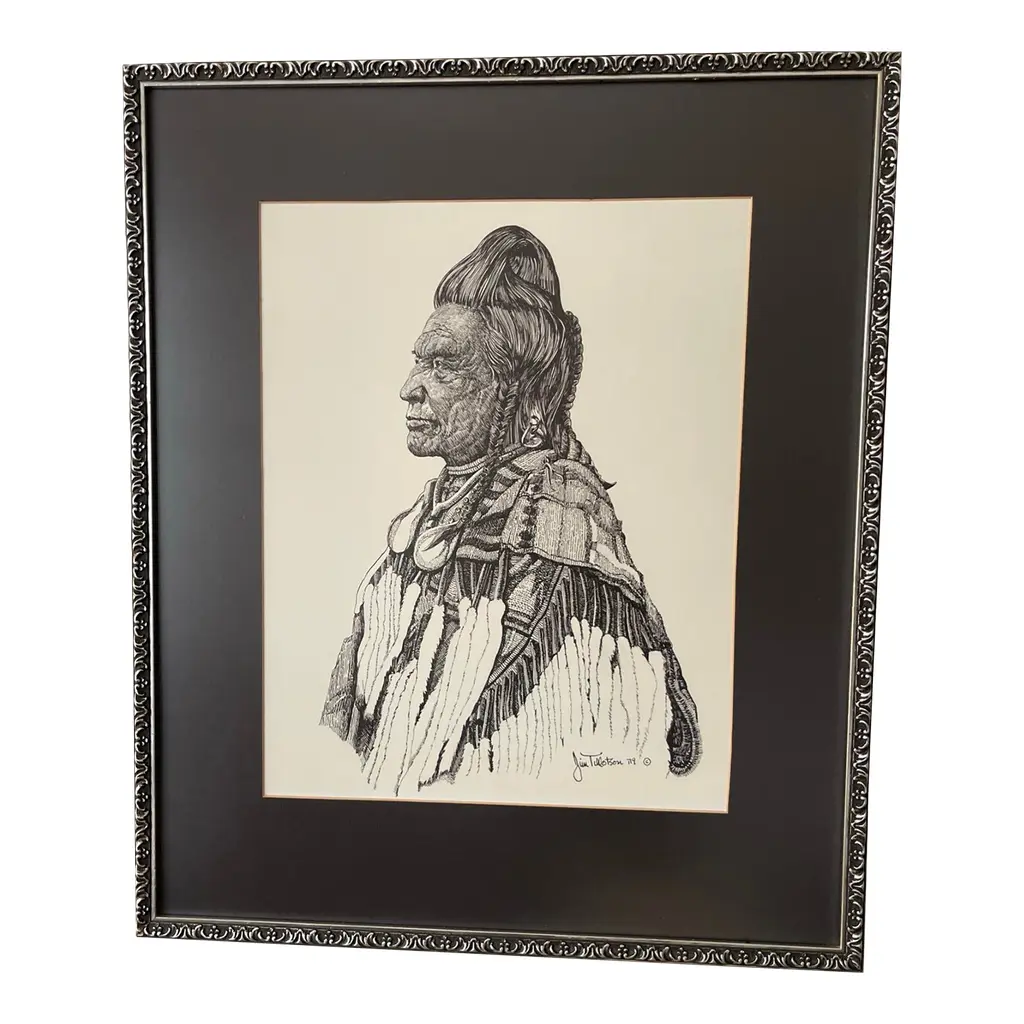
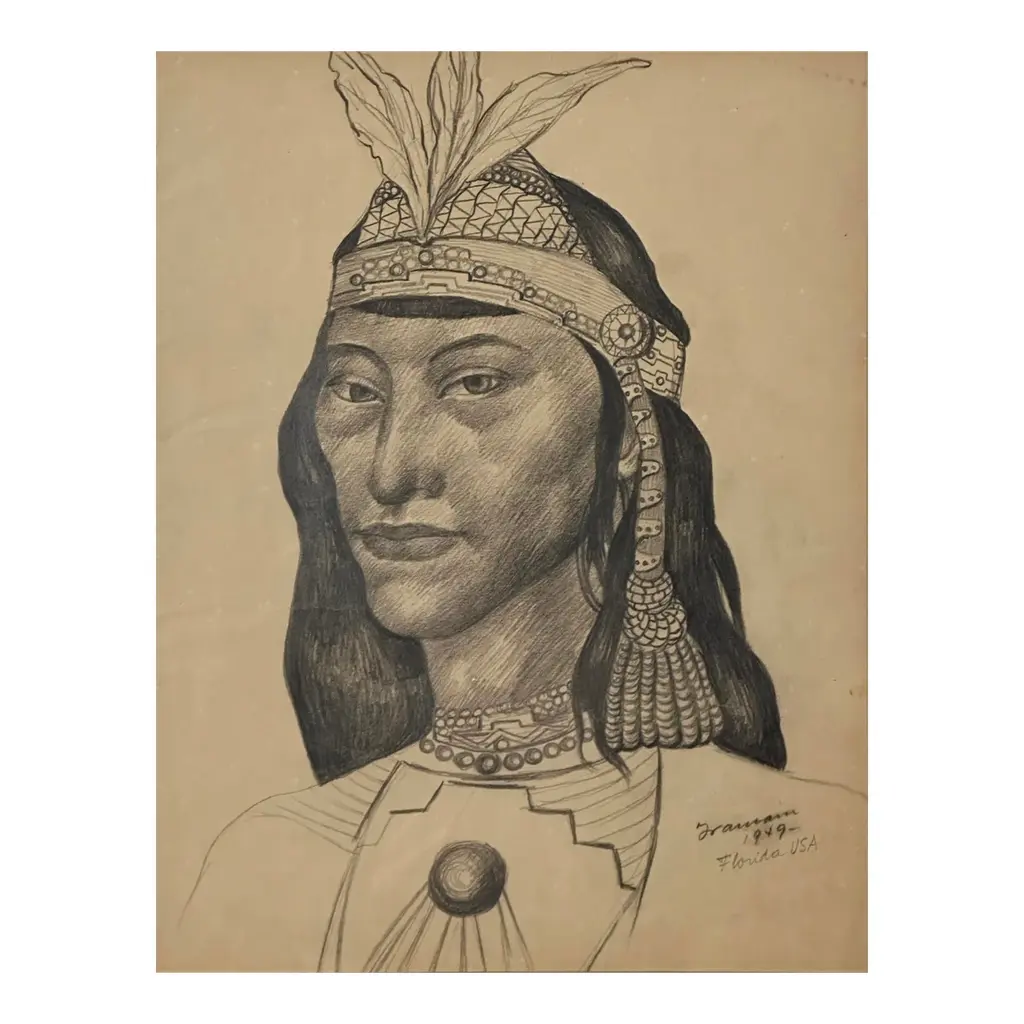
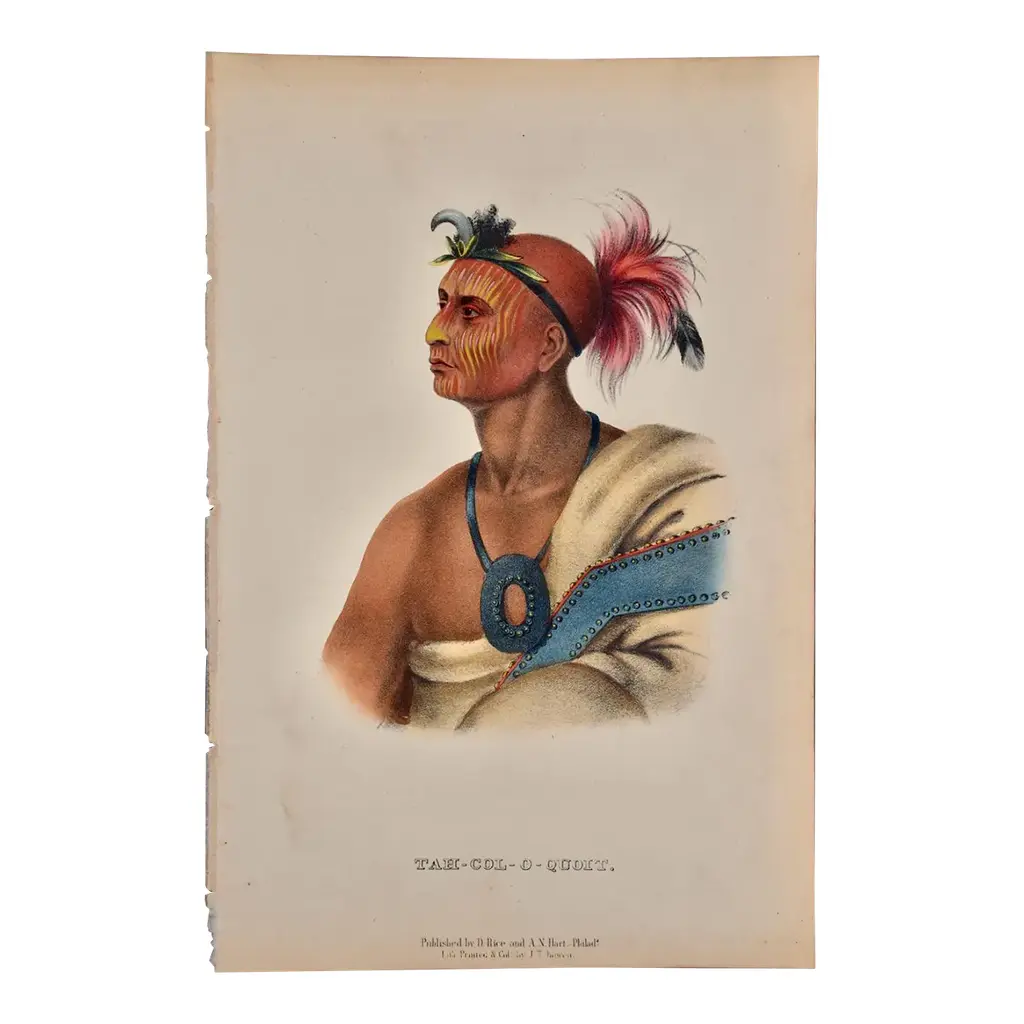
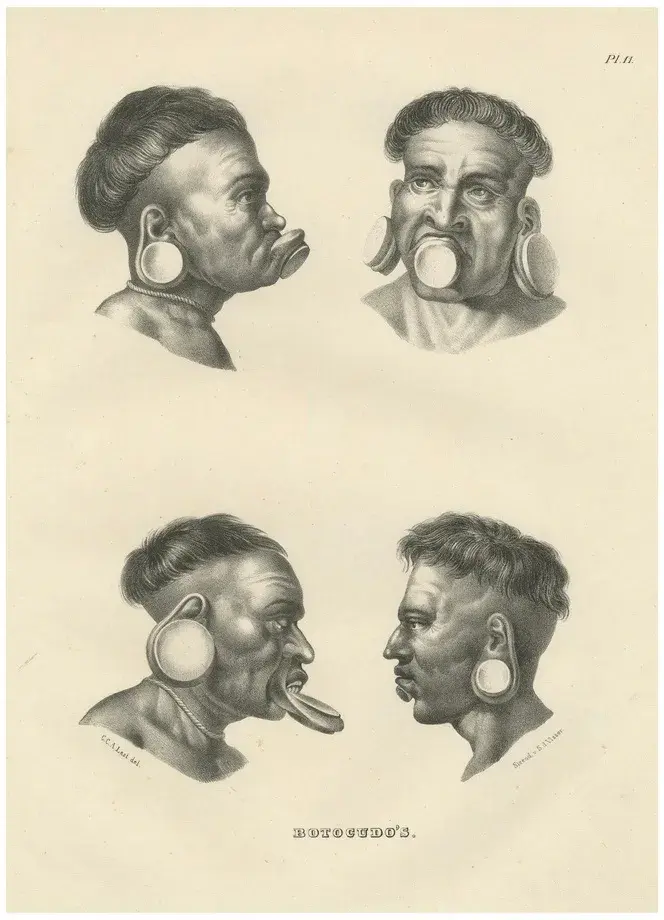
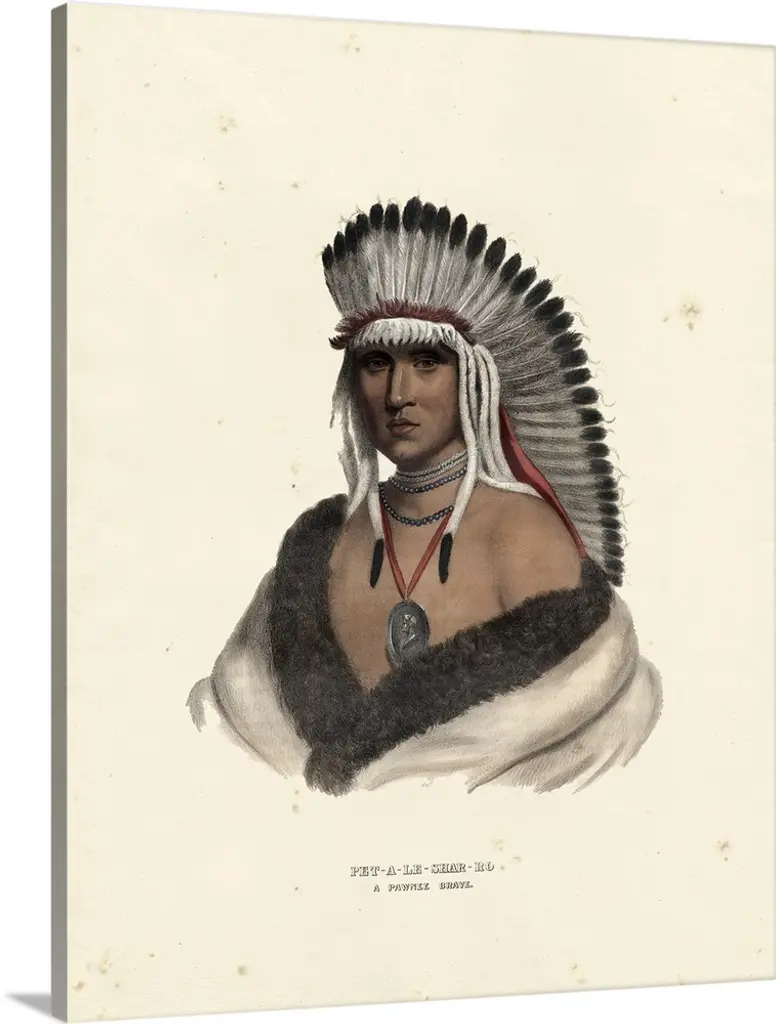
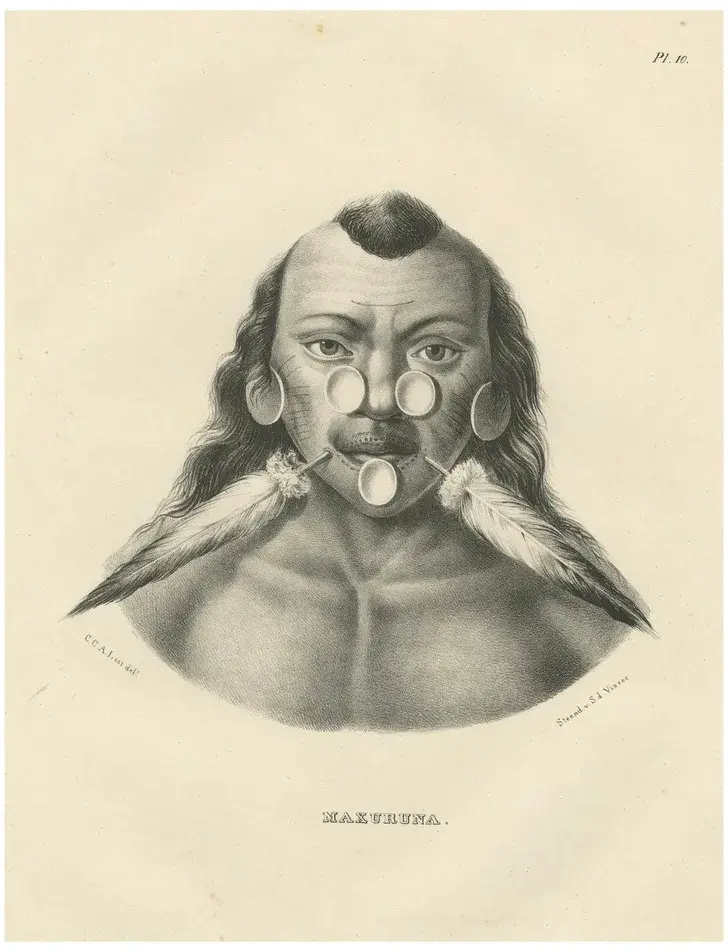
This lithograph, created by Karl Joseph Brodtmann, depicts Tawadanega, an individual whose name suggests Native American heritage, likely from one of the Eastern Woodlands tribes. The portrait emphasizes distinctive features of indigenous culture, focusing on attire, jewelry, and hairstyle. This work is an example of Brodtmann's ethnographic documentation. : The lithograph portrays a Native American man identified as Tawadanega, adorned in traditional attire. His appearance highlights cultural markers that were of interest to European audiences in the 19th century. - The subject’s headgear features a large, prominent feathered headdress, which was often symbolic of rank, achievement, or tribal identity among Native American groups. The headband is secured by a decorative ornament in the center, contributing to the overall regality of his appearance. - ** The clothing includes a garment with metal discs or medallions draped across the chest, which might have been decorative elements made from silver or other materials, signifying status or cultural affiliation. - Jewelry is another defining feature, with large earrings and possibly other adornments visible around his neck. His chest is decorated with a gorget, a type of ornamental neckwear commonly found in various Native American cultures during the 18th and 19th centuries, often made from metals such as silver or brass. The artist’s attention to detail in the headdress, jewelry, and facial features aligns with Brodtmann’s goal of representing the diversity of indigenous cultures through ethnographic realism. Maker: Karl Joseph Brodtmann (1787–1862) was a Swiss lithographer whose works focused on ethnographic studies and natural history. His illustrations often accompanied scientific and anthropological texts, serving as visual records for European audiences interested in learning about distant lands and cultures. This portrait of Tawadanega would have been part of a broader collection aimed at documenting the indigenous peoples of North America. Technique and Style: This portrait was created using lithography, a printmaking technique that allowed Brodtmann to achieve fine detail and subtle shading. His style is marked by ethnographic realism, meaning that he aimed to represent the subject with as much accuracy and detail as possible while still adhering to the European expectations of what constituted an "exotic" portrait. The feathers, jewelry, and facial expression are rendered with great care, suggesting that the artist had access to detailed s or visual references of the subject. Brodtmann’s approach is characterized by a balance between artistic interpretation and scientific observation, creating a piece that is both aesthetically appealing and valuable for ethnographic study. This particular portrait of Tawadanega reflects the European fascination with the indigenous peoples of North America during a time of exploration and expansion, as well as a desire to understand their cultures through visual documentation. Cultural Context: The name Tawadanega might refer to a member of a specific tribe or a person of significant standing, possibly an important figure within the context of Native American society in the Eastern Woodlands or Great Lakes regions. Many Native American leaders or figures were depicted in 19th-century European ethnographic works as part of the growing interest in the diverse cultures of the Americas.
Similar products