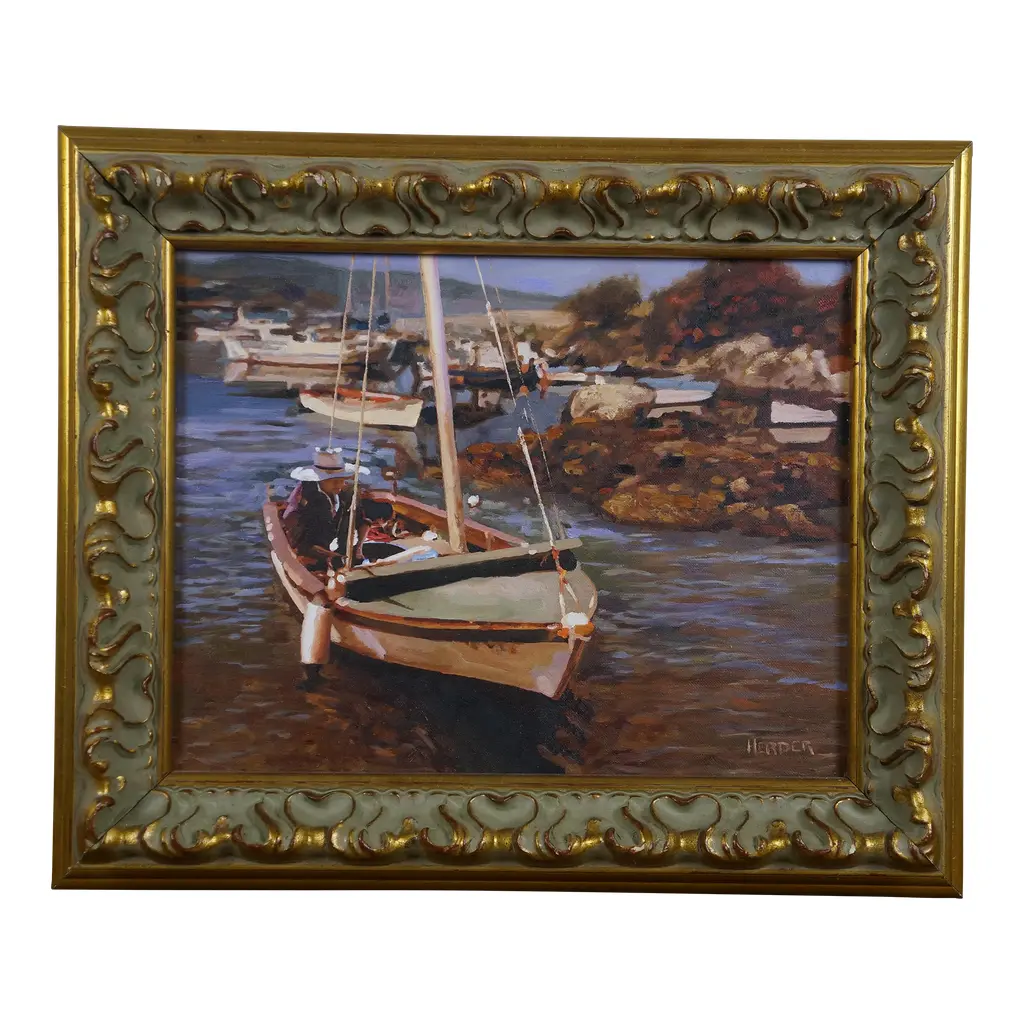
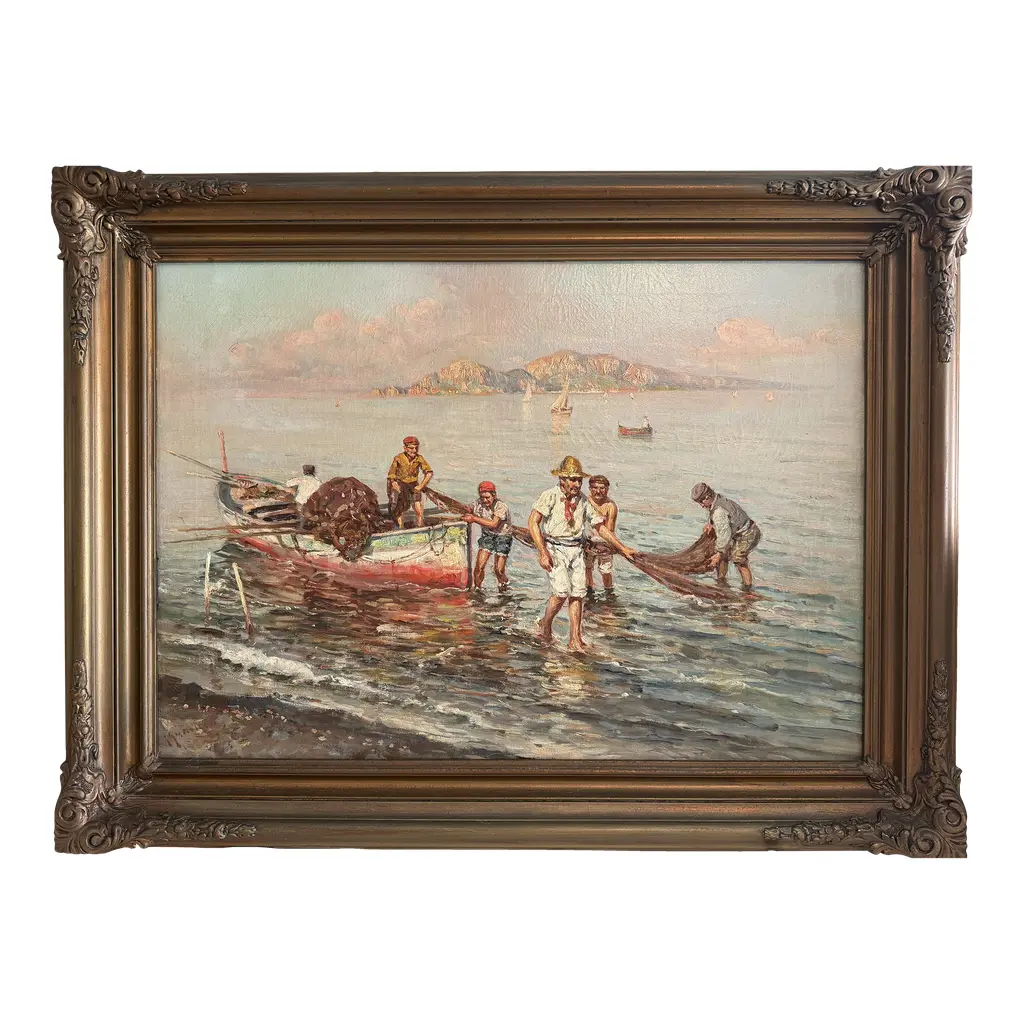
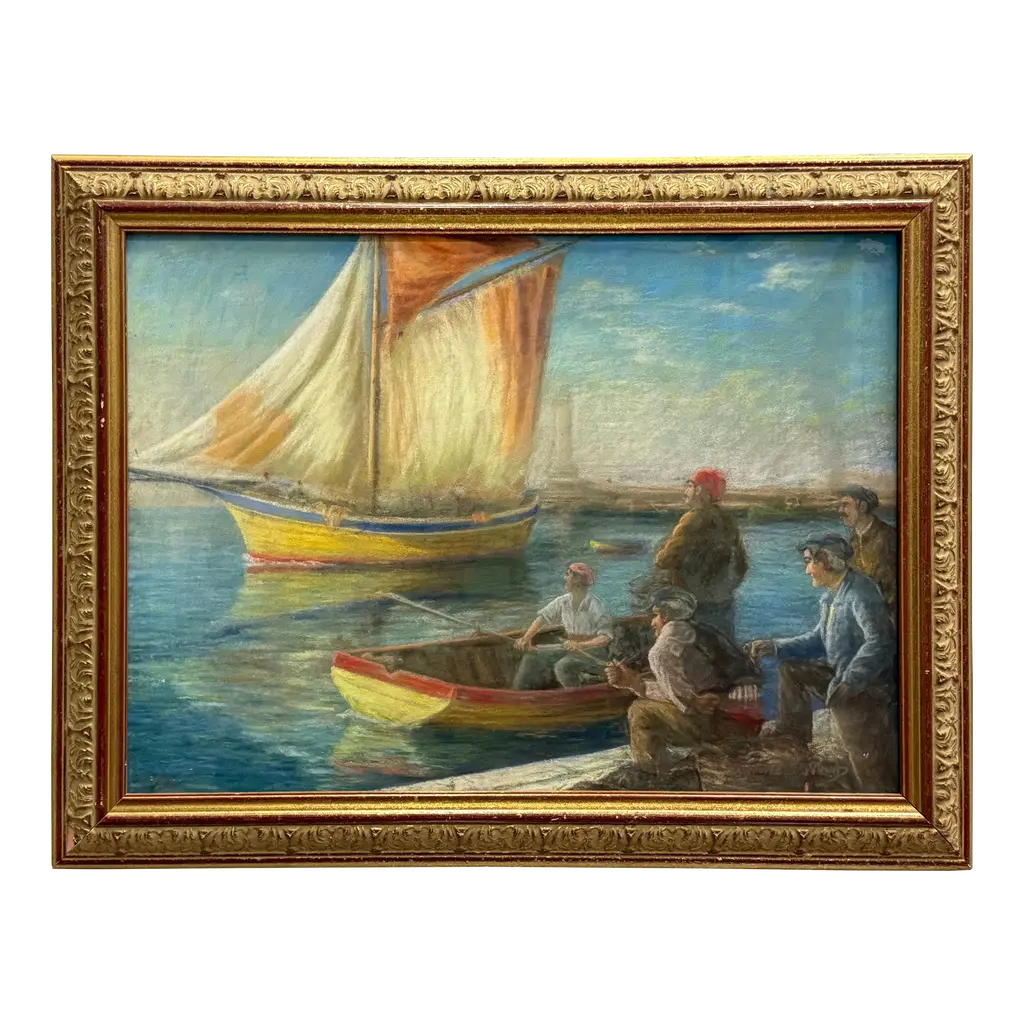
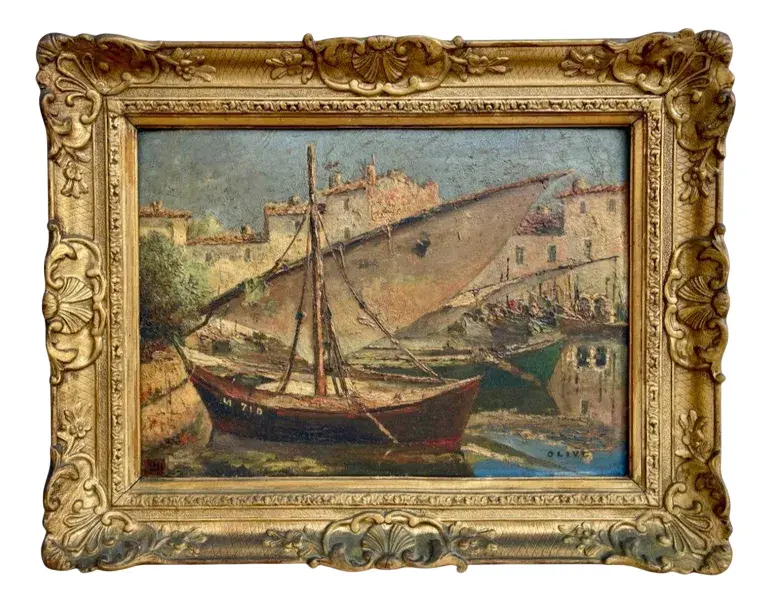
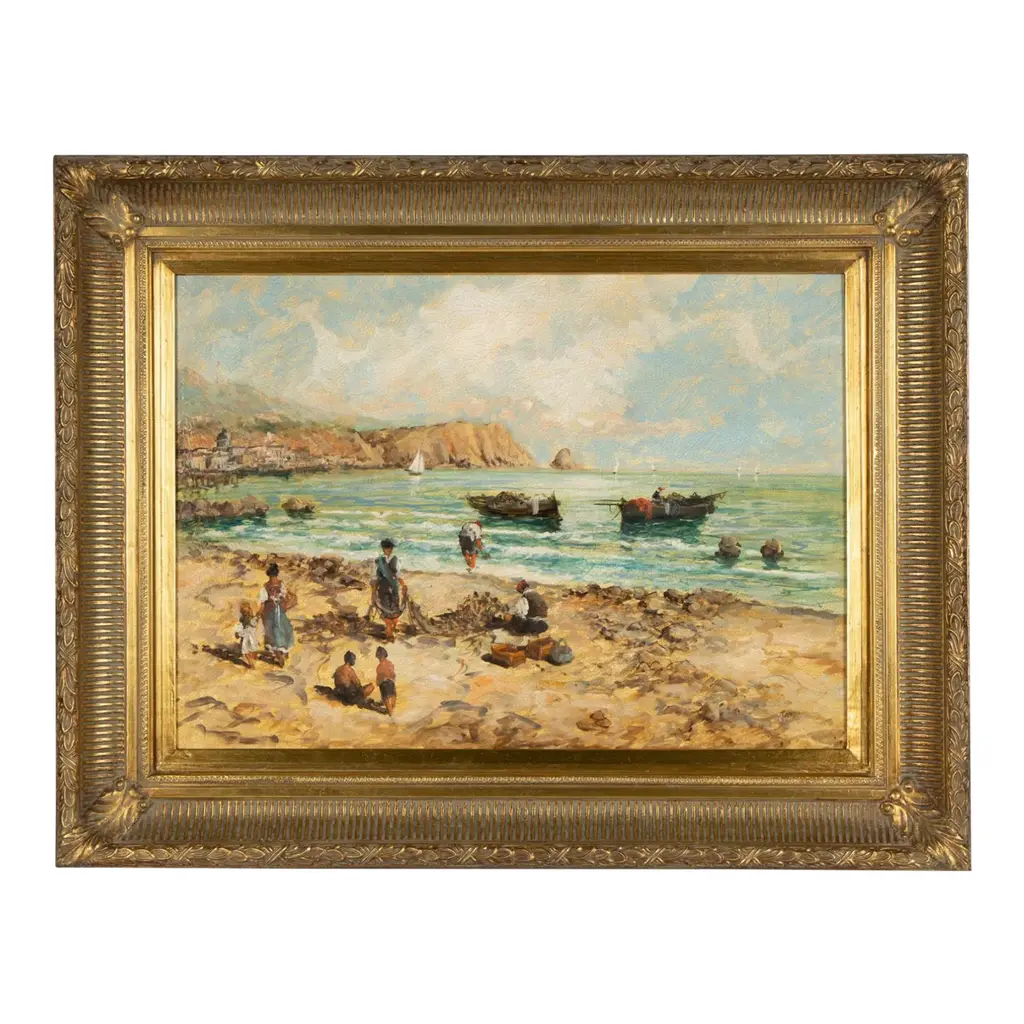
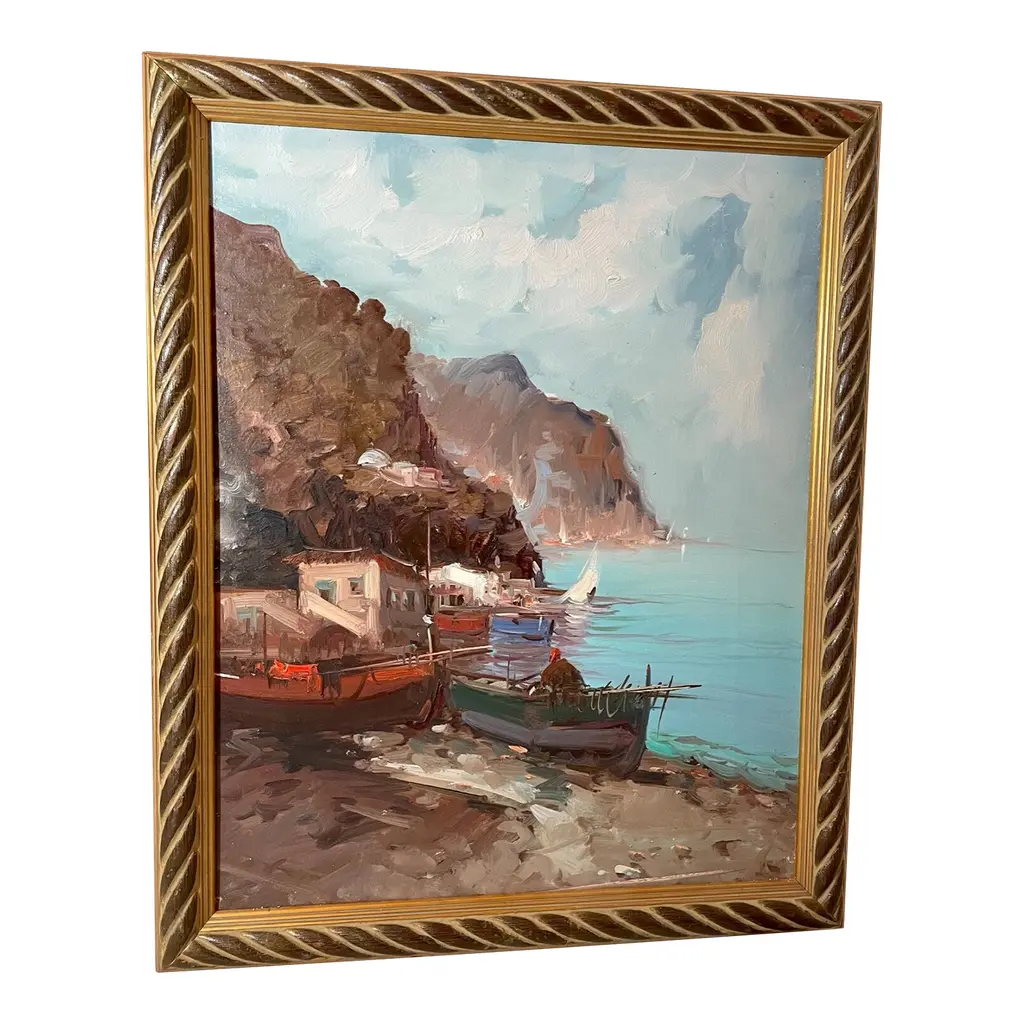
The painting replicates a classic scene located at Wied iż-Żurrieq, also known as the Zurrieq Valley Sea Inlet. This narrow, steep-cliff sea valley is located on the southern coast of Malta, most notably as the departure point for the Blue Grotto. The double-ended wooden boats in the foreground are traditional Maltese luzzijiet. They are famous for their sturdy build and bright color palettes consisting of yellow, red, blue, and green bands. The sleek boat on the left, fitted with a classic triangular lateen sail, is a historic dgħajsa, which was used historically to ferry passengers and cargo across the Maltese islands. Note The Eye of Osiris painted on boats’ bows. This ancient symbol is a Phoenician maritime tradition passed down through generations to protect fishermen from bad luck and evil spirits while out at sea. The horizontal color band painted just below the rim at the front of the bow is known locally as the mustaċċ (moustache). Historically, the color scheme of this band could immediately identify which fishing village or harbor the boat originated from. The subject is a bit of a surprise for an established 20th-century California painter. But Muscat was born in Malta in 1932, graduating from the School of Fine Arts there before later studying at Bennet College in Sheffield, England. He immigrated to the United States and permanently settled in Redwood City, California, located in the San Francisco Bay Area, where he ultimately found his milieu as a plein air painter. The artist had major exhibits at the Rosicrucian Museum in San Jose, California; the Emma Fry Museum in Seattle, Washington; the Biennale in Venice, Italy; and, of course, at the National Museum of Fine Arts in Valletta, Malta. Signature/Maker's Mark: Lower right (photo #3)
Similar products