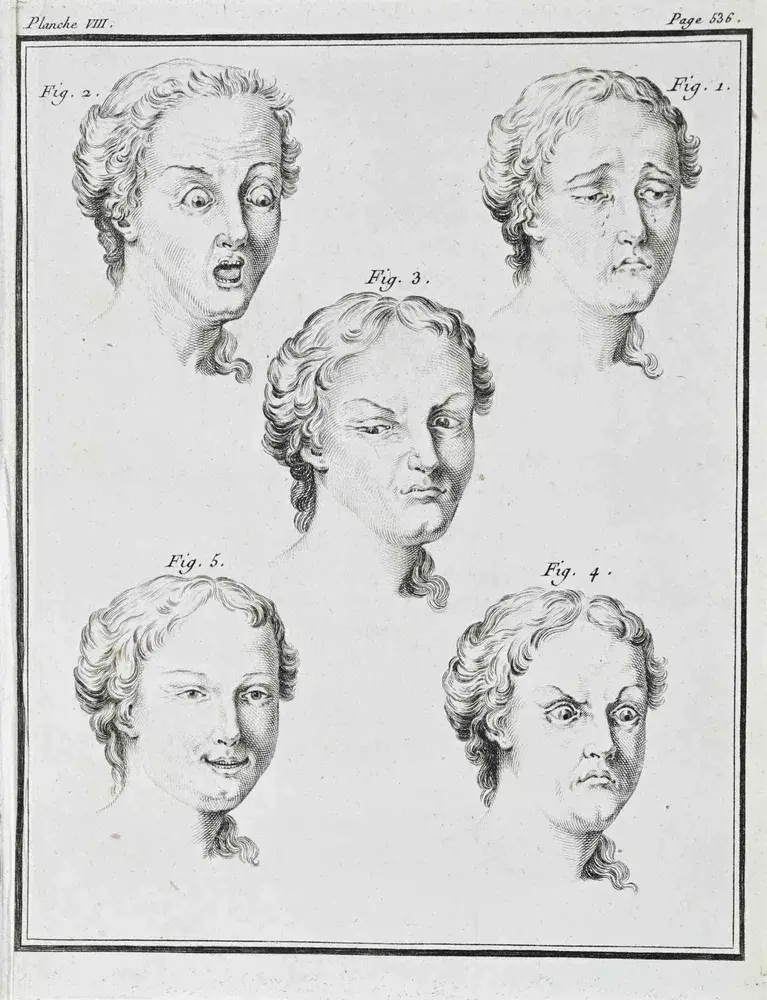
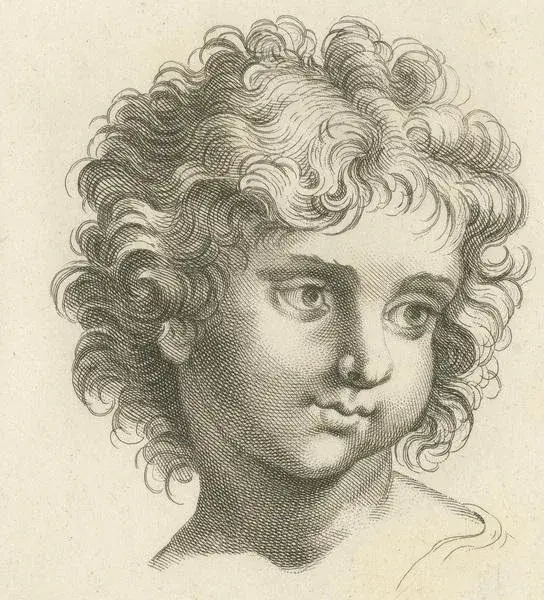
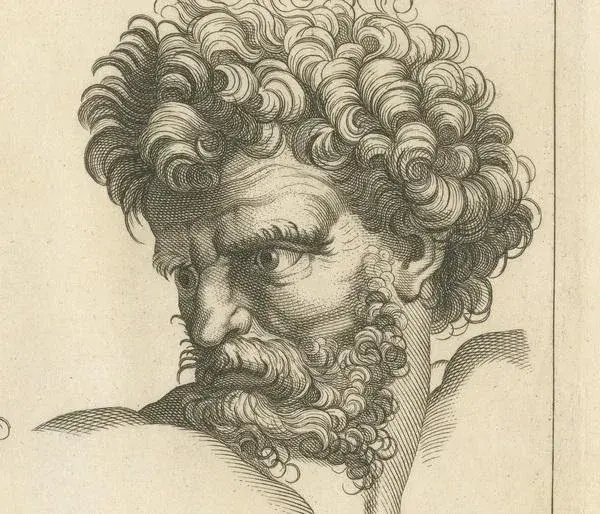
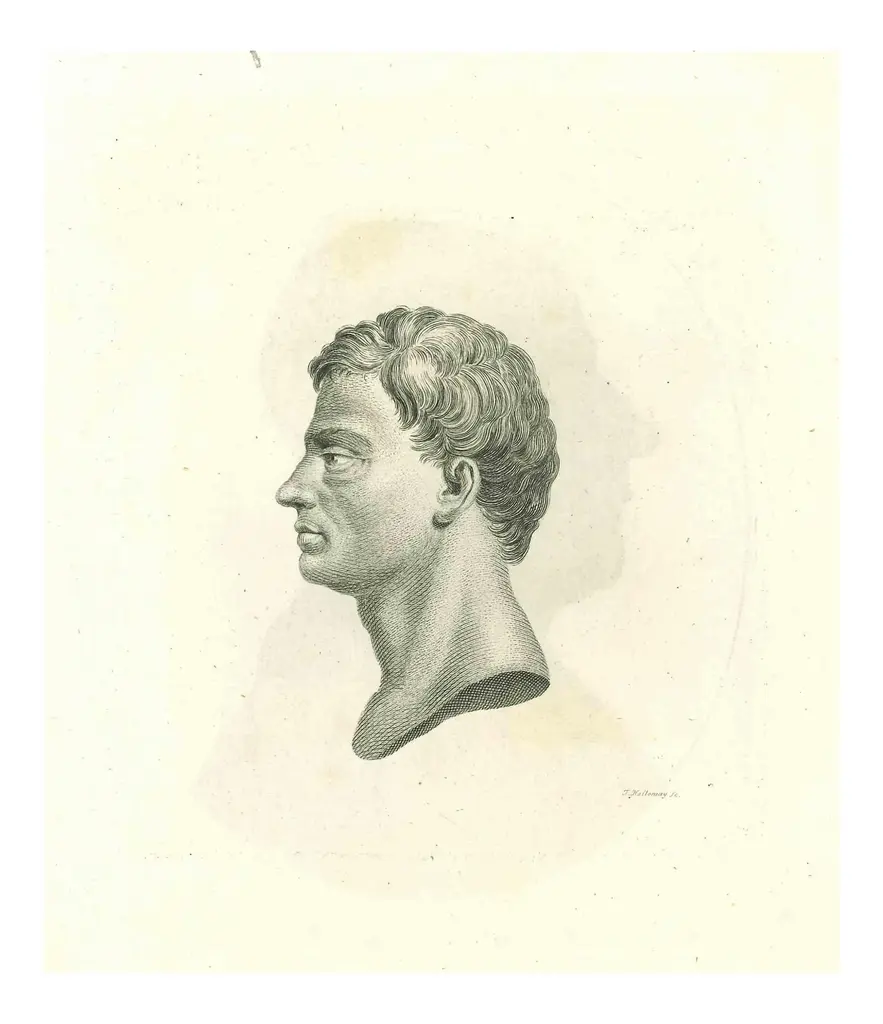
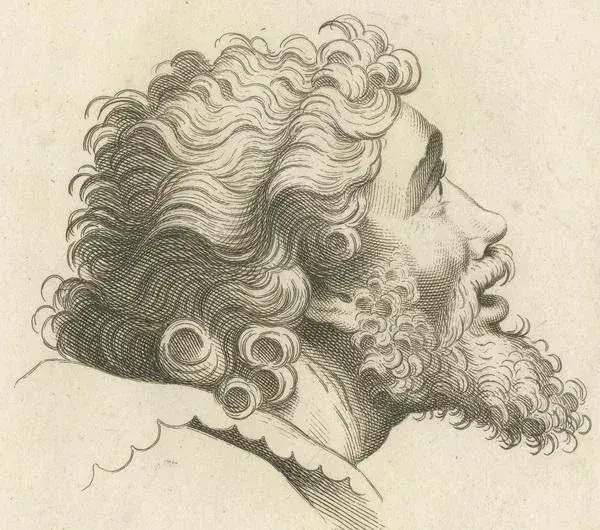
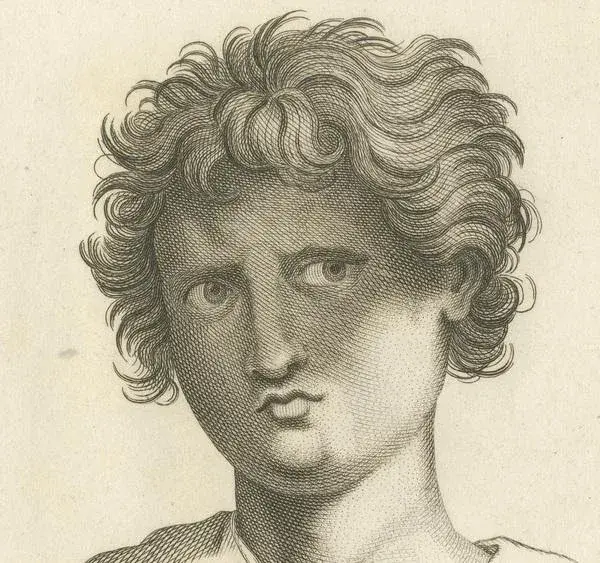
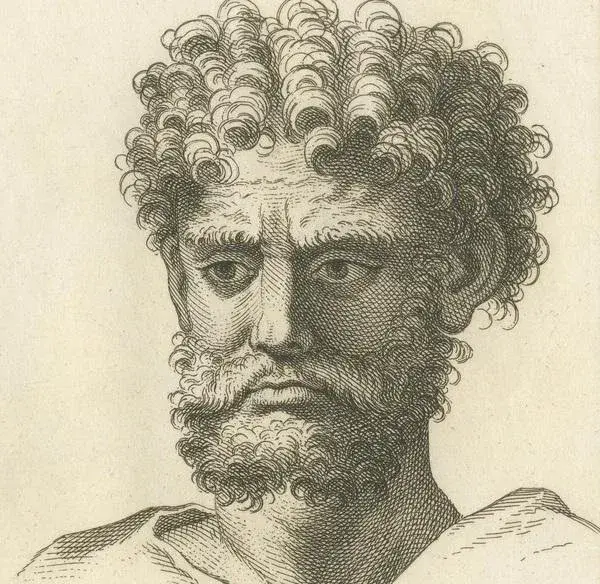
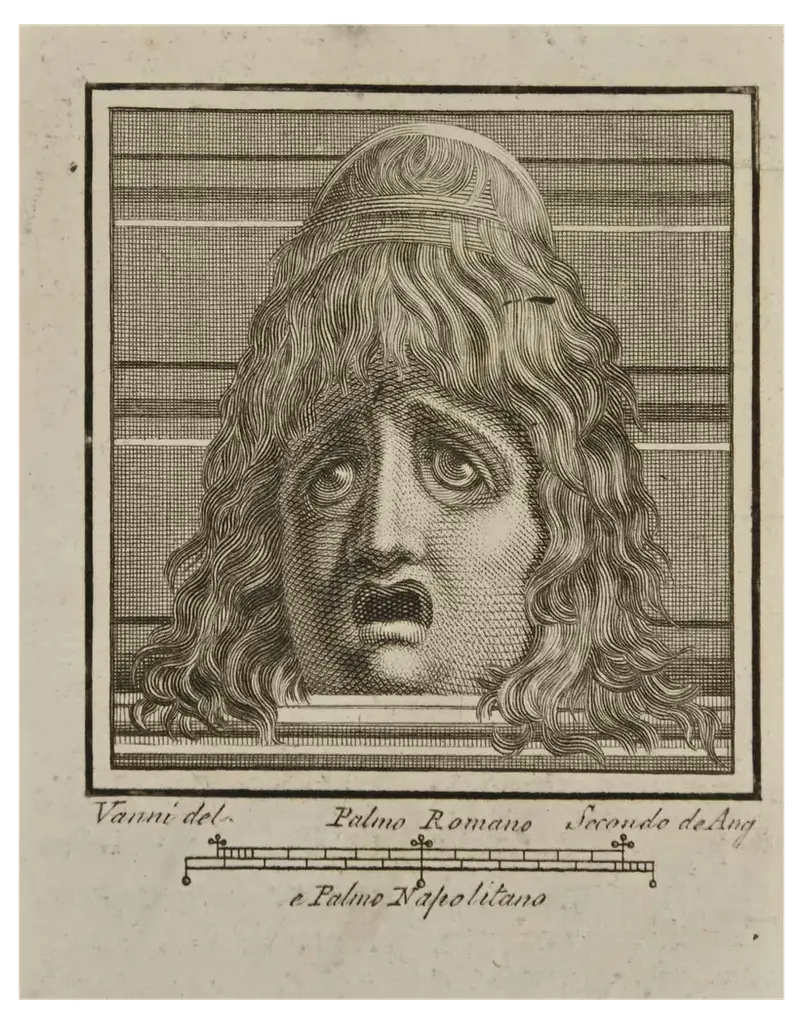
This engraving showcases two striking male profiles, each rendered with remarkable detail, characteristic of the "Recueil de XC Têtes tirées des Sept Cartons des Actes des Apôtres." On the left, the figure's curls are softer, framing a face that carries a calm and thoughtful expression. His eyes gaze gently to the side, suggesting a contemplative nature. Contrastingly, the figure on the right exudes a more intense demeanor. His curls are tighter, more pronounced, and his furrowed brow and piercing gaze lend him an air of determination or perhaps defiance. The inscription "Raph. Urb. pin." indicates that the design is after a painting by Raphael, while "Nicolaus Pigné. sculp." credits the engraving to Nicolas Pigné. These engravings were part of a larger project to make Raphael's works, originally created as preparatory cartoons for tapestries, accessible through print. The emotions captured in these faces reflect the humanist focus on individual expression that was central to Raphael's work and the Renaissance period. The engraving is part of a series known as "Recueil de XC Tetes tirees des Sept Cartons des Acts des Apotres peints par Raphael Urbin," which translates to "Collection of 90 Heads drawn from the Seven Cartoons of the Acts of the Apostles painted by Raphael of Urbino." This series was derived from the Raphael Cartoons at Hampton Court, which are famous works by the Italian Renaissance master Raphael. These cartoons were originally created as full-size designs for tapestries depicting scenes from the lives of Saints Peter and Paul. Nicolas Dorigny, a renowned French engraver, was responsible for creating these engravings. He was invited to England and worked on engraving the Raphael Cartoons, which he completed in 1719. Dorigny's engravings were sold by subscription and were highly regarded for their fidelity to Raphael's original designs and for their artistic excellence. His work was part of the broader European tradition of reproducing and disseminating the works of great Renaissance artists. These particular engravings are historically significant as they represent one of the key moments in the history of printmaking, providing an elite educated market with access to Raphael's artistry through the medium of engraving. Dorigny's work, including this series, was aimed at a knowledgeable audience, with all the lettering in the engravings done in Latin, highlighting the scholarly nature of the intended patrons.
Similar products