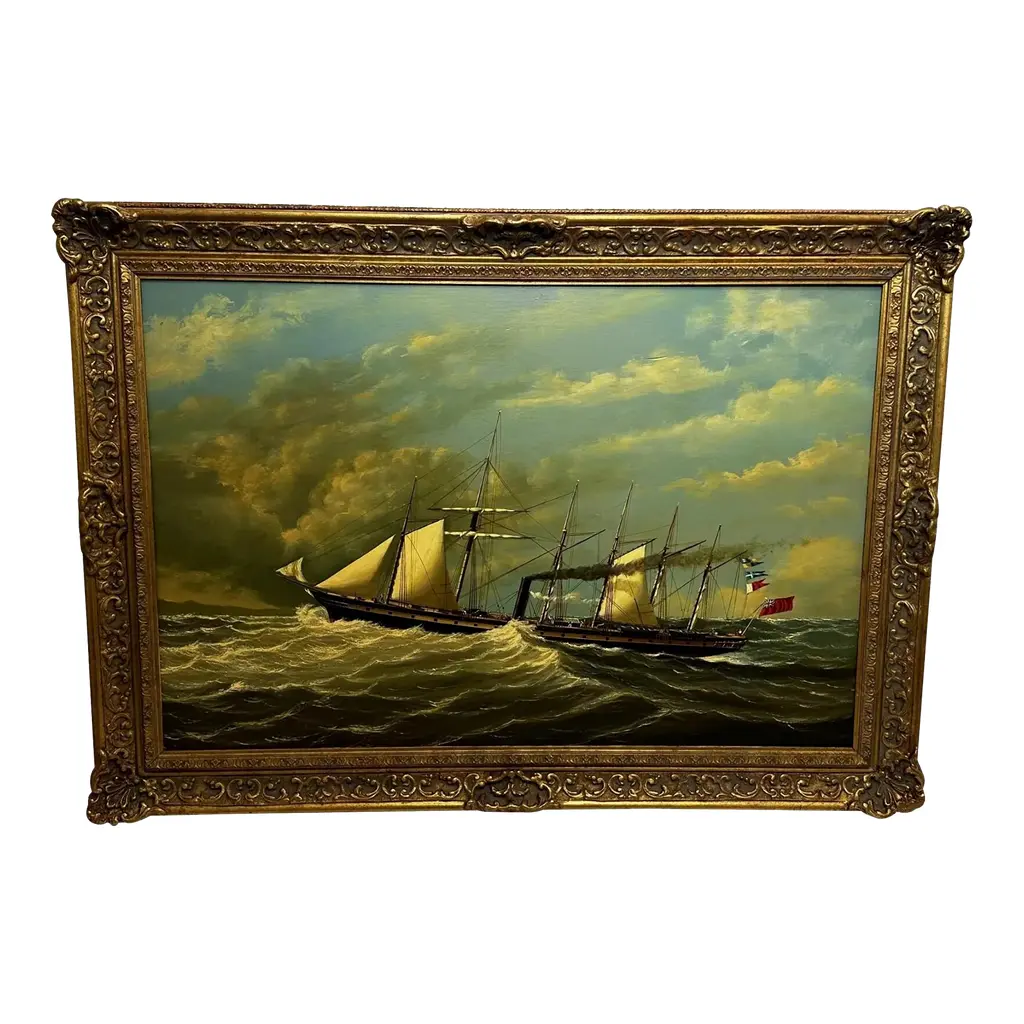
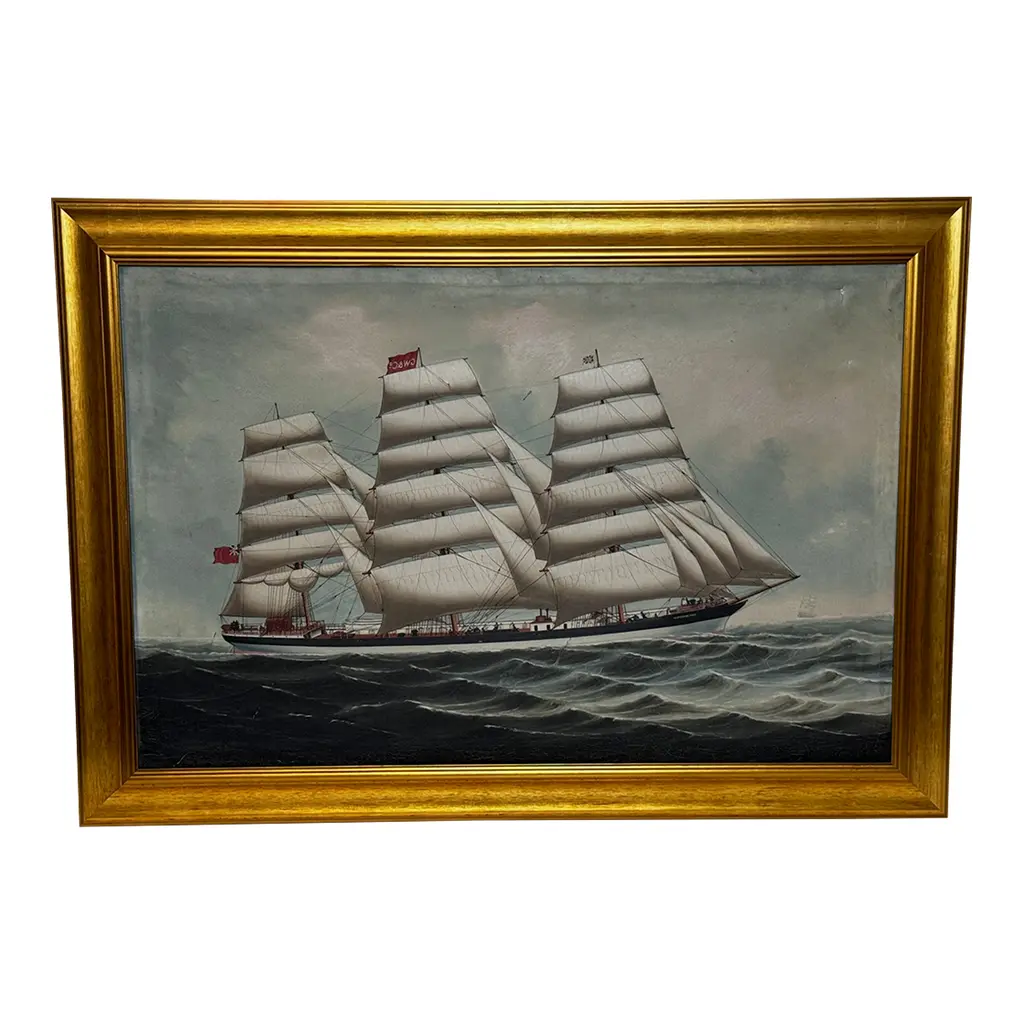
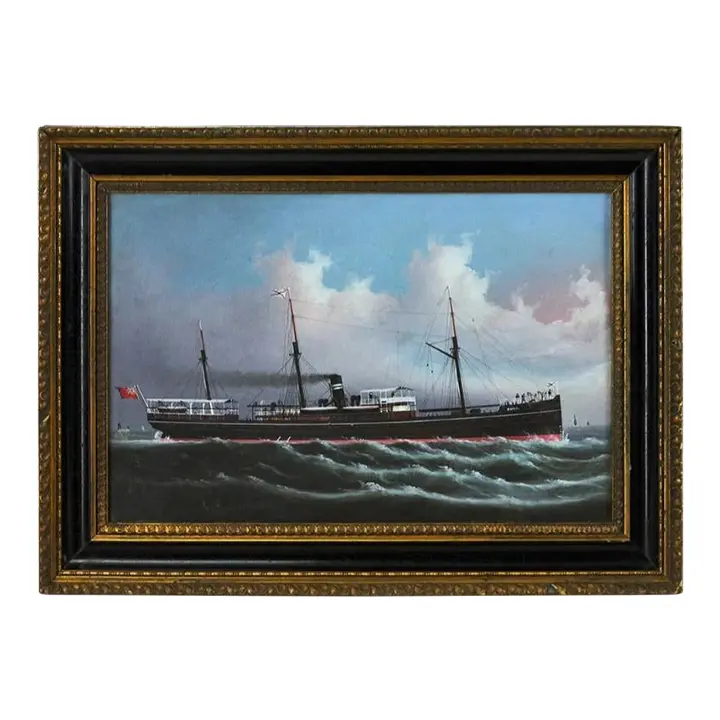
S.s. Shelley Steam Sail Ship In Heavy Seas — Attributed To Lucas Papaluca Early 20th Century Neapolitan Marine Painting | Gouache On Paper | Framed
Chairish$8,000
S.s. Shelley Steam Sail Ship In Heavy Seas — Attributed To Lucas Papaluca Early 20th Century Neapolitan Marine Painting | Gouache On Paper | Framed
Chairish$8,000
S.S. Shelley in Heavy Seas — Attributed to Lucas Papaluca (1890–1934) Early 20th Century Neapolitan Marine Painting | Gouache on Paper | Framed Overview A finely executed Neapolitan marine painting depicting the British auxiliary steamship S.S. Shelley navigating heavy seas. Attributed to Lucas Papaluca, this work captures the transitional era between sail and steam with precision and atmosphere. The composition combines documentary maritime detail with expressive seascape painting, making it both historically significant and visually compelling. Medium & Technique Gouache on paper, allowing for crisp detailing and controlled tonal variation. Layered application creates depth and movement in the sea Fine draughtsmanship defines rigging, masts, and deck structures White highlights articulate foam and spray Subtle tonal sky enhances mood and contrast Colour & Composition A refined palette of cool blue-green waters and silvery-grey sky is offset by warm accents of ochre, rust, and signal red on the vessel. The ship is presented broadside, rising against a swell, creating a dynamic sense of motion and resistance. The balanced composition draws the eye directly to the vessel as the focal point. Artist Attribution Attributed to Lucas Papaluca, part of the Neapolitan “pier-head painter” tradition. These artists worked along the docks of Naples producing commissioned ship portraits for captains, merchants, and travellers. Their work is valued for: Accurate maritime detail Architectural precision in ship rendering Atmospheric yet documentary quality The Ship: S.S. Shelley (1881) A British auxiliary steamship built by William Gray & Co Ltd. Specifications: Approx. 2003 gross register tons (1303 net) Length: just over 200 feet Beam: 35 feet Depth: 26.5 feet Iron construction, classed 100A1 by Lloyd’s Register Design: Hybrid propulsion combining steam engine and full sailing rig—typical of late 19th-century transitional vessels. History: Initially operated by Glover Bros. Transferred to Shakespear Shipping Co. Ltd (1898) Later sold to Chilean ownership Renamed Presidente Santa Maria (1909) Recorded as condemned in 1912 after damage Historical Significance This painting reflects a key moment in maritime history: The coexistence of sail and steam power Expansion of British global trade routes Mediterranean and Near Eastern commercial networks As a depiction of a documented vessel with traceable history, the work holds both artistic and historical value. Signature Unsigned, consistent with Neapolitan workshop practice. Attribution based on stylistic analysis. Frame Presented in a recent Larson-Juhl frame with: White-gold mount AR70 museum glass Professional conservation presentation Dimensions Image: 35 cm (H) × 58 cm (W) Framed: 85 cm (W) × 61 cm (H) × 1.3 cm (D) Provenance Halls Fine Art Auction, Shrewsbury (15 July 2020, Lot 329) Private collection Machynlleth antiques dealer Curated by Cheshire Antiques Consultant Ltd Exhibited at the Famous Lord Hill Museum Why This Piece Stands Out Depicts a documented historic vessel Strong example of Neapolitan marine painting Combines technical precision with atmospheric drama Highly decorative and historically grounded Professionally framed and ready to hang Ideal for maritime, industrial, or European art collections A compelling early 20th-century marine painting that captures the endurance and visual drama of a working steamship at sea—an excellent addition to any serious maritime or European art collection.
Similar products