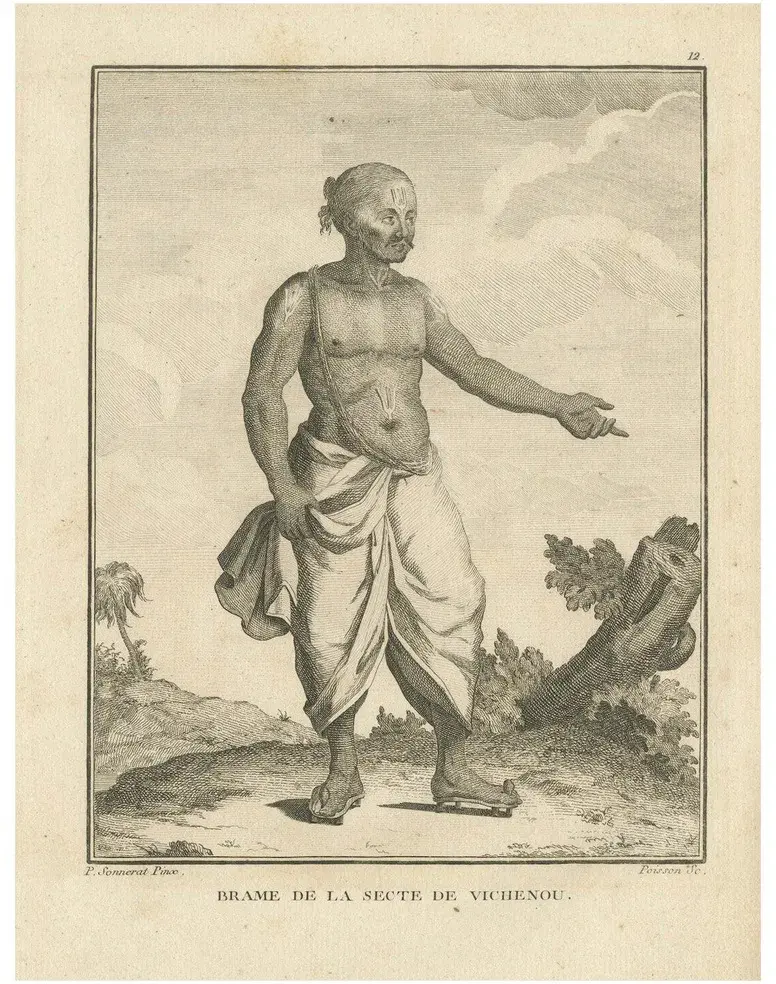
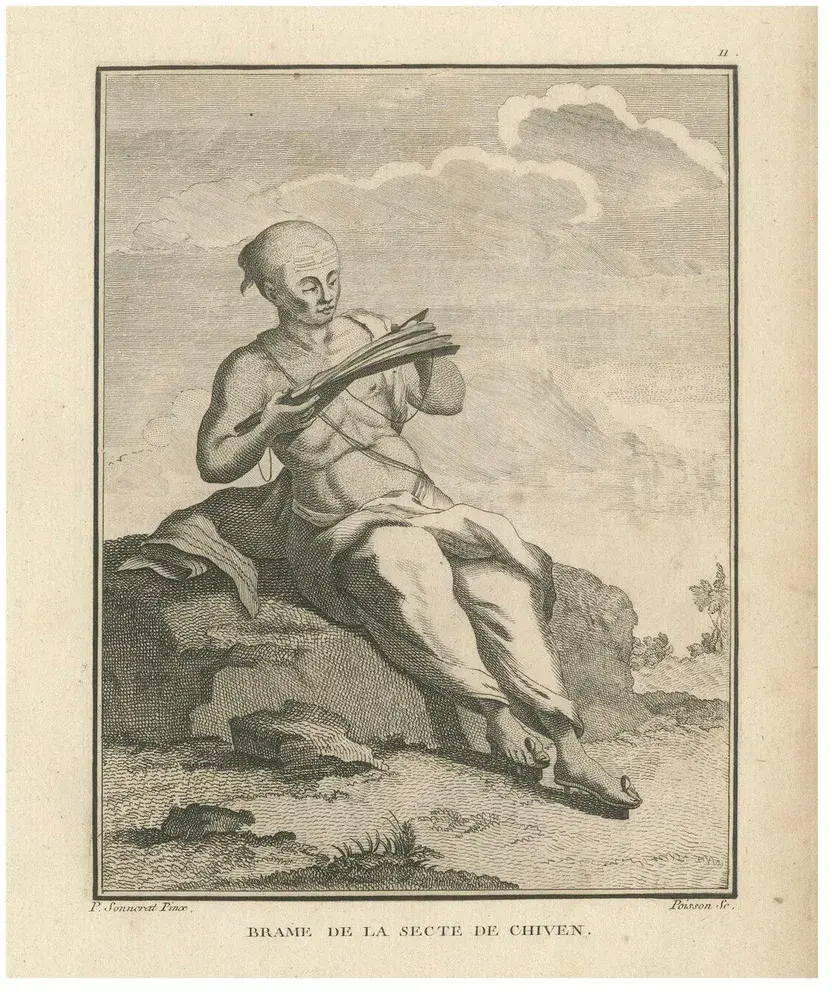
Indian Devotee of Vishnu – Engraving from Sonnerat's 1806 Voyage to India This fine 18th-century engraving titled *Indien de la Secte de Vichenou* (Indian of the Sect of Vishnu) is plate number 4 from the 1806 second edition of *Collection de Planches pour servir au Voyage aux Indes Orientales et à la Chine* by Pierre Sonnerat, published in Paris by Dentu. The work documents Sonnerat's travels and observations in India and Southeast Asia, with the accompanying engravings serving as an important visual ethnographic record of the time. The figure shown is a male devotee of Vishnu, rendered with careful attention to gesture, clothing, and physical expression. He is depicted standing in a serene natural landscape, gazing to the side with a composed and dignified air. His posture is relaxed yet noble, one hand resting near his midsection while the other adjusts the folds of his garment. He wears a traditional dhoti with the upper body left bare, and a turban adorns his head. His feet are clad in distinctive upturned sandals, a style noted in various regions of India. The engraving captures not just attire but also hints at the devotional identity of the subject. Followers of Vishnu, or Vaishnavites (here written as “Vichenou,” an 18th-century French transliteration), often display tilaka marks, although they are not emphasized here. The man’s composed expression and minimalist accessories suggest a spiritual focus, a lifestyle possibly aligned with asceticism or temple service. Sonnerat’s publication aimed to educate European audiences about the cultures and religions of Asia through both narrative and visual means. The engravings, many of them based on field sketches, are considered valuable for their documentary role during a period of expanding colonial interest in the East. Condition: Good condition for its age. Crisp impression on laid paper with wide margins. Some light toning and minor foxing near the edges. Blank verso. Framing suggestion: To highlight the engraving's refined detail, frame it with a simple dark wood or ebonized frame and a warm-toned acid-free mat. A generous mat border will lend it a museum-quality presentation and preserve the full title inscription for contextual appreciation.
Similar products