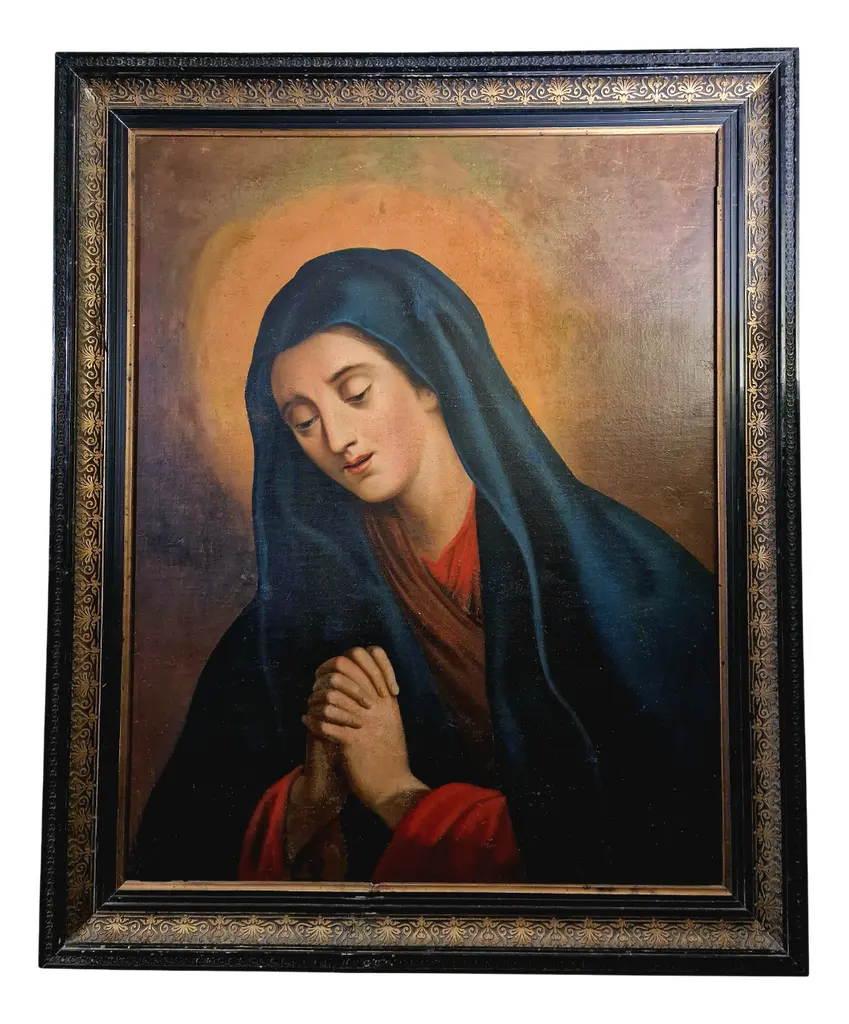
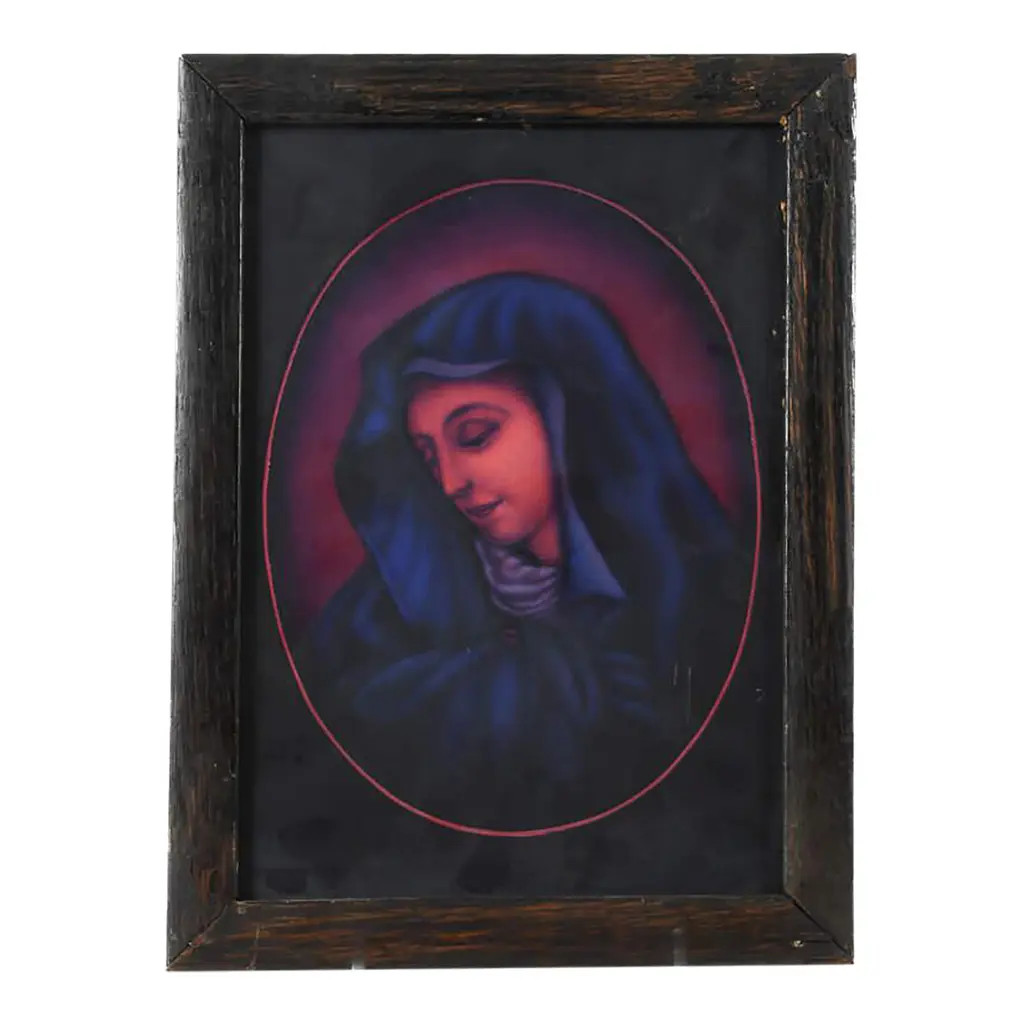
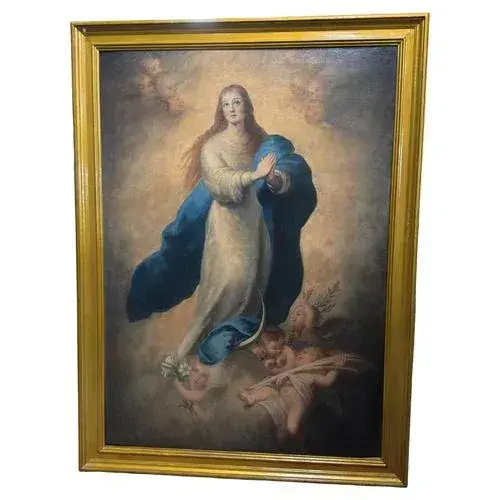
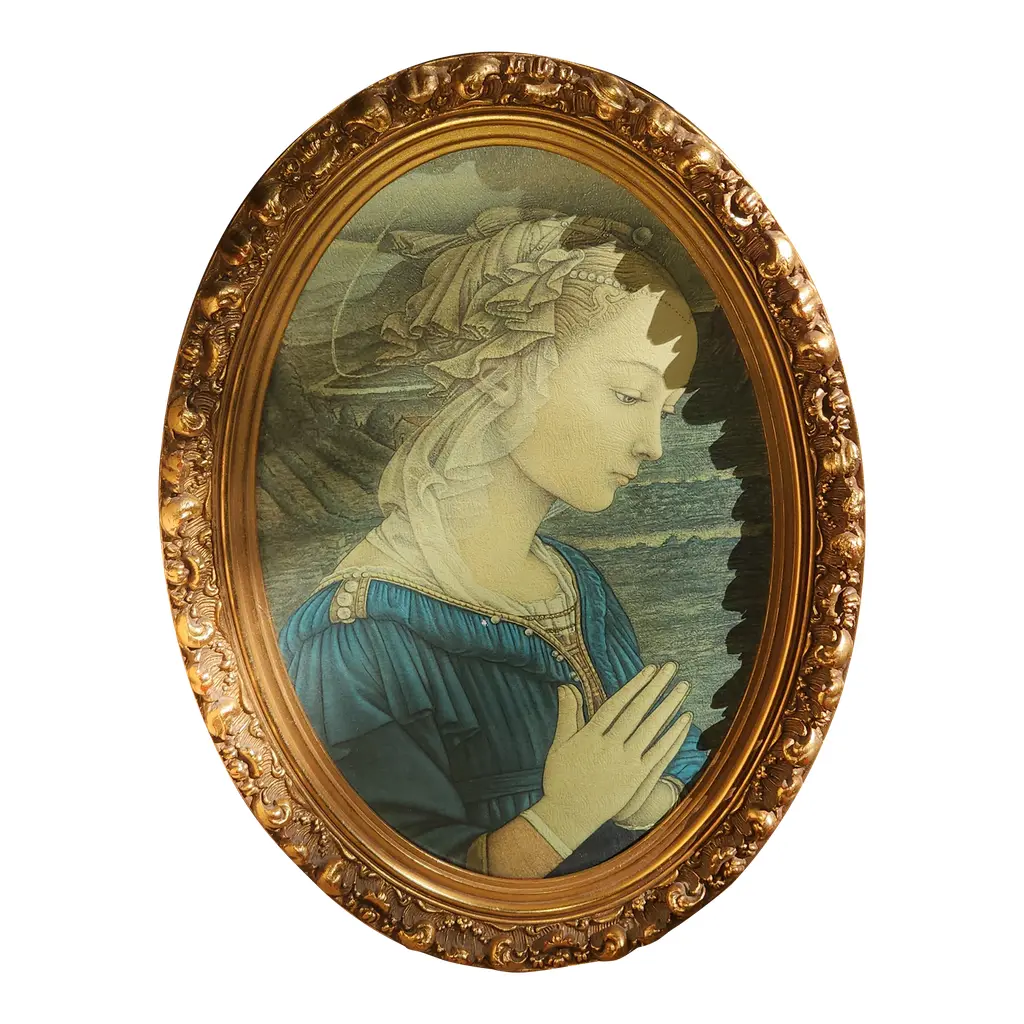
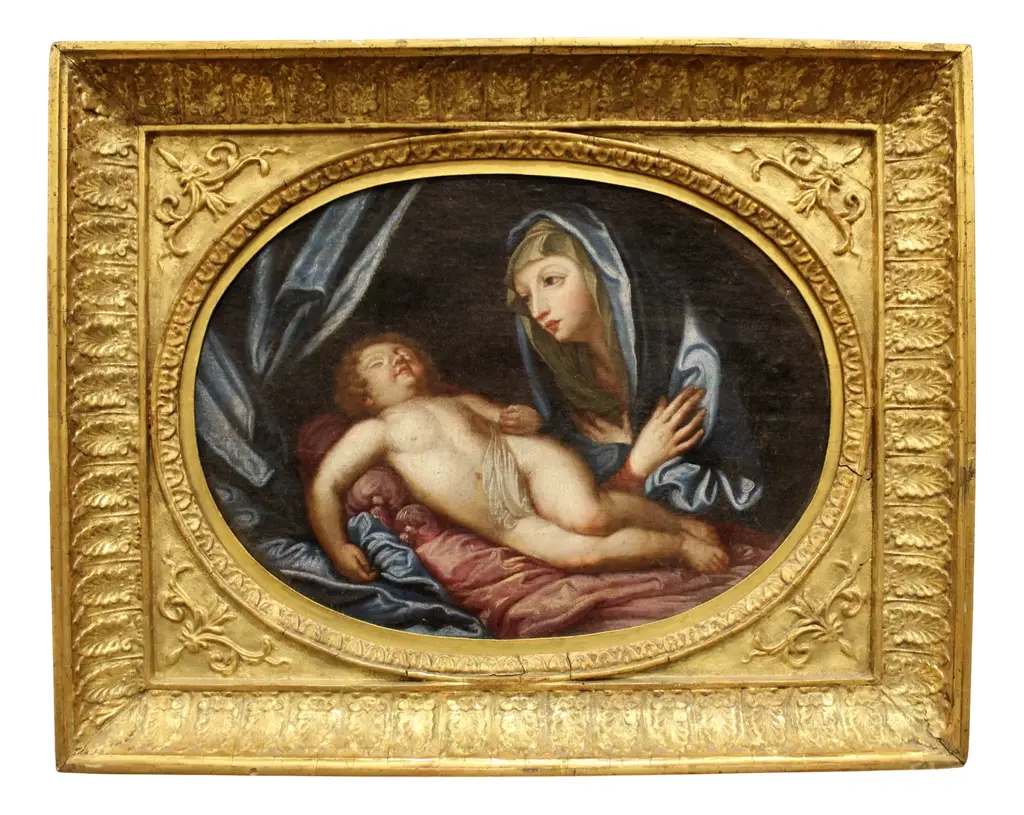
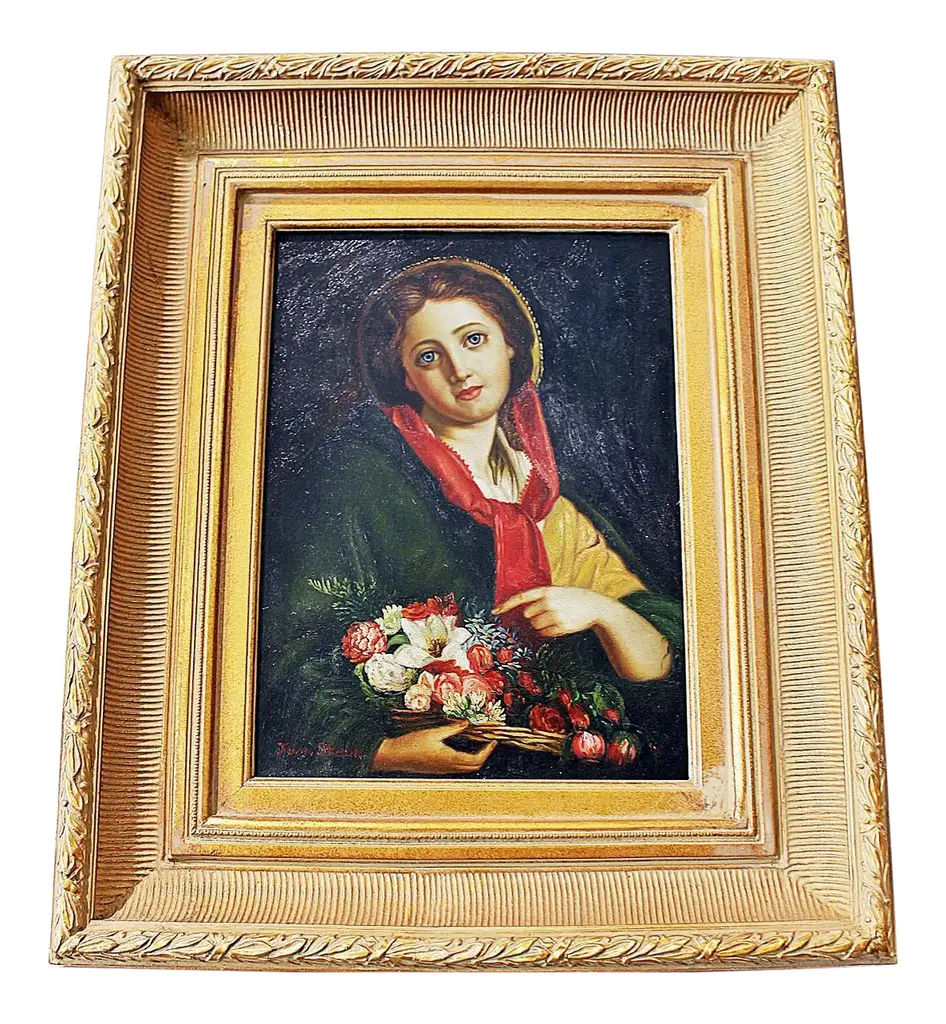
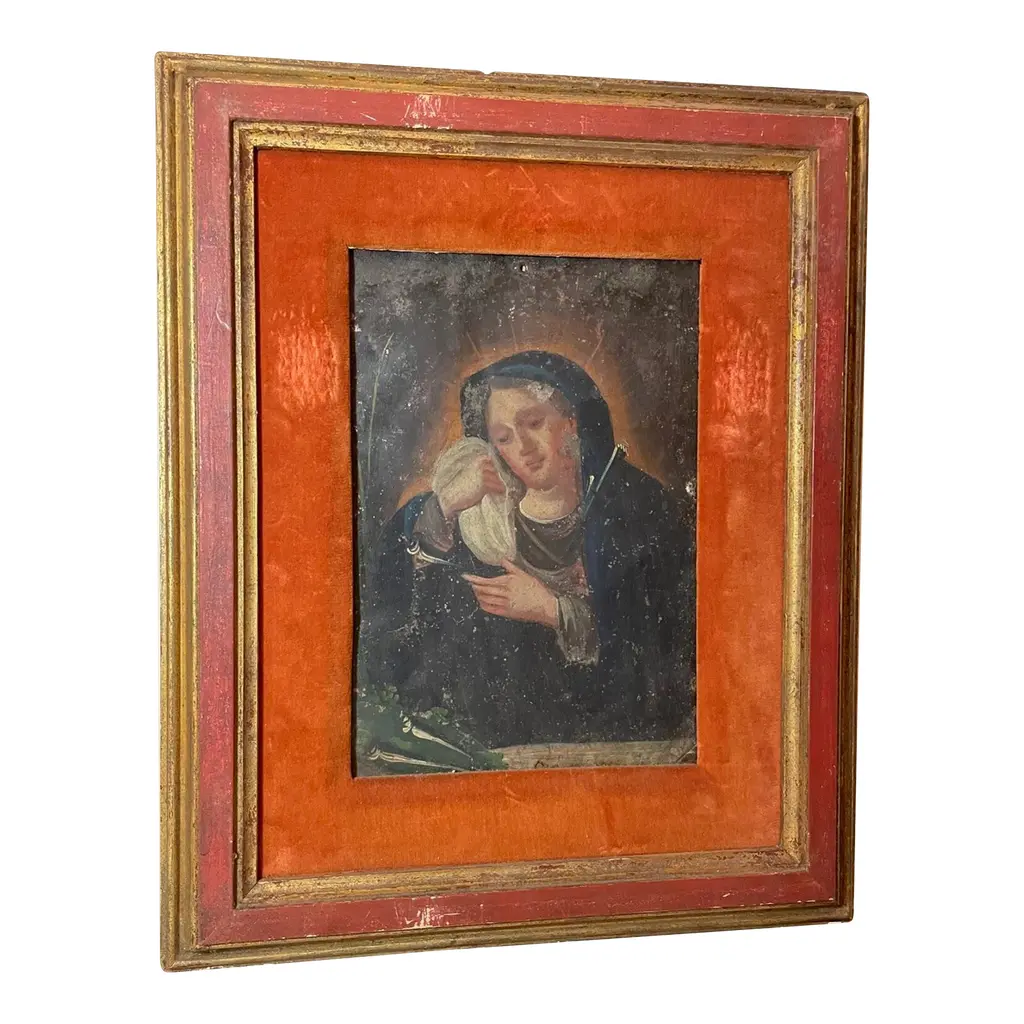
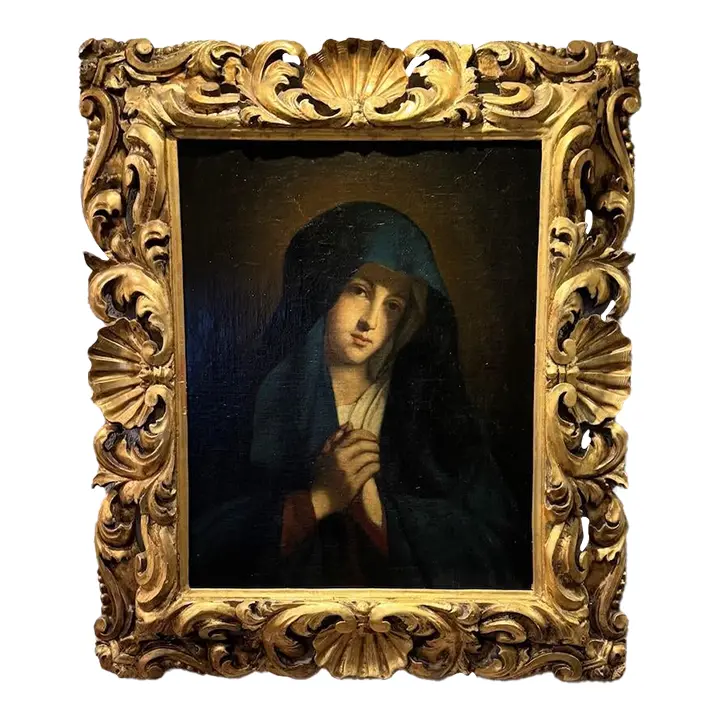
A delicate and spiritually evocative Baroque devotional painting depicting the Virgin Mary in profile, shown with her head gently bowed in prayer or sorrow. She is portrayed with an idealised, porcelain-smooth complexion, large expressive eyes cast downward, and a serene, contemplative expression. The Virgin wears a deep blue mantle adorned with scattered golden stars (a clear reference to the Immaculate Conception and the apocalyptic “Woman clothed with the sun”), over a white lace-trimmed collar. A soft golden halo radiates behind her head, set against a dark neutral background that heightens the dramatic chiaroscuro and intimate mood. Technique and Condition: Executed in oil on copper – a support particularly favoured in early 18th-century Italian workshops for its exceptionally smooth surface, which permits minute detail and a luminous, enamel-like finish. The painting displays the characteristic fine craquelure and warm golden-brown patina associated with works of this period . The brushwork is highly refined: multiple thin glazes create seamless transitions in the flesh tones, while fluid, controlled strokes define the drapery folds and the small star motifs. The oval format and original gilded frame further enhance its character as a private devotional object. The condition is stable, with scattered minor paint losses and surface dirt; professional conservation and cleaning would significantly restore the original vibrancy of the colours. The frame was added later... Provenance: Formerly in a European private collection; acquired on the Vienna antiques market (Austria). The object has been in Europe for several decades.
Similar products