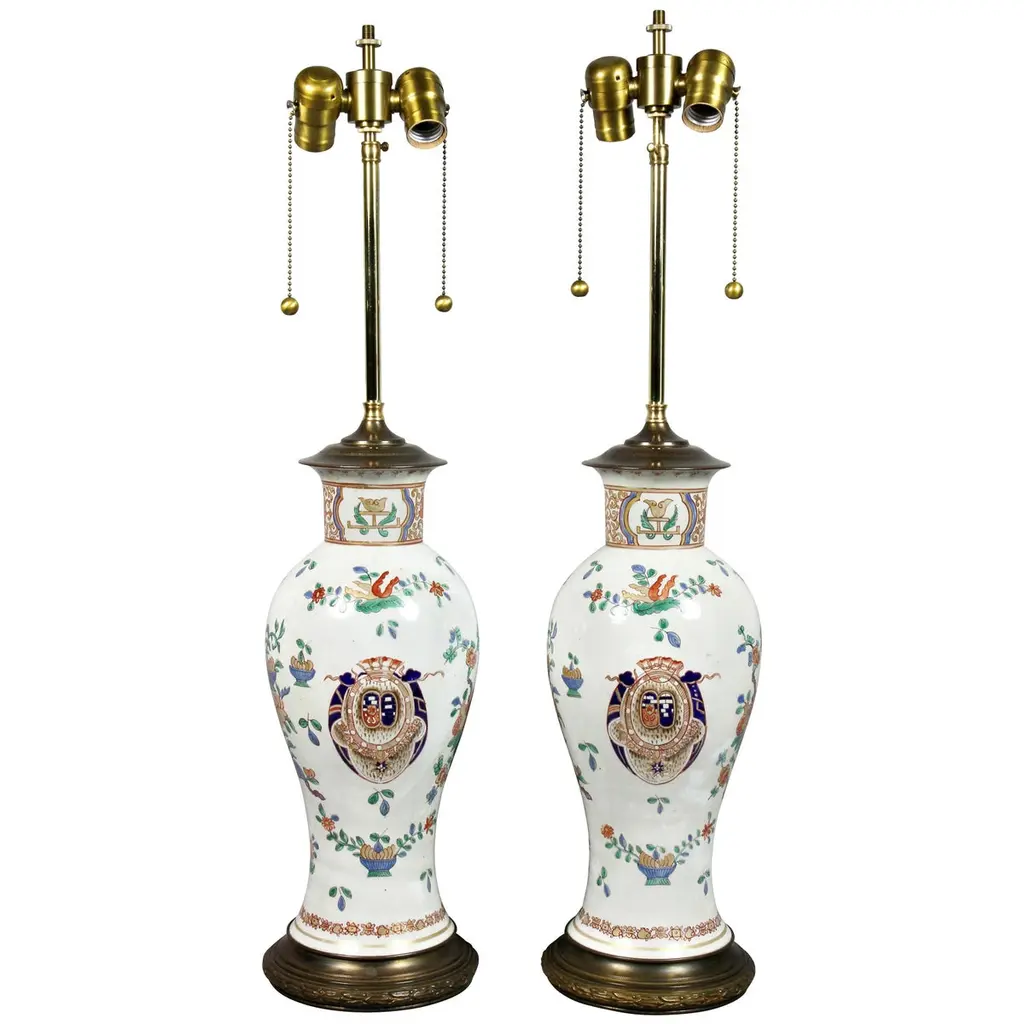
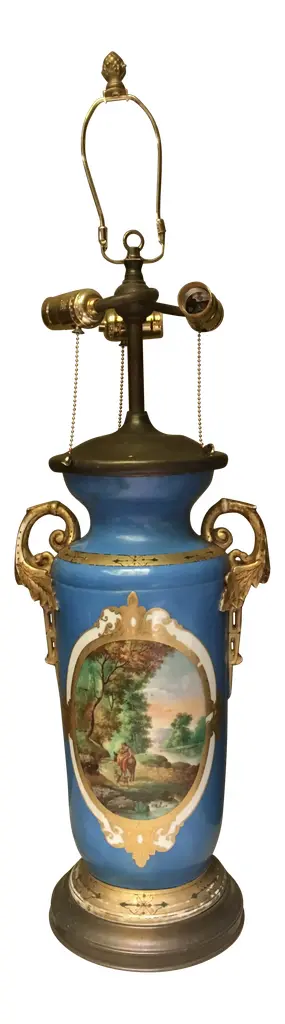
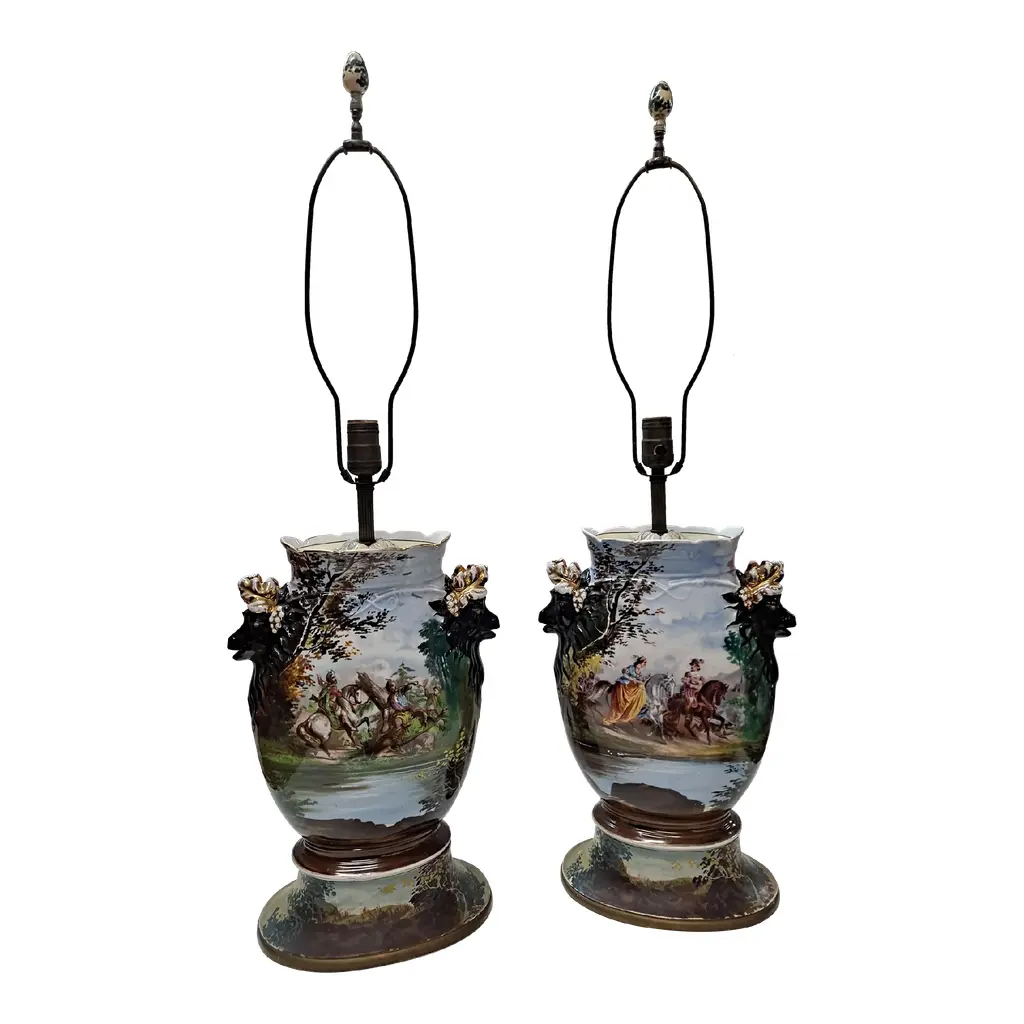
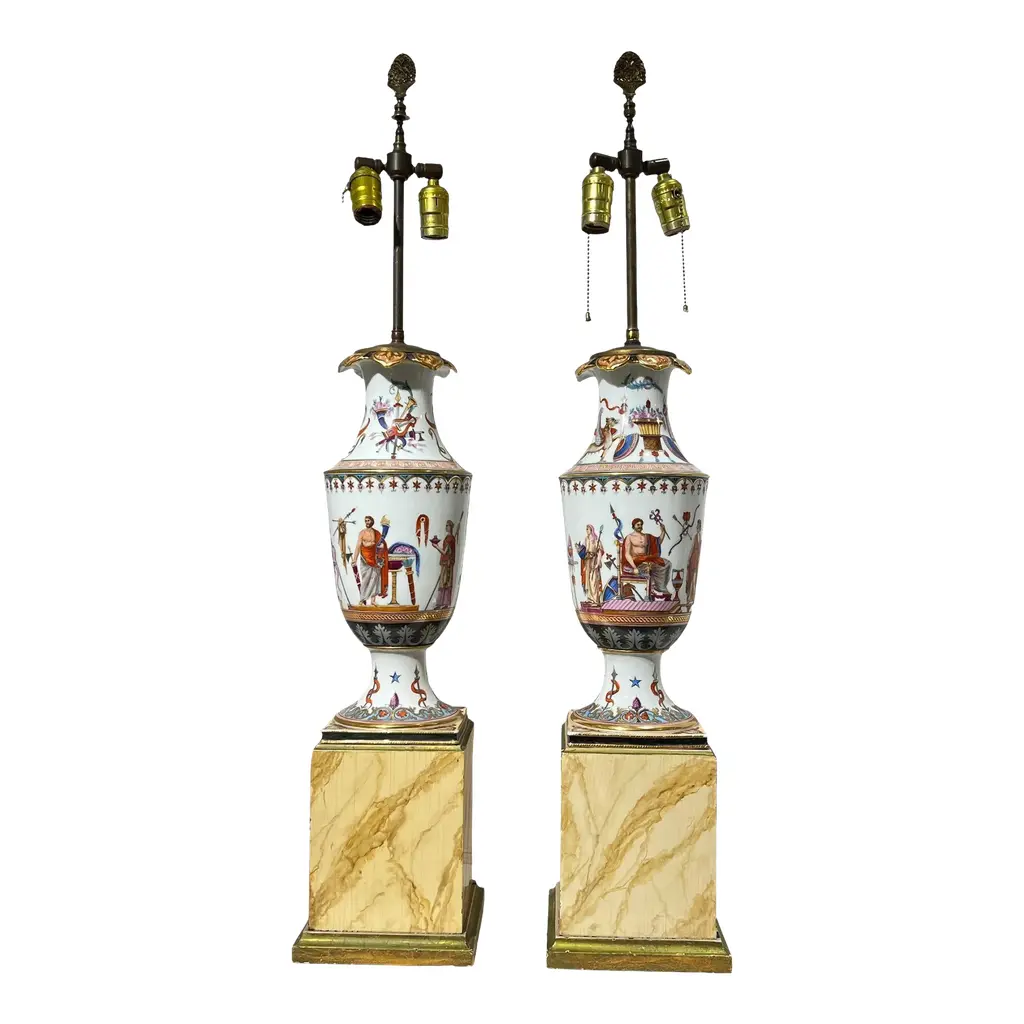
On offer are a pair of 20th-century lamps made from antique Dutch Delftware tobacco jars. Such containers were originally designed in the 18th century to store imported tobacco leaves. Incorporating antique Delftware technique—a tin-glazed earthenware produced in the Netherlands since the 17th century—these hand-painted pieces were decorated with a polychrome palette. That multicolored approach was more costly and sophisticated than the traditional blue-and-white Delft style. As such, these jars became iconic decorative items during the 18th and 19th centuries to be used in tobacco shops to store and display different varieties of tobacco—their age underscored by the crackle pattern that has formed over the centuries. Each jar prominently displays a central banner or cartouche indicating a specific tobacco origin or variety. These names did more than identify contents; they conveyed prestige and flavor. "VIRGINIA" refers to an important American tobacco producer, while "VARINAS" identifies a prized variety from what is now Venezuela. The design and symbolism of these Delftware tobacco jars trace back to the 18th-century "Atlantic World" trade. For example, the "VARINAS" jar displays a three-masted sailing ship in the background, symbolizing the merchant vessels that carried goods across the Atlantic to Europe. Unlike many Delft jars that show merchants and ships, this specific design focuses on the labor of tobacco production. On the Virginia jar, the supervising figure on the left is shown smoking a "churchwarden" pipe—a long clay pipe popular in the 1700s. His relaxed posture and smoking action serve as an advertisement for the product's quality and its supposed relaxing effects. The figure on the right is shown actively harvesting or tending to a tobacco plant. In the context of 18th-century "Virginia" tobacco, this is an idealized representation of the enslaved or indigenous labor that fueled the plantation economy. The presence of palm-like trees and lush foliage is a "shorthand" used by Dutch artists to signify the exotic, warm climates of the Americas, even though the geography shown is more generic than accurate. The conversion of these jars into table lamps was a popular mid-to-late 20th-century trend. In the case of this pair, each with double sockets, brass lids were formed into "beehive" shaped caps to house the electrical hardware. They sit on custom brass bases to provide stability and height. Once effective for marketing, they're now illuminating. Signature/Maker’s mark: Nonexistent
Similar products