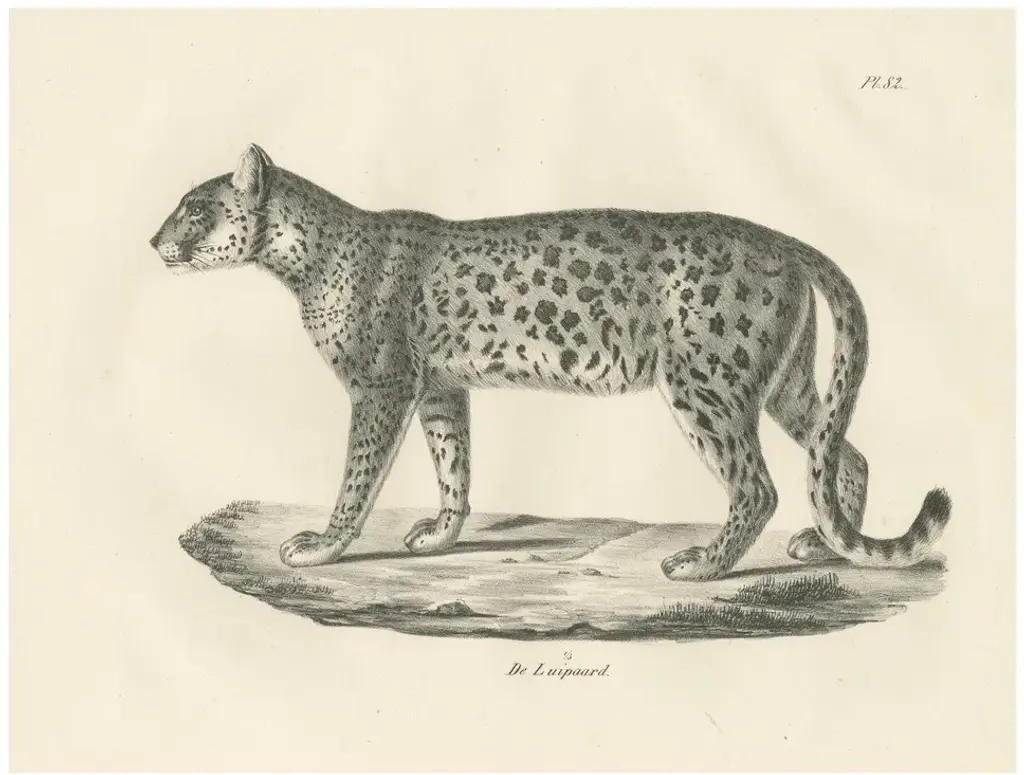
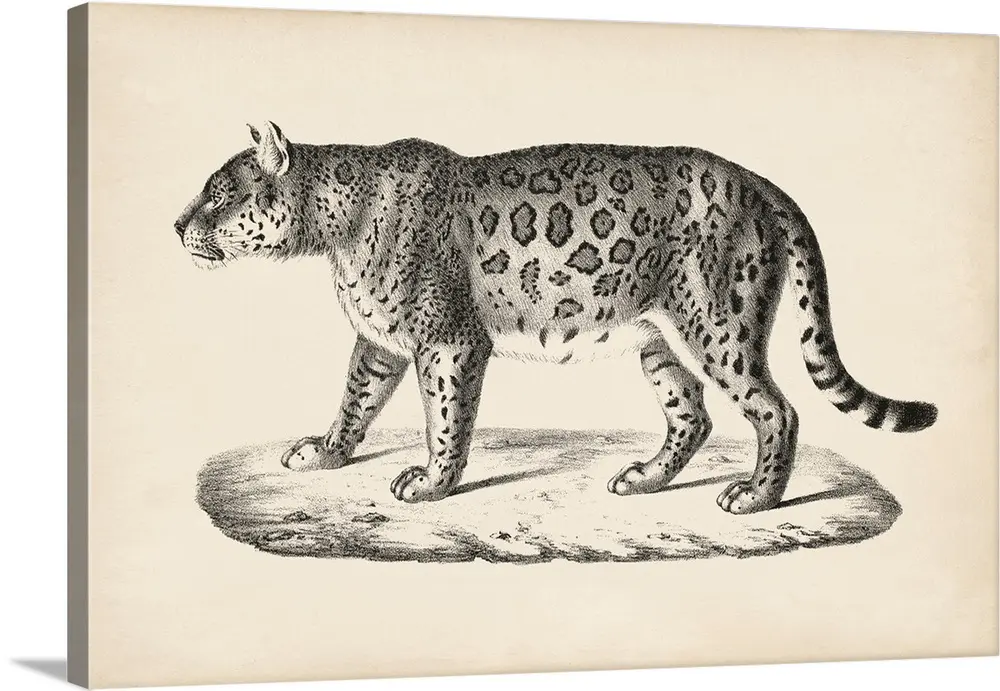
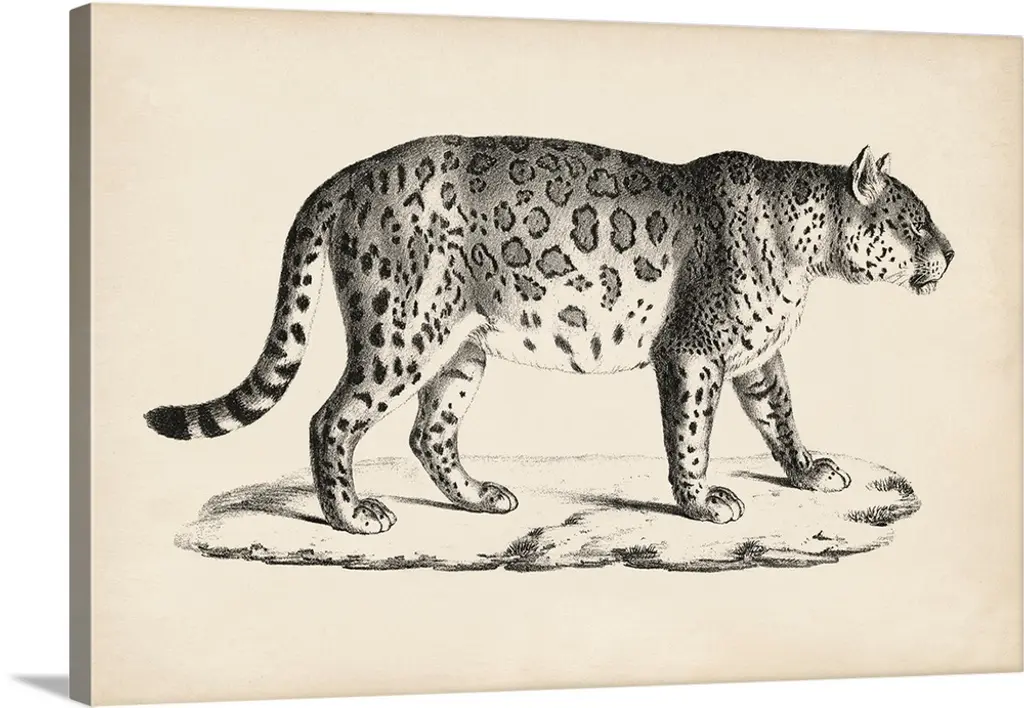
19th-century lithograph of the jaguar, also known as the american tiger this striking 19th-century lithograph presents the jaguar (de jaguar of amerikaansche tijger), one of the most powerful big cats of the americas. Originally published in 'de zoogdieren: afgebeeld en in hunne levenswijze geschetst', this illustration captures the jaguar’s distinctive rosette-patterned coat, muscular build, and intense gaze with remarkable scientific precision. The jaguar (panthera onca) is the largest cat in the americas and the third-largest in the world after the tiger and lion. It inhabits dense rainforests, wetlands, and savannas across south and central america, with the highest population found in the amazon basin. Unlike other big cats, jaguars are known for their exceptional bite strength, capable of piercing through the shells of turtles and caimans. Their solitary and elusive nature makes them one of the most enigmatic predators in the wild. During the 19th century, european naturalists often referred to jaguars as the "american tiger" due to their size and strength. Created by c.c. G. Zool. And printed by la haye & j. L. G. V., this lithograph is an invaluable addition for collectors of antique zoological prints, wildlife art enthusiasts, and those fascinated by early artistic depictions of exotic animals. Keywords: 19th century, lithograph, natural history, zoology, jaguar, american tiger, panthera onca, big cats, wildlife art, scientific illustration, antique print, animal engraving, taxonomy, netherlands, la haye, j.l.g.v. --- condition: the print is in good condition, with minor age-related toning and some light foxing, mainly along the margins.
Similar products