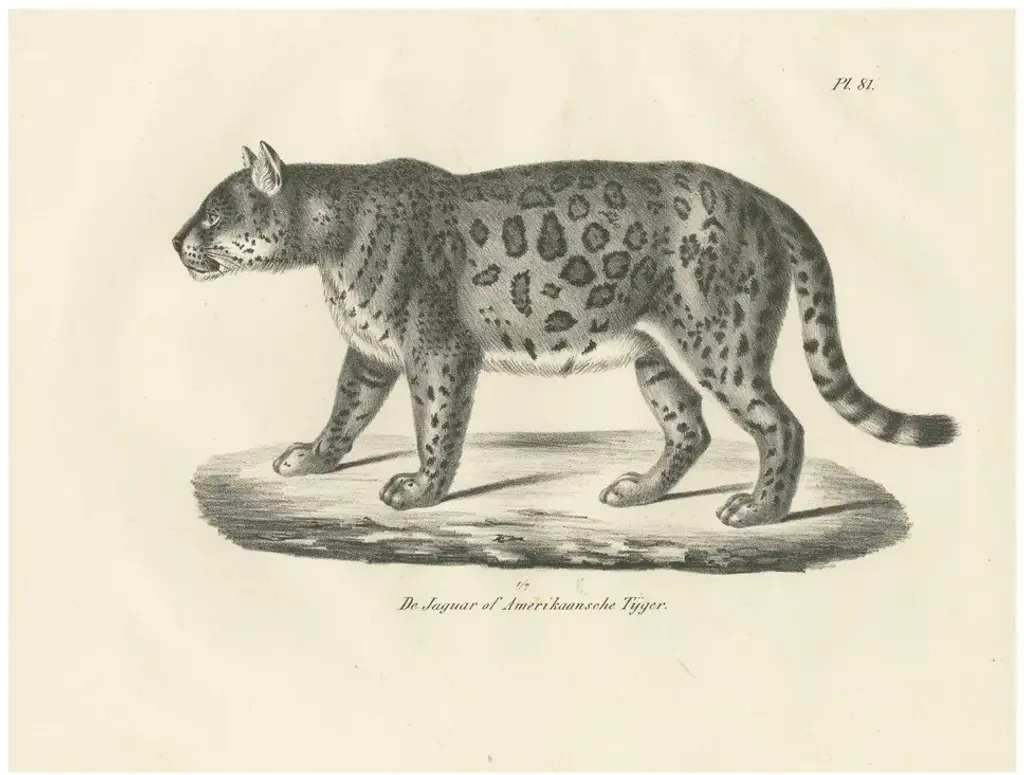
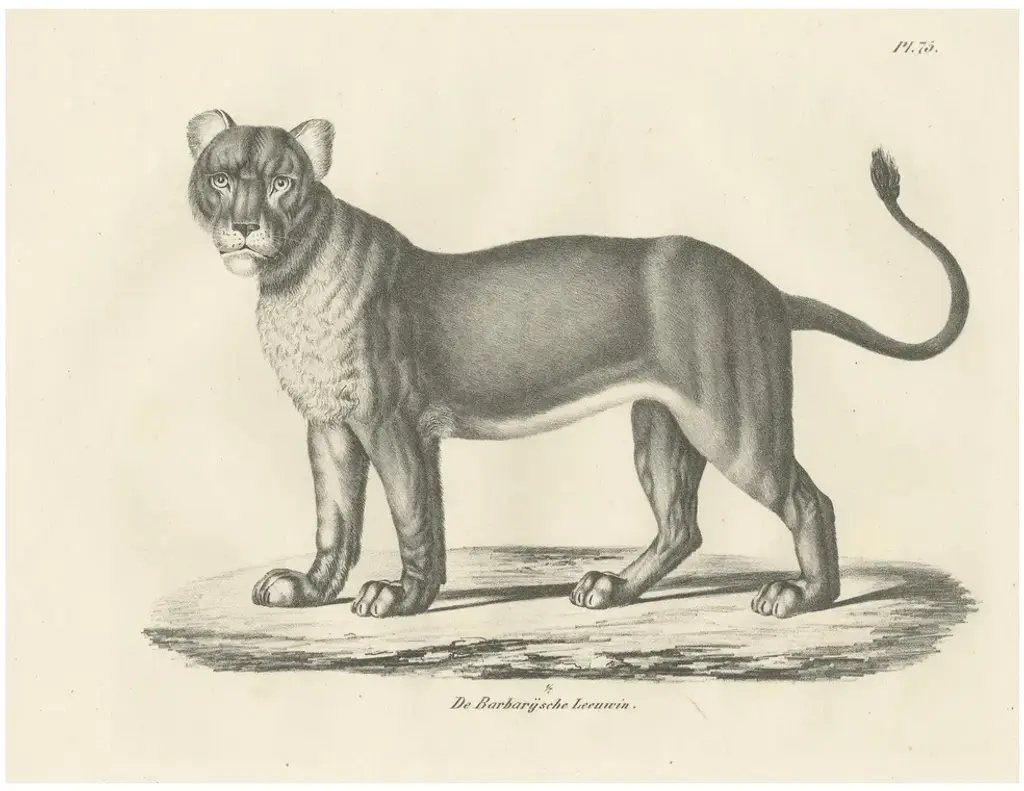
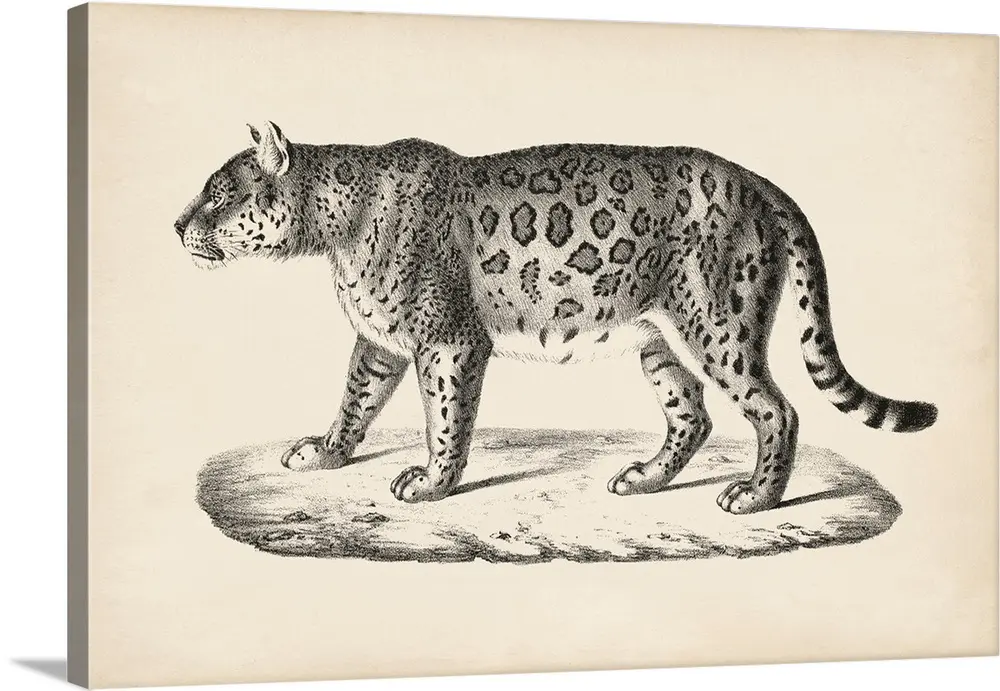
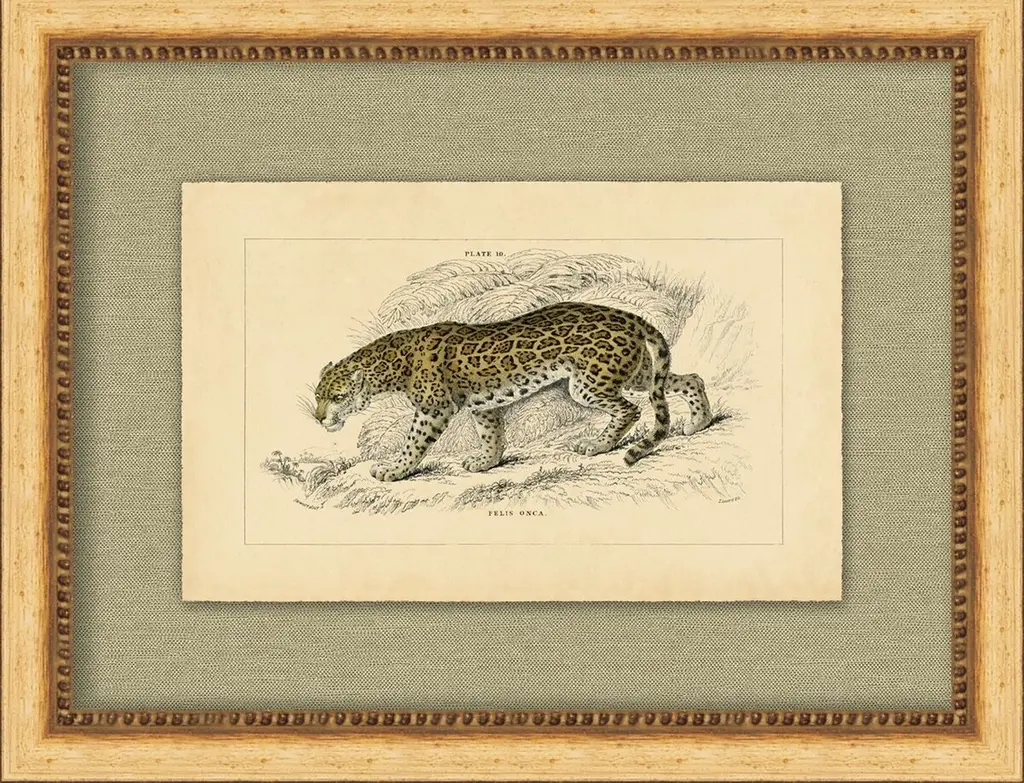
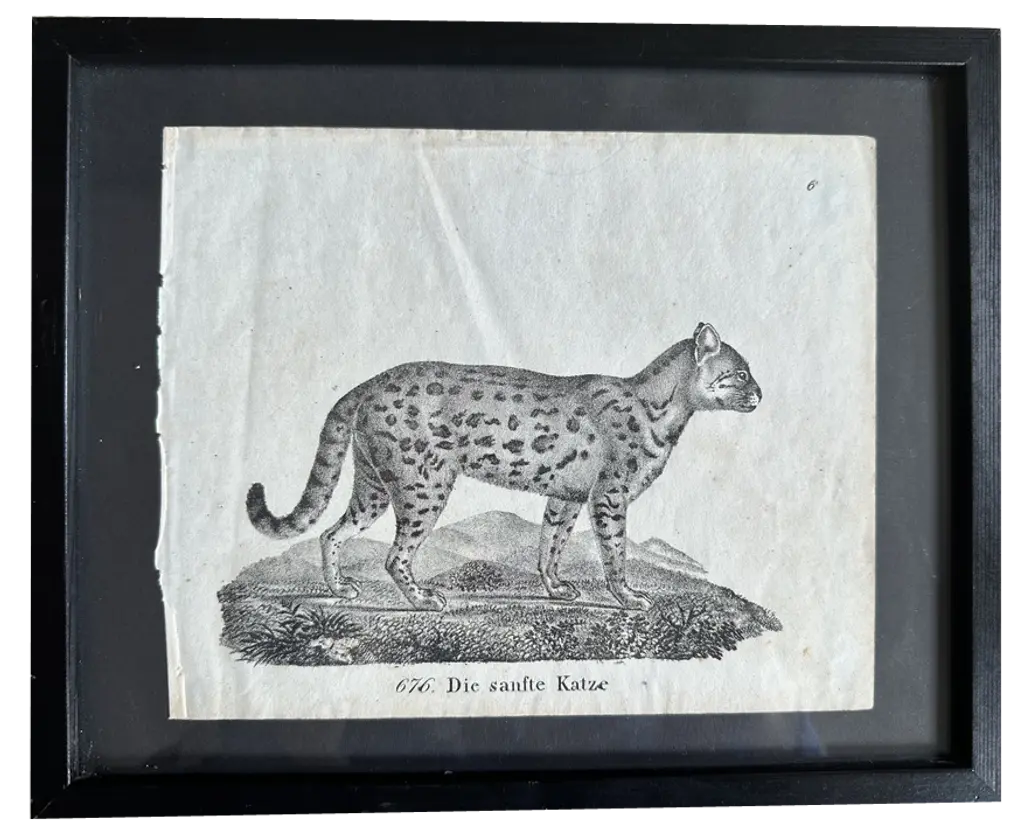
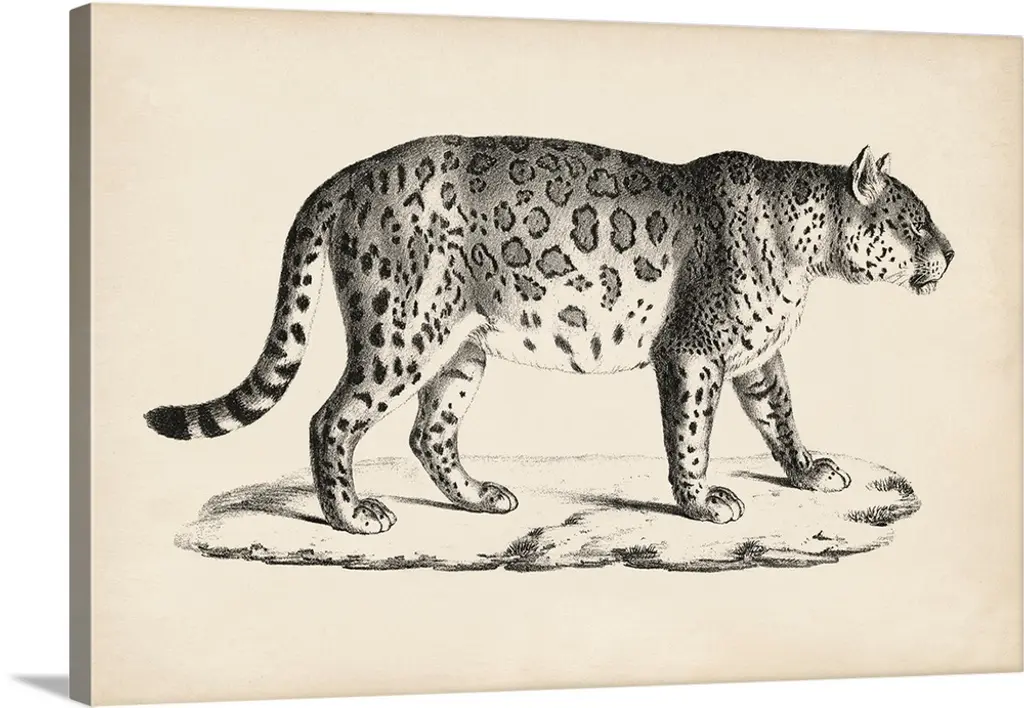
19th-century lithograph of the leopard in a graceful standing pose this finely detailed 19th-century lithograph features the leopard (de luipaard), depicted in a poised and elegant stance. Originally published in 'de zoogdieren: afgebeeld en in hunne levenswijze geschetst', this illustration showcases the leopard’s distinctive spotted coat, muscular frame, and sleek proportions with remarkable artistic and scientific precision. The leopard (panthera pardus) is one of the most adaptable and widespread big cats, found across africa, the middle east, and parts of asia. Known for its agility and strength, the leopard is an expert climber, often hauling prey into trees to avoid scavengers. Unlike lions and tigers, leopards are solitary hunters, using their stealth and speed to ambush prey. Their coat pattern, consisting of rosettes rather than solid spots, helps them blend into dense foliage, making them highly effective predators. In the 19th century, leopards were a subject of fascination for european naturalists, often depicted in scientific works and held in menageries. Created by c.c. G. Zool. And printed by la haye & j. L. G. V., this lithograph is a valuable addition for collectors of antique zoological prints, wildlife enthusiasts, and those interested in early artistic representations of exotic felines. Keywords: 19th century, lithograph, natural history, zoology, leopard, panthera pardus, big cats, wildlife art, scientific illustration, antique print, animal engraving, taxonomy, netherlands, la haye, j.l.g.v. --- condition summary: the print is in good condition, with mild age-related toning and minor foxing along the margins. The lithographic details remain sharp, particularly in the leopard’s intricate fur pattern and fluid posture. The edges show minor irregularities from historical binding, but no major tears or folds are present. The print is well-preserved and remains highly collectible. --- framing tips: for a sophisticated display, use an acid-free mat in a neutral tone such as off-white or beige to enhance the lithograph’s fine details. A dark wooden or black frame will provide a strong contrast, drawing attention to the leopard’s elegant form. Uv-protective glass is recommended to prevent fading over time. If displayed alongside other wildlife lithographs, matching frames will create a refined and cohesive presentation.
Similar products