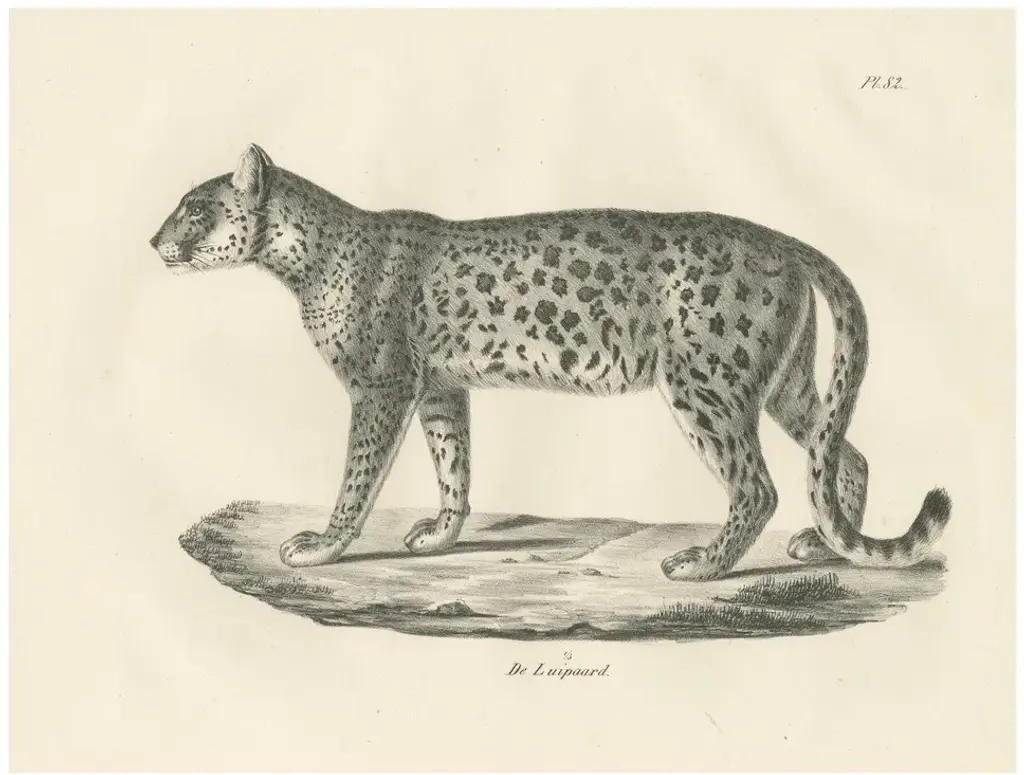
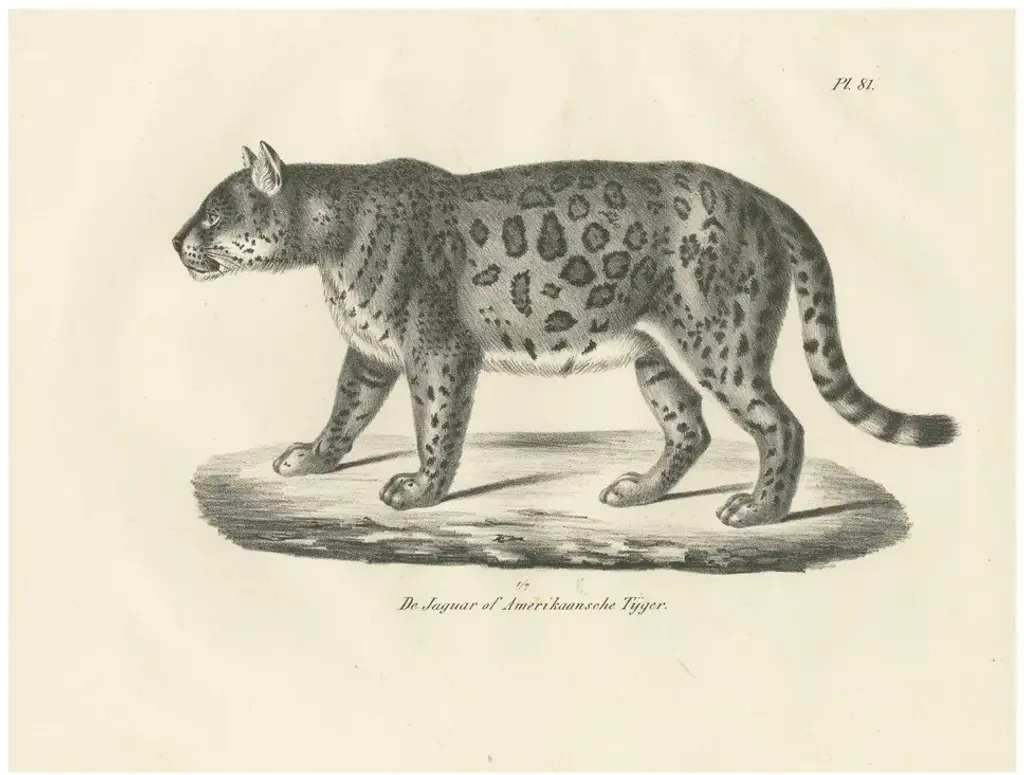
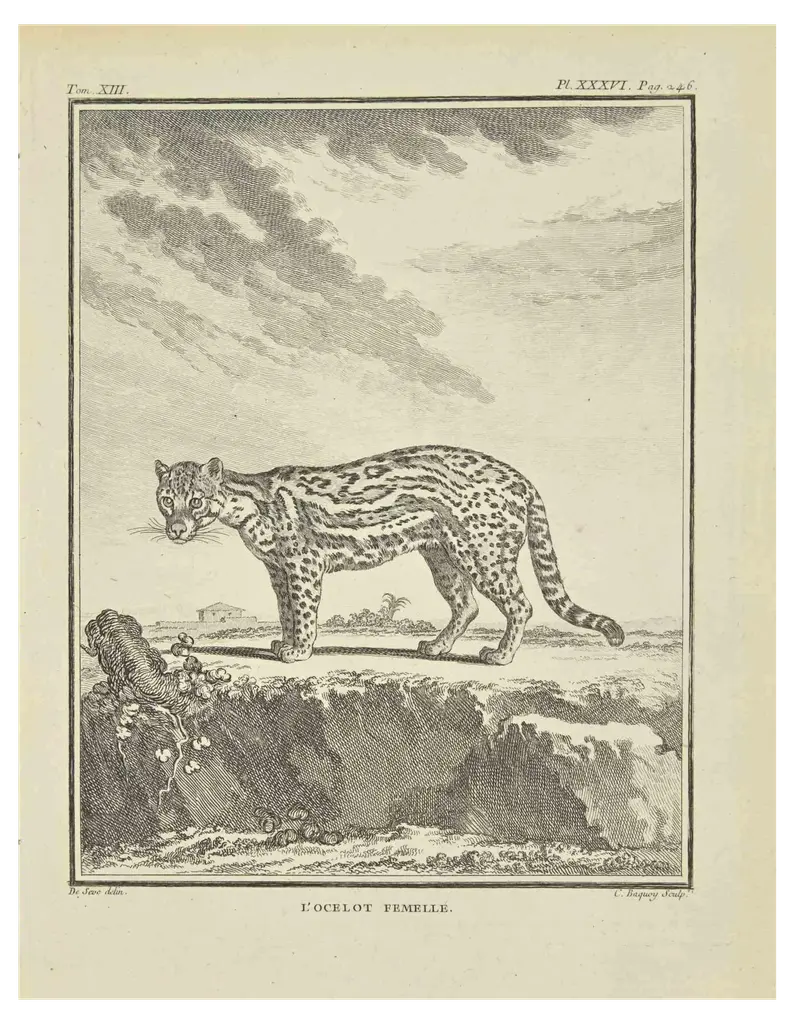
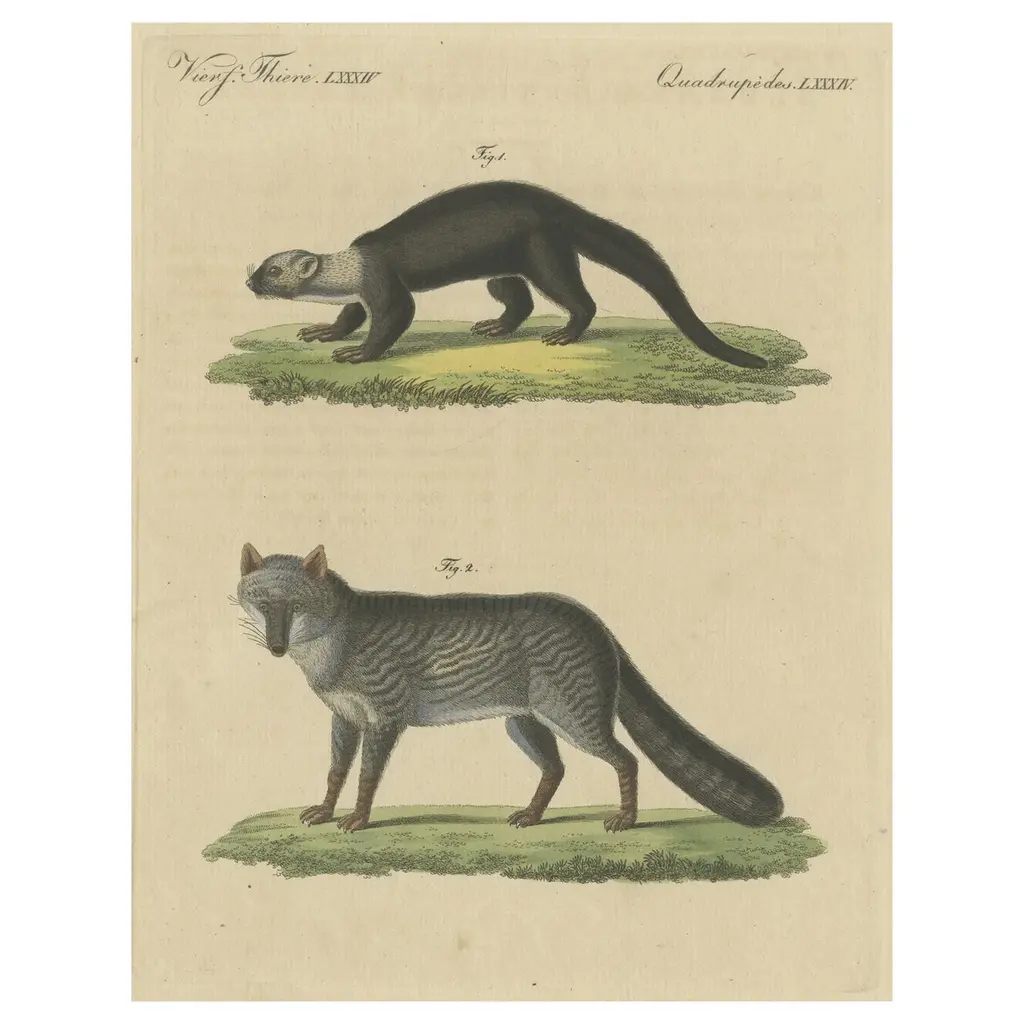
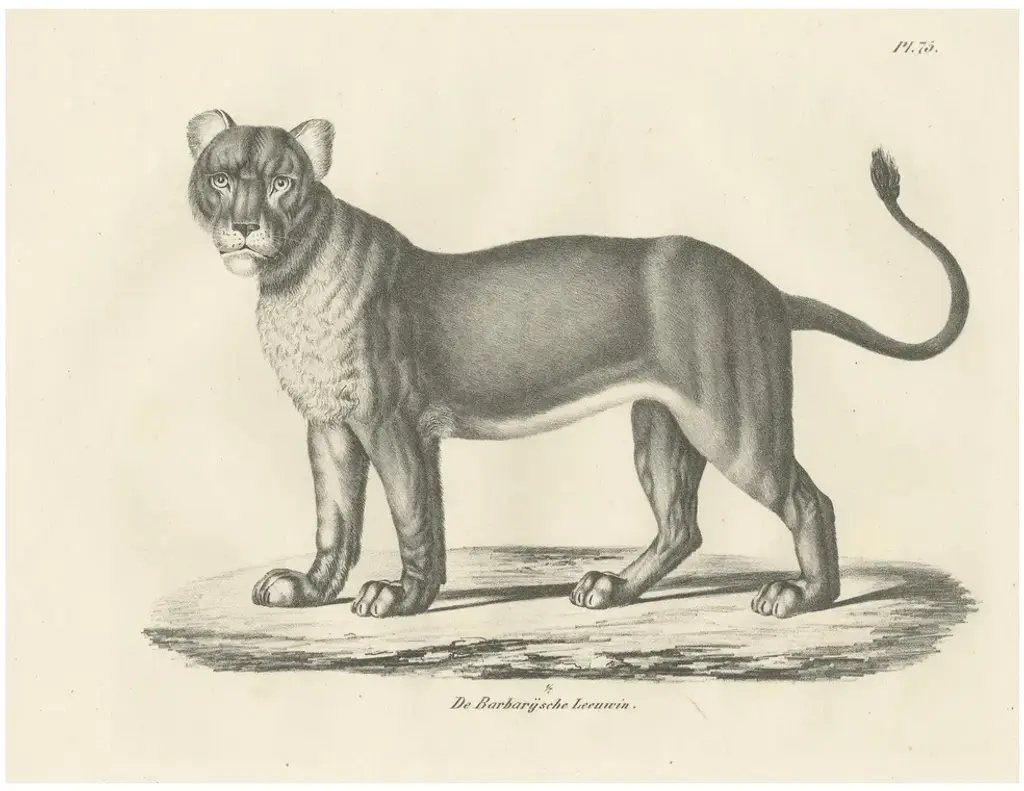
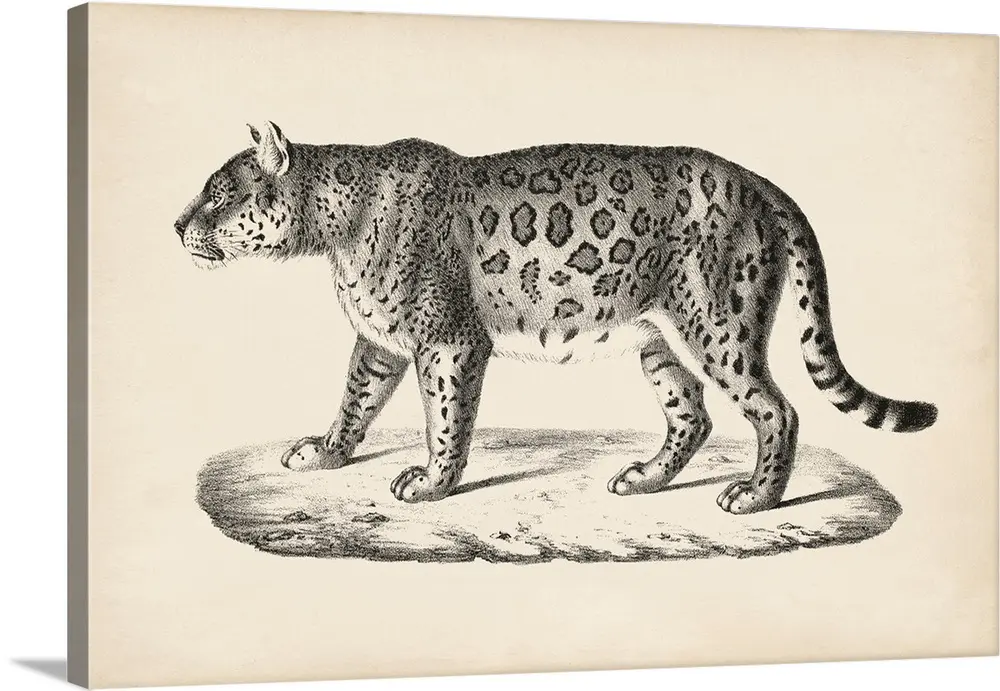
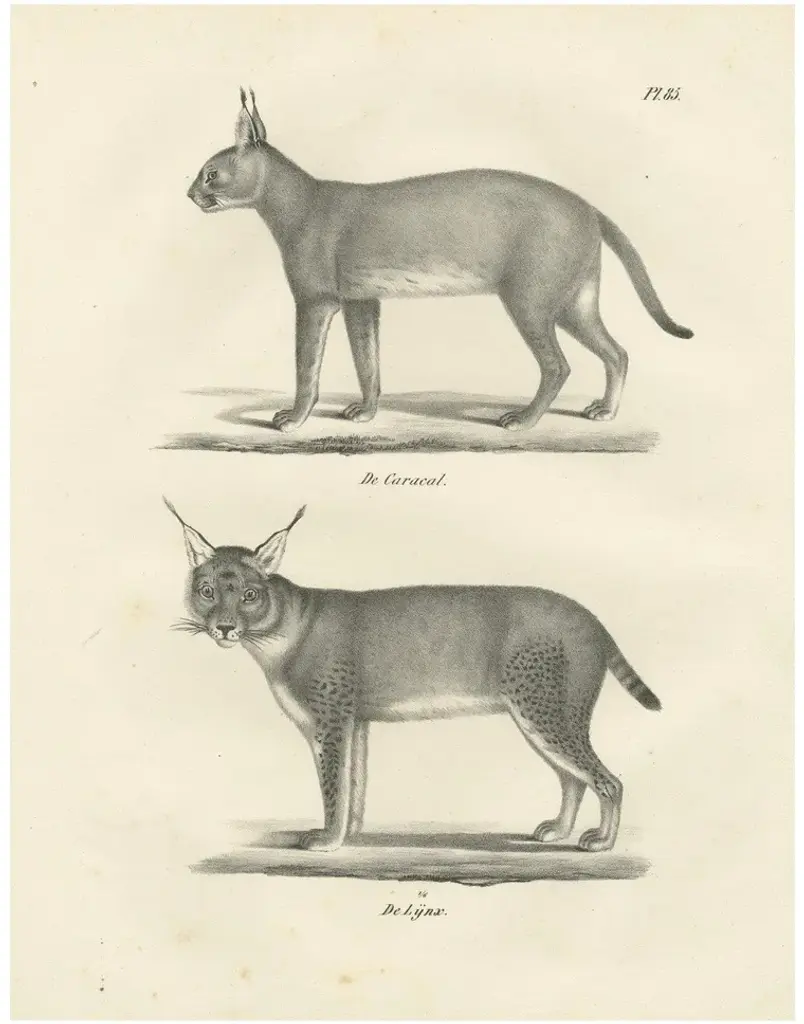
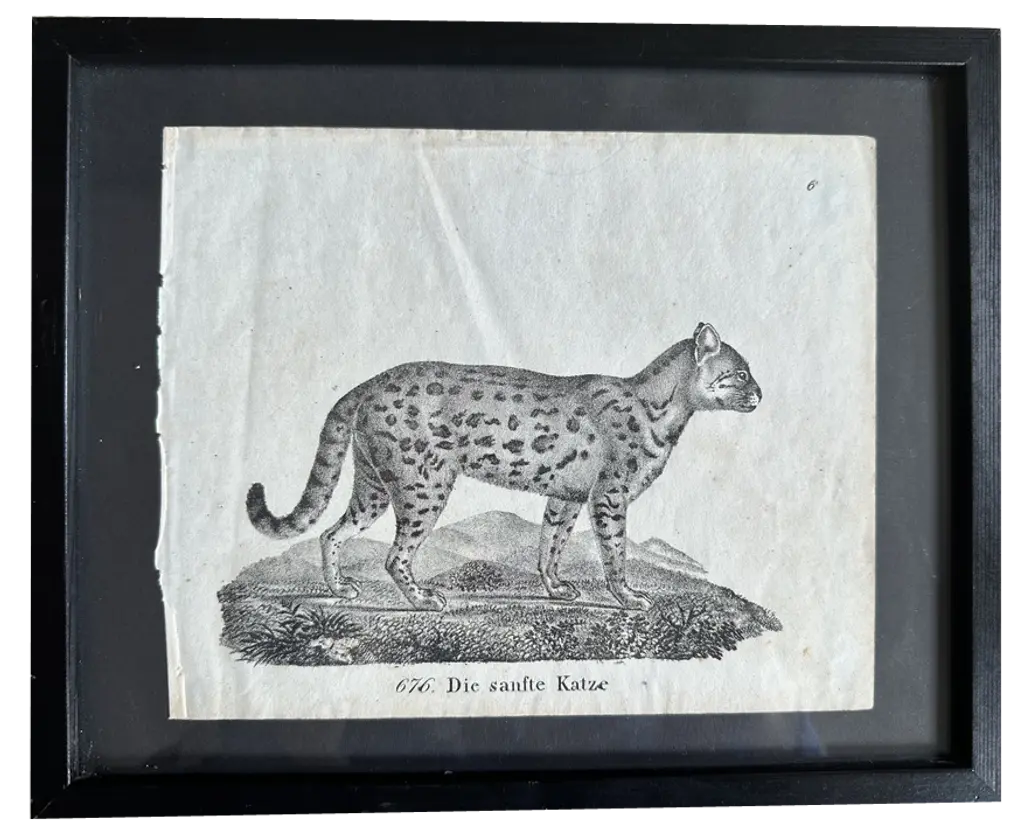
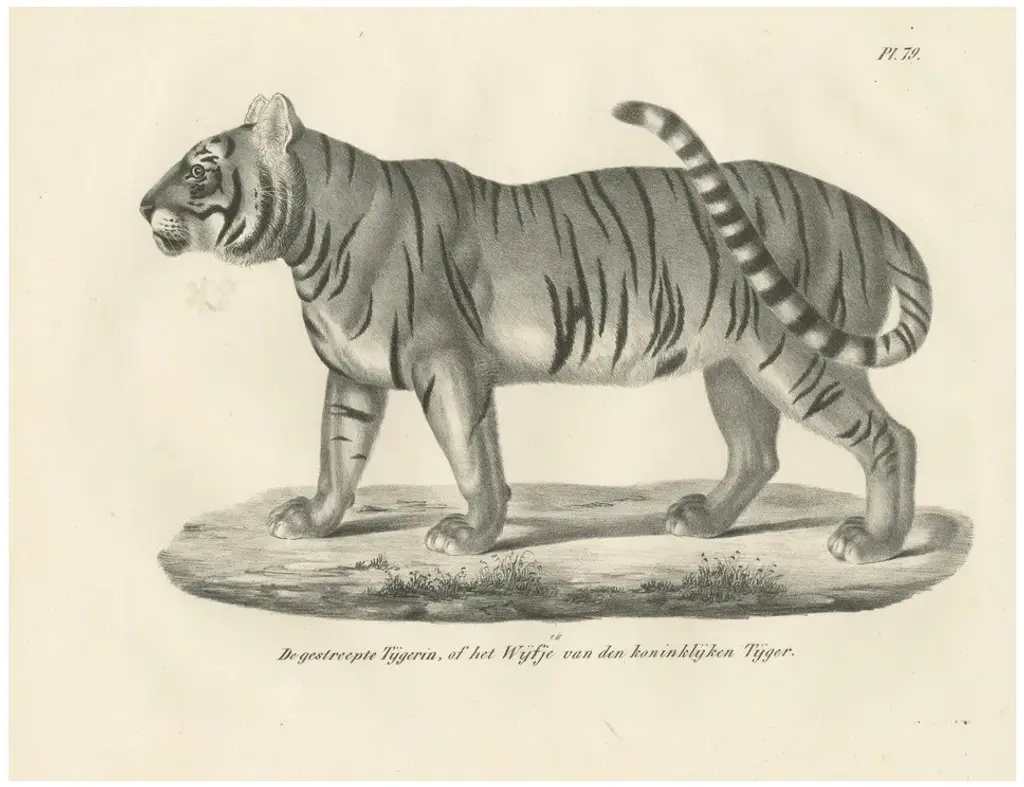
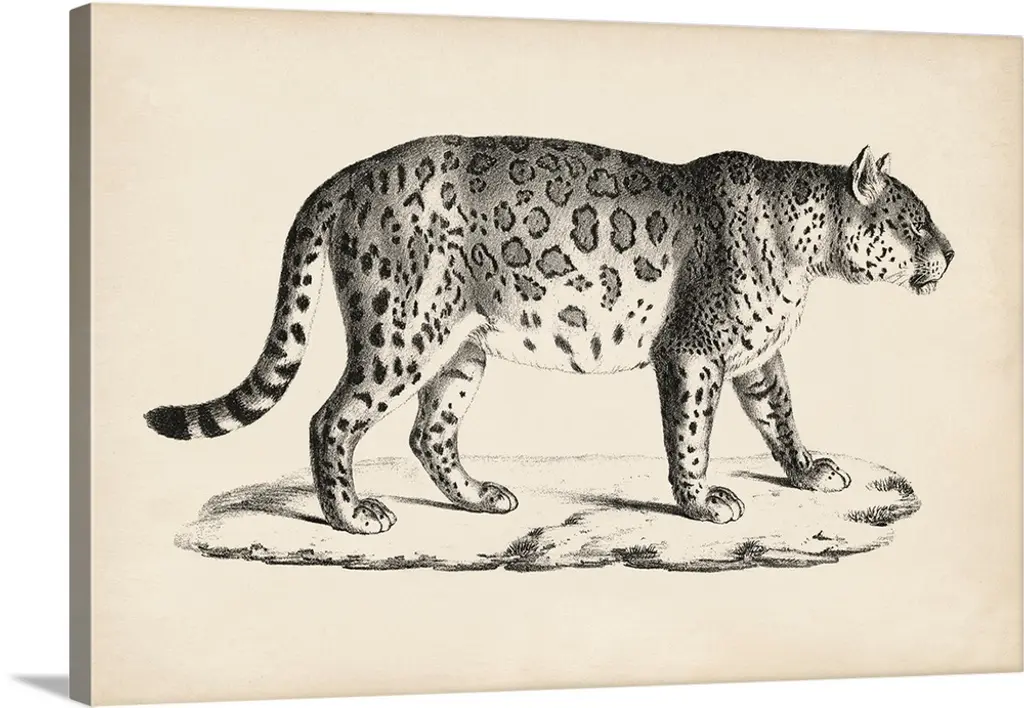
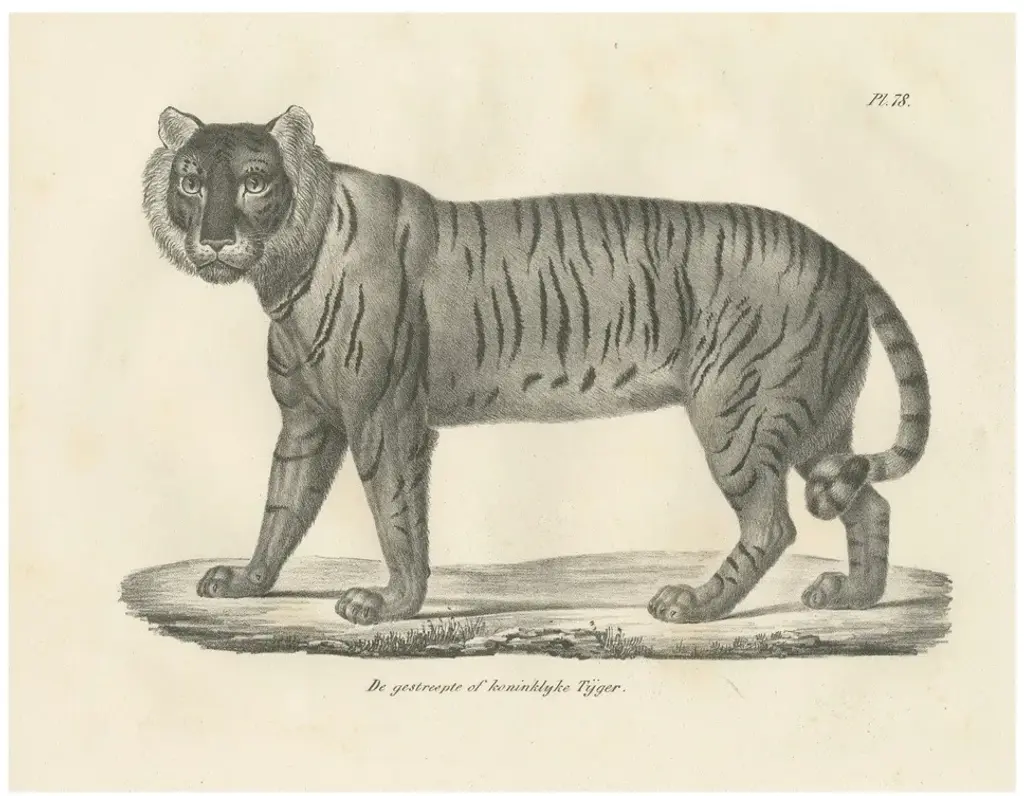
19th-century lithograph of the long-striped tiger and wild asian cat this remarkable 19th-century lithograph showcases two fascinating felines: the long-striped tiger (de langgestreepte tijger) and the wild cat (de wildeche kat). Originally published in *de zoogdieren: afgebeeld en in hunne levenswijze geschetst*, this illustration captures the elegant physiques, intricate fur patterns, and naturalistic postures of these wild cats with great scientific and artistic detail. The long-striped tiger is likely an early representation of a now-disputed or misclassified feline species, possibly influenced by depictions of spotted or clouded leopard subspecies (neofelis nebulosa). The wild cat is reminiscent of the fishing cat (prionailurus viverrinus) or leopard cat (prionailurus bengalensis), both native to asia. These small wild felines are agile hunters, thriving in dense forests, wetlands, and grasslands, preying on birds, rodents, and amphibians. Created by c.c. G. Zool. And printed by la haye & j. L. G. V., this lithograph remains a significant historical piece for collectors of antique zoological prints, natural history enthusiasts, and those interested in early depictions of exotic wild cats. Keywords: 19th century, lithograph, natural history, zoology, tiger, wild cat, fishing cat, leopard cat, clouded leopard, big cats, scientific illustration, antique print, animal engraving, wildlife art, taxonomy, netherlands, la haye, j.l.g.v. --- condition summary: the print is in good condition, with mild age-related toning and some foxing, primarily along the margins. The lithographic details remain sharp, particularly in the fur patterns and natural postures of the felines. The edges show minor irregularities due to past binding, but no major tears or folds are present. The print remains well-preserved and highly collectible. --- framing tips: for a refined display, use an acid-free mat in a neutral shade, such as off-white or beige, to highlight the lithograph’s fine details. A dark wooden or black frame will enhance contrast, drawing attention to the shading. Uv-protective glass is recommended to prevent fading over time. If displayed with other wildlife lithographs, consider using matching frames for a cohesive and elegant presentation.
Similar products