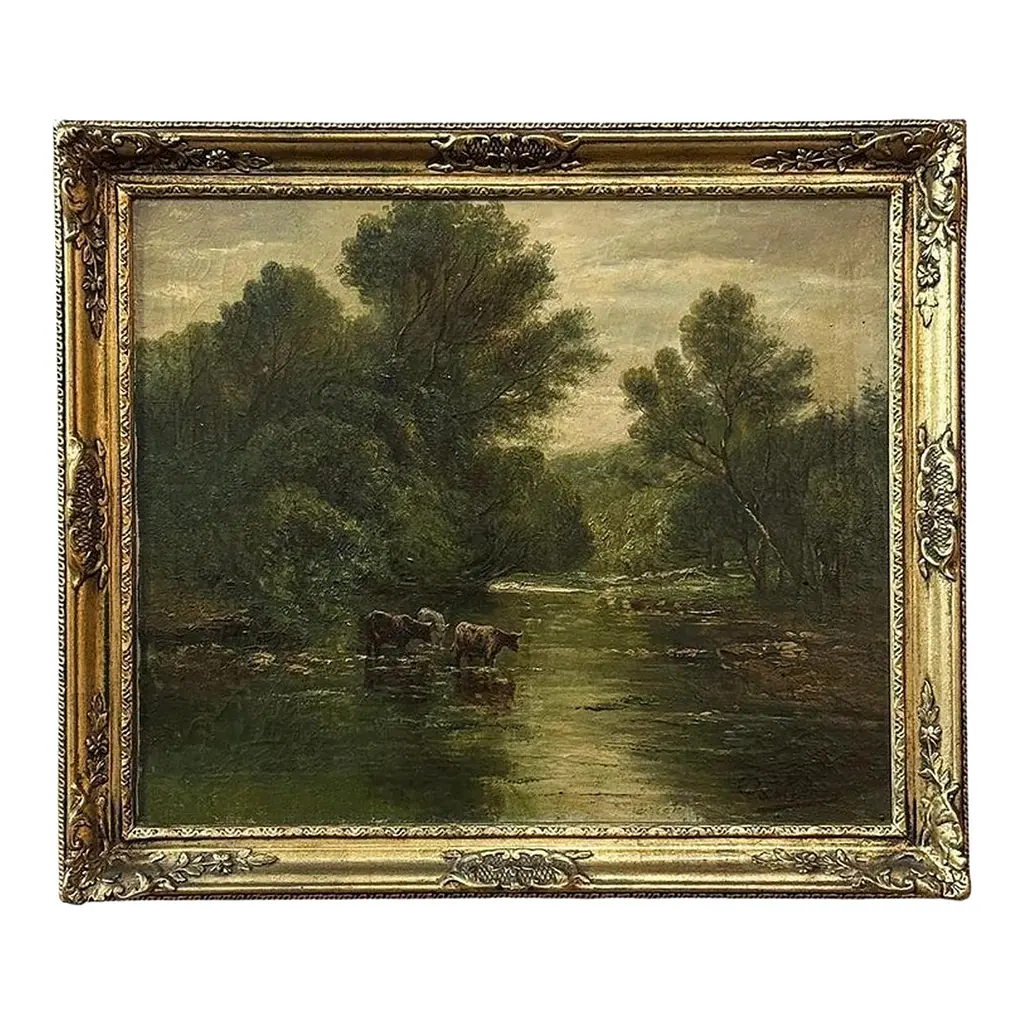
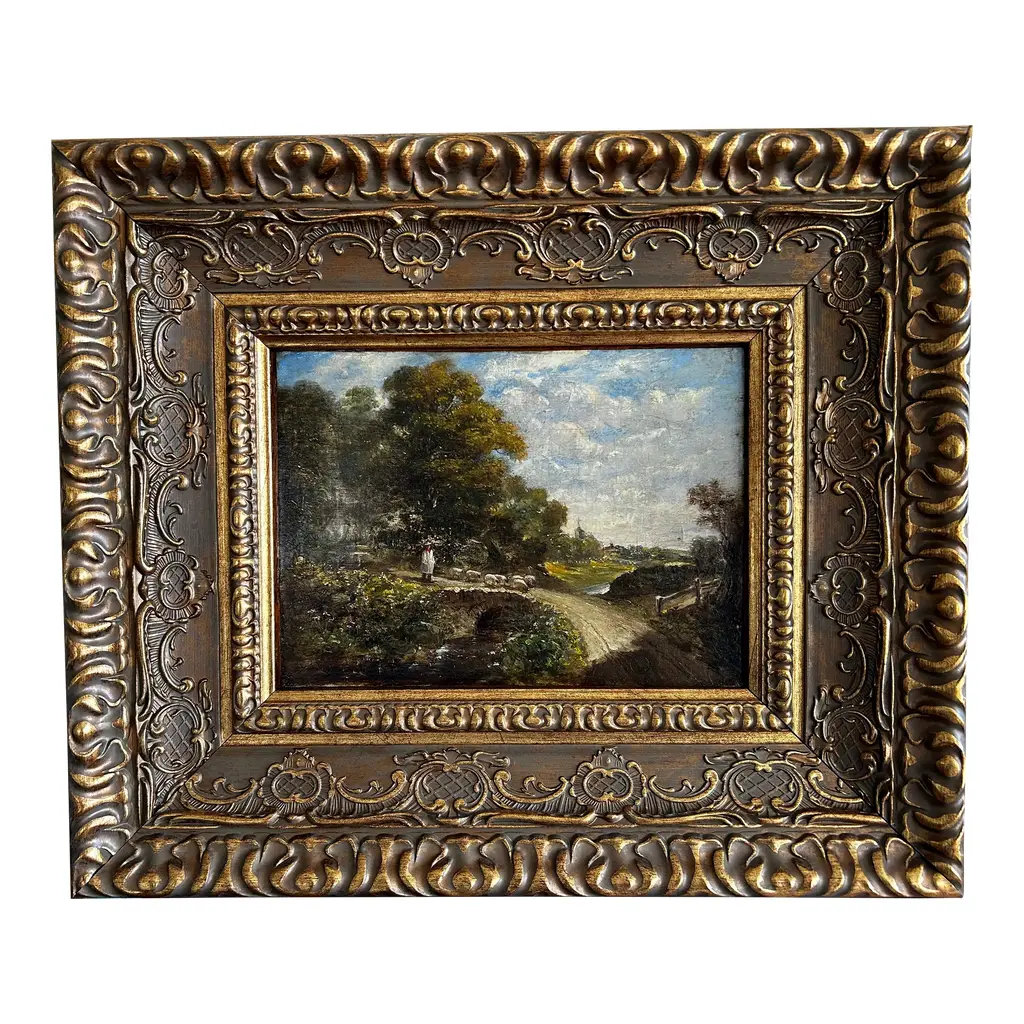
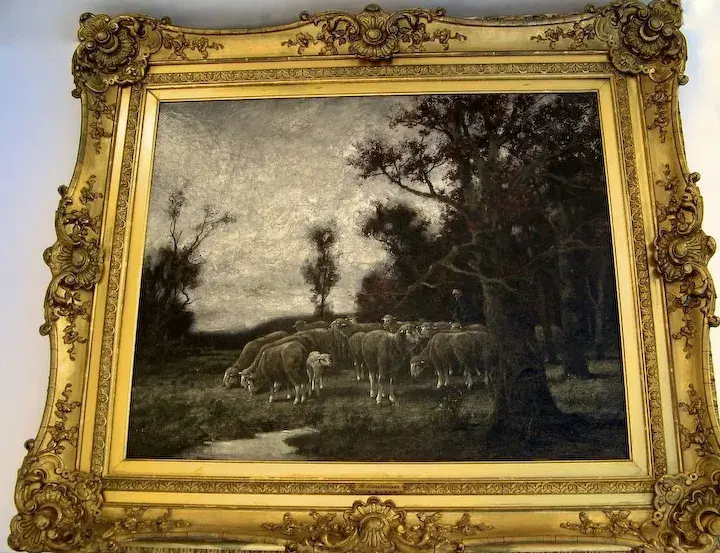
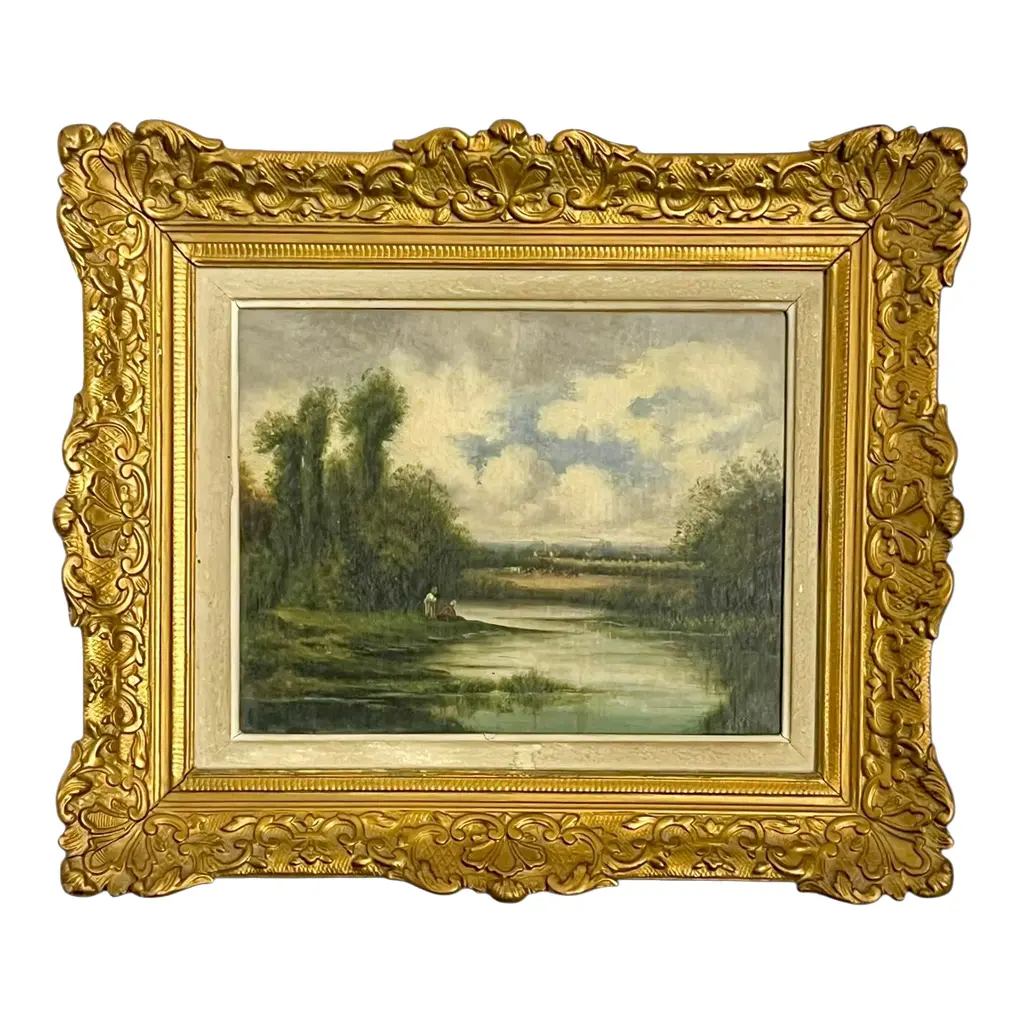
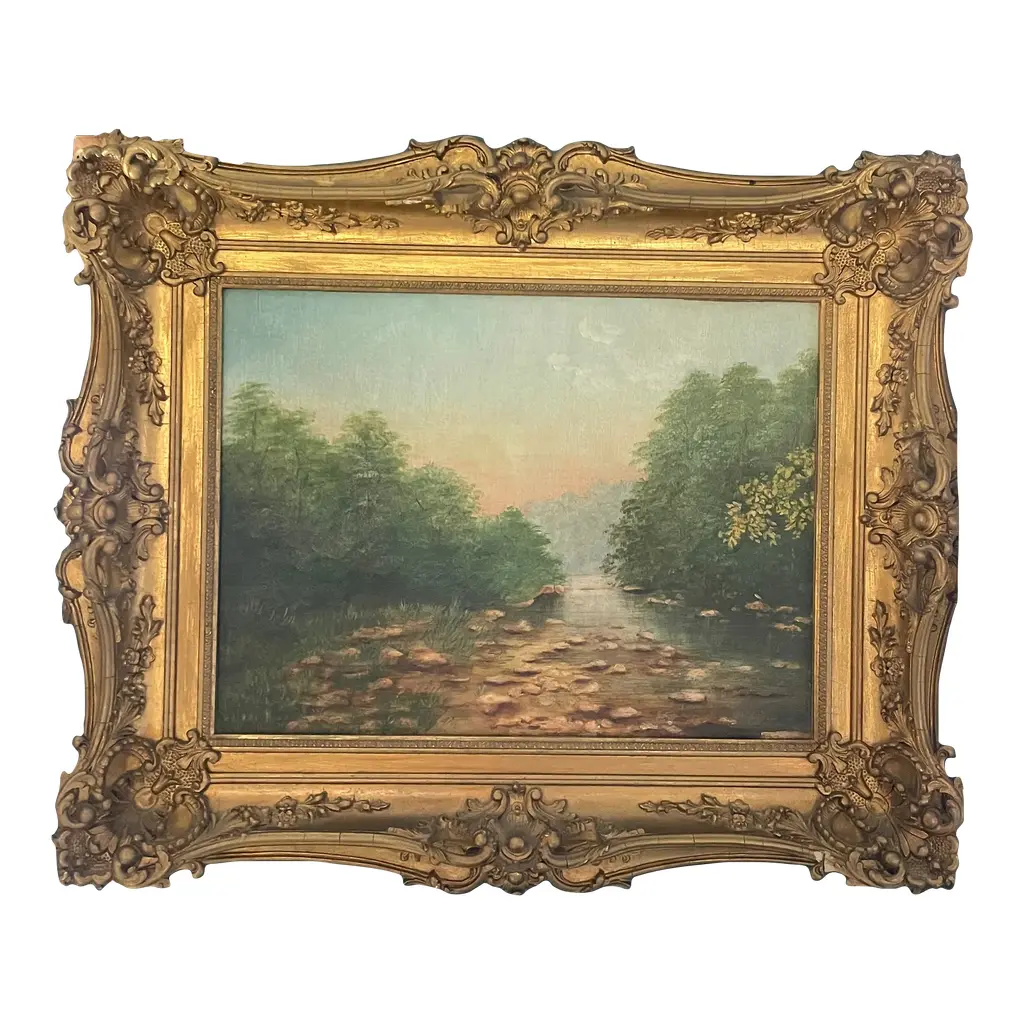
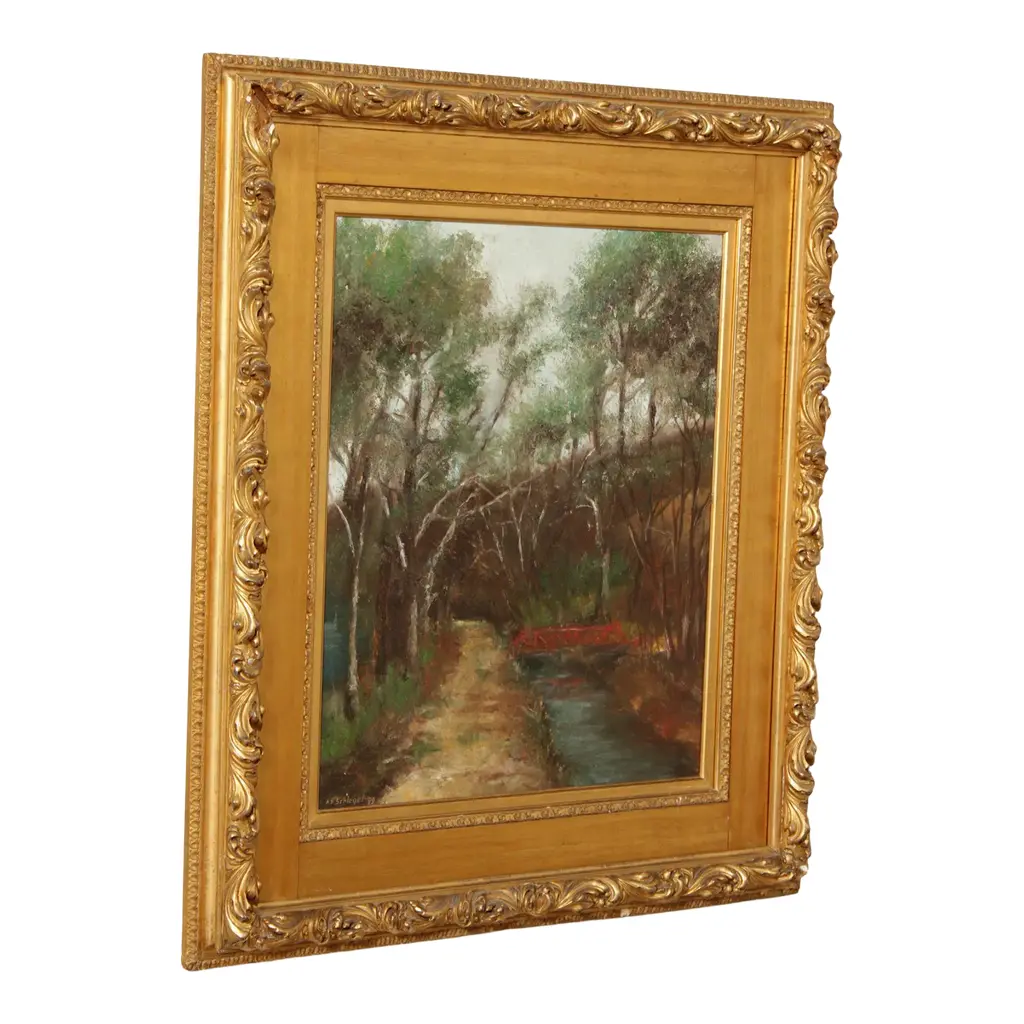
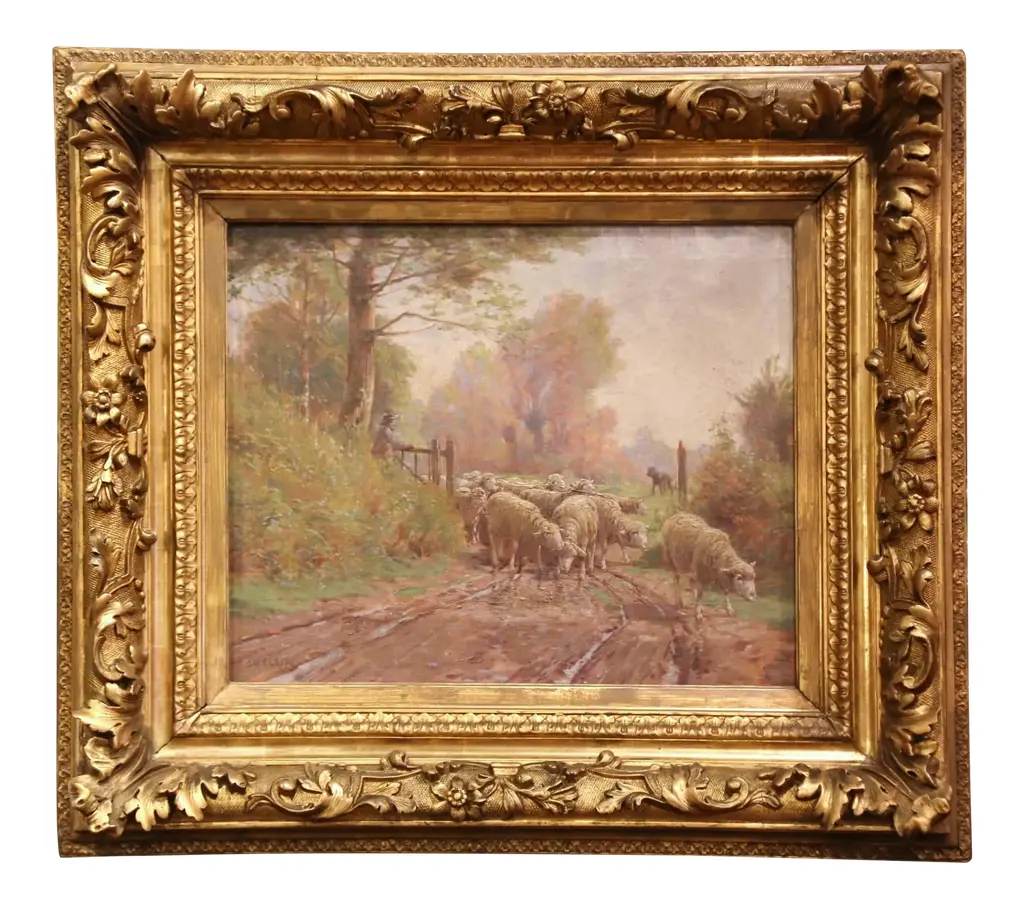
On offer is a pastoral scene in a forested clearing along a stream. A small figure tends to five goats grazing near the water's edge on a sunny day. Given its diminutive size and an attribution to a painter whose works his collectors describe as “masterfully painted,” perhaps this was a wonderfully rendered study. It would have been done on site to capture the enchanting moment when the figure looked directly at the viewer, and in such perfect light, before the animals and their herder dispersed. It’s an artistic goal that’s underappreciated now when in a mere instant we can snap such a moment with our smart phones. The work is attributed to a German-born émigré to the U.S., H.J. Krueger, whose artistic career within this country spanned 1890 to 1910. Not given to self-promotion, little is known about his life compared to his more famous contemporaries. However, because he lived during a time of significant German migration and artistic exchange, details are often reconstructed from the few works that have survived in the art market. While his exact birthplace is not definitively recorded, his surname and artistic style point toward German heritage. Many painters with the surname Krueger (or Krüger) in that era originated from the German Empire and later immigrated to the United States. Further, there is no specific record of which academy the artist might have attended to acquire his skill level. However, his body of work follows the conventions of the Academic and Impressionist traditions of the late 19th century. Krueger’s technique—particularly in his landscapes of Yosemite and pastoral river scenes—shows a strong familiarity with the Munich School or the Düsseldorf School of painting. Lastly, there’s an intriguing handwritten notation verso on the stretcher (photo #6), the source of the work’s date. Another mystery yet to be unraveled. Signature/Maker’s mark: Lower right (photo #04). Unframed dimensions: 6.76”w x 5.75”h.
Similar products