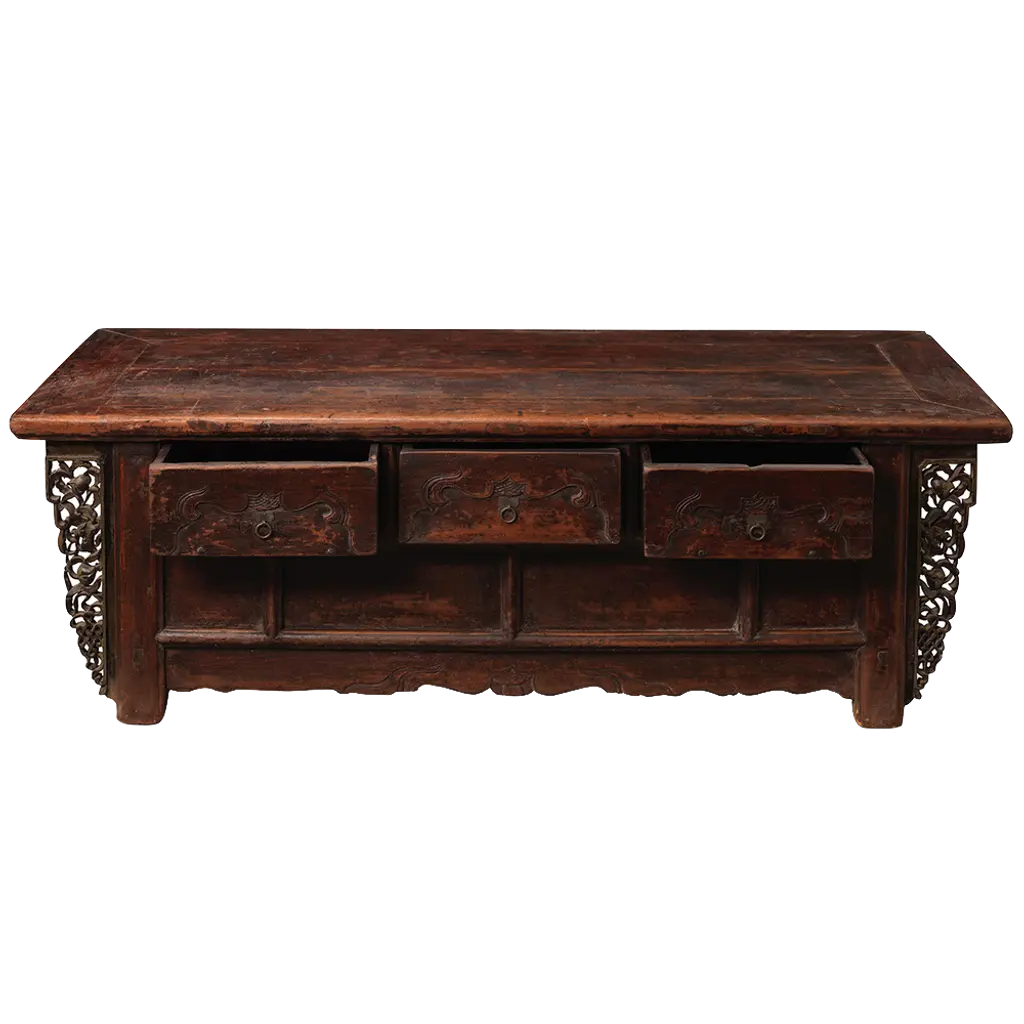
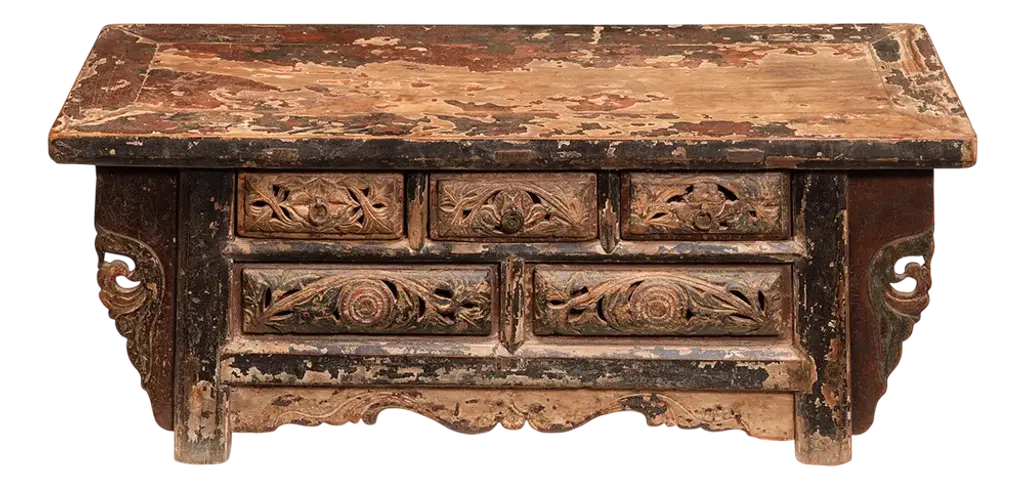
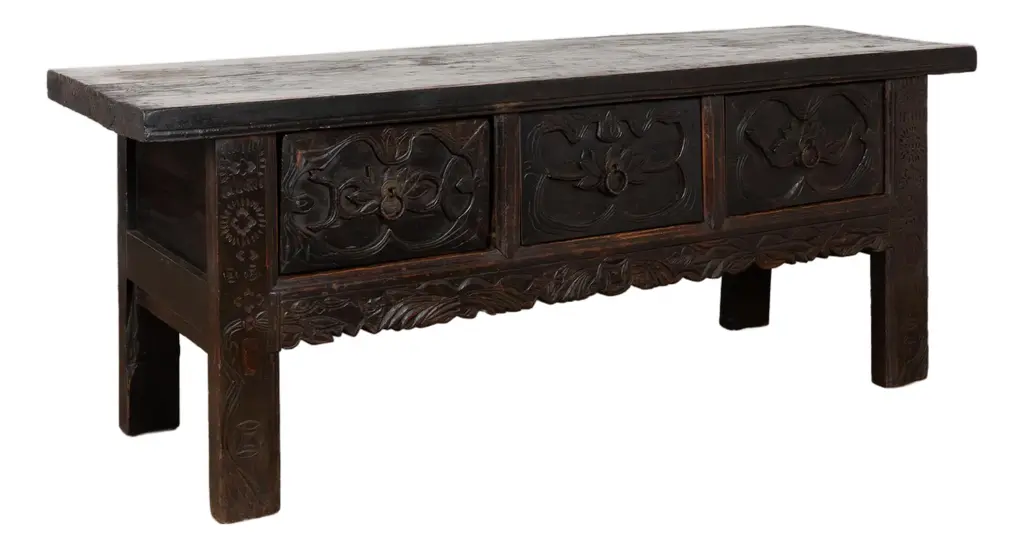
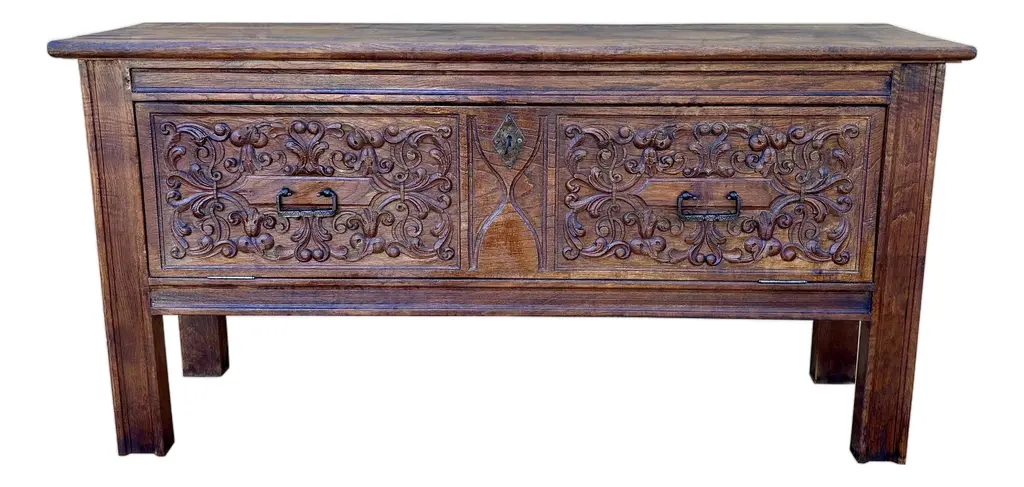
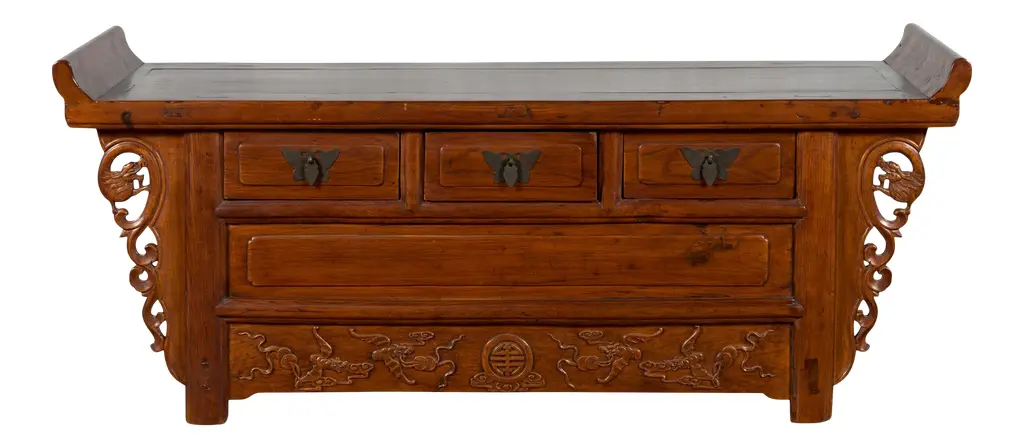
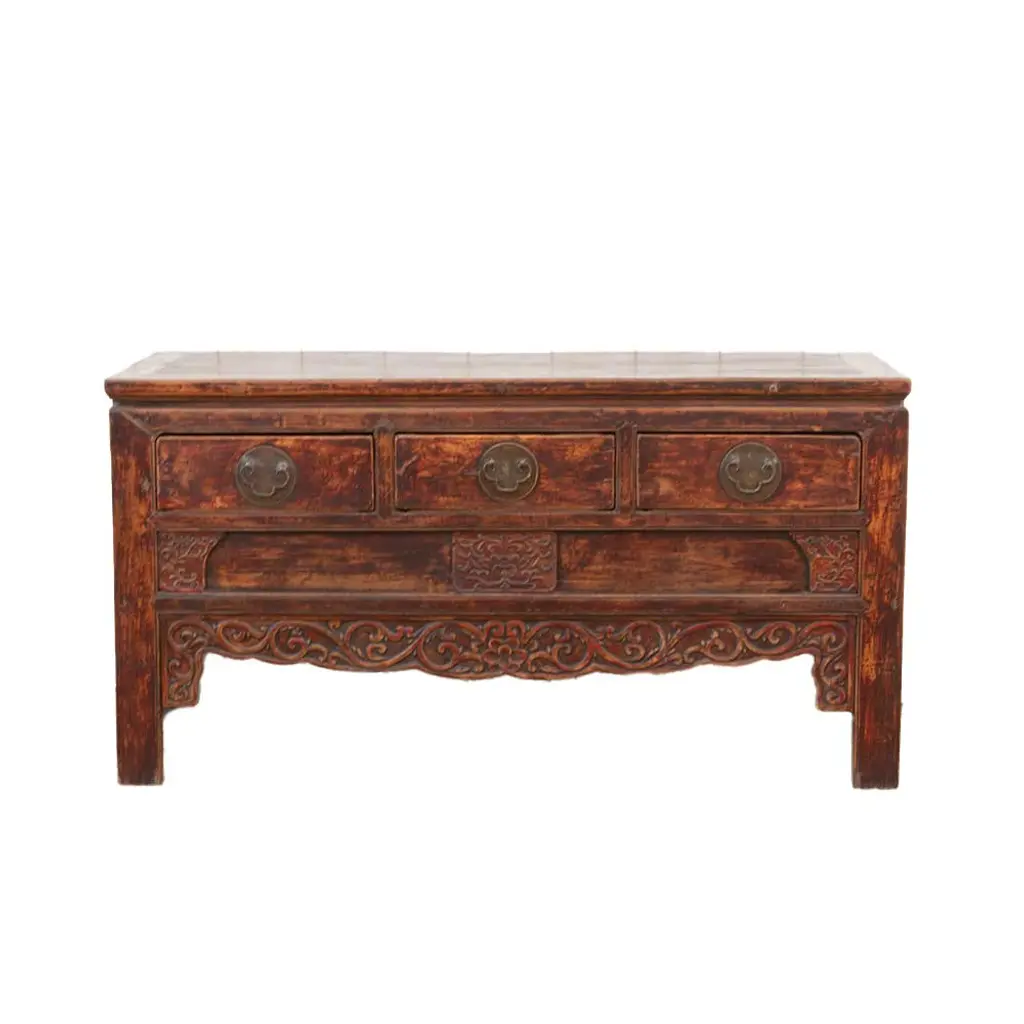
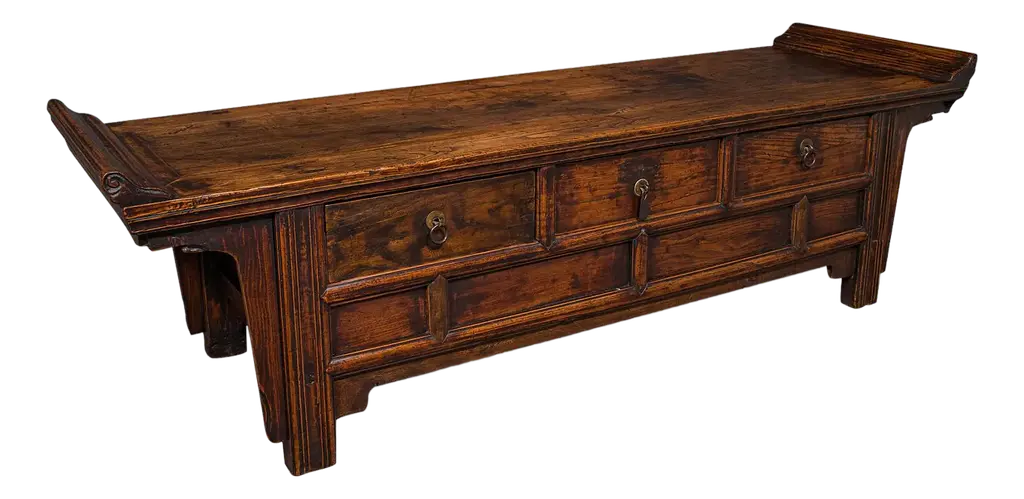
Shanxi Province is located in North Central China and is on the same latitude as the US Mid Western States. Imagine a winter without central heat - that was what people in Shanxi province had to endure until modernization in the mid 20th century. The wealthy people in Shanxi built "Kang" beds - a raised brick platform in a room that is heated by coals or other means fed from an opening on the outside wall. A kang can accomodate a few people who sat on the kang to work, eat and sleep. Small and low furniture had to be used on the kang, for eating and writing and for storage. This ornately carved kang table is one of the pieces in use from the 18th century. The top is a single plank of wood with everted flanges. Do pay attention to the large rectangular joinery that appear at the four corners. This is good evidence to support the good age of the piece. The front of the Kang Cabinet is very attractive and shows off the panel construction that is so prevalent with Shanxi furniture. The three drawers are separated and the drawer fronts have attractive cartouche with pull rings. The apron under is very elaborately curved. The openwork carving on the front is so typical of Shanxi furniture and it has a unique quality and appearance. The wide legs are similar to larger Shanxi cabinets and they are called elephant legs. The original patina has worn off and the little cabinet/table has been re-varnished and restored. This is an unusually beautiful representation of Shanxi furniture. The style is unique to Shanxi and Honan, and not found elsewhere in China. It is my personal opinion that Shanxi has a unique history that this area has been occupied by non Han people, beginning at the end of the 4th century by the Toba who originated in Manchuria, and again by the Khitans between the 12 to 13th century. Then came the Mongols and the Manchus. They brought with them their own culture and the furniture style reflected their mannerism that exuded strong, bold looks with a bit of floral elements. In a contemporary home, it can be used as a stand to give more height to a piece of sculpture or a vase. It can be used under a window for plants, or as a stand alone piece.
Similar products