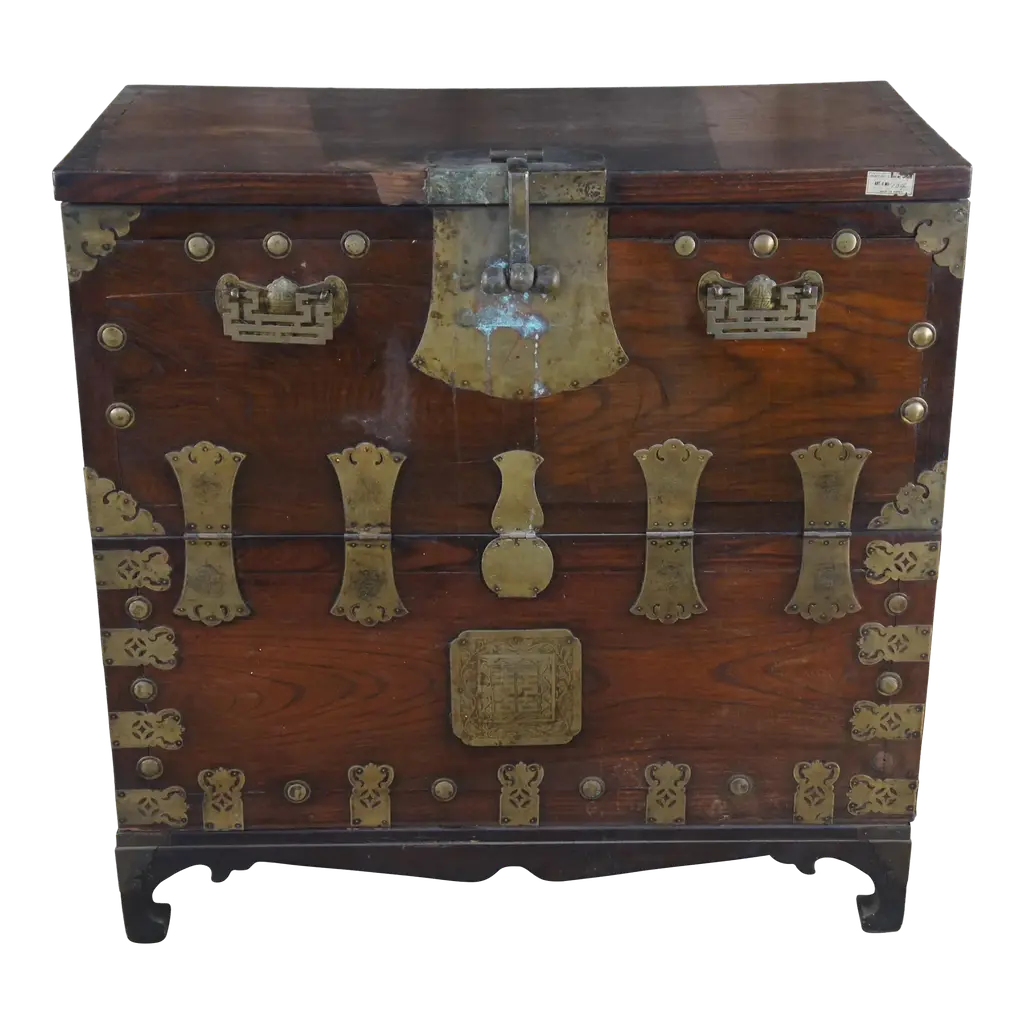
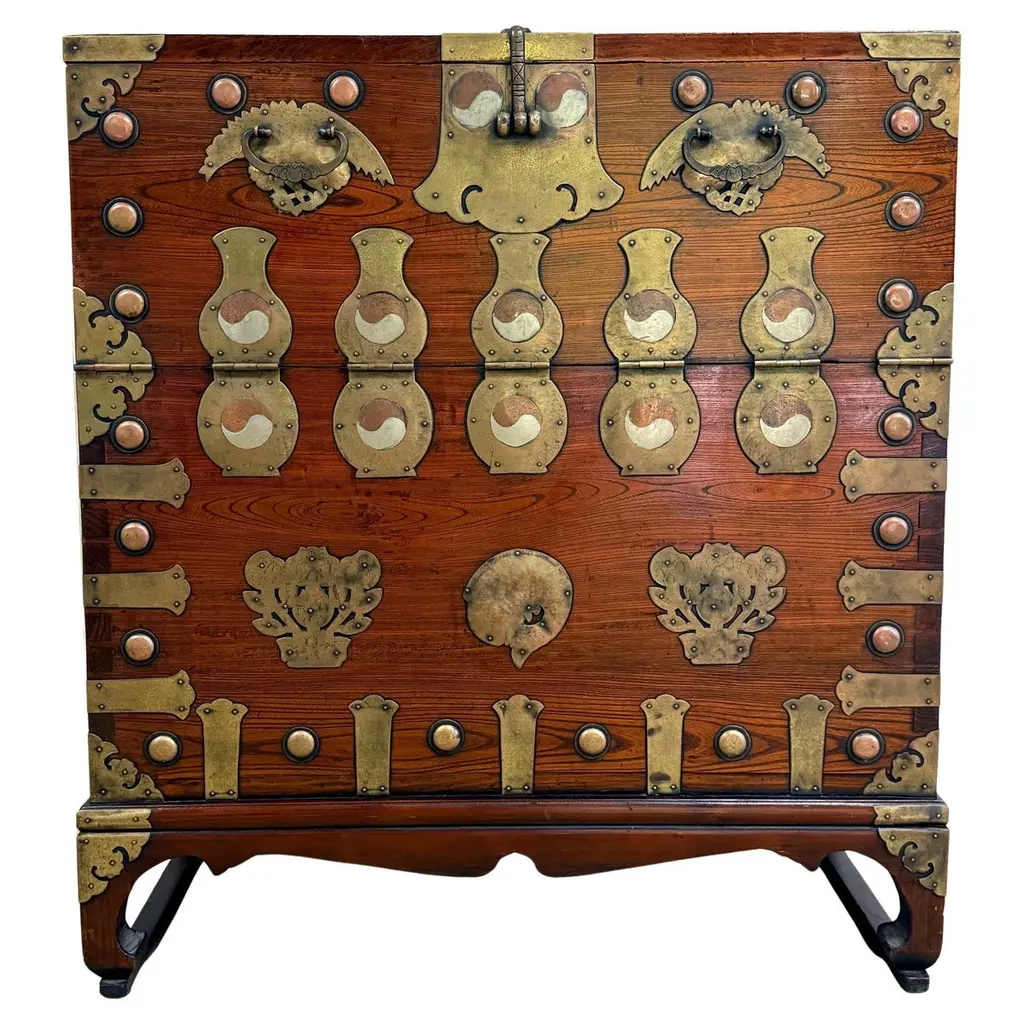
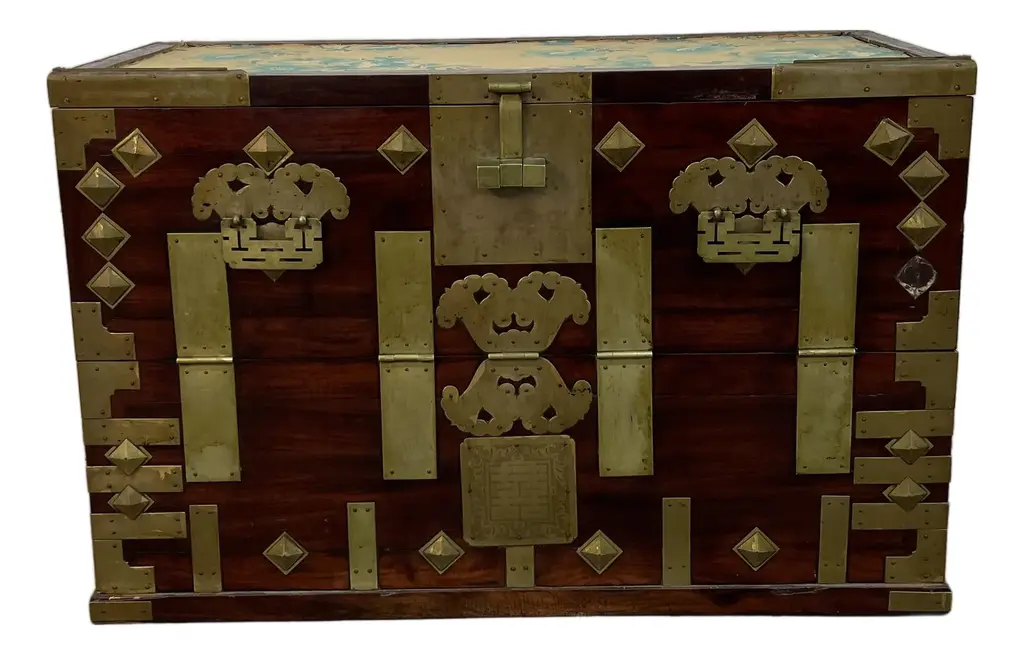
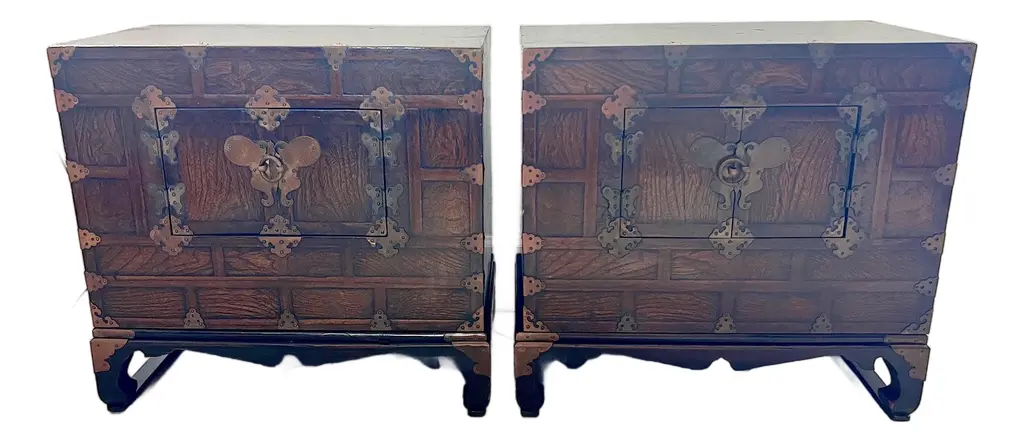
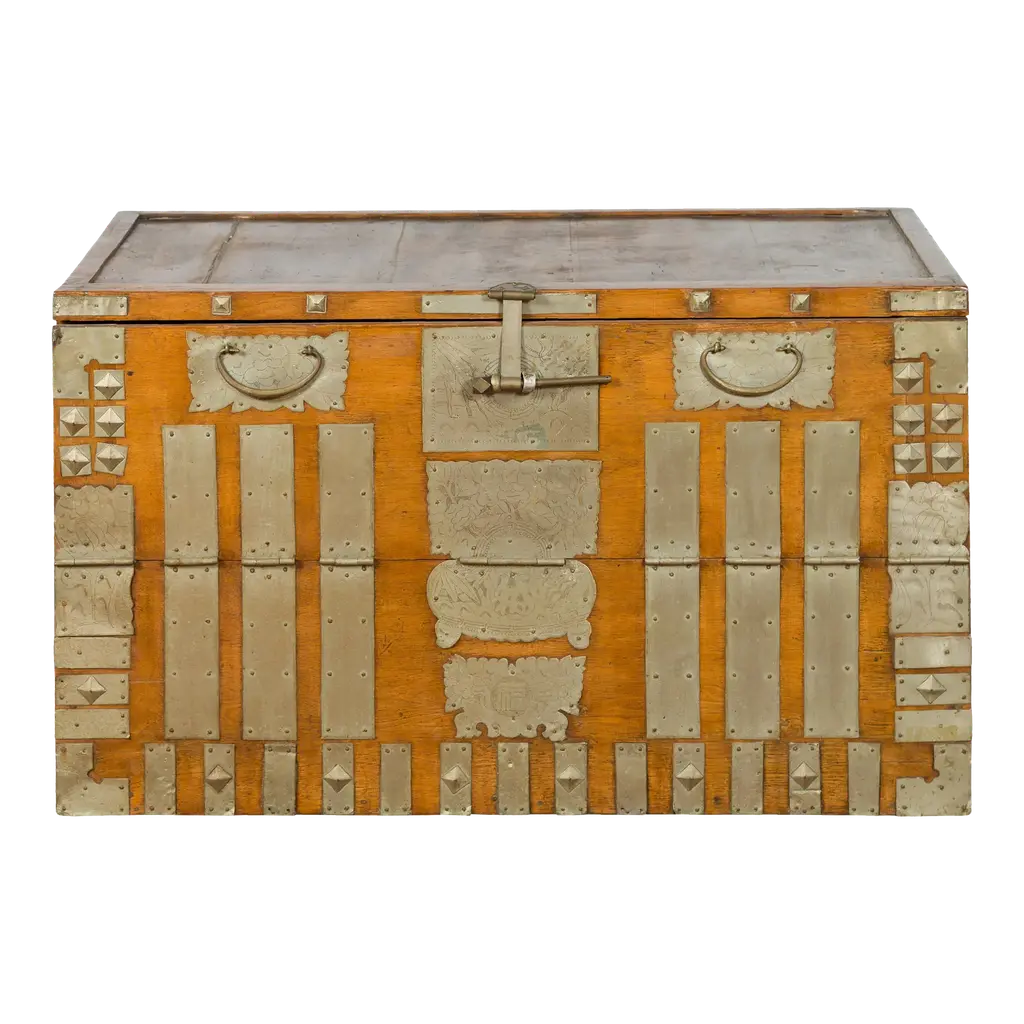
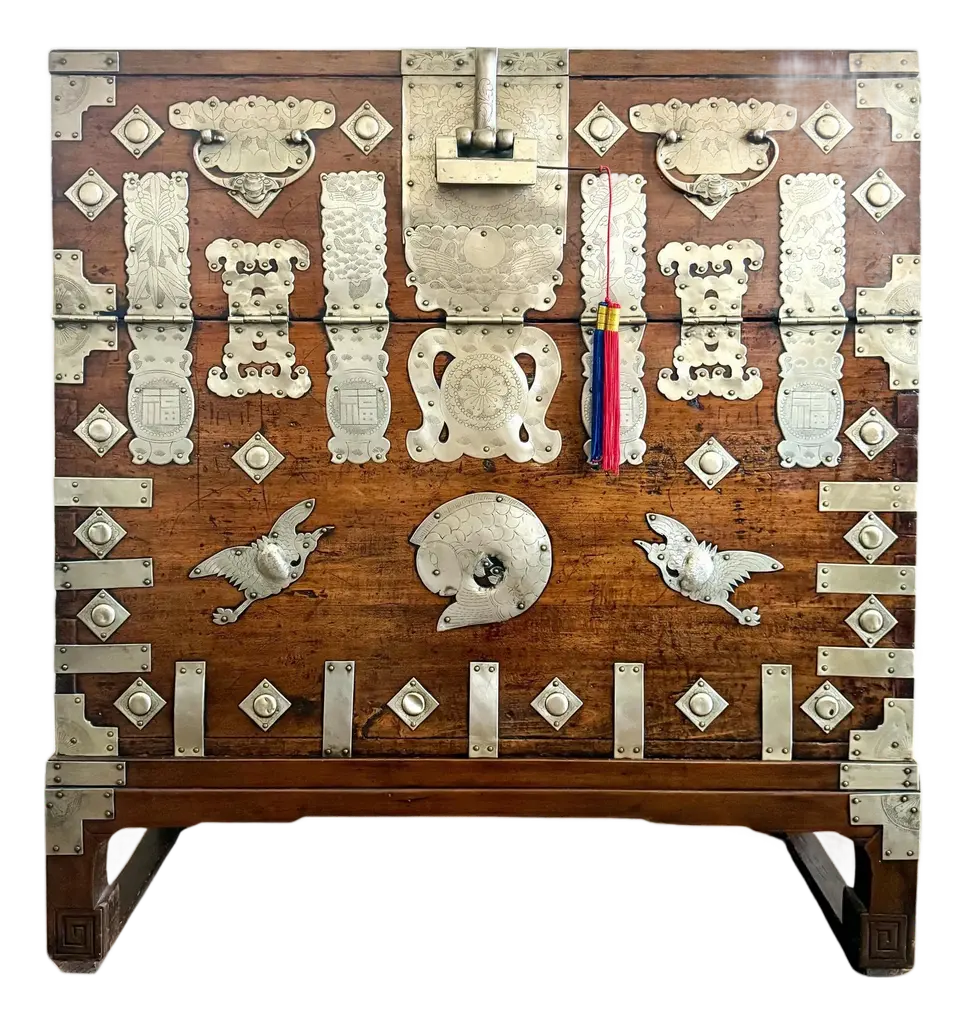
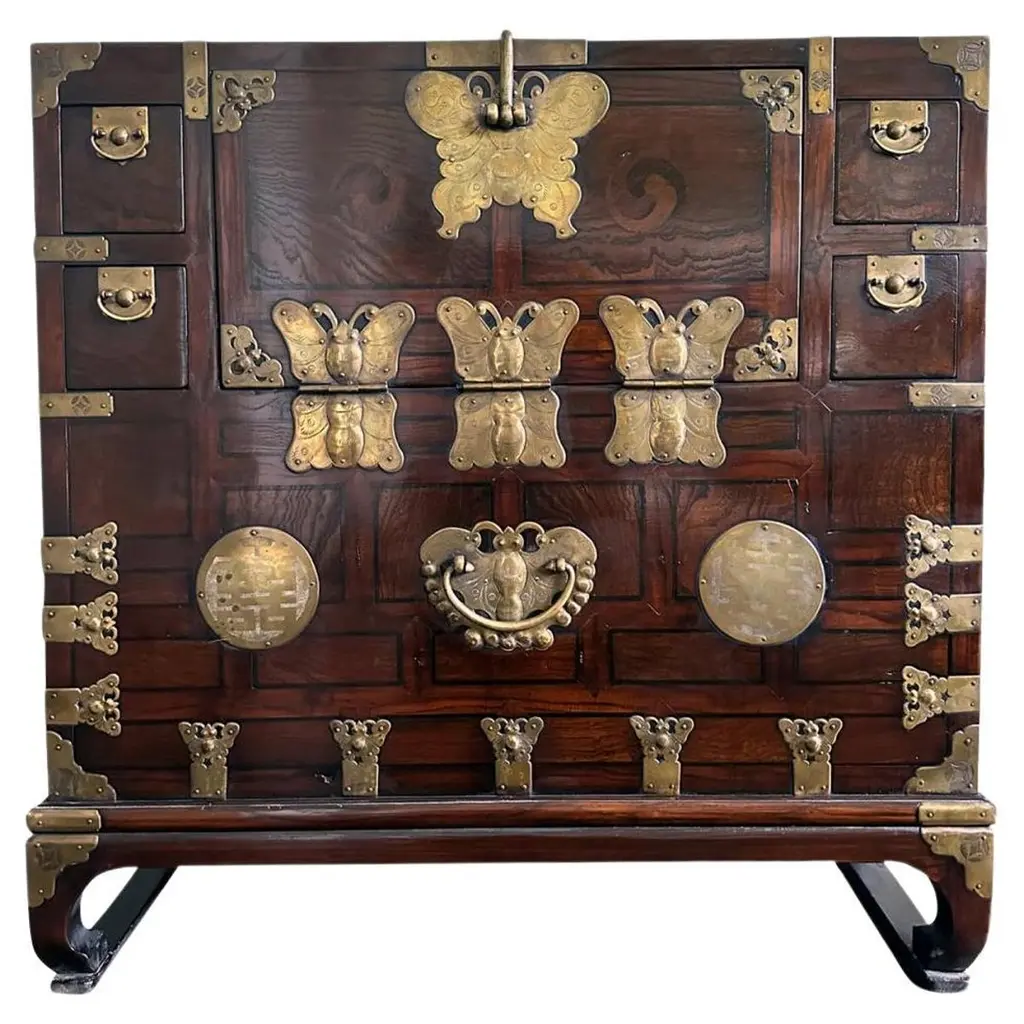
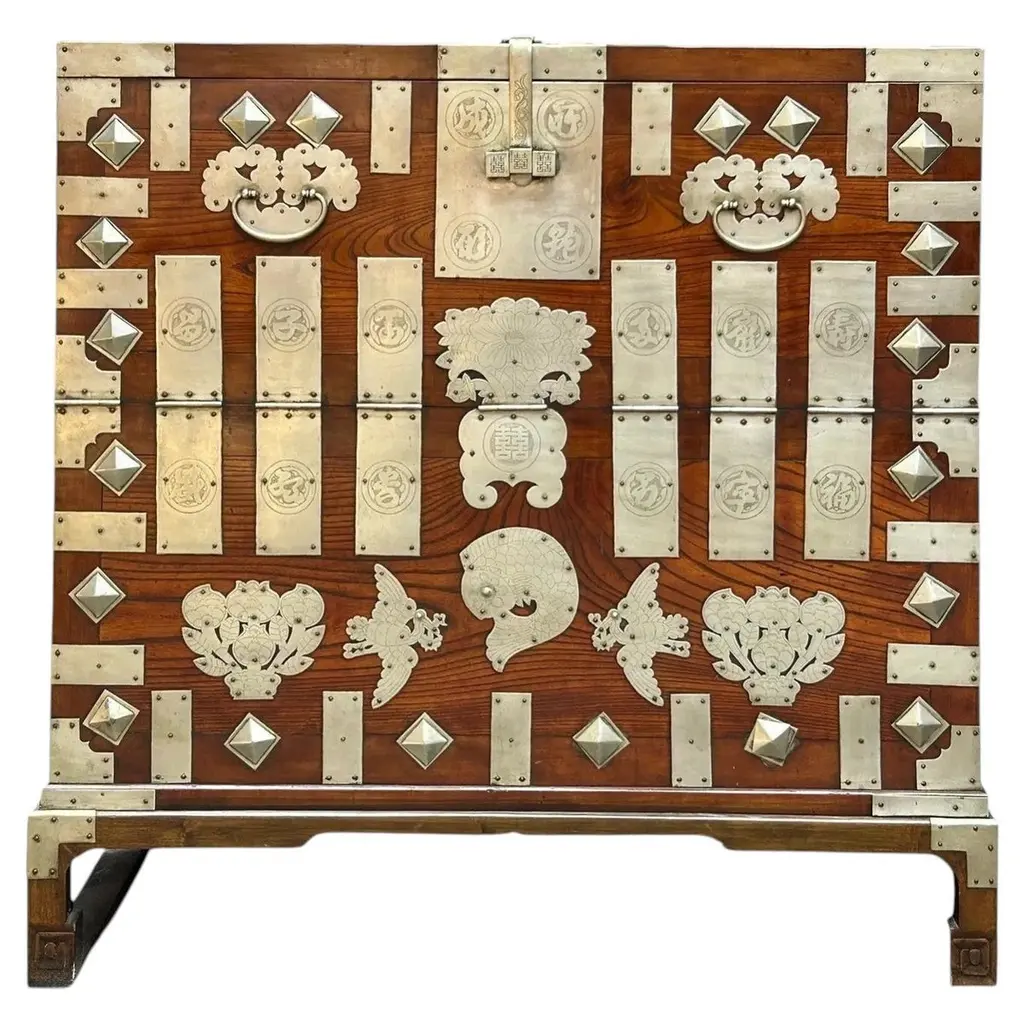
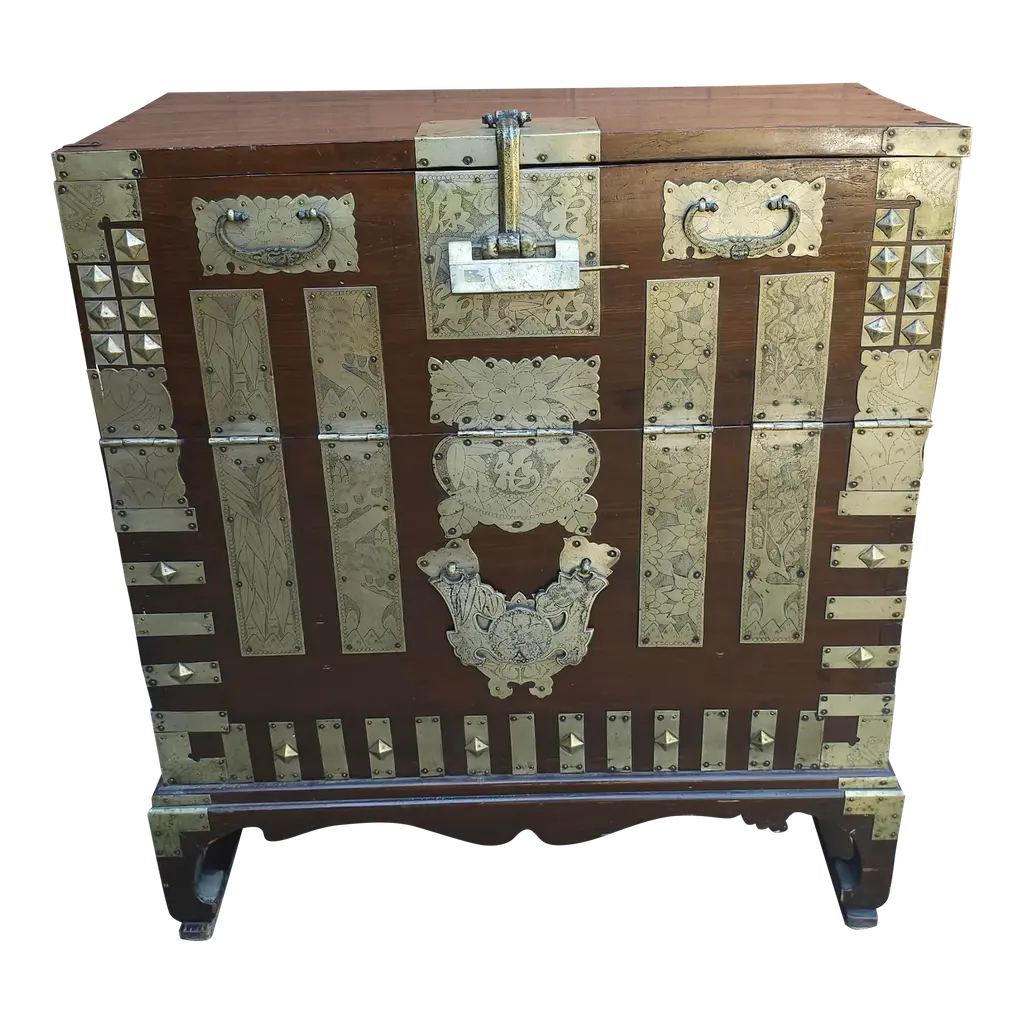
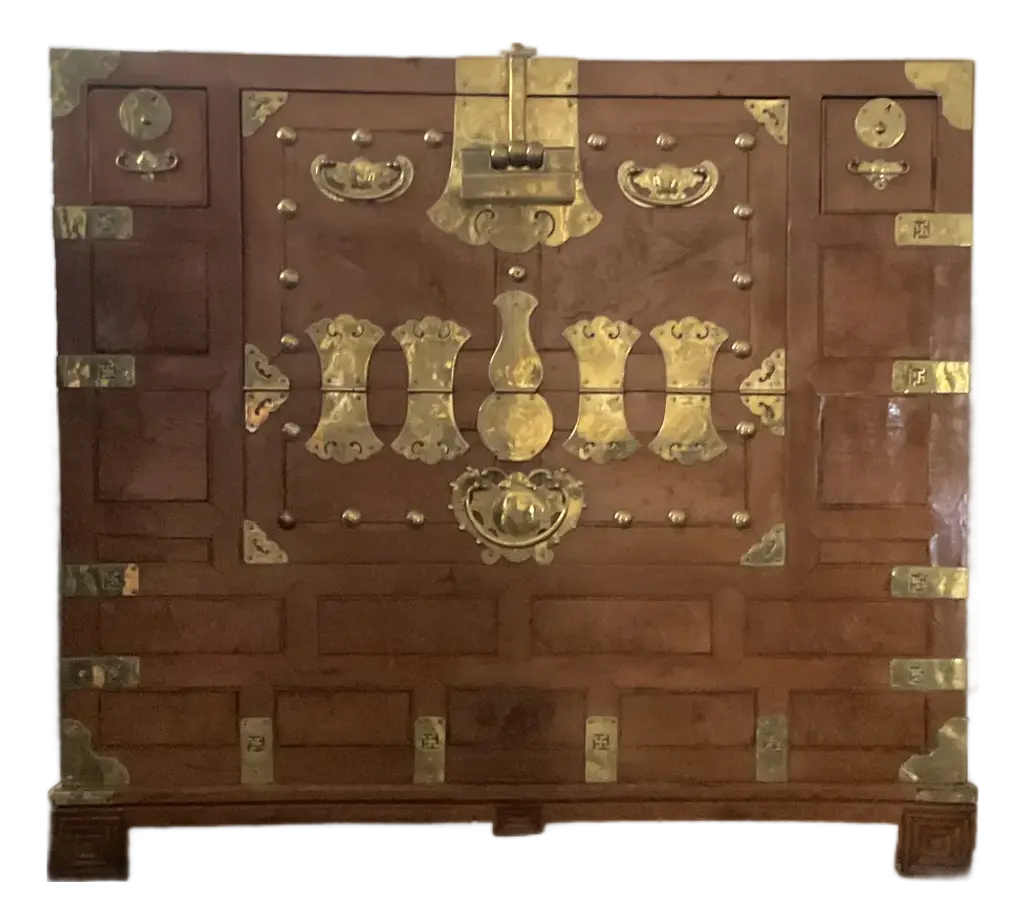
A late 19th century, Joseon dynasty Korean bandaji cabinet. Often given as wedding chests and filled with the bride’s household linens and best robes, more elaborately decorated chests such as this were an indication of the family’s wealth and status. This example is heavily ornamented with brass panels and detailings often associated with the Gyeonggi-do style popular in the central region surrounding Seoul. It is crafted in richly figured zelkova wood with a wide banding of elm and features two small top drawers flanking the central door. It retains a rare and unusually large size working padlock (eo-hyeong jamulsoe) in the form of a fish (w/key). Because fish appear to sleep with their eyes open, they were often used decoratively in Asian cultures to convey a sense of security or safe keeping.
Similar products