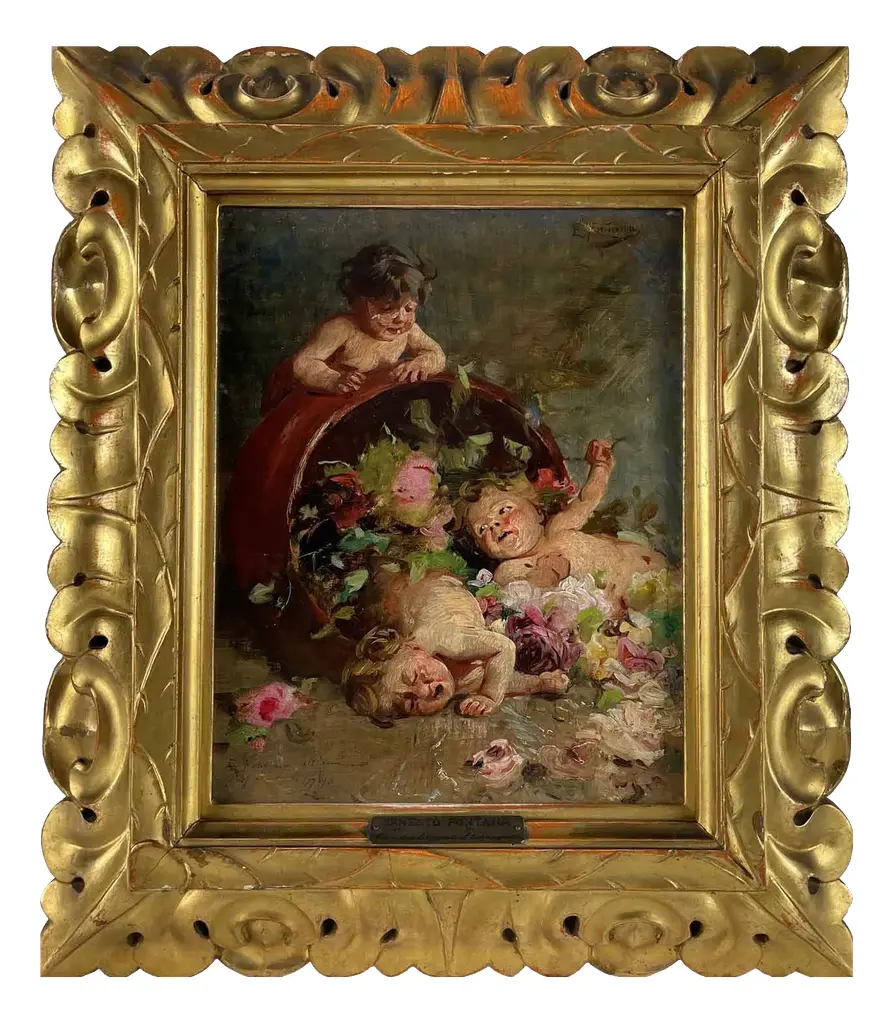
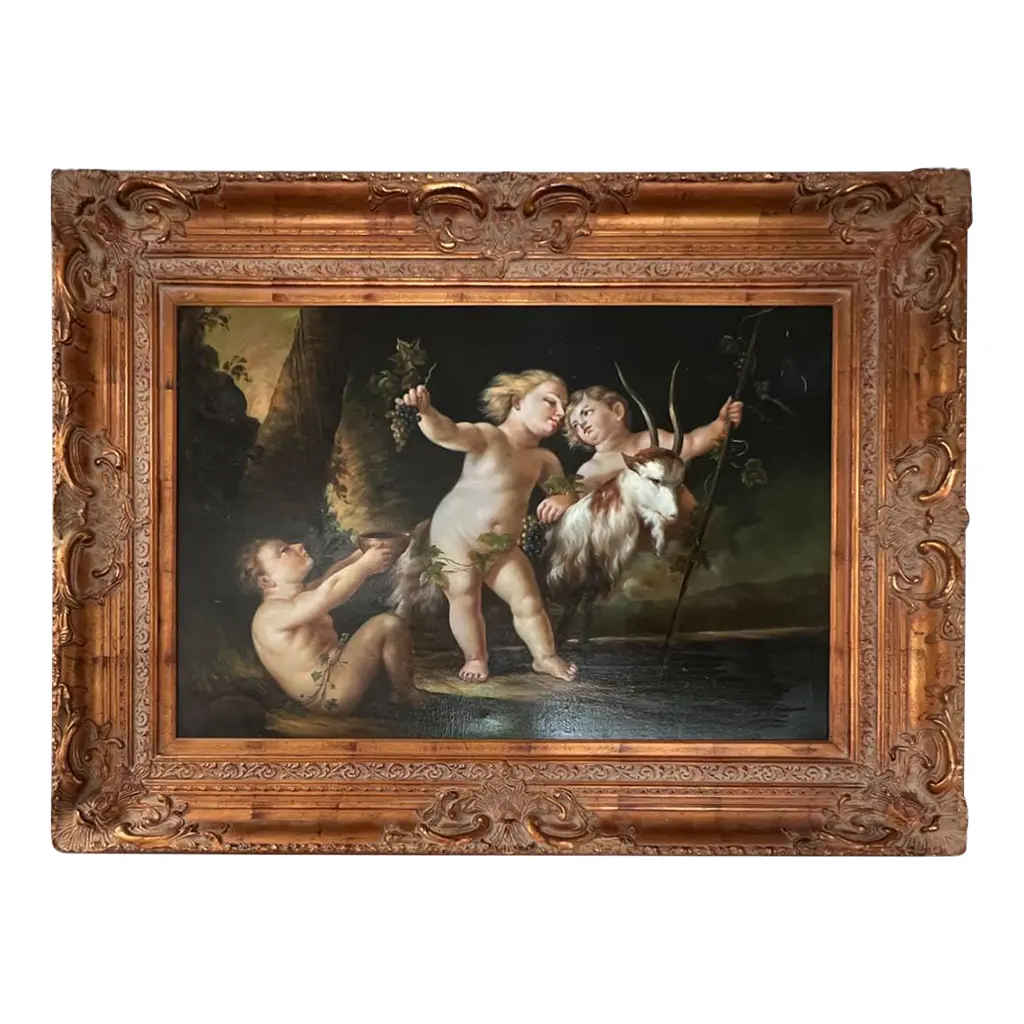
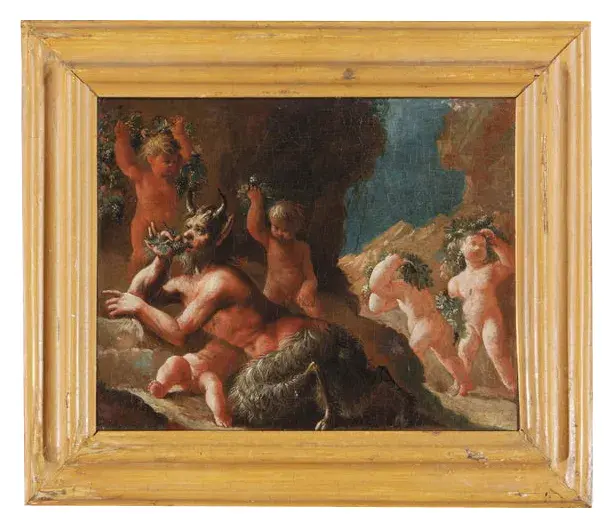
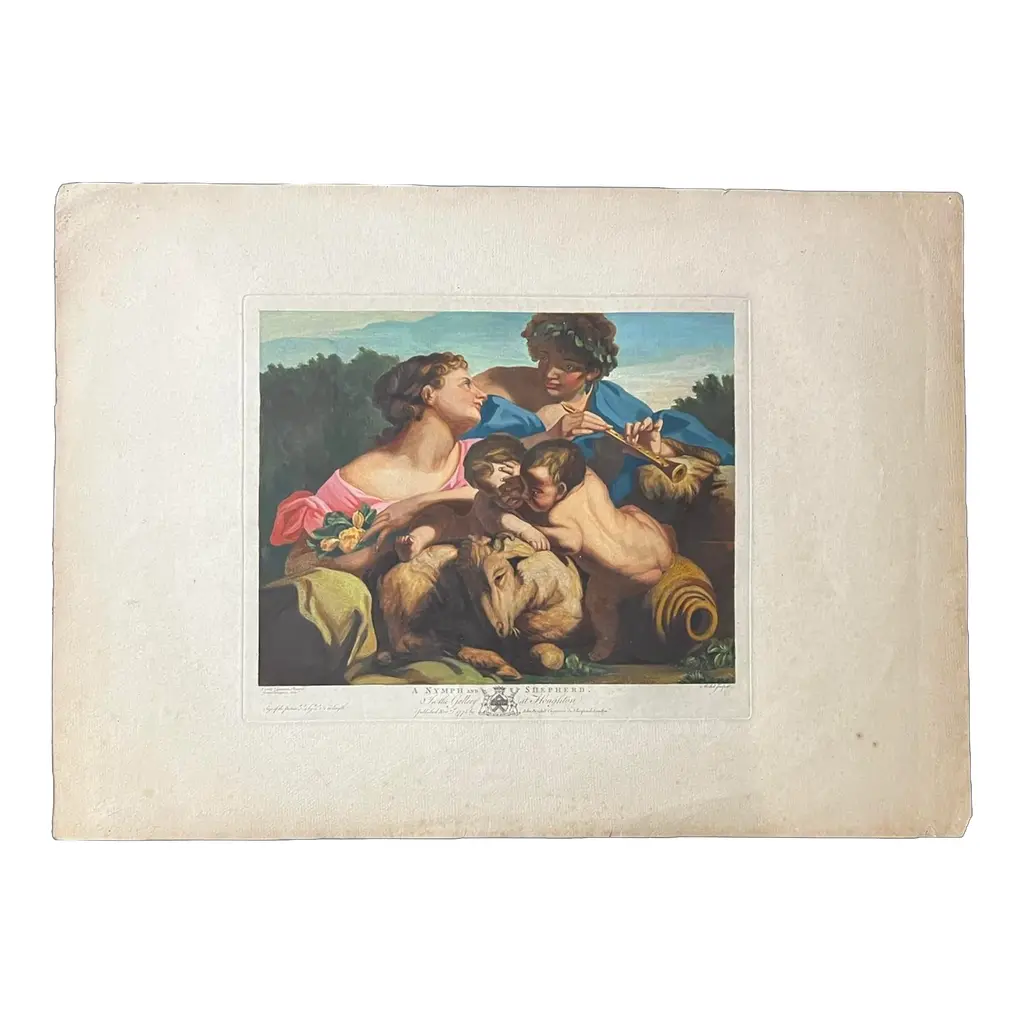
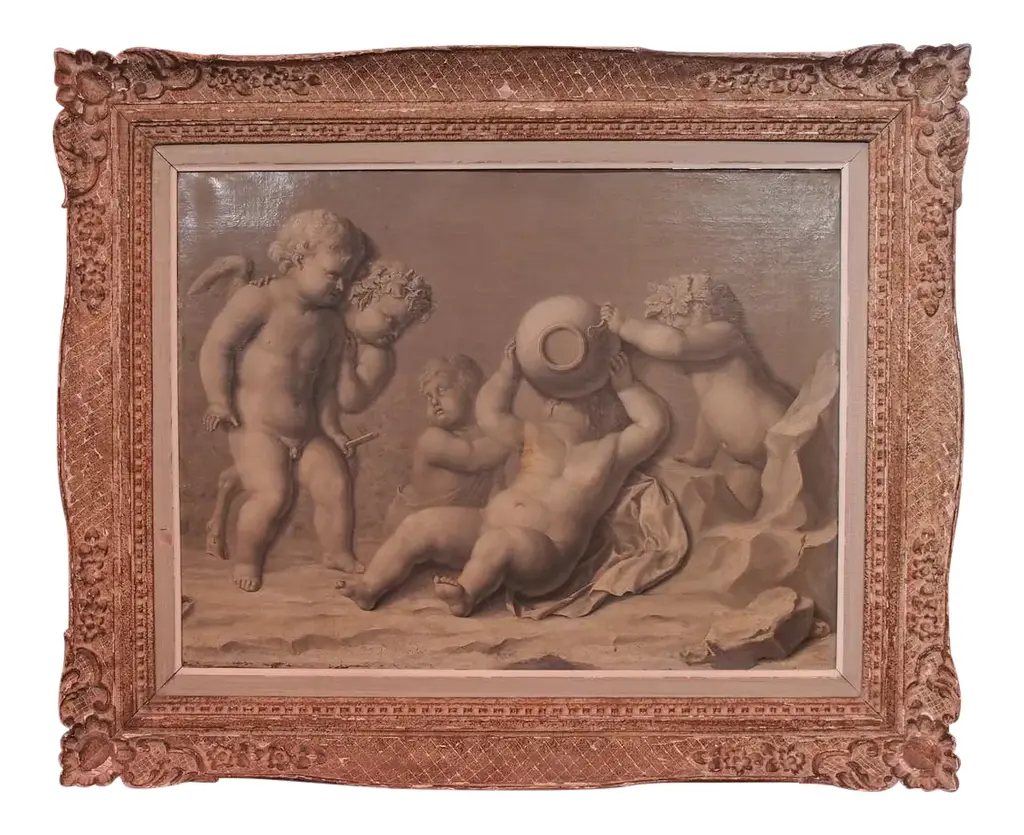
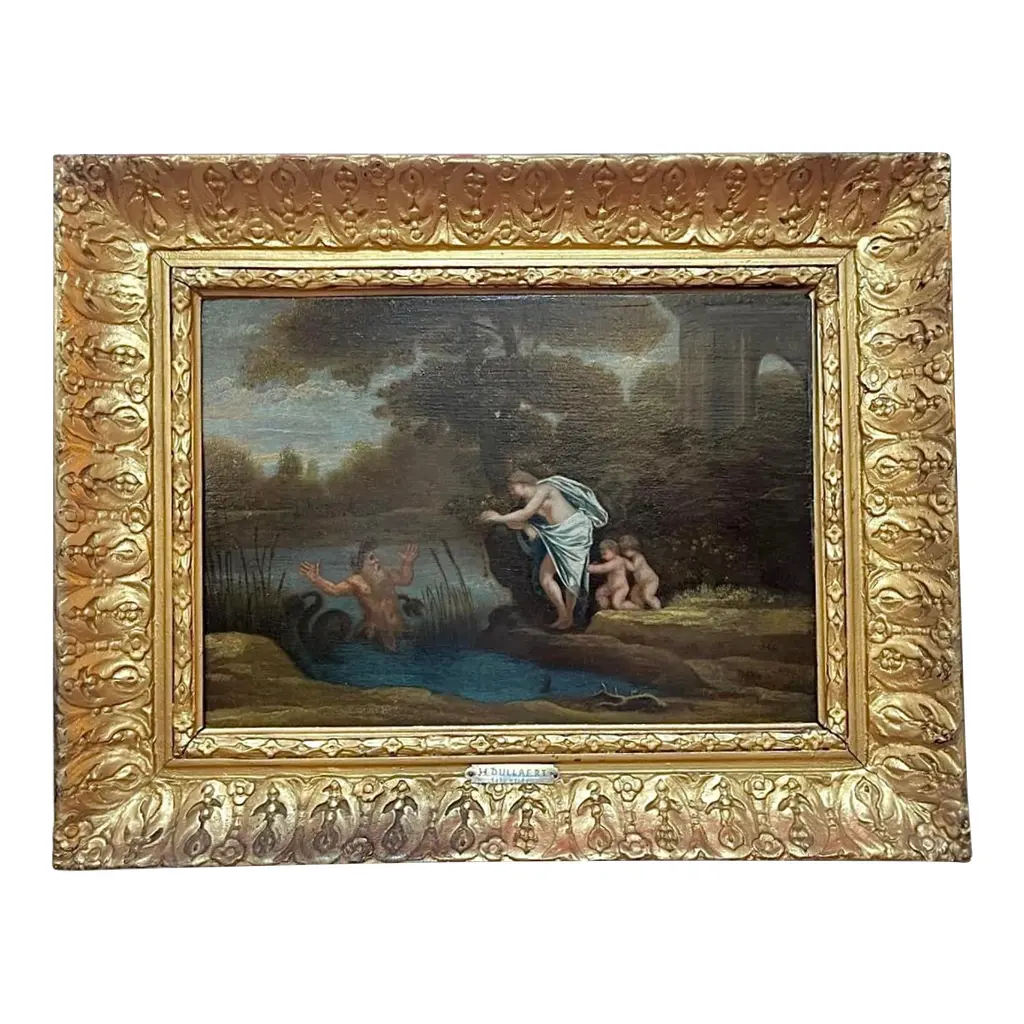
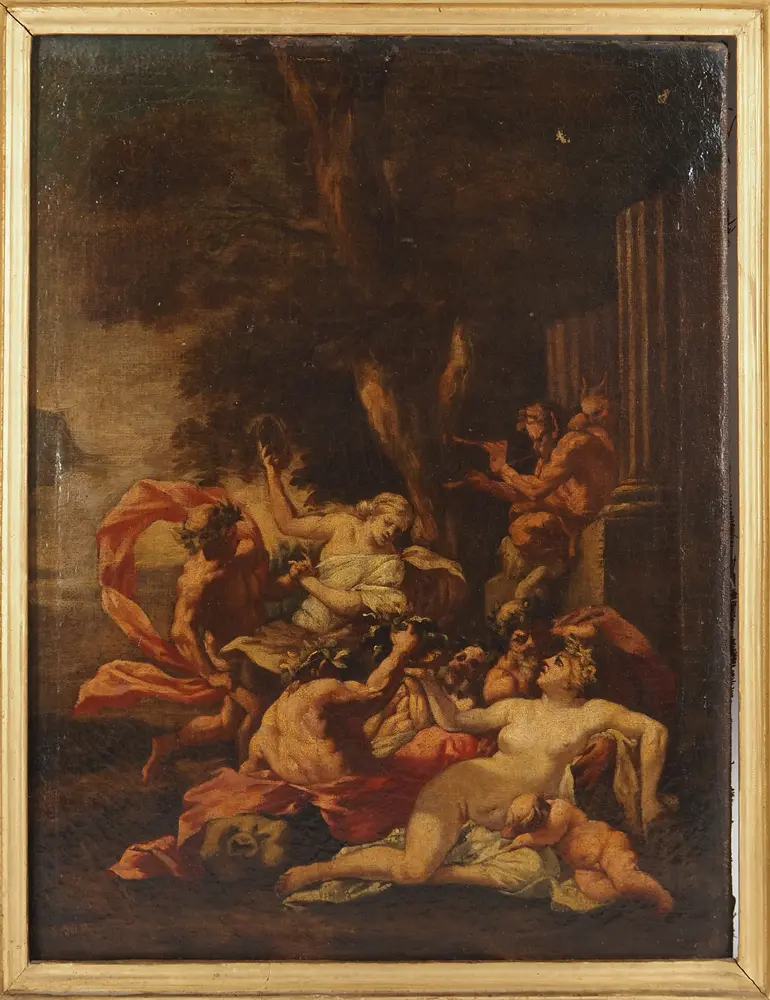
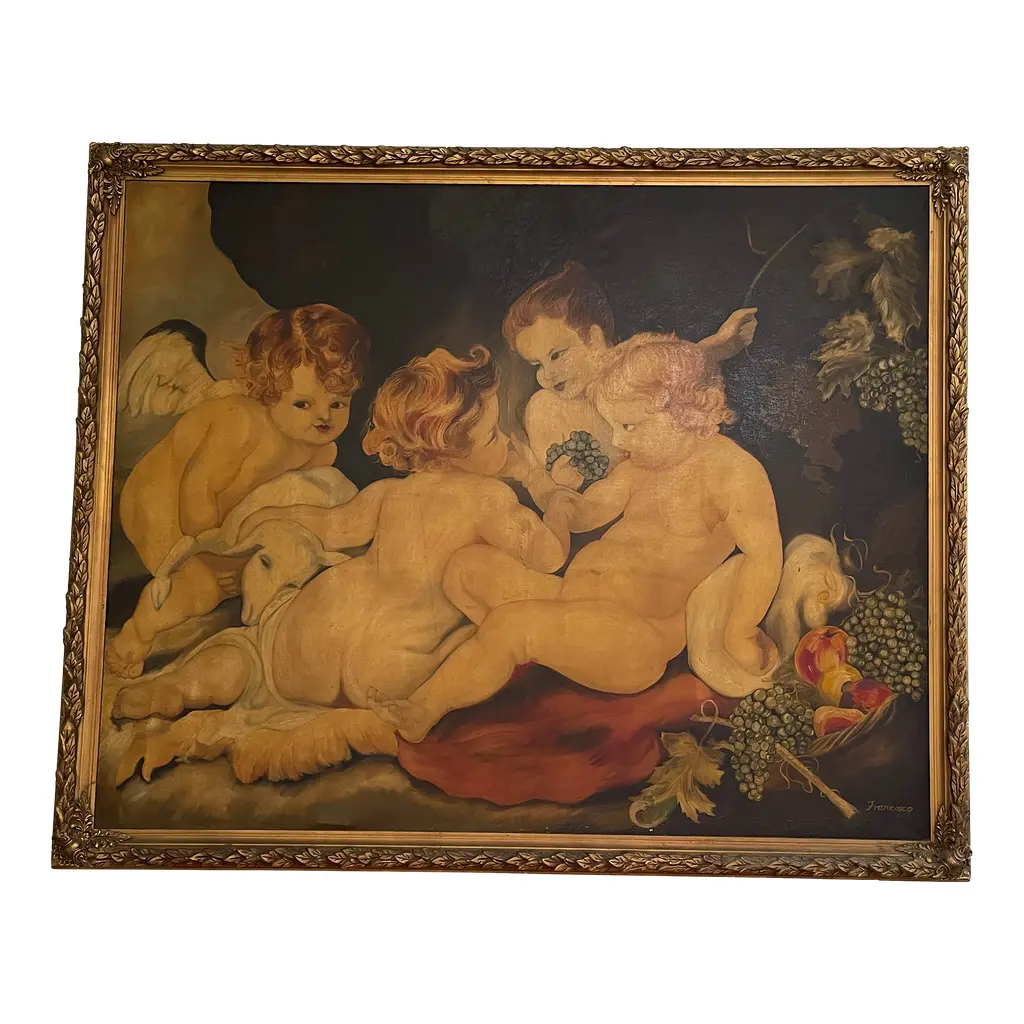
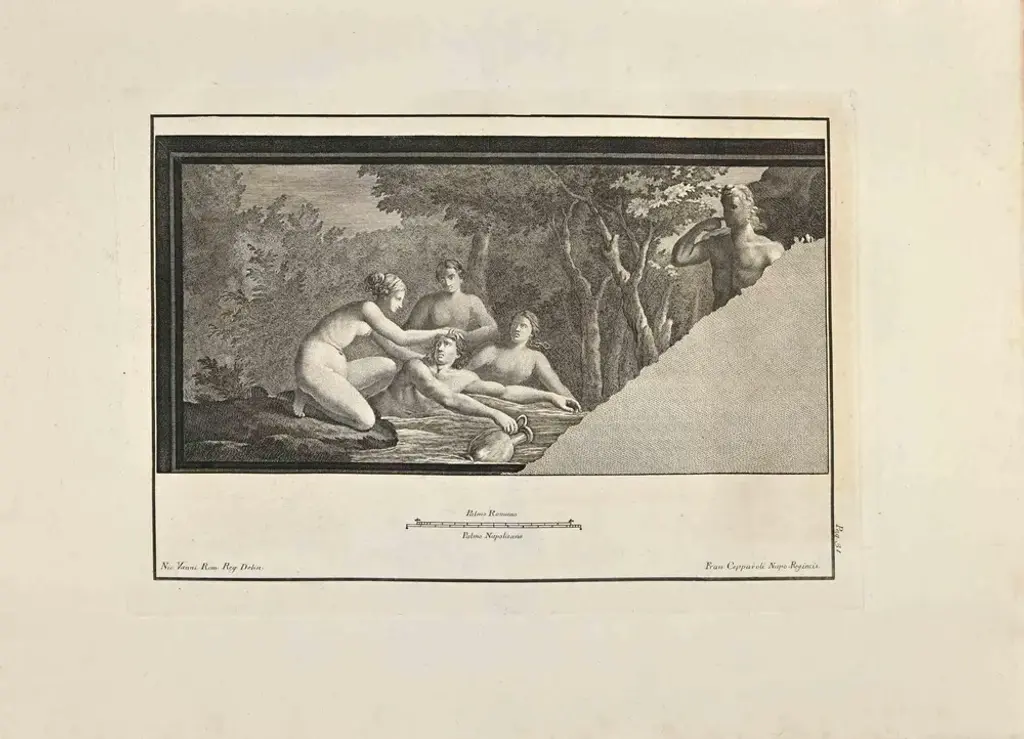
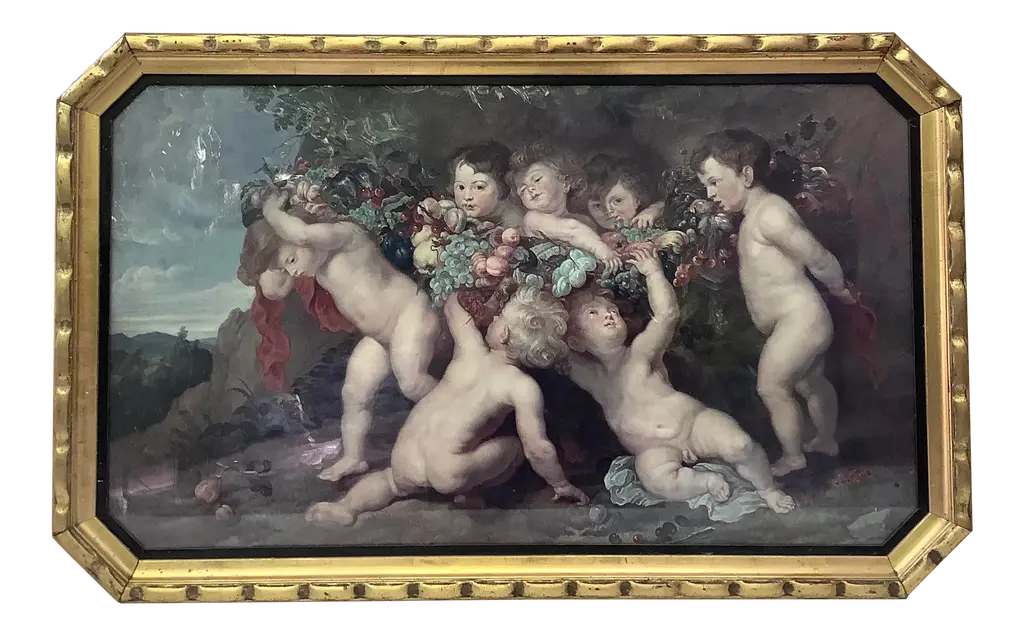
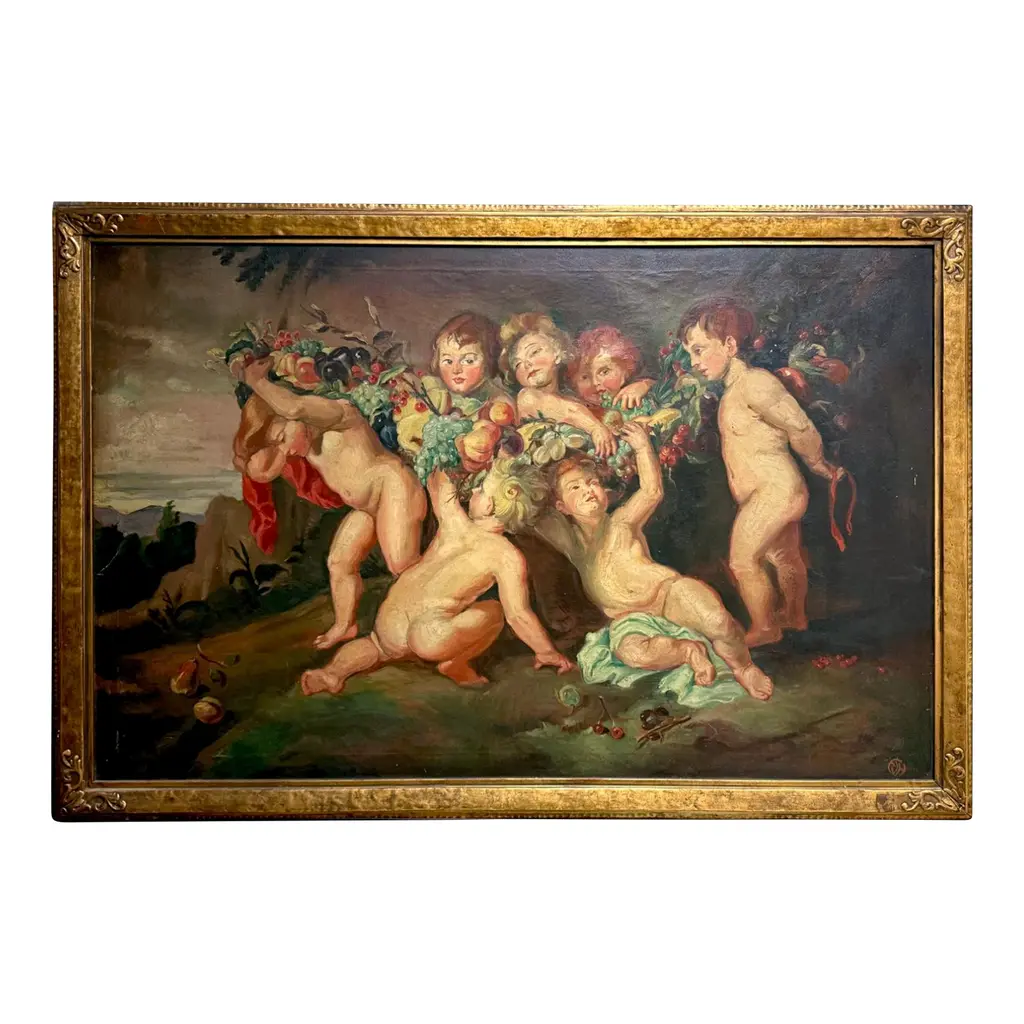
An attractive 18th-century oil painting depicting a lively group of putti at play in a woodland stream, executed in the graceful Rococo manner associated with François Boucher and his circle. While the painting is offered as possibly the work of a follower of Boucher, it captures many of the qualities that made the artist's compositions so beloved: soft modeling, animated figures, a luminous palette, and an idyllic celebration of childhood and nature. In classical and later European artistic traditions, putti are infant figures that symbolize love, innocence, joy, and the playful forces of nature. Often associated with Cupid and the realm of Venus, they frequently appear in scenes of pastoral abundance and earthly delight. Water, likewise, held rich symbolic meaning in mythology and art, representing renewal, fertility, purity, and the life-giving forces of nature. The combination of putti and flowing water was particularly favored by Rococo artists, who used such imagery to evoke carefree beauty, pleasure, and harmony with the natural world. The painting has undergone professional conservation at some point in the distant past, having been relined and mounted onto canvas to ensure its long-term stability. The work remains structurally sound and presents well. There are several small areas of paint loss, which are shown in the accompanying photographs. Otherwise, the paint surface appears stable. I have included detailed close-up photographs to illustrate the quality of the brushwork, the texture and depth of the paint surface, and the areas of loss referenced above. Please review all images carefully as they form an important part of the description. I am happy to answer any questions and can provide additional photographs upon request.
Similar products